The Fairy Castle Cactus (Acanthocereus tetragonus) is a columnar cactus native to the southern United States, Mexico, Central America, northern South America and the Caribbean. It is a night-blooming cactus that gets its common name from its resemblance to the turrets of a medieval castle. Let’s see how to propagate, grow Fairy Castle Cactus and its care.

Basic description
- Botanical name: Acanthocereus tetragonus
- Common names: Fairy Castle, Cruceta, Nopal de Cruz, Jacube or Jacubo
- Usually I: well-drained soil
- Bloom: From midsummer to spring
- Light: Full sun to partial shade
- Irrigation: Very little, when the soil is completely dry
- Spread: cuttings and seeds
The Fairy Castle Cactus is a slow-growing cactus that can reach two meters in height. Other common names are Night-blooming Cereus, Triangle Cactus, and Barbed Wire Cactus. Let’s see how to grow fairy castle cacti.
How to Propagate Fairy Castle Cactus
Propagating a fairy castle cactus is quite simple. There are two popular propagation methods, but one is used much more frequently than the other. The reason is the time required.
Fairy Castle cacti grow slowly, so it’s a big commitment to grow them from seed rather than propagating them with cuttings.
Seeds
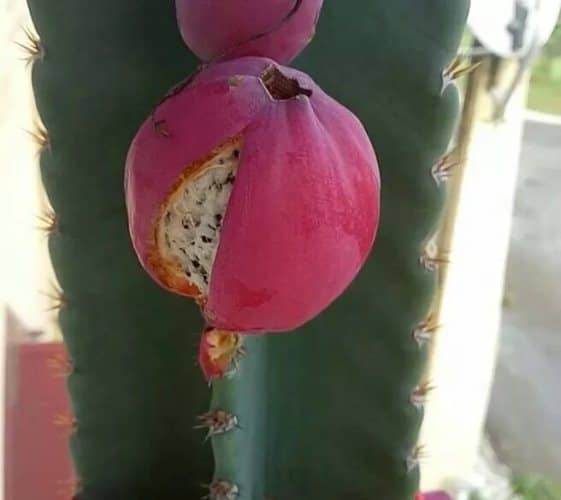
Seeds of the Fairy Castle Cactus can be harvested from its fruit, but because this plant rarely flowers and grows so slowly, few gardeners opt for this method of propagation. Seeds can also be found available for purchase online.
If you are one of the patient few, you should sow your seeds in the fall or spring, in well-drained soil formulated for use with cacti. Keep the soil slightly moist, but not too wet, until you see seedlings emerging from the soil.
Once the seedlings have come to the surface of the soil, you can let the soil dry out before watering it.
As with adult cacti, damp soil will cause rot, so avoid excess moisture at all costs.
In the first year, you may only see an inch of growth from your new cactus, but with patience, your fairy castle cactus will soon produce needles of its own.
Propagate by cuttings (stems)

The most common method of propagating Fairy Castle Cactus is by cuttings. Since this cactus typically produces many branches, collecting cuttings is as easy as cutting or snapping off one.
When trimming branches, be sure to use sharp, sterile scissors, shears, or a knife to prevent infection and minimize potential damage to your cactus.
After picking up the cuttings, it is recommended to leave them out in the open for a few days to allow the cuttings to heal and dry out. This helps prevent bacterial and fungal infections once the cactus cutting is introduced into the ground.
Before planting, you can dip the cutting in rooting hormone. This is not a necessary step, but it can help shorten the time between planting and root formation.
Once the cutting has become calloused and you have soaked it in rooting hormone, if you have decided to do so, you are ready to plant your fairy castle cactus cutting.
Plant the cutting in a pot with drainage. Excess water can damage fairy castle cactus, so be sure to plant it in a pot with drainage holes.
During the first weeks after planting, it is not necessary to water the cuttings. They don’t have roots yet, so they can’t absorb water. Water as little as possible to keep moisture in the soil.
After planting your cuttings, it’s important to remember that although this is the “fast propagation” method, you probably won’t see more than 4-8 inches of growth in the first year.
Growing and caring for Fairy Castle Cactus

light requirements
Make sure your fairy castle cactus gets plenty of light. Those kept as houseplants should be grown in a space that receives plenty of sunlight.
If these plants do not receive enough light, the colors will fade and their columns will become distorted. It is a full sun plant, but will survive partial shade.
Irrigation
Water the fairy castle cactus sparingly. To avoid overwatering, allow the soil to dry out between waterings.
Standing water or soggy soil will cause root rot or attract scale insects, which will likely cause your cactus to fail.
Temperature
Regulating the temperature of the plant’s environment, the fairy castle cactus thrives in warm climates. However, it is very sensitive to frost and must be brought inside if the outside temperature is below 0°C.
Also consider the location of your cactus indoors carefully, as cold drafts or air conditioning can be detrimental.
Soil (substrate)
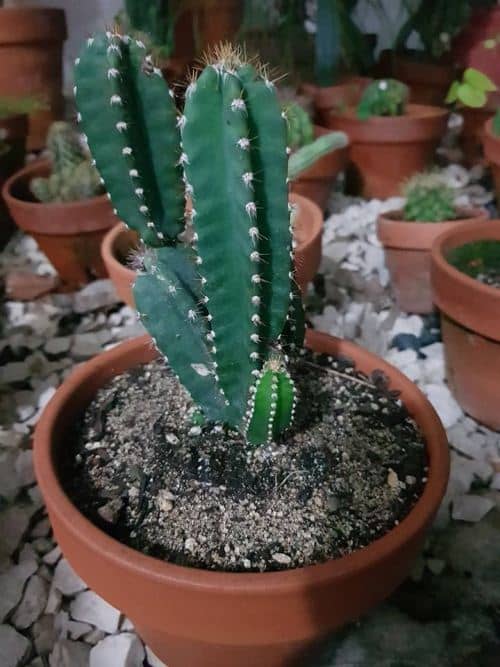
Grow the fairy castle cactus in well-drained soil. Like many other cactus species, it needs well-drained soil.
Using soil with high percentages of gravel, bark, sand, or perlite will help keep the soil from becoming soggy.
Fertilize
During the warmer months, plant food can be added to the soil or water to promote growth, but should not be used when the cactus is dormant in winter.
In the spring, fertilize with cactus compost when growth resumes.
Common pests and diseases

As mentioned above, overwatering is the most common problem with these cacti. To avoid this problem, it is essential to ensure that the soil is completely dry before watering again.
This can be achieved by inserting a finger a few centimeters below the soil surface. If it’s dry, it’s time to water, but if it’s wet, you should wait several days before checking again.
Remember that they are drought lovers and won’t hesitate to wait a few more days before being watered.
Common pests are scale insects, spider mites and fungus gnats, as well as millipedes in some areas.
The most common pests are usually treated with a combination of high pressure water, insecticidal soap or neem oil. For more information on how to deal with pests, read our guide.
It’s important to check on your plants often, even if you don’t water them as often. By checking your plants every few days, you’ll be able to spot any problems before they get worse.
Share it on the networks: