

Rust is a fungus that affects many plant species, especially roses. Once the rust on roses manifests itself, is difficult to remove and has an unfortunate aesthetic effect. The environment he likes is humid. When it rains, it spreads extremely quickly, but it doesn’t actually appear until two months later. The first symptom that can be observed is the appearance of warts of different colors on the leaves.
In this article, we’ll tell you everything you need to know about rose rust control, its characteristics and symptoms so you can identify it quickly.
what is rust

Unlike other garden fungi such as powdery mildew, rose rust is typical of gardens. This is not a relief, rather it is an incentive to be alert and ready to fight rose rust and, if possible, prevent its occurrence.
Many factors can trigger the appearance of rust. Generally speaking, its appearance can be attributed to humidity and heat, which are the ideal environment for most fungi, but the fact that rose rust is a problem has to do with the resistance of roses against any pest.
Rose rust is a disease caused by fungal attack. It is a serious disease of roses, and in southern Europe it can even kill them. This fungal plant disease is caused by two different fungi: Phragmidium tuberculatum and Phragmidium mucronatum.
It seems that depending on weather conditions and where the roses are planted, they may be more prone to shrink one or the other. In northern Europe, the most common rust-causing fungus is Phragmidium tuberculatumwhile in southern Europe the fungus responsible for rust is Phragmidium mucronatum. In gardening, it is important to treat and fight rust because the effects are just as harmful, the same symptoms and the same treatments.
Rust Symptoms in Roses

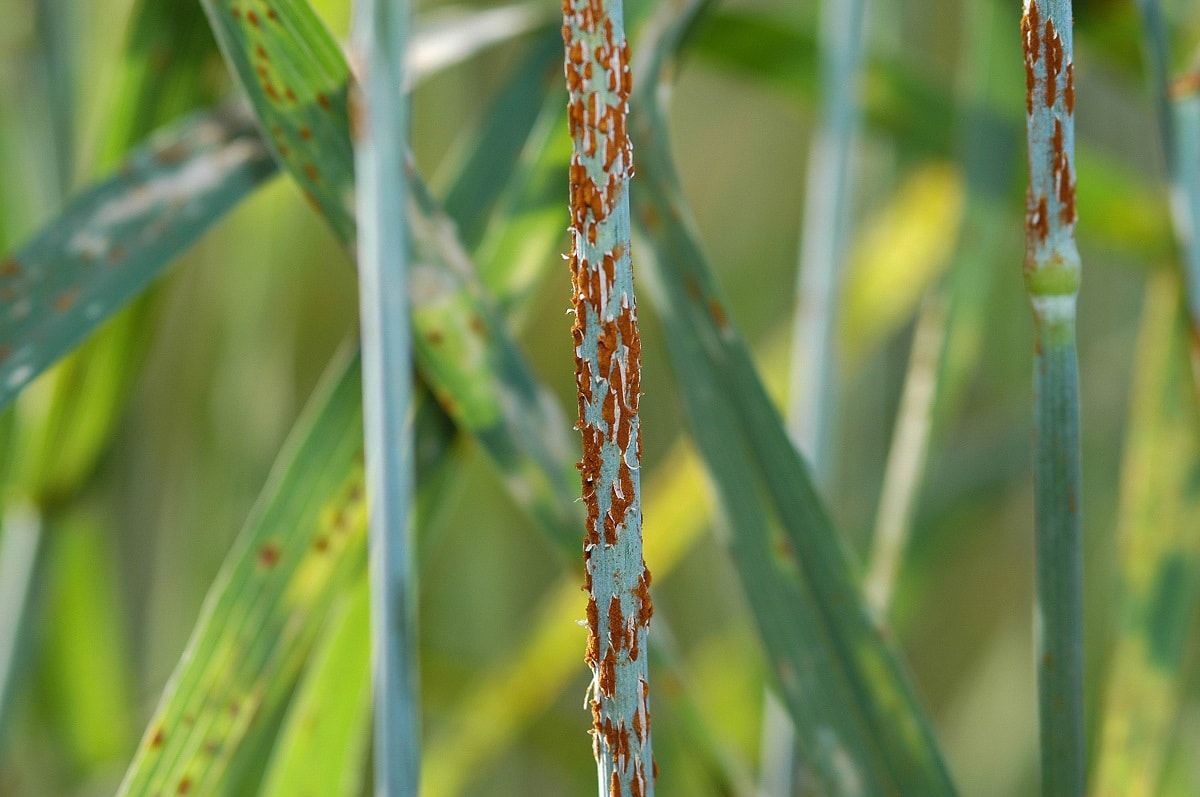
Early detection of any type of disease or pest helps us take appropriate corrective action to eradicate it as quickly as possible. The first symptom of rust on a rose bush is an orange bump that appears on the underside of the leaves. These spots then turn brown or black.
Over time (if the disease is not stopped in time), spots or pits appear on the top of the leaves. The fungus will continue until it invades the branches of the rose. In the worst case, the leaves end up falling to the ground and the branches die because the flow of sap is severely impaired.
Rust prevention in roses
To prevent fungi from developing on roses, the first treatment that we must give to roses is preventive. It’s not that we want to avoid 100% oxidation, but obviously we can avoid it, or in the worst case, if:
- We make an appropriate size. Pruning roses has a preventive effect on the appearance of fungi (spots, mould) because sunlight and air are allowed to penetrate inside the roses, which is necessary to prevent them from appearing.
- We maintain a good planting distance between the roses. This suggestion is related to the previous suggestion.
- The fungus thrives in conditions of high heat and humidity, what can happen when the roses are close together and badly pruned.
- pay correctly, taking into account the fact that organic fertilizers such as earthworm humus can significantly improve the structure of the soil and prevent the appearance of various fungi.
- Do not wet the leaves with irrigation. Roses should be watered from below, avoiding splashing as much as possible.
- Remove all pruning debris, especially if affected by fungus.
- Keep the garden free of weeds.
Useful Home Remedies
At this point we must distinguish that there are several ways to stop oxidation, we can use ecological treatments or the direct use of systemic fungicides… some of which are formulated based on ecological remedies that you will see below -below.
There is a lot of literature on this subject and we have to decide how far we are willing to go to get rid of rose leaf diseases.
Various combinations of products (under license) are used in organic farming to prevent oxidation:
- Bordeaux broth: copper sulphate for roses
- Calcium Sulfur Broth, Rust Inhibitor
- Combination of the previous two
There are also a number of household rose fungicides that appear to be effective against rust. The problem with home remedies for these fungal plants is that they may be less effective or take longer to achieve their goals:
- Garlic sauce. To treat garlic rust, we need a crushed head of garlic, which we put in a container with 2 warm water.
- Partially cover and marinate for 24 hours. We filter the results and dilute to 100ml per liter of water. We apply twice a day for 5 days.
- Onion sauce. The process is exactly the same as the garlic maceration process.
- Onions and garlic are natural antifungals.
- chamomile sauce. We soak 200 grams of chamomile in 5 warm water. This preparation is partially covered and left to rest for 24 hours. After 24 hours, we filter the results and dilute 250 ml per liter of water. Apply twice a day (morning and evening) for 5 days.
- nettle porridge. Nettle Pulp is an impregnated nettle that fights all kinds of fungal infestations. It’s a bit more complicated than the previous ones, but we have the advantage that prepared preparations are already available.
We must remember that the damaged parts of the plants never recover, so we must be attentive to the first symptoms. Rust’s best friend is high humidity and moderate temperatures, so nighttime watering should be canceled in late summer. There is nothing we can do about rainwater as long as there is a good drainage system to prevent puddles from forming.
Hopefully with this information you can learn more about rose rust and its characteristics.