
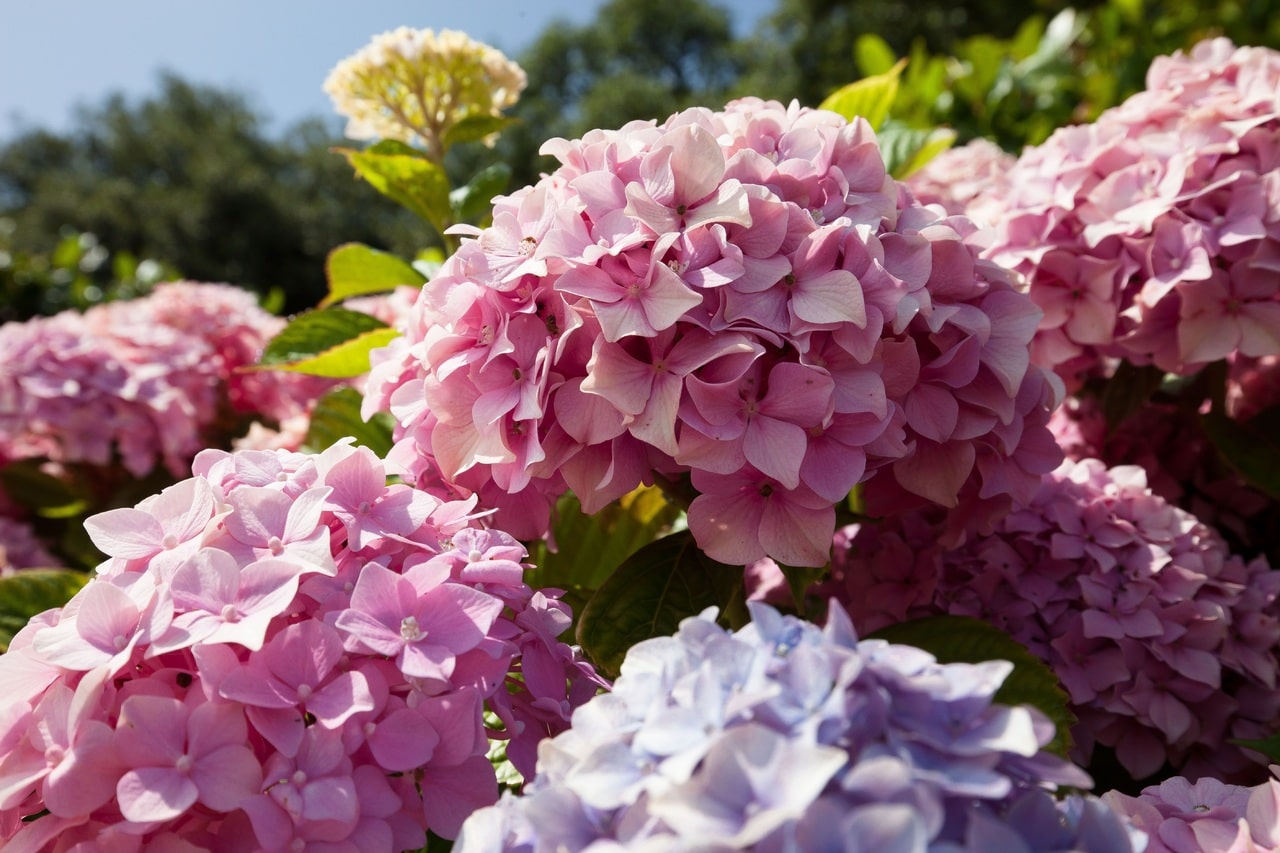
Is vinegar useful for hydrangeas? Finally, like everything in life: it depends. And it will depend on what you will be using them for, and whether or not they really need them given the soil they are growing on.
And it is that vinegar is a liquid that has a very low pH, for which it is said to be acidic. Therefore, it can be useful when growing our favorite plants, but only in special cases.
When to use vinegar on hydrangeas?

Hydrangeas are acidic plants. This means that They grow in soils with a pH between 4 and 6.. When we plant them in higher pH soils, or in other words, when kept in alkaline soils, they very soon start showing the typical symptoms of iron chlorosis: yellowing of the leaves, and more later their fall.
But beware, because soil pH can be lowered or raised with the water it receives and, also, with the manures and fertilizers that we put there. Therefore, if we have a plant in acidic soil, but we water it with water that is very alkaline, for example, sooner or later the pH will increase, thus turning the acidic soil into alkaline. And the reverse can also happen: if the soil is alkaline, but we irrigate with very acidic water, in the end the pH of this soil will drop.
Next, When will we use vinegar on hydrangeas? In such cases:
- If you have watered them with alkaline water and realize this after a while.
- If the soil or medium has a pH of 7 or higher.
And in no other.
Vinegar can only be used for this, to lower the pH of alkaline water and/or soil.. Hydrangeas, in fact, do not need it if they are planted in acidic or slightly acidic soils, and if they also receive rainwater or whose pH is suitable for them (between 4 and 6).
How to use?
The pH of vinegar is very acidic; so much so that it is between 2.5 and 3.0. For this reason, The first thing we need to do is know the pH of the water we use for irrigation. for example with the pH strips they sell here. These have a simple method of use: just take a strip and put it in water. Then when you take it out, you will see that it has changed color. Well, that color is the one you need to locate on a color scale that comes with the kit, where each color corresponds to a pH degree. It is similar to this:
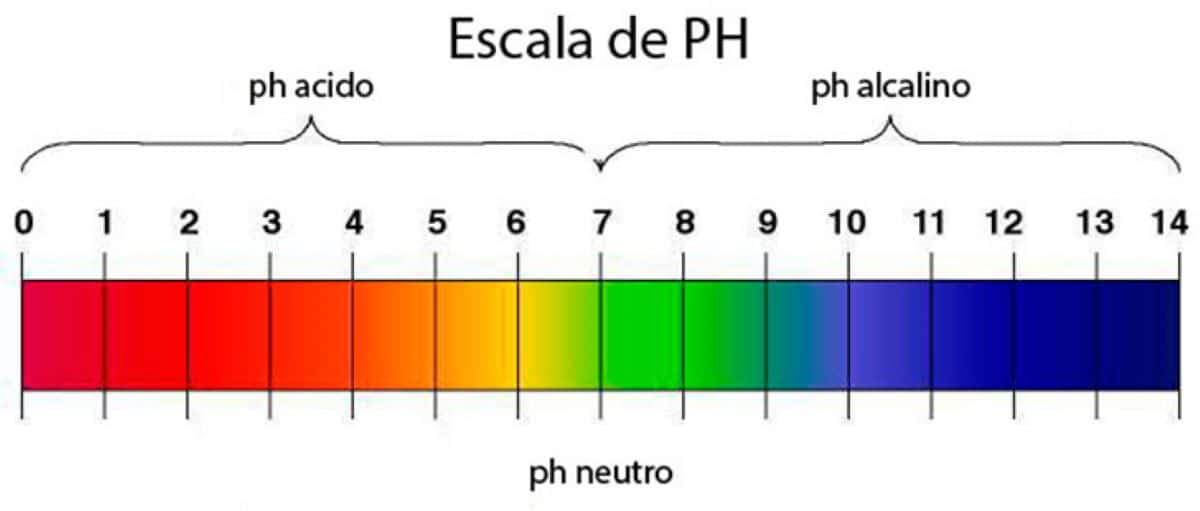
Image – scientificexperiences.es
Once you know what the pH of the water is, you can know whether you need to lower it or not. Sure, if it’s 7 or more, you’ll need to add vinegar and mix.
We cannot tell you the exact amount of vinegar to use as it will depend on the pH of the water. What we are going to tell you is that the more alkaline the water, the more vinegar you will need. But yes, it is better to add a small amount of vinegar, mix and measure the pH of the water again to better control itrather than pouring in too much and the pH of the water dropping too much.
Thus, not only is there no risk of acidification of the water, but your hydrangeas will also be able to keep their leaves a beautiful green color.
And if I don’t want to use vinegar, how do I lower the pH of the water?
Hydrangeas are plants that do or do not need low pH water. That is why it is interesting that when the one we have is alkaline, vinegar is used to lower the pH. Now well, it can also be done with lemonfollowing the same steps mentioned above (i.e. add a small amount of lemon to the water, stir and then check the pH of the water).
Same, To avoid ferric chlorosis of hydrangeas, it can be fertilized with an acidic plant fertilizer such as East, because it contains the most important nutrients you need. But yes, it should be used as specified by the manufacturer on the packaging.
Vinegar can be very helpful, but only if used correctly.