Some of the links in the post are affiliate links and I receive a commission for purchases made through some of the links in the post.
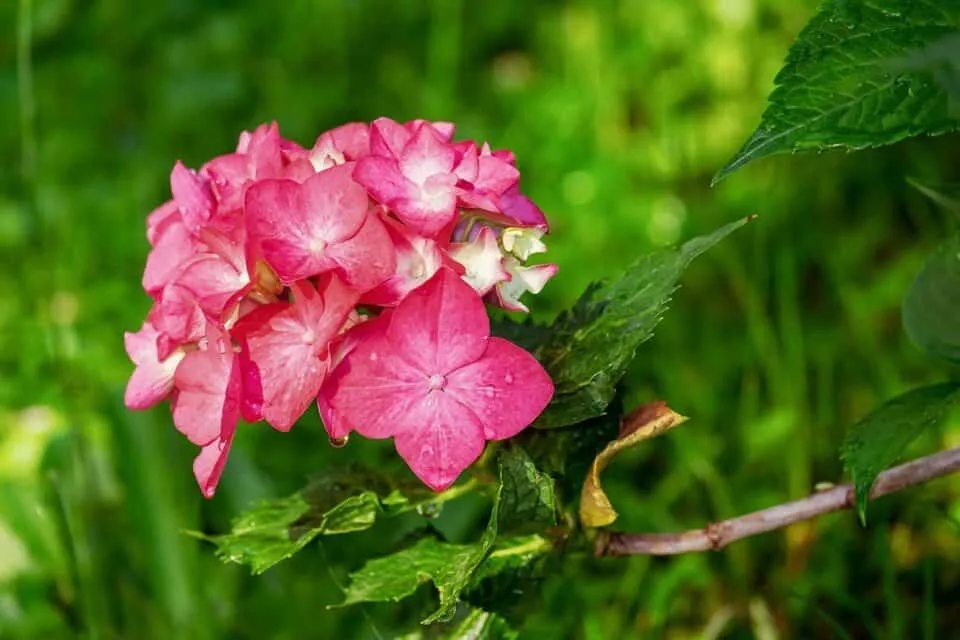
Hydrangeas are a perfect addition to any garden and can make anything around them aesthetically stunning.
Especially in spring and summer, these bushes become covered with huge flower bulbs with thousands of small flowers on them.
Although they seem high-maintenance, hydrangeas require little care and are easy to grow in the right environments. Ever since you came across this article, you must be wondering: are hydrangeas annuals or perennials?
All types of hydrangeas are perennials and can live for many years. Hydrangeas are essentially woody perennials, so their stems don’t have a delicate green texture. Frosts generally kill the development of susceptible perennials, not woody perennials.
Therefore, if we think about it, it can be both.
If you choose the right type of hydrangea for your location and environment, they will live and thrive for years. However, whether the hydrangea is an annual or a perennial is another question that will be clearly addressed in this article.
what is a hydrangea
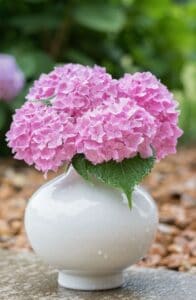 Hydrangeas are flowering shrubs that come in 75 different species. These beauties are also called hydrangeas. Hydrangeas are native to Asia and America.
East Asia has by far the greatest variety of species, especially in China, Korea and Japan.
Hydrangeas bloom from early spring to late fall, brightening up every garden and home with their spectacular huge blooms.
Flowers are often added on the outside of small flowers or strung in a ring.
Although cultivated hydrangeas have been developed and chosen to produce more flowers of the larger type, plants in wild populations often have few and smaller flowers.
Most hydrangea species can survive in USDA area 3 to 7, but some varieties can survive to zone 9.
Additionally, some species thrive in cooler environments or even shade. A plant’s hardiness refers to its ability to withstand harsh growing conditions, especially a harsh winter.
This means that most hydrangeas can survive a fairly cold winter and bloom again the following season.
What do annual and perennial mean?
To find out if a hydrangea is an annual or a perennial, let’s take a clear look at these two groups. Although you may be familiar with these expressions, it is essential to know what they mean.
Also, it is essential to realize that some plants may be perennials in some hardiness zones, but annuals in others.
Plants that need a warmer climate don’t always do well in colder climates because they can be too hardy.
In the north, a plant can only be planted as an annual, in the south as a perennial. Let’s take a closer look.
Plants are considered annuals when they go through all the stages of their life cycle. In general, this means that the plant germinates from seed, then grows and produces seed, and finally dies.
The ultimate goal of an annual plant is to generate a seed that allows it to propagate. Annuals will bloom throughout the season until their work is done.
Dead head at the start Freeze is the best method to prolong the flowering period. Annual flowering plants for gardens include marigolds and petunias.
A plant that survives for a period of 2 years or more is called a perennial. Typically for perennials, the top growth wilts in the winter and reappears in the spring.
Perennials have a long and enjoyable life if grown in the right conditions. There are many types of plants in this broad category, and each has a specific maintenance schedule.
It’s easy to grow perennials at home. You can take layers or cuttings straight from your garden and root them in growing medium.
Another propagation option is to create perennials to increase their numbers. Whether you do it in spring or fall, your garden will continue to grow. Perennials include Heuchera, Echinacea and Hosta.
Is Annual Hydrangea or pperennial?
 So, here is an answer to the question: is the hydrangea an annual or a perennial? All types and types of hydrangeas are perennials.
The life cycle of a hydrangea lasts about one or two years. It can even take up to 3 years for the seeds to actually produce their flowers.
Hydrangeas are essentially woody perennials, so their stems don’t have a delicate green texture. Freezing generally kills susceptible developing perennials, but not woody perennials.
If properly cared for and given enough sunlight, some species of these interesting plants can live up to 50 years.
Although hydrangeas are generally perennials, they can be considered annuals under certain circumstances.
If you choose to plant a hydrangea that is not suitable for your climate, it will most likely become an annual.
In this case, if it is too cold or too hot for that particular type, your hydrangea may not survive the winter.
You can treat your hydrangea the same way you would annuals by placing them in planters or other containers.
If you love hydrangeas but think you don’t have enough room for them in your garden, this is a great option.
Do hydrangeas bloom every year?
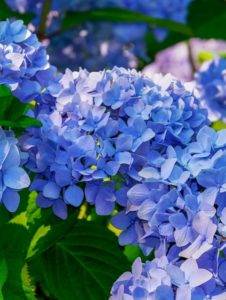
Hydrangeas bloom and their blooms come in shades of blue, pink, white, purple and vegetable.
These woody perennials go dormant in winter then reappear in spring, producing new shoots and blooming throughout spring and summer.
They grow quickly, can grow tall quickly, and can even reach a height of 15 feet. Many people like to plant it because it generates great flowering.
With flowers that start in spring and continue in summer and until dawn. fallHydrangeas bloom as perennials in zones 3 through 7. In your landscaping, hydrangea flowers are useful as a base plant.
What are the most common perennial hydrangeas?
big leaf hydrangea this is the most common type. Its perfect hardiness zone is 5 to 9. Also known as hydrangeas, florist’s hydrangeas, and French hydrangeas.
The most typical mop, lace, and mountain hydrangeas are the three different varieties of hydrangea macrophylla, also known as the bigleaf hydrangea.
As long as the winter isn’t too harsh and dry, some bulb hydrangeas can survive in colder climates.
After prolonged hot weather, hydrangeas are more vulnerable to frost exposure. Better protection may be needed in some areas.
panicle hydrangeas they thrive in zone 3 and reach heights of up to 15 feet. Compared to other hydrangeas, the leaves of panicle hydrangeas are quite easy to spot.
The leaves of these species are usually 3-6 inches long and 3-4 inches long. In some species the edges have small teeth, while in others the teeth are coarser.
They have a matte surface and a medium green color. It’s just that the hydrangeas that will grow into trees are PG varieties. Its primary stem(s) have the potential to develop into beautiful logs.
final thoughts
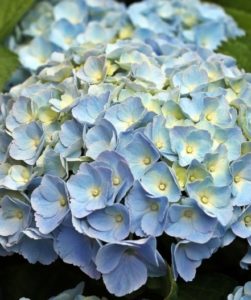 In this article, we discuss whether a hydrangea is an annual or a perennial. Hydrangeas are considered annuals in some climates, although everyone agrees that these beauties are perennial in nature.
That doesn’t mean you can’t interact with them in your garden as you wish. The decision of what to plant is ultimately up to you.
Hydrangeas look beautiful when planted in planters and pots, whether the setting is indoors or outdoors.