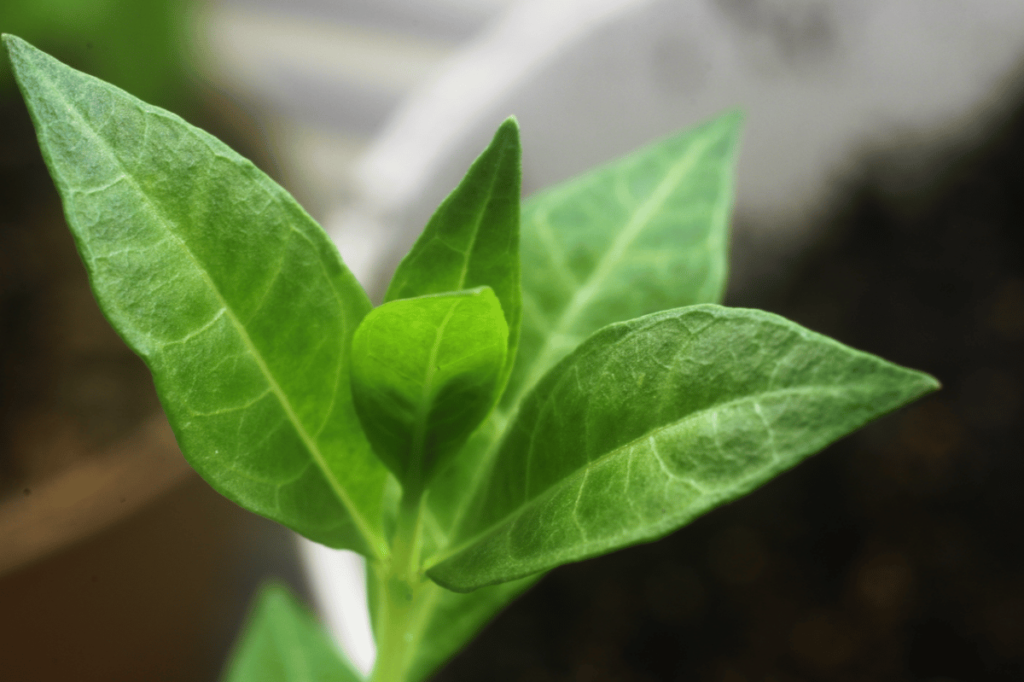

Image – Wikimedia/Dinesh Valke
There are many plants that humans have been able to take advantage of. One of them is the Lawsonia inermisa shrub which, although not very tall, is highly valued by different cultures in the Mediterranean region, especially on the African continent.
In fact, you might not know what it is from the scientific name, and even the most “recognized” common name (so to speak) might not tell you anything. What if I told you it’s also called henna? Yes, it’s related to those wonderful designs that are done on the extremities. Would you like to know everything in depth about this plant? Let’s start then.
What is the origin of Lawsonia inermis?
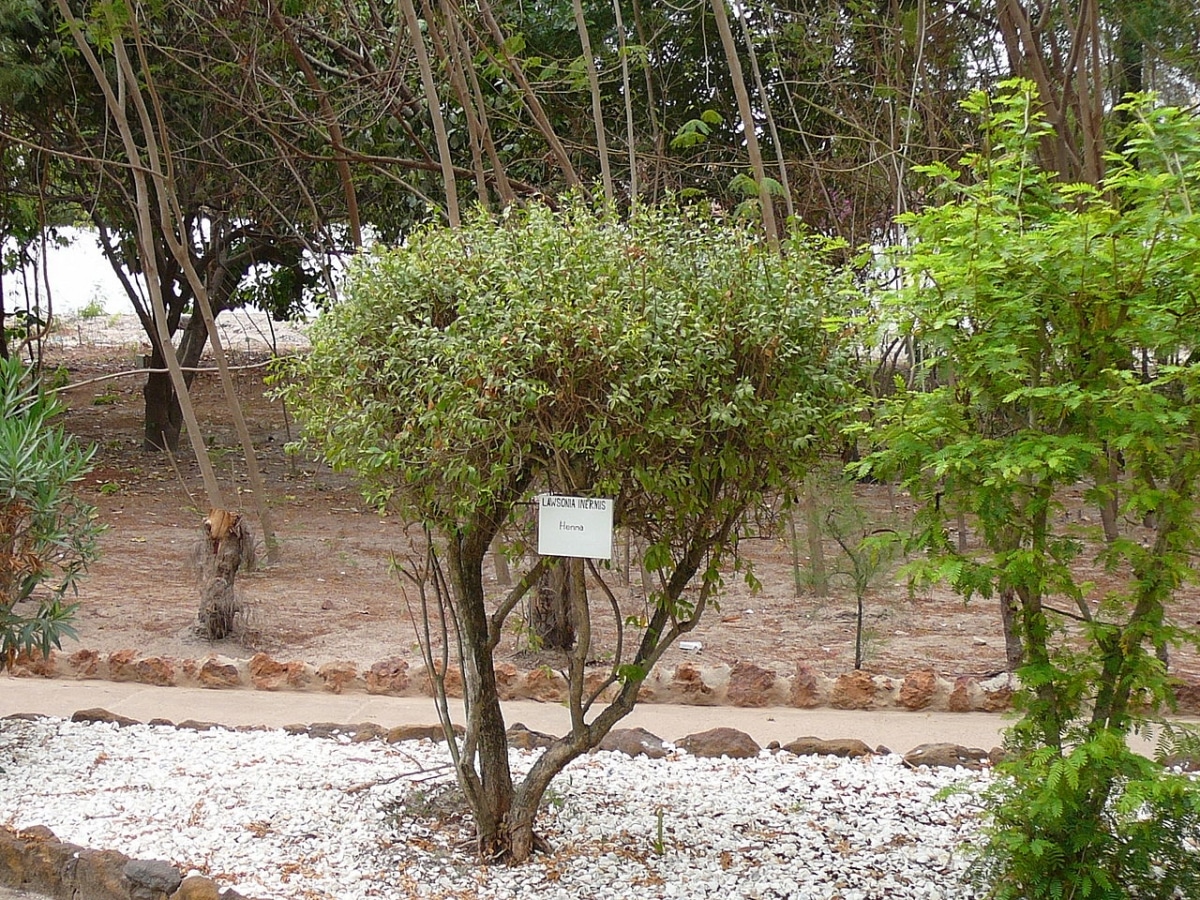
Image – Wikimedia/Atamari
The Lawsonia inermisknown as arjeña, henna, henna or henna, It is a shrub native to the Mediterranean basin. It is very popular especially in Arab countries, such as Egypt or Morocco. But today it is cultivated in other places where the climate allows it to grow without difficulty, such as in the subtropics of China or North America.
It is a plant that, as we will comment a little further down, is quite adaptable. Although it exceeds one meter in height, this does not mean, for example, that it cannot always be kept in a pot. If necessary, it can be pruned to keep it low, or even compact if desired.
How is it?
It is a thorny bush or a small tree that reaches two meters in height, rarely 7 meters.. It develops thin and long branches from which grow oval green leaves. These are retained for a long time in the plant, so that one could say that it is an evergreen species; Now, if the winter is cool, it will surely lose some of its foliage. This should not worry us, as it is a survival measure that other plants, such as Brachychiton, also possess. In the spring, new leaves grow and the plant turns green again.
The flowering season begins in spring and ends in early summer. In the northern hemisphere, this happens from May to July approximately, but it will depend on when temperatures rise again after winter and when it starts to get very hot. Its flowers are small, 1 centimeter in diameter or a little less, pink or white.and grow in terminal inflorescences.
The fruit is a rounded capsule, which measures about 1.5-2 centimeters in diameter and inside which we find the seeds.
What are henna treatments?

Image – Wikimedia/235uranium
If you fancy growing a privet or henna, you must first know the needs of this plant. This way you can decide if it is really worth it or not. And it’s that we often acquire plants because we love them – which is great – but we don’t think about whether they will be able to survive our climate.
And of course, in this way we run the risk of spending money in vain. I speak from experience: I have been in the gardening world since 2006, and if I had many good surprises, I also had many disappointments. That’s why I want you to know how you should take care of the Lawsonia inermis:
Location
It’s a bush that grows well outdoorswhenever exposed to direct sunlight. But it is important that you know that it is very, very sensitive to cold, so if frosts occur in your area, I recommend that you keep it in a jar. So you can protect it indoors when the temperature drops below 10°C.
If the climate in your region is warm all year round, you can choose to plant it in the garden -in the spring-, or give it a place of choice on the terrace.
soil or substrate
- In case you want to plant it in the ground, you need to make sure that the soil drains water well. This means you need to absorb and filter it quickly. For example, clay soil tends to have poor drainage, as it is very heavy and compact; This is why puddles easily form when it rains more or less intensely. On the contrary, a loamy soil has the ideal drainage, as it absorbs water quickly but not too much. So if yours doesn’t drain well, dig a big hole and fill it with universal soil mixed with 30% perlite.
- In case you want to have it in a jarfind one that has holes in its base and fill it with universal substrate (available here).
Irrigation
Wing Lawsonia inermis It should be watered regularly, as it cannot last long with dry soil. So, during the summers we water more frequently than during the rest of the year, as long as there is no clear rainsince if it rains, we can space out the risks.
In any case, it is important that in case of drought and very high temperatures (30 ° C or more), you pour water several times a week so that it does not have a bad time.
Subscriber

Image – Flickr/阿橋HQ
It is highly recommended to pay privet in the spring and summer. This way we will get it to push better, with more energy. For this, we will fertilize it with fertilizers authorized for organic farming, such as seaweed fertilizer, guano (ecological, not mixed with fertilizers), earthworm humus or manure.
Multiplication
henna propagates by seed, which are sown in forest containers or pots with substrate (such as the specific one for nurseries like this or coconut fiber, which you can buy here) in the spring. You must place them on the surface of the earth and then bury them no more than one centimeter, because if they are buried more they will have problems with germination. Then you need to water and place the seedbed in a sunny spot.
Cut
If you deem it necessary, you can prune it in the spring. Remove dry and broken branches. Also take the opportunity to prune those that grow a lot, keeping in mind the shape you want it to have.
hardiness
The lowest temperature it withstands is 0 degreesbut it is preferable that it does not fall below 10ºC.
What are the given uses?

Henna is a bush with different uses, which are:
- Ornamental: This is a very interesting garden plant. It can be planted alone, with other shrubs of similar size, or in rows to create a thorny hedge.
- like a dye: this is probably the best known use. It is obtained from the dried and crushed leaves and branches. This dye is generally used to give color to clothing, as well as to the body itself, be it skin and/or hair.
What did you think of the Lawsonia inermis?
Does Lawsonia inermis good to grow indoors? I have one. I live in New Jersey. I mean it’s healthy to grow in bedroom. Please let me know that.