
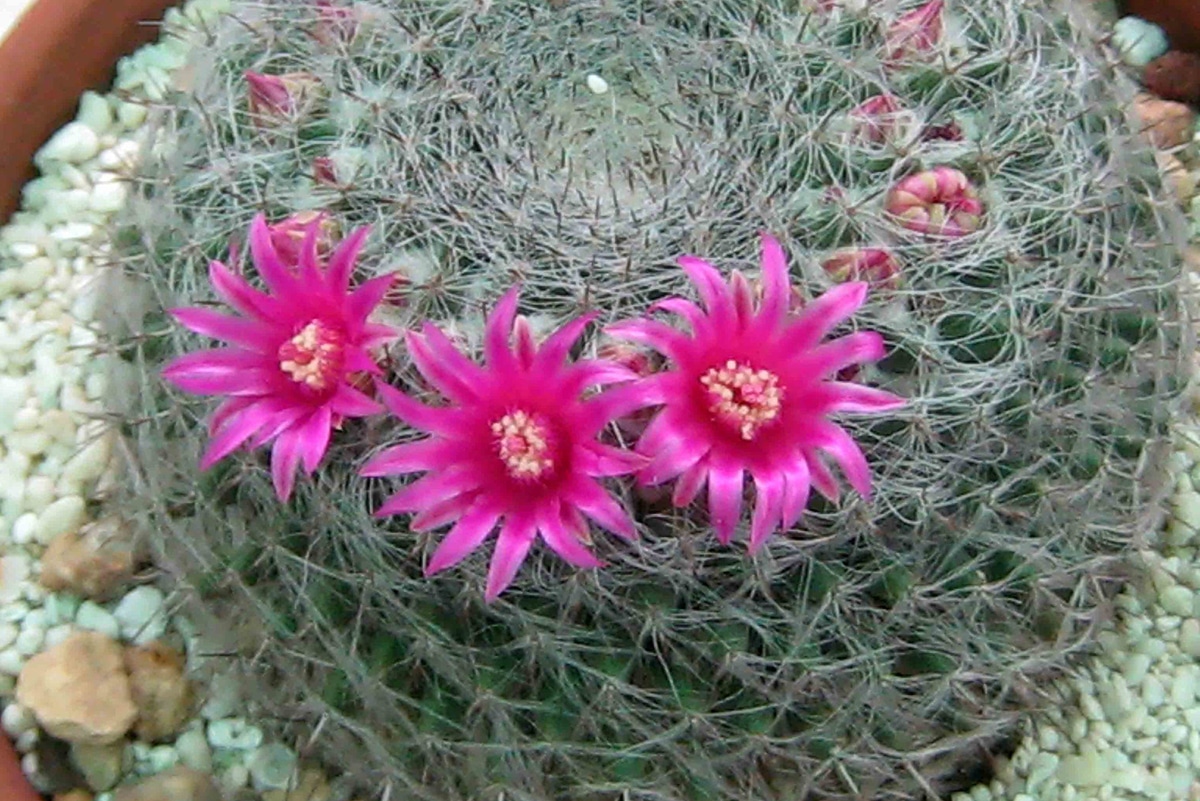
Flowering plants are not always accompanied by beautiful green leaves. Some cacti can also offer spectacular blooms in contrast to their thorns. A very popular for decorating homes is the Mammillaria hahniana, which is distinguished mainly by its woolly appearance and its beautiful purple flowers. Does that tell you anything? Otherwise, I recommend that you keep reading.
In this article we will talk about this flowering succulent. We will discuss what exactly it is, how it is and what care it requires. Luckily, there aren’t many, making it a great option for those new to the world of gardening. So be sure to take a look at this article if you are considering getting a beautiful and striking cactus that is low maintenance.
What is the Mammillaria hahniana?
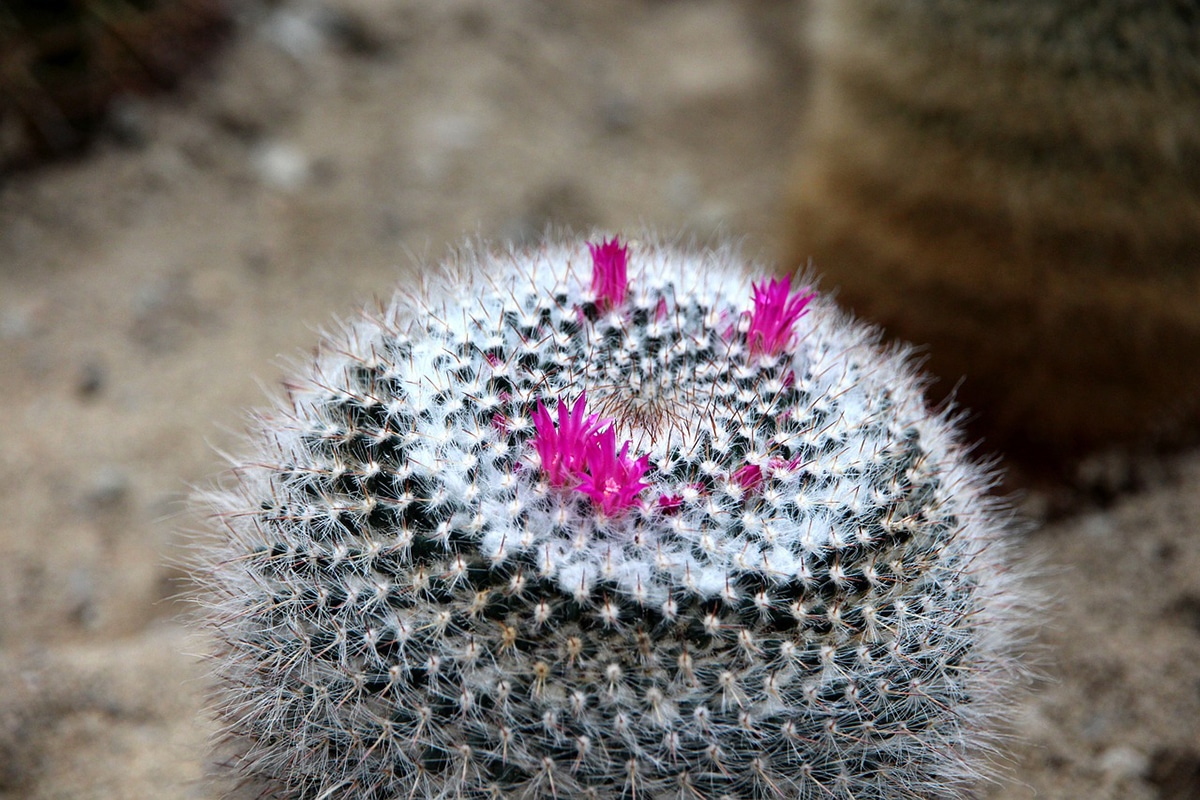
There Mammillaria hahnianacommonly called Biznaga vieja de la Sierra de Jalpan, belongs to the family Cactaceae and it is native to Mexico, although it is cultivated all over the world, as it is a highly coveted collector’s plant. It is a cactus that is usually planted in groups with other plant species in rock gardens or in individual pots. Its natural habitat is arid deserts, where high temperatures and soils with very few nutrients stand out. It is therefore not surprising that it is an ideal plant to grow in subtropical and tropical climatic zones.
Regarding the appearance of the old Biznaga de la Sierra de Jalpan, it should be noted that It is a globose, fleshy perennial that has a rather pale green color. It springs from its base and forms several groups. The stems of this cactus can be up to 19 centimeters high and reach a diameter of 20 centimeters. It’s the equivalent of a soccer ball! It should be noted that their growth is generally slow and erect.
The stems consist of several tubercles of conical shape from which the thorns emerge from the top. There are usually about 15 soft, radial, white spines that can exceed one centimeter in length. Besides, there Mammillaria hahniana it is covered with a kind of white wool. It should be noted that each tuber has between one and four central spines which are generally stiffer and smaller.
Fruits and flowers of the old Biznaga de la Sierra de Jalpan
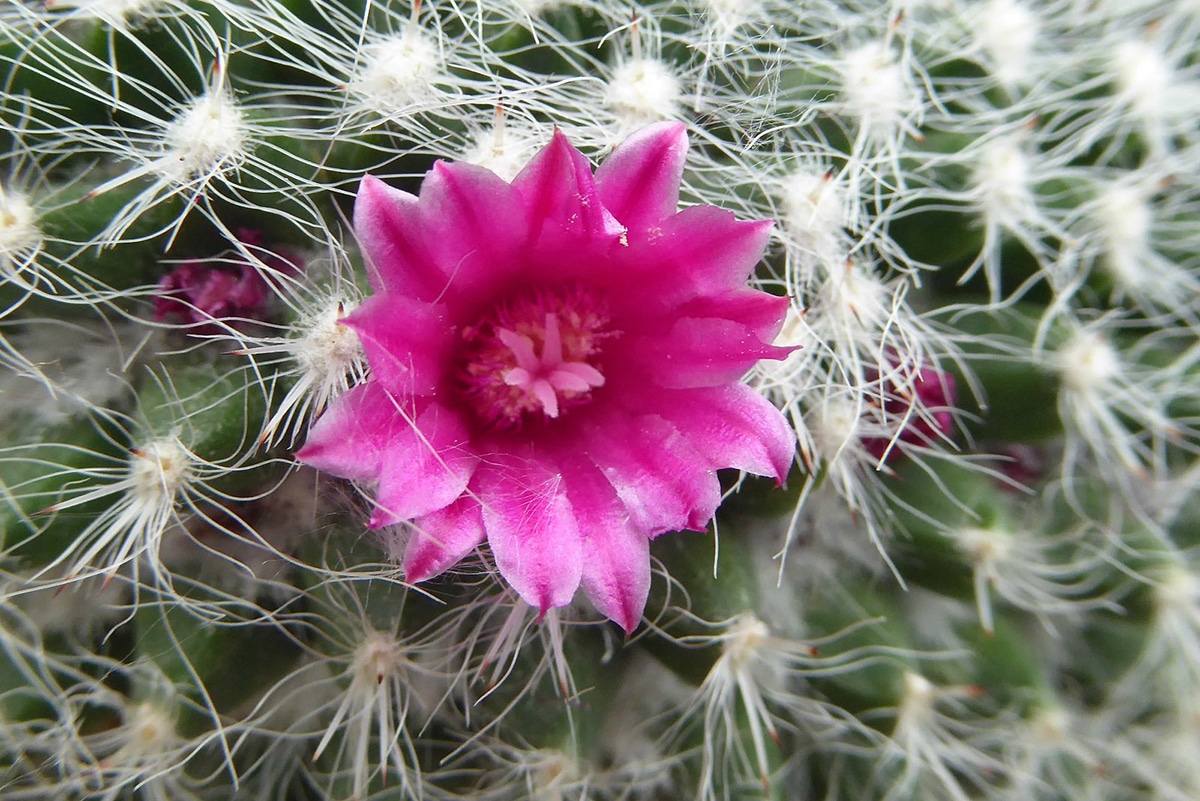
One of the most outstanding characteristics of the Biznaga vieja de la Sierra de Jalpan are its beautiful flowers that appear individually in the armpit that are on the upper sides. Together they form a sort of floral wreath. Each of them has a diameter of about one and a half centimeters. Additionally, they have very striking purple lobes. They really stand out for the pale color and woolly white appearance of the plant itself.
Regarding the fruits of Mammillaria hahniana, these tend to be globular and also purple when ripe. Their size is about seven millimeters. On the other hand, the seeds are very small and brown in color. It should be noted that they are usually very numerous.
Care of the Mammillaria hahniana
If you like this beautiful and striking succulent, you will like to know that its cultivation is very simple, suitable even for the most novice in gardening. For it to grow and develop properly, it is important to consider their basic care. They are:
- Light: Since this is a plant that typically grows in deserts, it will do best with lots of direct sunlight. However, it can also grow well in partial shade, but will have fewer flowers. It should be noted that if it receives too much shade, it may completely stop growing.
- Temperature: As you can already imagine, this cactus is used to very high temperatures. The ideal for the cultivation of this species is to provide a temperature between 22ºC and 30ºC for most of the year. We must avoid at all costs that temperatures drop below five degrees Celsius for an extended period.
- Substrate: When choosing a substrate for the soil, it is best to have 30% organic matter and 70% minerals. It is very important that it provides good and rapid drainage of water so that the roots of the plant do not rot from excess moisture.
- Irrigation: Nor will it be surprising that the Biznaga vieja de la Sierra de Jalpan requires little water, since it is a cactus. Watering once a week or every ten days during the hot season will suffice. On the other hand, in winter, the best thing to do is not to water it at all if the temperatures drop below 15 degrees Celsius.
Plagues and diseases of the old Biznaga of the Sierra de Jalpan
Usually the Mammillaria hahniana It is generally not affected by pests. Exceptionally, it can be attacked by scale insects. They are insects that feed on the sap of many plants. In doing so, they weaken the affected plants and can lead to the appearance of various diseases. Also, as they can spread very quickly, it is important to act as soon as possible.
what yes is generally more common in cacti is the appearance of fungi. These normally appear when the ambient humidity is high and the ventilation is not good. Therefore, to avoid the appearance of fungus in plants, it is important not to flood the soil, provide good ventilation and keep the plant clean. In case it is already too late, I advise you to take a look at the article on how to recover a cactus with mushroom, it will surely be useful to you!
What do you think of this spectacular vegetable? Of course, the contrast of the white wool with the purple flowers is very striking and does not go unnoticed. In addition, it does not require much maintenance, so it is ideal for decorating our home.