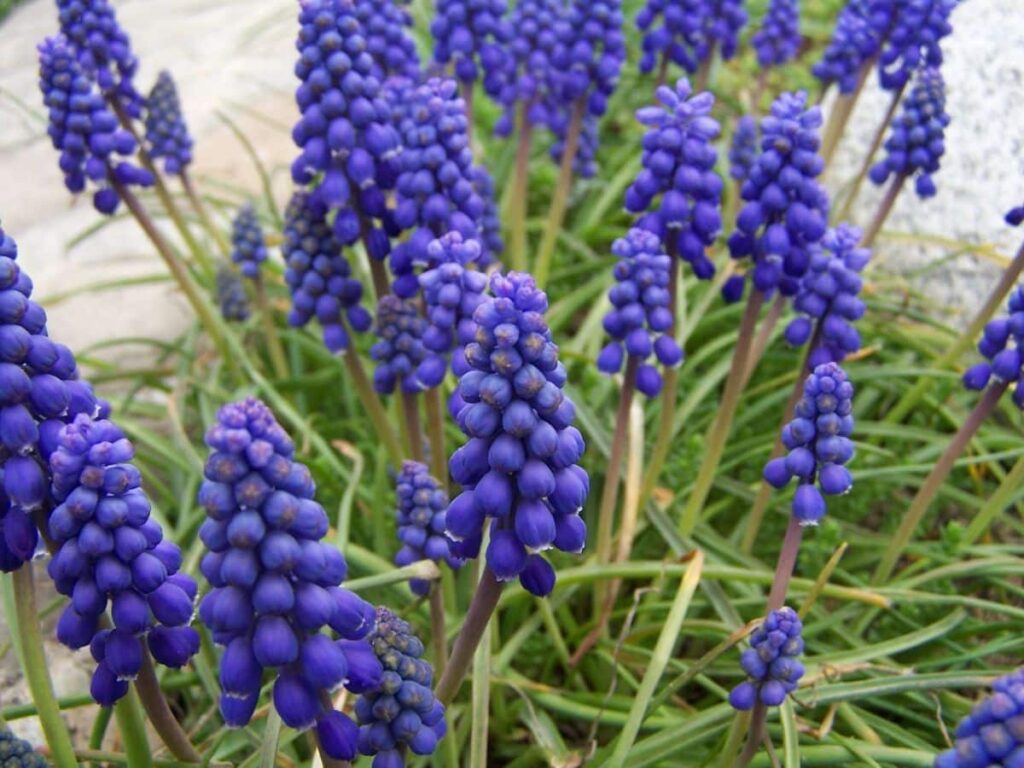
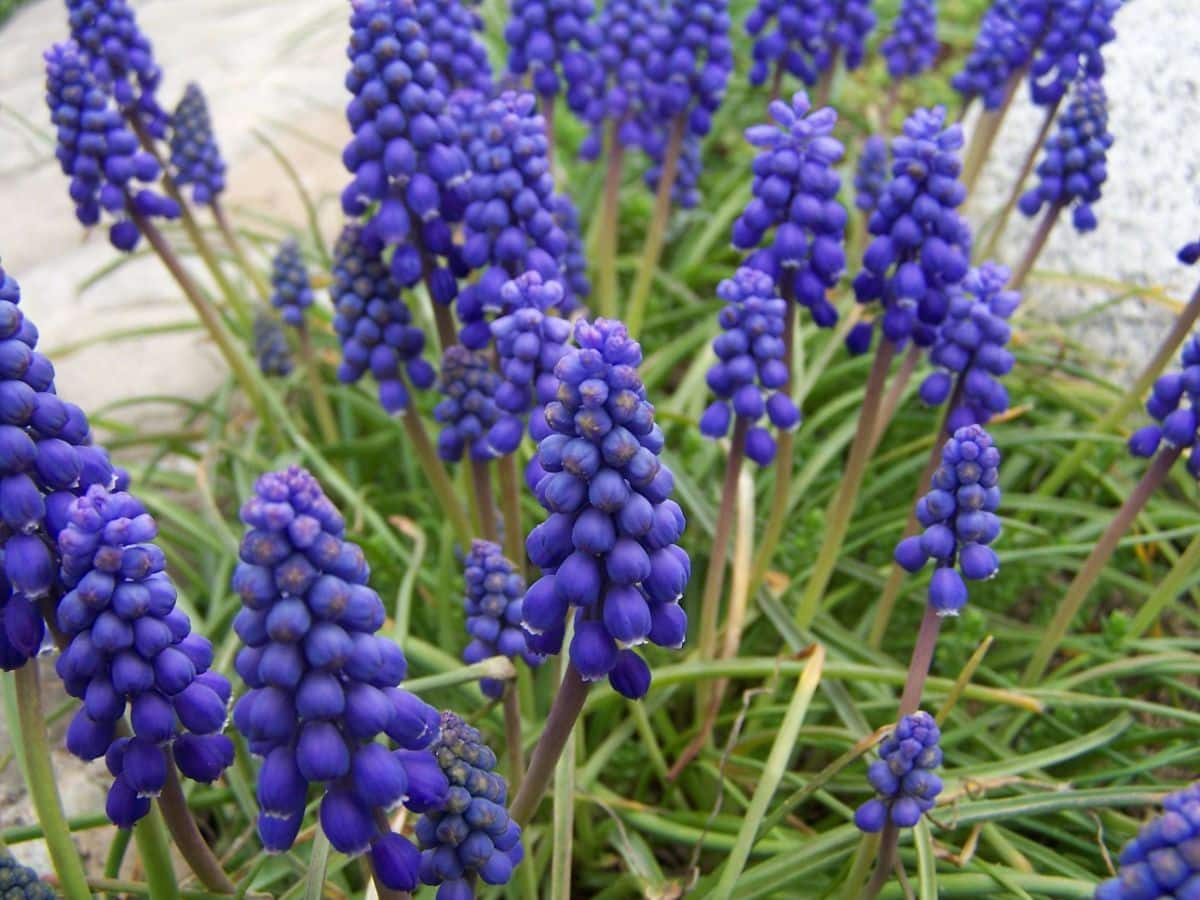
The Muscari armeniacum is actually the scientific name of a plant in the wild, sometimes considered a weed. However, her beauty precedes her and when you meet her you realize how much attention she attracts in a garden.
But, how is it Muscari armeniacum? What care do you need? Are there any details you need to know before getting it? Discover everything in what we have prepared for you.
How is the Muscari armeniacum

Also known by other names, such as muscaris, nazarenos or grape hyacinths, this plant is native to the Mediterranean, as it grow in North Africa as well as Southern Europe and West Asia. In fact, you can find around 40 different species.
In addition, it is quite old, since we know, from the documents that are kept, that it has been marketed since 1596, which makes it one of the oldest plants. That is
arrive at reach about 15 to 25 centimeters in height and the most characteristic Muscari armeniacum is its flowering. Around mid-spring, blue (usually) or white flowers begin to bloom. They do it as if they were bunches of grapes, hence this particular name that connects it to this fruit. To this must be added the fact that its name, Muscari, already prefigures something else about this plant. In case you don’t know, this word means musk (it’s Latin) and indicates that the flowers have a rather pleasant and peculiar aroma.
More specifically, the Muscari armeniacum It is one of the plants keeps the flowers longer, and also one of the most used to attract bees. Although the usual thing is that the flowers are blue, the truth is that you can also find species that are white, pink, purple or even have two colors at the same time.
care of the Muscari armeniacum
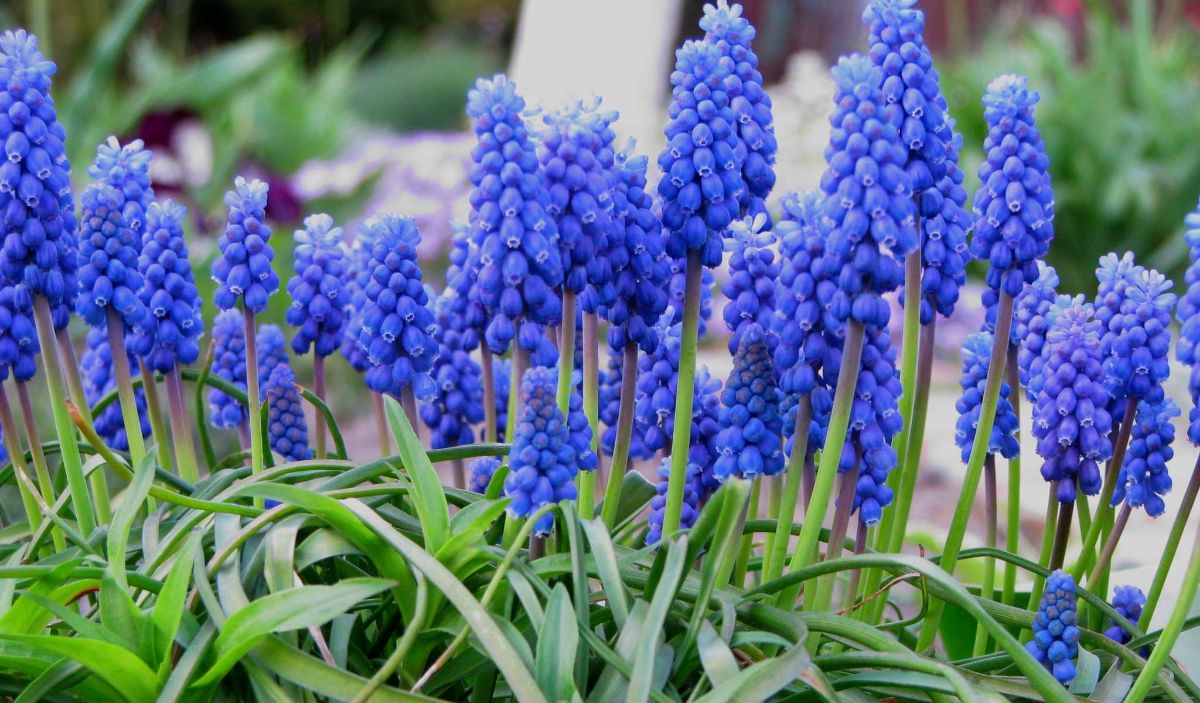
If after what you have read, you have been struck by your garden, how about taking a look at its maintenance? You should know that it is quite easy to maintain and maintain, especially since it will hardly need you to be aware of it. Here we leave you everything you need to know.
Location and lighting
The Muscari armeniacum it can be both in full light and in partial shade. It is a plant that adapts quite well to light and likes it, so you shouldn’t have too many problems. In addition, Due to its Mediterranean origin, it is used to the sun.
It is best placed outdoors, but it can be both in the ground and in a pot, as it adapts well to both.
Temperature
If we were to tell you what is ideal for this plant, then we would say that it goes from 10 to 25 degrees Celsius. But the truth is that tolerates cold and heat without problems. Of course, if it’s too hot, it may need a little more water so as not to dry out.
Substrate
The Muscari armeniacum It is not a very greedy plant, because the truth is that it adapts to everything. Yes it’s true that, if you provide good drainage it will be much better, because you will get it to grow stronger by having space for the roots to grow. For this reason, especially in a pot, you should mix the substrate with perlite or similar.
If you go straight to the garden, some professionals recommend at least two weeks before, the soil is prepared by stirring about 20 centimeters deep and mixing it with compost and peat so you have all the nutrients you need.
Transplant
must be done every 3 years because when it flowers it uses a lot of the nutrients of the earth and it is necessary to renew them. In pots, you may need to transplant even earlier as it needs more space, especially if it grows fast enough.
Irrigation
This plant is not one of those that needs a lot of watering. In fact, it hardly needs moisture, and irrigation should be rare and not too much. That doesn’t mean it doesn’t need water, but you don’t need to be as aware of it as other plants.
If you go too far with the watering, you can suffer from bulb rotwhile being a breeding ground for other diseases.
Once it blooms, the watering is stopped a bit to avoid the above, so that it won’t give you any trouble.
Cut
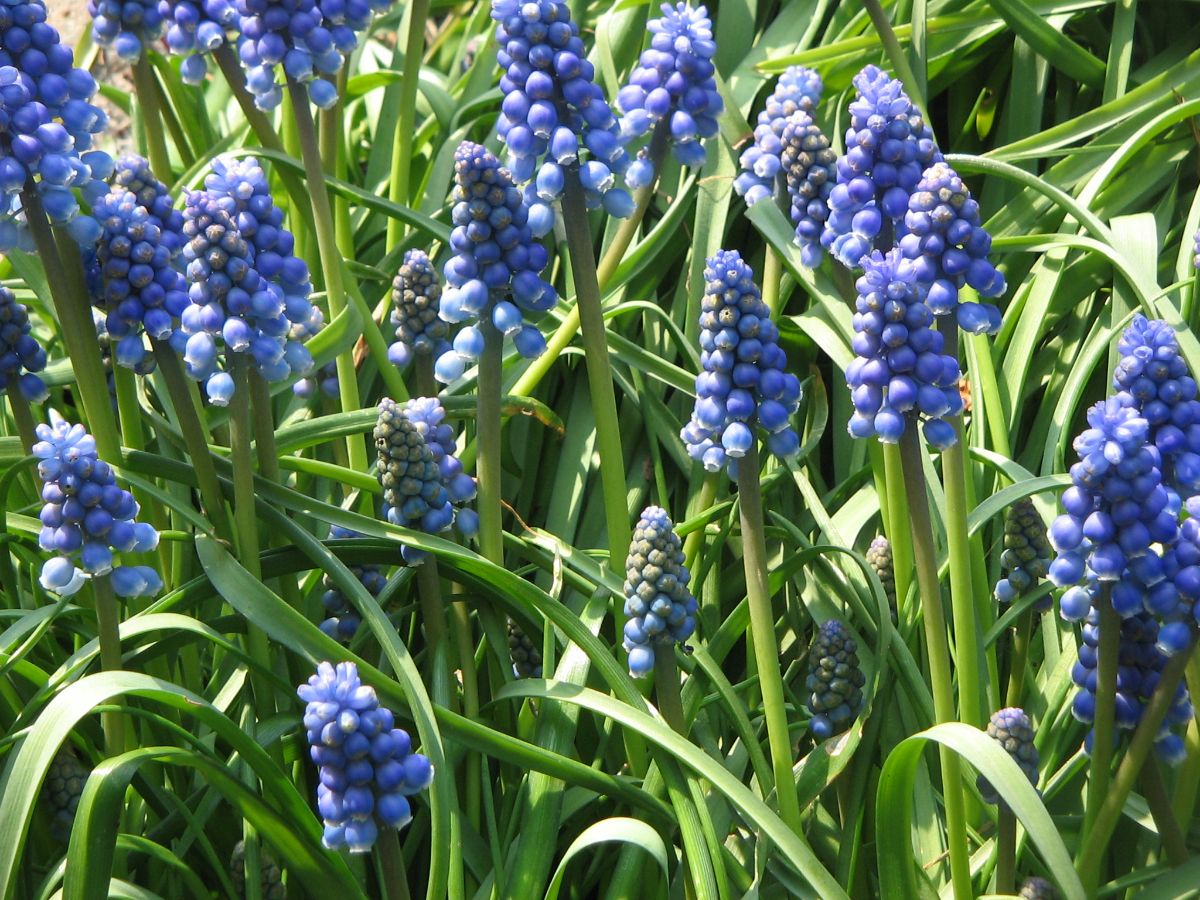
The plant itself does not need to be pruned. However, it is true that at the end of flowering, flowers and faded stems remain and this can make the appearance of the plant and the garden in general ugly.
Therefore, it is recommended to cut it to, not only improve its aesthetics, but also help in new blooming or to prevent it from losing energy in this process.
Also keep in mind that this is a bulbous plant, so there will come a time when it will hibernate for a few months to regrow in early spring (the bulbs will last you a few years, but as it gives off shoots, you will have no problem keeping it for a long time).
Plagues and diseases
Digging a little deeper into this topic, you should know that this plant is not very prone to pests, as it tolerates them quite well. But in the case of diseases, it is not the same thing.
In fact, the main one and the one that can affect you the most is the one that has to do with a excess irrigation. It is better to water little than to suffer from diseases related to it.
Multiplication
To play the Muscari armeniacum you have nothing to do. In fact, it only does this through short spikes that arise from the bulb. Still, yeah you can divide the main bulbs, but only every two years.
Apps
One of the main uses given to Muscari armeniacum It is decorative for gardens. It is mainly used for associate it with other bushy plants, but also as a ground cover or to cover areas of the garden where there are no other plants (for example, to put these plants in place of grass, or in combination with it.
We haven’t been able to find any food or health uses, so either it’s not used or that knowledge hasn’t been disclosed.
What do you think now of the Muscari armeniacum?