
Without a doubt, parsley is one of the most consumed aromatic plants in the world. Its delicious leaves add a touch of flavor to various dishes. It is therefore not surprising that it is a vegetable grown in many homes. Although it is primarily known for its leaves, it also has other lesser-known components that are edible. In this article we want to focus in particular on the parsley flower.
If you want to know more about her, I recommend you keep reading. We are going to explain to you what it looks like and what are the uses that we can give it. After more than two thousand years of cultivation, it is not surprising that we have learned to use different parts of this vegetable, is it? Parsley went from being a sacred plant to being used in medicine and then in gastronomy. I hope this information is of interest to you!
How is the parsley flower?

We all know more or less what parsley leaves look like, which are popular in various culinary dishes around the world. But if you’ve ever grown it at home, maybe you’ve seen the parsley flower at some point. Flowers are usually removed as soon as they appear so that the plant continues to grow strong and healthy.
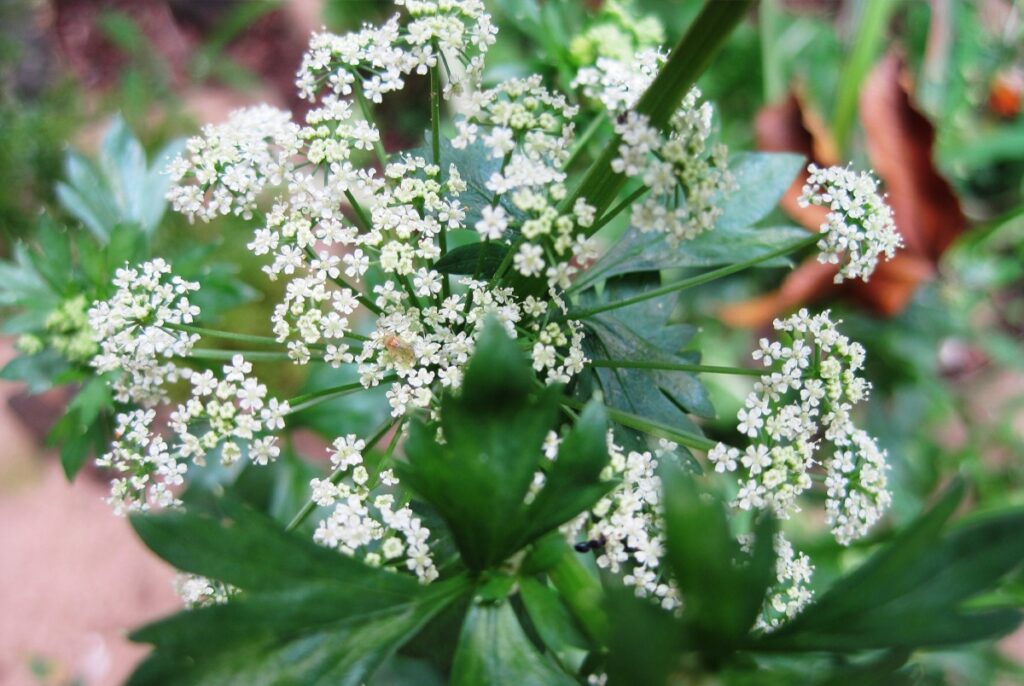
As a rule, parsley flower appears in the second year after planting this vegetable. They are really groups of many small flowers that come together in umbels. and which grow from a fairly long flower stalk. Usually their color is white with a greenish tone when they are still very tender, over time they become yellowish (very similar to celery flowers). The seeds they produce are oval and flattened, with grayish and brown tones. As for the flowering period, it is usually in the summer.
benefits of parsley
It’s no mystery that parsley has many health benefits. Although the leaves are mostly eaten, the flowers are usually more intense. This plant is rich in minerals and vitamins, as long as it is eaten raw. Cooking can remove some vitamin components. But fresh, this vegetable provides high levels of vitamins A, C and K. Indeed, its concentration of vitamins is three times higher than that of an orange. Additionally, the amount of vitamin K present in parsley is six times the amount generally recommended. It should also be noted that it helps absorb calcium and is rich in fiber.

Related article:
grow parsley
Regarding the medical uses of these vegetables, let’s see what they are:
- Diuretic
- Digestive
- antioxidant
- detoxifying
- blood endurance regulator
- Activation of the immune system
Historically, parsley was used to fight cancer, anemia and arthritis and was also used as an antimicrobial, expectorant, laxative, blood pressure lowering and aphrodisiac. However, noThere are no scientific studies that support the effectiveness of these effects.
At the culinary level, parsley, especially its leaves, It is used as an aromatic herb in a wide variety of foods. In general, it combines very well with garlic, since it neutralizes the strength of its flavor, obtaining a good balance. In fact, the combination of garlic and parsley is also known as “ajillo”. So whenever you see a dish that says “garlic”, that means it comes with garlic and parsley. This combination is very common, especially with shellfish and fish.
What to do with parsley flowers?

Apart from the leaves, other parts of parsley can also be eaten, such as the seeds, roots, stems and also the flowers. These different elements allow us to add new nuances of flavors and textures than using only the leaves. Focusing on the parsley flower, It should be noted that it generally has a more acidic and anise flavor. It may even have a bitter and spicy touch at the end. As for the texture, it is generally rough and grainy, thus providing new sensations when tasting this delicious aromatic plant. These leave a slight metallic touch, very similar to carrot and celery.
When it comes to creating dishes with an intense and fresh touch, we can take advantage of the touch that both the buds and the flower of parsley give it. These items are ideal for adding to salads, lemon balm, mint tabbouleh, arugula leaves, tarragon and other edible vegetable leaves or flowers. The result will be truly spectacular dishes. The seeds can also be eaten as a spice. They are very rich in stews with others such as fennel, dill, cumin or coriander. It must be said that the seeds are frequently used to make infusions, as they have many medicinal properties.
Do you dare to try the parsley flower?