

Image – Flickr/stephen boisvert
Sempervivum are one of the most cold-resistant succulents; in fact, they are probably the hardiest, because They can withstand temperatures up to 20 degrees below zero.. Of course, they don’t like the extreme heat that can exist in areas like the Spanish Mediterranean, but in these places they can be had without a problem if they are protected from direct sunlight.
But the question is: How many types of Sempervivum are there? Well, about 30 species have been described, although unfortunately not all of them are commercialized. We will see here those that are relatively easily found for sale in nurseries and garden centers.
10 varieties of Sempervivum
Take a look at which ones are easier to get:
Sempervivum arachnoideum

Image – Wikimedia/H. Zelle
The Sempervivum arachnoideum It is the most curious species, since it seems that the center of each rosette is filled with cobwebs, which is why it is called eternal spider or eternal cobweb. It is native to the Alps and has green leaves grouped together to form a basal rosette. It measures about 8 centimetersand like all varieties, it tends to produce suckers, which is why it can reach 30 centimeters wide.
Sempervivum calcareum
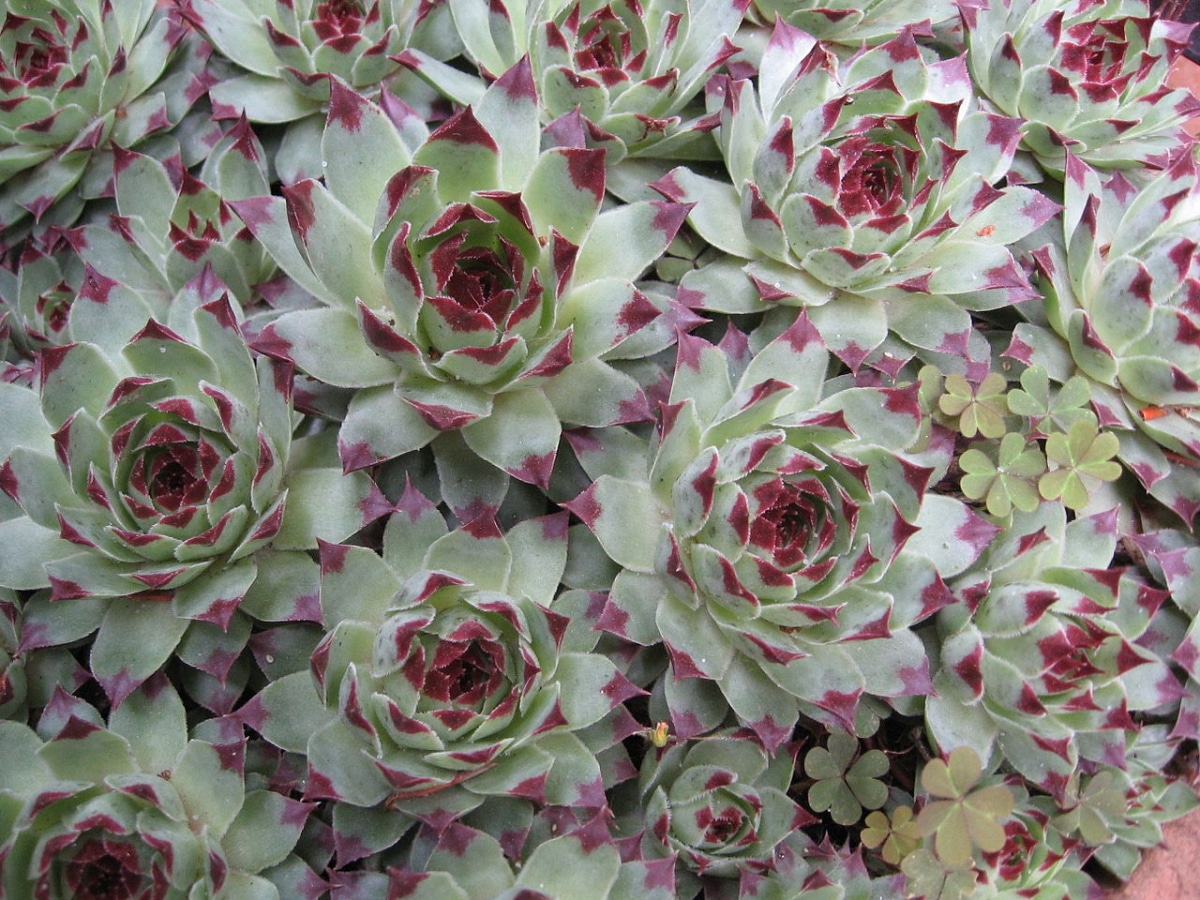
Image – Wikimedia/Cillas
The Sempervivum calcareum is a plant also native to the Alps, which reaches a height of about 10 centimeters and a width of about 40 centimeters -including suction cups-. It forms rosettes of blue-green or glaucous leaves with red tips. Several cultivars have been extracted from it, such as ‘Extra’ or ‘Guillaume’.
Sempervivum ciliosum
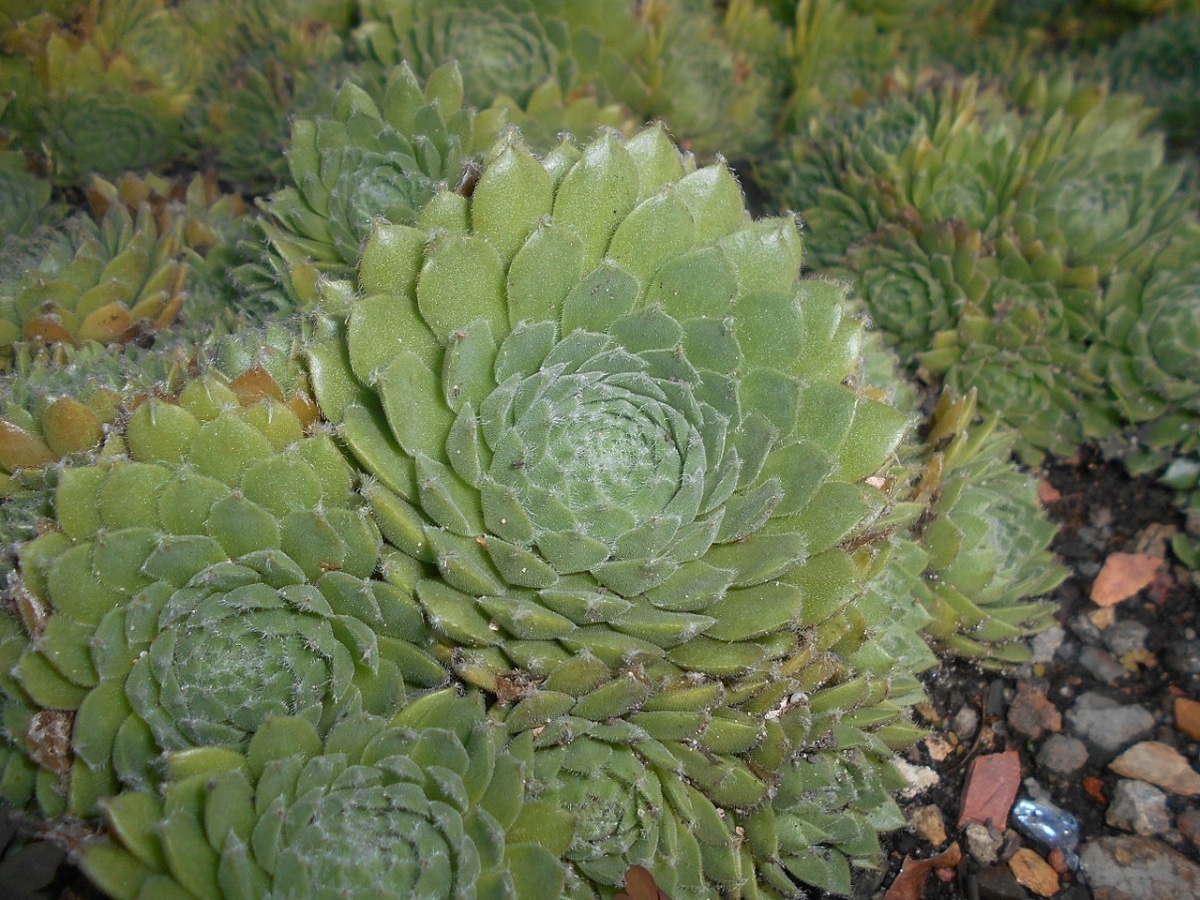
Image – Wikimedia/Salicyna
The Sempervivum ciliosum It is a species native to southeastern Europe. It reaches 10 centimeters high and can be up to half a meter wide.. It can be confused with S. calcareum, but this one has green leaves, with only a reddish point that can go unnoticed at the end of them.
Sempervivum grandiflorum
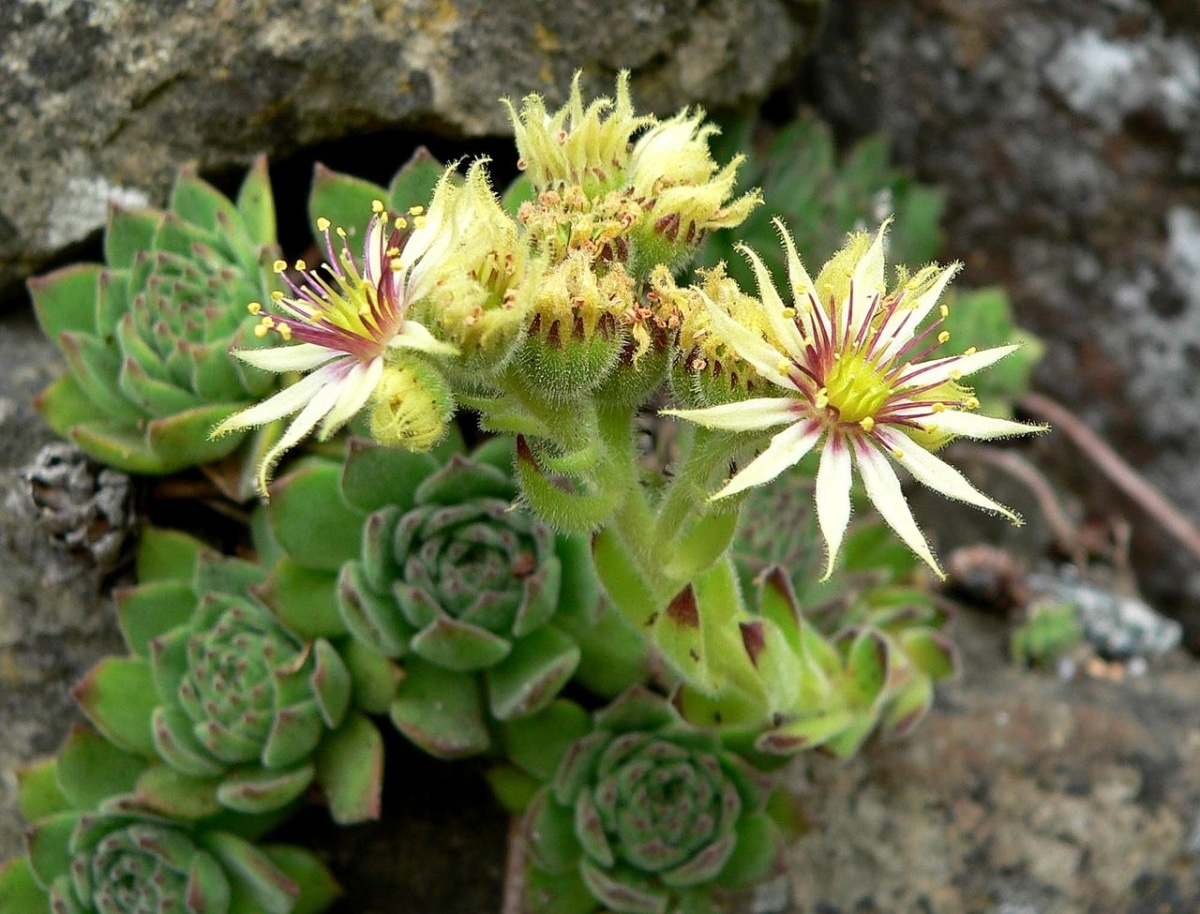
Image – Wikimedia/Stan Shebs
The Sempervivum grandiflorum is a succulent native to Italy and Switzerland that reaches an approximate height of about 7 centimeters and a width of about 35 centimeters. It grows forming rosettes of green leaves with red tips. The family name “grandiflorum” refers to the flowers, which are somewhat larger than those of other species, measuring almost 2 centimeters in diameter.
Sempervivum globiferus
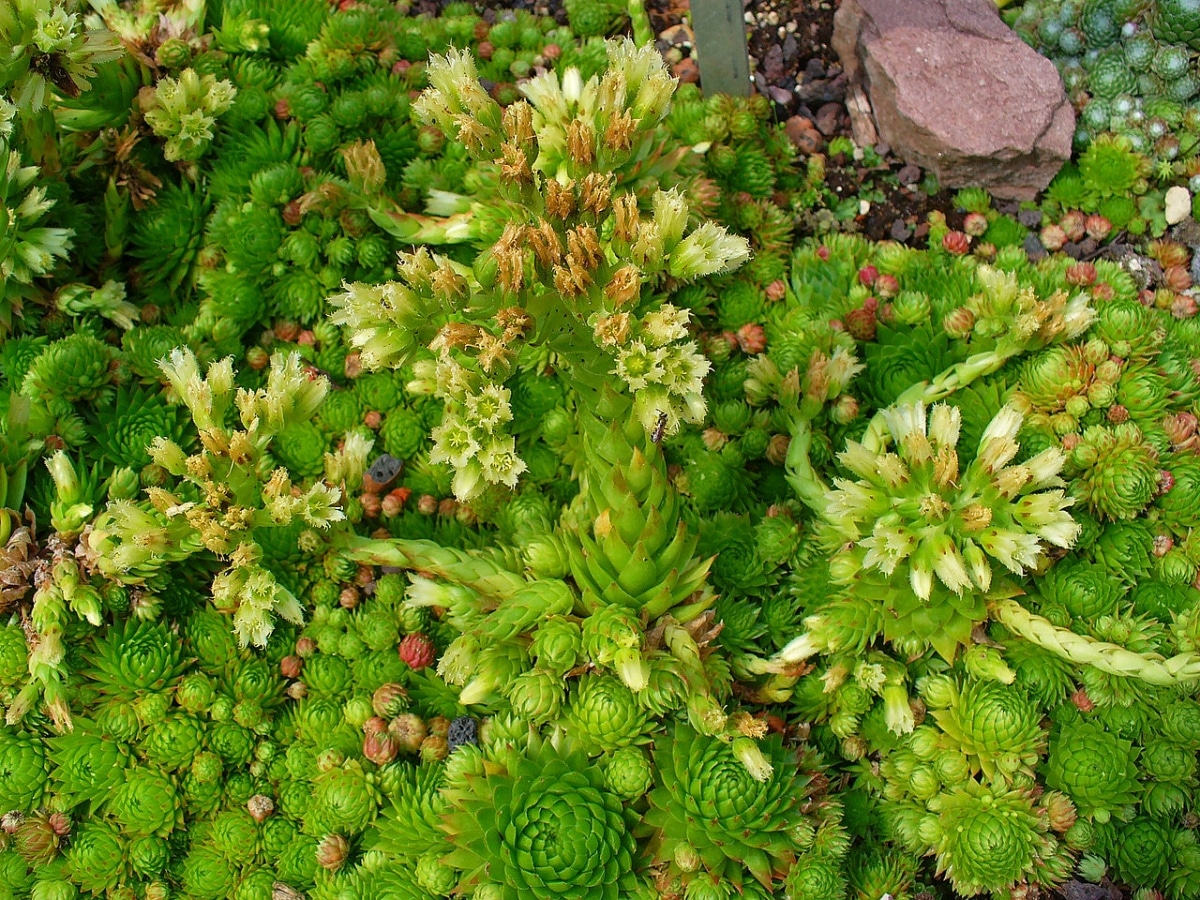
Image – Wikimedia/H. Zelle
The Sempervivum globiferus it is one of many species that grow in Europe. It is found in the Alps, the Carpathians and in Russia. Unlike others, it develops rosettes of spherical or globose leaves, hence the surname “globiferum”, which means globe-shaped. This one is green, but if it is very exposed to the sun, it acquires reddish tones. It can measure about 6 centimeters high for about 40 centimeters in diameter.
Sempervivum heuffelii
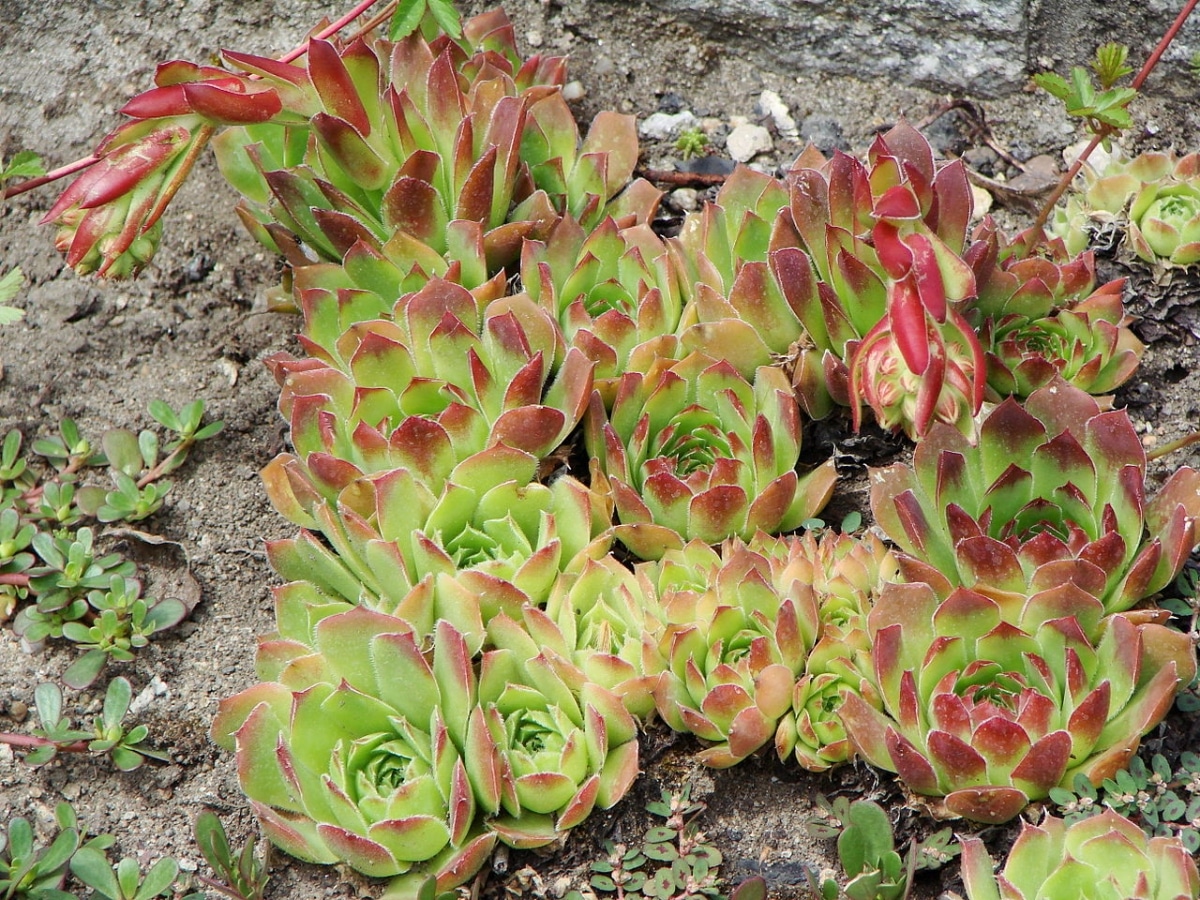
Image – Wikimedia/Guérin Nicolas
The Sempervivum heuffelii It is a succulent plant that grows in Europe, specifically in Greece, Bulgaria or Romania, among others. It grows forming rosettes of green leaves with reddish tips that They can measure about 8 centimeters high by about 40 centimeters wide..
Sempervivum macedonicum
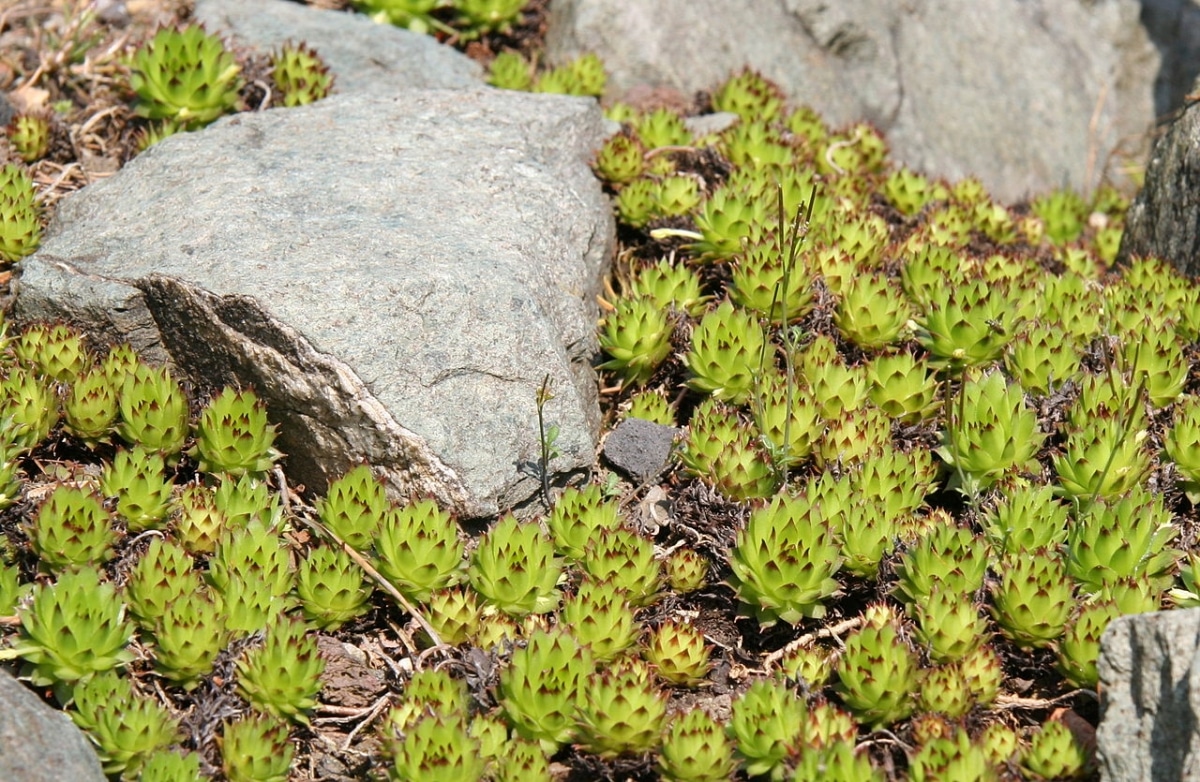
Image – Wikimedia/Michael Wolf
The Sempervivum macedonicum It is a variety originating in Europe which forms rosettes of green leaves with dark red tips. These they measure about 5-7 centimeters in diameter by about 7 centimeters high. Of course, consider that it can pull off suckers, so it is important that it is planted in a wide pot.
Sempervivum montanum

Image – Wikimedia/Remih
The Sempervivum montanum It is a variety originating from the Pyrenees, the Alps and Corsica. It only grows up to 5 centimeters in height, but by adding the suckers, it can reach 40 or 50 centimeters in width.. The leaves are green, with reddish, hairy tips.
Sempervivum tectorum
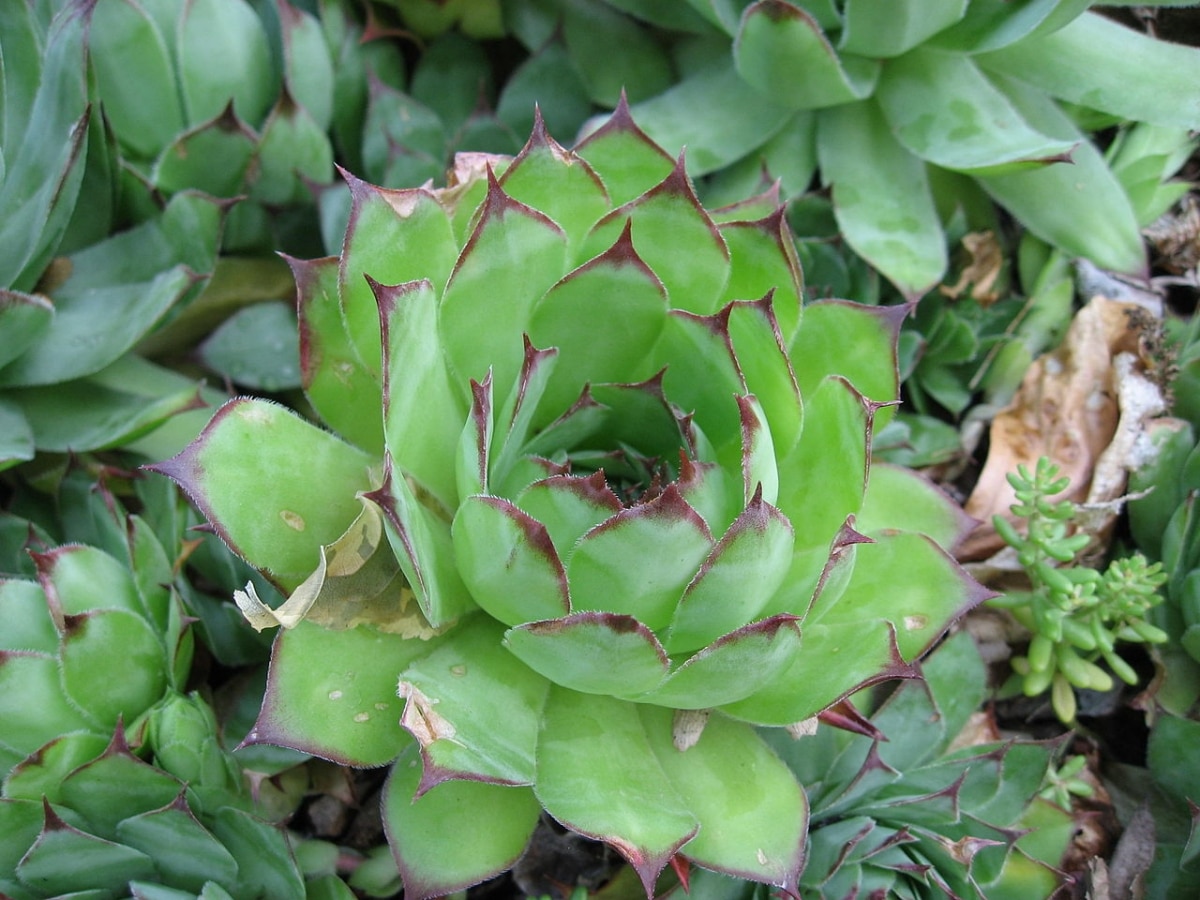
Image – Wikimedia/Line1
The Sempervivum tectorum It is a plant known as the immortal of the roofs, native to the Pyrenees, the Balkans and the Alps. It grows up to 30 centimeters high and can be up to 30 centimeters wide.. The rosettes are green with red tips.
Sempervivum vicentei

Image – Flickr/José Maria Escolano
The Sempervivum vicentei It is a succulent native to Europe. Its leaves form rosettes about 9 centimeters in diameter by about 5 centimeters high.and are green with purple tips.
How are they cared for?
Finally, if you plan to get some, or if you already have some and you don’t know how to take care of it, don’t worry. Here’s how to take care of it:
- Location: they are succulents that resist the cold well, so the best thing to do is leave them outside. And if we also live in an area where the summers are very hot, with temperatures above 30°C, we will leave them in the shade or partial shade.
- Ground: if they are going to be in pots, we will put a substrate for cacti and succulents like this one; and if they will be in the garden, it is important that the soil is well drained, that is, not waterlogged.
- Irrigation: just water them when the soil is dry.
- Subscriber: They can be fertilized in the spring and summer with a fertilizer for succulents like this one, following the directions for use.
- Multiplication: the easiest and fastest way to get new specimens is to separate the suckers in spring or summer and plant them in pots.
Where to buy sempervivum?
You can get them by clicking below:
Which of these different types of sempervivum that we showed you did you like the most?