
If you purchase an item through links on this page, we may earn a commission. Our editorial content is not influenced by commissions. Read full disclosure.
Owning a horse is exciting, but bringing home your first horse can also be overwhelming. Providing day-to-day care is often full of questions. Am I doing this correctly? Am I doing enough? What sort of daily grooming routine should I have with my horse?
For horses, one of the most important aspects of daily care is grooming. Well cared for horses not only look better, they are also healthier than their poorly cared for counterparts.
But what constitutes “well groomed” can vary greatly depending on your horse’s lifestyle. Let’s explore the details.
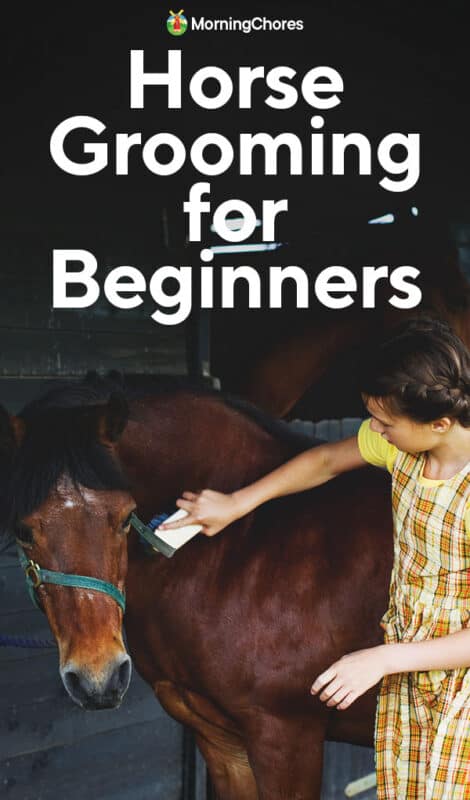
Determine grooming needs
Horse owners, like so many animal lovers, are often overwhelmed by the expectations of a “pet parent” culture. New horse owners are particularly vulnerable to advertising designed to sell them all the latest gadgets.
Despite what the ads say, horses don’t need rooms full of expensive hoof treatments, buckets of brushes and specialized blankets. Like all animals, they simply need constant, knowledgeable care, quality food, and a few species-specific tools to stay healthy.
Most horses these days spend their days in stalls with short periods of grazing on pasture. Boarded horses and those kept on small areas do not always have hours to spend in the pasture.
If your horse is stabled most of the day, he will need more intensive daily grooming.
This may seem counter-intuitive. The pastures are full of dirt, grass and mud! But out in the field, your horse can do a lot to maintain its coat and skin.
Rolling in the dirt and grazing in the sun does a lot to reduce parasites and skin problems. Consistent movement as he grazes and plays with other horses will help him wear down his hooves naturally.
In the stable, your horse does not have access to any of its natural means of grooming. He relies on you to do everything. If your horse spends most or all of its free time in the pasture, it does not need full daily grooming.
In fact, he’s happiest with thorough grooming once or twice a week or before and after a big job. The rest of the time you can brush him well with a dandy brush and clean his hooves before and after working with him. This is especially true if your horse is covered in rain or snow.
Of course, any horse with mud stuck in the area where the saddle and bridle go should be groomed to remove the mud, which can irritate his skin. Hooves must be picked before and after each outing.
Prepare yourself and your horse
Full grooming is a workout. Your horse is a big animal – there are a lot of them to clean. For head to tail grooming, you will need a rubber curry comb, a stiff-bristled dandy or tampico brush, a soft-bristled body brush, a mane comb, a hoof pick, rubbing cloths and hoof oil or conditioner.
It may seem like a lot, but remember that your horse has three very different parts of his body to groom. He has long hair from his mane and tail. Then he has short hair and skin on his body.
Finally, he has hard hooves – the health of which is absolutely essential to his ability to stay healthy and active. Each of these areas requires special attention.
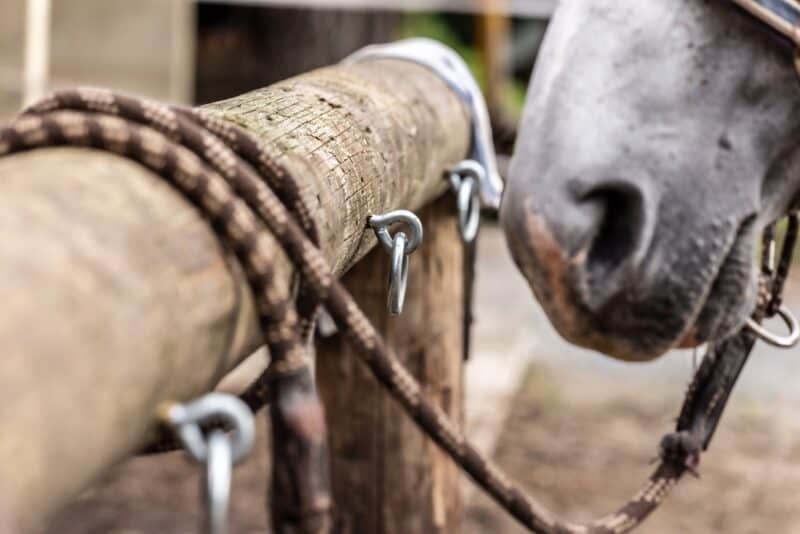
Always tie your horse to a sturdy post or beam before grooming him. If possible, use an easy-to-manage clip or quick-release knot, just in case you need to free your horse quickly.
Take care of the body
Some people start with the feet and then move on to the horse’s body, but I’ve always preferred going down. If you are grooming a nervous or restless horse, it is sometimes helpful to start with a relaxing brushing before handling his feet.
Rubber Curry Comb

Start with the rubber curry curry. Do not use the steel ones, they are too rough.
If your horse is not shedding its winter coat, is sweating, or is itchy, you can sometimes skip this step. Use your rubber curry in circular motions – making large and small circles along your horse’s neck, shoulders and body.
If you brush from neck to tail, dust and debris will move away from his eyes and behind him. As you brush, the curry comb loosens loose hair, increases circulation and feels amazing for your horse.
Most horses will lean over the curry comb when you work it regularly on their body. Avoid using the curry comb on your horse’s legs, face and sensitive areas. Apply firm pressure and revisit the same areas several times to make sure you’ve done it right.
Also keep in mind that some horses are extremely sensitive and have thin skin. Thoroughbreds often have a reputation for having sensitive skin. In this case, use something softer, like Epona Tiger Tongue.
The Dandy brush

The dandy brush is designed to remove dust, sweat and loose hair from the surface of your horse’s coat. This is a stiff bristle brush, perfect for removing any loose hairs and debris left behind by the rubber curry comb.
The dandy brush is also a great brush to use just before tying up a horse that has been out in the pasture, as it gets rid of anything that might get caught under the saddle and chafe.
Use the dandy brush to brush in gentle, short strokes along your horse’s back, neck, shoulders and flanks. Do not use this brush on your horse’s legs, belly or face. It is too firm to be comfortable on the more sensitive skin in these areas.
Use firm pressure. As you brush with the curry comb and dandy brush, watch your horse for reactions that indicate sore spots, aches or any other signs of illness and injury.
Finish with the body brush
The body brush is the softest brush you will ever use on your horse. It is ideal for brushing your horse’s sensitive areas and making his coat shine. Some people use a smaller body brush on the horse’s face because the full size body brush can be cumbersome.
Continue brushing from head to tail, moving in the direction of hair growth. As you brush your horse’s legs with the body brush, look for any signs of injury. Swelling, tenderness, nicks and cuts are all common issues to look out for.
Hoof care
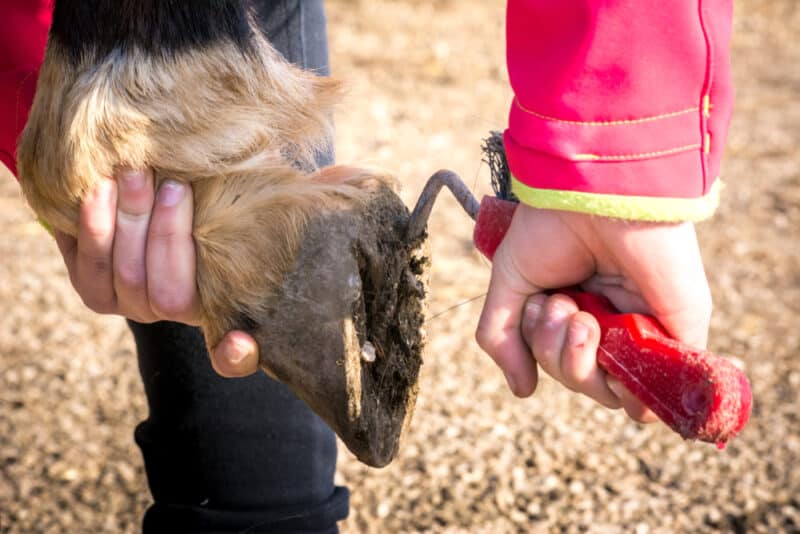
Now that you’ve made your way to your horse’s hooves, it’s time to examine them. Take your hoof pick and lift each hoof individually.
To lift a horse’s hoof, stand parallel to your horse, facing its tail. Gently lean against him, running your hand along his leg. He should lift his hoof for you, although some horses need a few lessons in grooming etiquette first.
When you have his hoof in hand, take a look at it. Use the pick to gently remove any debris. From back to front, pay special attention to the frog (the softest V-shaped area of the hoof) and under or around the shoe (if your horse is shod).
Your goal is to prevent anything from getting lodged in the hoof. Stones and the like can cause your horse a lot of pain.
As you clean, look for cracks, swelling, or overgrowth. On average, horses should have their feet clipped every 5-8 weeks. Thrush, a common disease – especially for stabled horses – is also easy to spot. Look for a dark discharge in and around the frog.
If you notice serious problems like thrush or cracks in the hoof, it’s time to call the farrier.
In the summer, or if your horse’s hooves tend to crack, use hoof oil daily to condition them. Hoof oil is one of those grooming items that isn’t always necessary, but it can be a great addition to your grooming kit.
Final touches
Alright, you’re almost done! Once you have finished his hooves, your horse needs his face and tail (under the tail) to be wiped down with a soft cloth. Then comb his mane and tail, and he’s ready.
Maintain sensitive areas
Use a soft cloth to wipe your horse’s eyes, ears and face. Watch his eyes as you do to see if they are watery, red, or irritated. Take a look at your horse’s ears to check for mites or ticks.
After wiping your horse’s face, open his mouth and look at his teeth. You can tell a lot about a horse’s health by looking at its teeth. Any sign of inflammation, sores or loose teeth is problematic.
If you notice any serious or persistent dental problems, call your veterinarian and schedule an exam. A healthy horse’s mouth has strong teeth and firm, salmon-colored gums. If your horse’s gums are too pale or too shiny, there is a problem that needs to be corrected.
mane and tail

Finally, use your mane comb to gently untangle your horse’s mane and tail. Work slowly, taking small sections at a time. You can use a detangler (specific for humans or horses). Don’t tug on your horse while combing; instead, choose carefully through the tangles.
When combing the tail, stand to the side so you don’t accidentally get kicked if your horse spooks something. If the mane and tail are particularly tangled, start by using the dandy brush to loosen some of the easier tangles before combing through.
Was this article helpful?
Yes No ×
We appreciate your helpful feedback!
Your response will be used to improve our content. The more feedback you give us, the better our pages will be.
Facebook pinterest