The best soil for indoor succulents is soil specially designed for “succulents and cacti” containing a high content of inorganic matter with different particle sizes to ensure that excess water drains off easily. Succulents and cacti mimic the preferred soil conditions of the succulents natural habitat.
It is important that suitable soil is not compatible with good watering practices and that all succulents are planted in pots with drainage holes in the bottom to allow the soil to dry out.
| Succulent Soil Requirements: | Optimal soil properties: |
| Good drainage: | Well-drained sandy or sandy soil mimics the dry soil conditions of the hot, dry native environment of succulents. Succulents are vulnerable to root rot, so good drainage is imperative. |
| Aeration: | Succulents need soil with a high inorganic matter content, ideally with a large particle size to allow air to circulate around the roots and improve drainage. |
| Low to medium fertility: | Succulents grow in sandy soil that doesn’t hold many nutrients. Regular potting soil is often too nutritious for succulents, which can cause leaf drop, |
| Soil pH: | Succulents can grow without problems in slightly acidic, neutral and slightly alkaline soils. |
What kind of soil do succulents need?
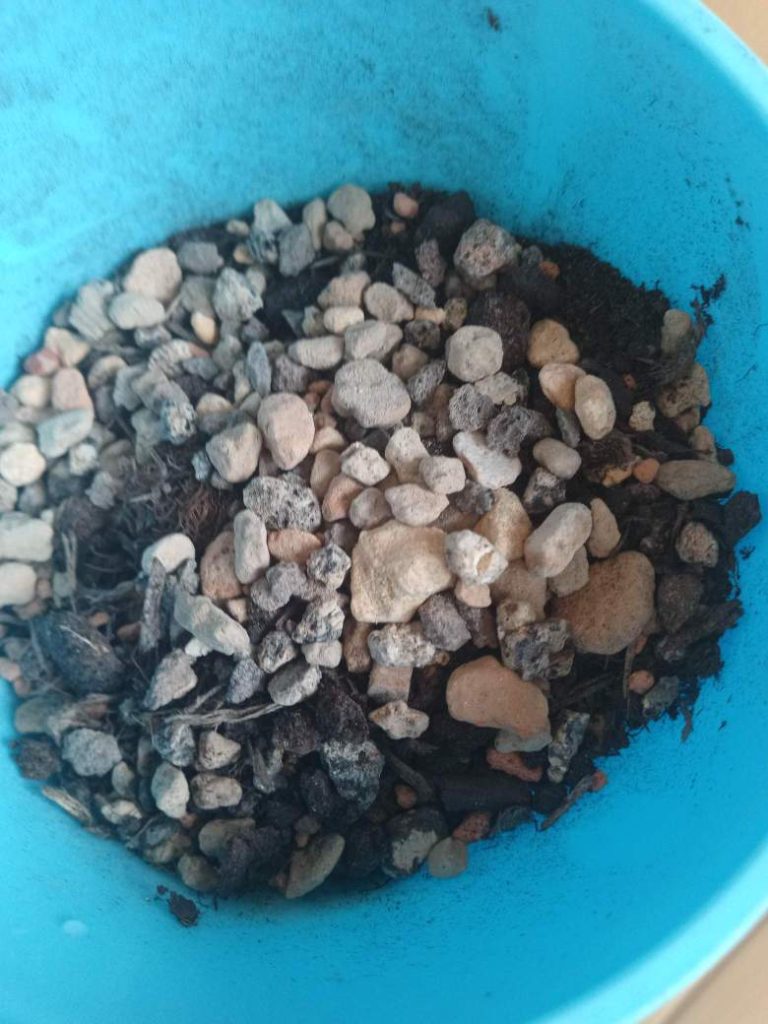 A sandy ‘succulent and cactus’ soil is the best soil for growing succulents,
Succulents are plants that have adapted to tolerate drought conditions in their native environment with infrequent (although often heavy) rainfall.
In its natural habitat, succulents and cacti grow in sandy or gritty, well-drained soil that does not hold much moisture very tall with a porous structure that allows excess water to drain away, so roots don’t get stuck in soggy soil.
Because succulents are adapted to dry environments, they are particularly susceptible to diseases such as root rot, which is caused by over-watering and planting the succulent in potting soil that retains too much moisture around the roots.
To grow succulents indoors in pots, it is essential mimic the soil conditions of the succulent’s natural habitat with more inorganic matter (sand or gravel) than organic matter (compost).
The optimal soil mix for succulents has a good porous, airy structure that allows water to seep through and reach the roots, as well as drain efficiently, greatly reducing the risk of plant rot. roots and reduces many problems associated with overwatering.
The gritty or gritty soil that succulents naturally grow in does not contain many nutrients, so it should be noted that when grown indoors, succulents grow relatively slowly compared to other indoor plants and thrive even in soil with relatively low fertility.
Can you use regular potting soil for succulents?
Succulents are specifically suited to growing in sandy or sandy soil, so regular potting soil is not suitable for growing succulents. Normal potting soil retains too much moisture for succulents and takes too long to dry out for the roots of succulents to tolerate.
When a succulent is planted in conventional, unamended potting soil, the succulent will begin to turn brown, yellow, or black with a mushy texture indicating root rot, stem rot, or basal stem rot.
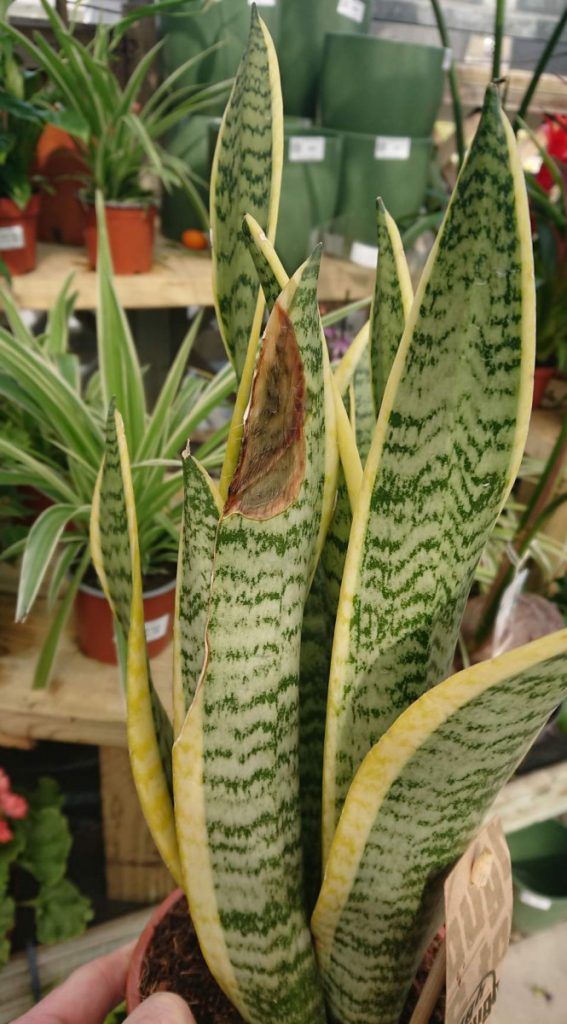 A snake plant with rotting brown foliage due to excess water and slow-draining soil.
(If your succulent turns brown, yellow or black, it is imperative to transplant it into new soil. I recommend you read my article, How to revive a dying succulent plant for resolution).
If you don’t have a specific potting soil for succulents or cacti (available at garden centers and online), it’s best to use regular peat-free potting soil and supplement it with perlite, horticultural sand, or sand. sharp.
Personally, I recommend horticultural sand or perlite over sand (from experiments with my own succulents) because they have a larger particle size, closely mimic the natural soil conditions of the succulent, and create an airy structure. and porous which allows good drainage.
To provide adequate drainage conditions for succulents (to prevent root rot), ensure that the mix is at least 1 part potting soil to 1 part sand or perlite. I generally prefer 60% sand or perlite to 40% potting soil.
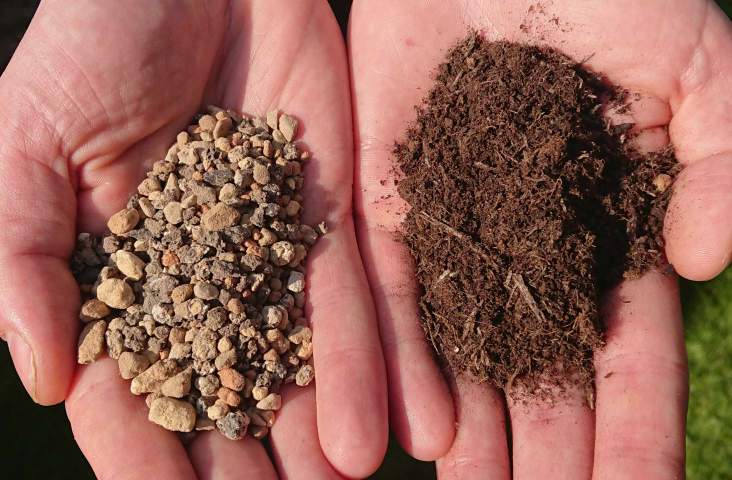 Use a mixture of sand and potting soil to create the optimal soil structure for growing succulents,
Potting soil in these proportions is essential to avoid the most common reason for the death of succulents, because it drains so well that even if the succulent is watered more often than it should, the drainage is good enough to prevent the root rot.
(Read my article on how often to water succulents at different times of the year, how often to water succulents).
Avoid Planting Succulents in Peaty Soil
I strongly advise against planting succulents in potting soil containing peat.
Succulents should allow the soil in their pots to dry out between waterings, as this mimics the downpour of rain followed by a wet-dry cycle period that succulents often experience in their native environment.
However, when peat soil is completely dry, it can harden and become hydrophobic (meaning it repels water from the surface of the soil) and water runs off the surface of the soil down the side of the peat pot and out of the pot’s drainage hole. . the base, without infiltrating properly and reaching the roots.
This prevents the roots from absorbing moisture despite watering and can cause water stress in a succulent. This causes the leaves of succulents to become thin and curl or droop as they draw moisture reserves from the leaves.
Soil specially adapted for succulents and cacti retains an open porous structure, even when it has dried out, entirely due to the large grain size of sand and perlite. This allows water to reach the roots and replenish moisture reserves in the thick, fleshy leaves.
Soil, drainage and irrigation.
The three most important criteria for keeping succulents healthy and preventing root rot:
- The optimal soil.
- Plant succulents in pots with drainage holes.
- How often do you water the succulent.
A good potting soil for indoor succulents is essential to ensure the health of the plant and should be combined with good watering practices and planting the succulent in a pot with drainage holes.
The best way to avoid the most common succulent problems associated with overwatering is to use the right potting soil, but also to only water when the soil for succulents is completely dry, due to their preference for the conditions. dry.
Allowing soil to dry out before watering completely mimics the water conditions of the succulents natural habitat and keeps leaves thick and healthy.
To judge whether the soil is dry or not, touch the soil at the bottom of the pot through the drainage hole at the bottom. If the soil is still wet, delay watering. If the soil seems dry, now is the best time to water with a good soak.
You can also use a wooden skewer to stick it in the ground, then pull it out to see if the skewer is still wet. In this case, wait to water until you repeat the test and it is dry to the touch.
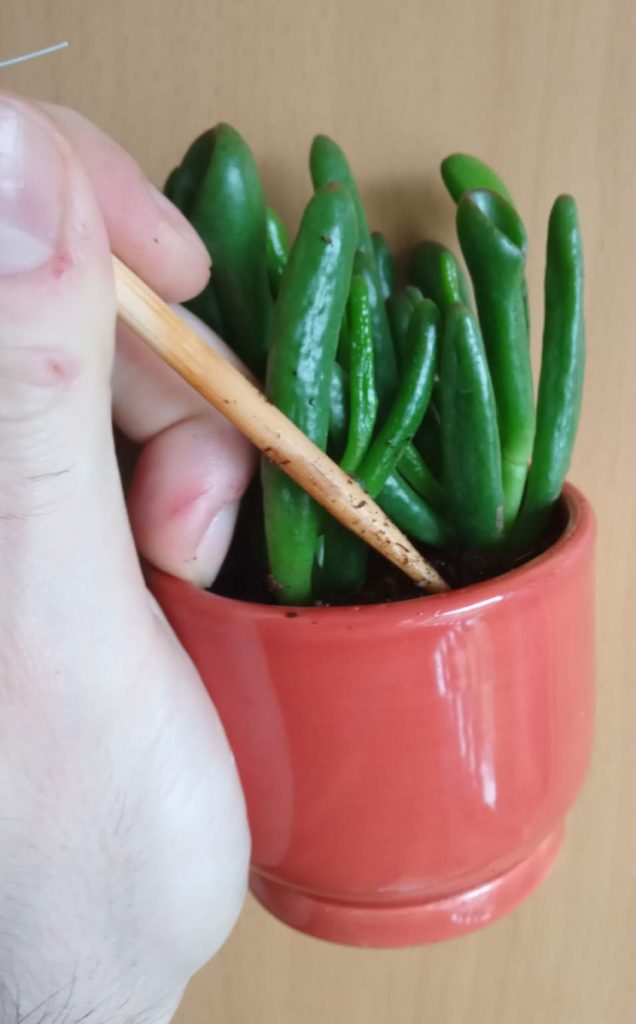 Use a wooden skewer to check if the soil is dry.
I recommend lifting your succulent pot occasionally to gauge its weight, which can help you determine when the soil has dried out, as the pot should feel much lighter.
A pot with drainage holes will allow excess water to drain through the potting mix and escape out the bottom, allowing the soil around the roots to dry out completely between waterings.
(Read my article choosing the best pots for aloe vera plants).
Key learning points:
- The best potting soil for indoor succulents is a specially formulated “succulent and cactus” mix that mimics the natural preference of succulents, providing aeration around the roots, good drainage, and ensuring the correct balance of nutrients.
- Avoid planting succulents in regular potting soil, as it retains too much moisture for the drought-tolerant succulent to tolerate. Regular potting soil doesn’t drain well enough for succulents, which tend to rot if the soil around the roots is too wet.
- Avoid planting succulents in peat-based soil, as it bakes hard when hot and dry, allowing water to run off the surface without seeping in and reach the roots where it is necessary.
- Plant succulents in well-drained, sandy potting soil that mimics their native soil, allowing the soil to dry out between waterings, and always plant succulents in pots with drainage holes in their bases.