
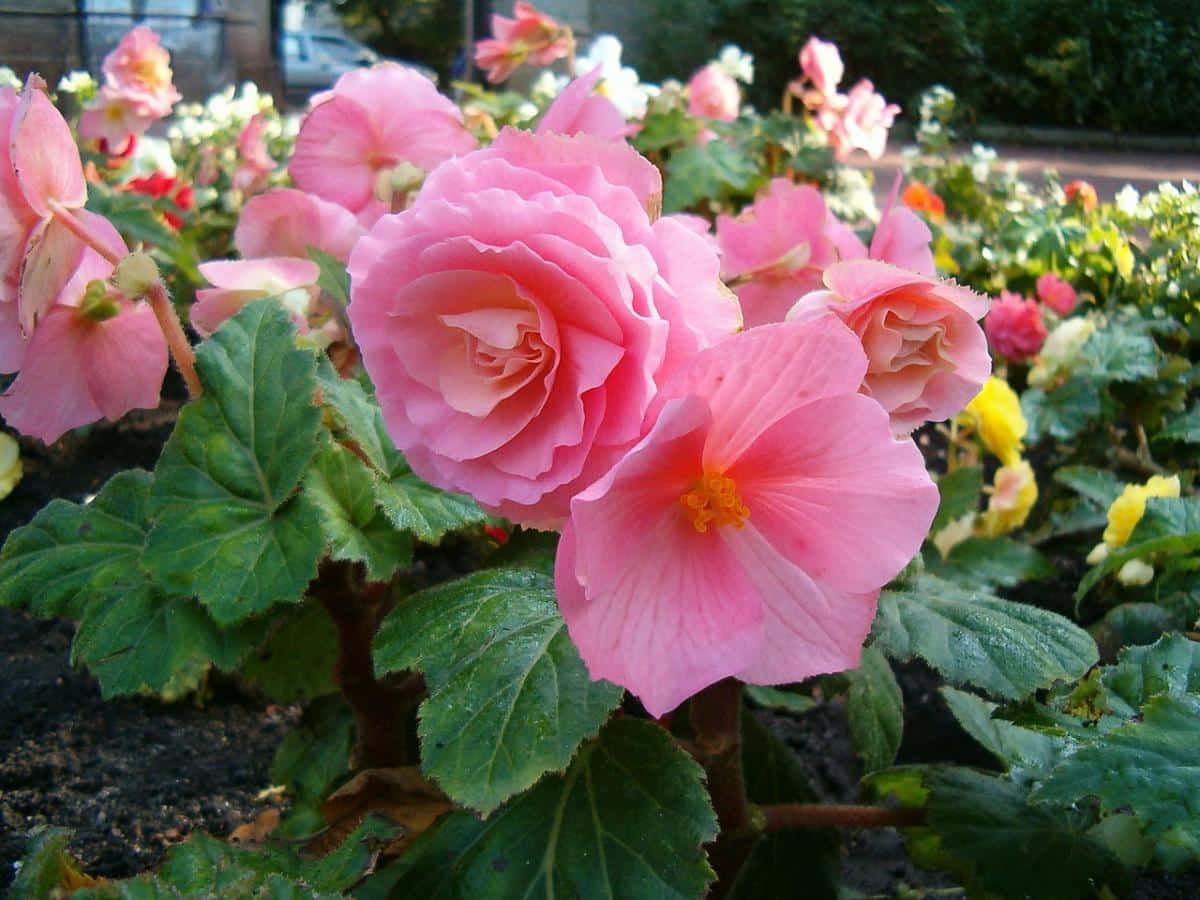
Begonias are plants widely used in the decoration of gardens and interiors. One of the most popular is tuberous begonia. Tuberous begonias are scientifically known as Begonia tuberhybrida. They are prized for their large, colorful flowers and beautiful foliage. They are very popular in the United States.
In this article, we are going to tell you about the characteristics, uses and care of tuberous begonia.
main Features

It was born from crossings and hybridizations. British hybrid horticulturist John Seden produced the first such hybrid, revealing a new species. It grows in the spring and blooms beautiful flowers in the summer in a variety of colors, including white and red. The flowers can be large or small, and it’s simple even with teeth on the edges.
Tuberous begonias are herbaceous or slightly woody old plants. They grow to about 50cm, with light to dark green leaves that are large and round or short.
It needs lots of light, some humidity and plenty of protection from the cold. The root is formed by a large, rough, brown, flat nodule. Some have large single or double flowers, up to 15 cm in diameter. Different colors, single or variegated, with jagged or curly petals.
Other tuberous begonias have smaller flowers. Between 2 and 10 cm in diameter, single or double, abundant in clusters. None of its species is winter hardy. The tuberous begonia has a bushy, very compact and rounded habit. Its stems are thin and weak, so it must be staked when it begins to flower. They can bloom any season of the year if cared for and kept indoors.
Benefits and properties of tuberous begonia
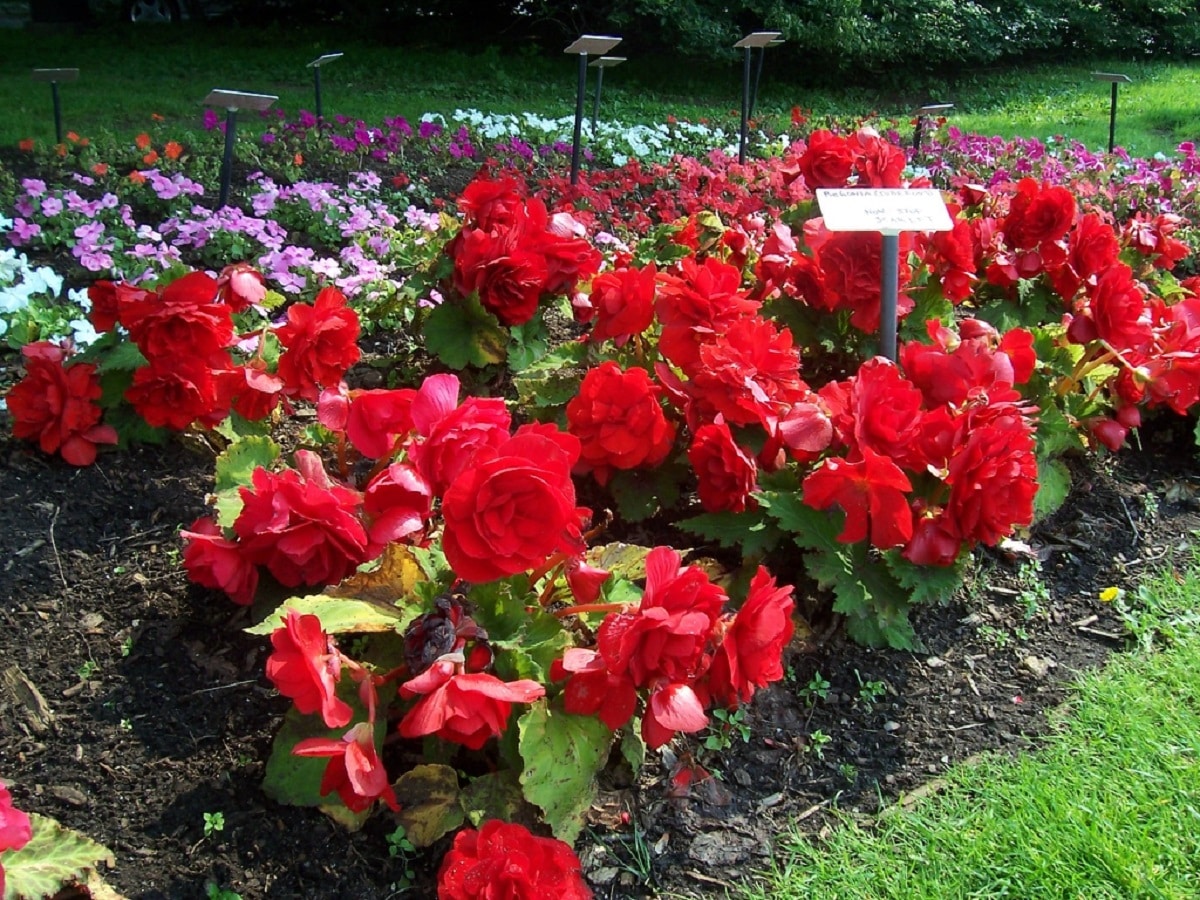
It is used as a decorative plant for flowers, but it also has active medicinal properties that can be very useful if you know how to apply it. Its flowers are protective against oral infections and treat pharyngitis and tonsillitis.
The aerial parts of the plant can be ground for drinking.. This mixture can be used to stop fever, diarrhea and dysentery. It can remove toxins from the body and promote improved blood circulation.
If you want to use crabapple petals for ulcers or burns, you can get relief. Its roots control toothache. You can also grind all the aerial and fresh part of the plant.
Among the most interesting properties we have the following:
- diuretics
- Purgative
- antidiarrheal
- painkillers
- febrifuge
- antiseptics
Apps
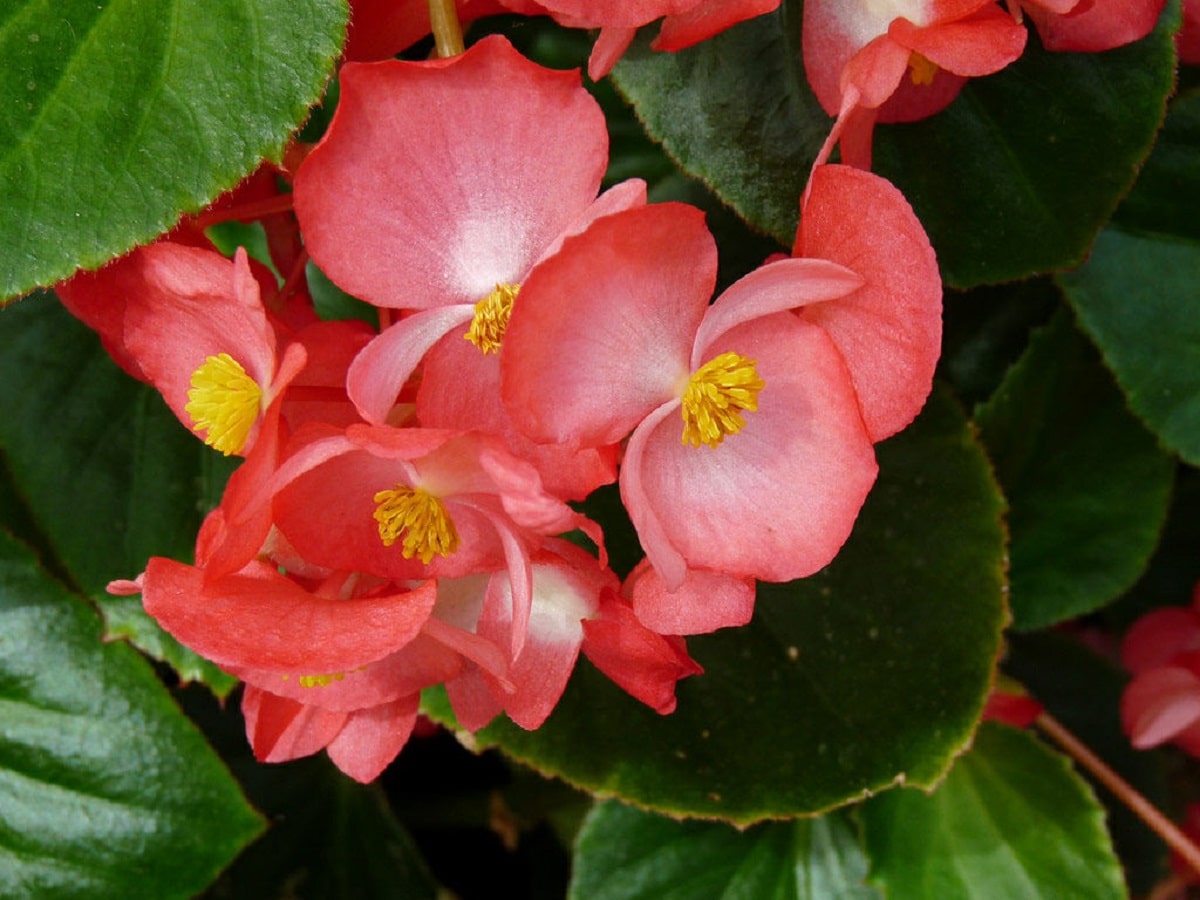
They are often used in pots and planters but, weather permitting, beds can be formed in cool areas of the garden. Other uses are:
- The flowers can treat colds and swelling.
- Disinfect the wound.
- Its infusion helps eliminate toxins from the body and promotes blood circulation.
- The root is used to relieve toothache.
You can also prepare infusions. It can heal wounds and is effective on pain. To make tuberous begonia tea, we need:
- 20 or 30 g tuberous begonias
- 1 liter of water
It is necessary to boil a liter of water, add 20g or 30g of wild apple. Let it sit at room temperature and once cooled it is ready to use for gargling. Fight pharyngitis, mouth infections, tonsillitis and sharp cuts or rotten sores.
Tuberous begonias are less toxic. The sap of the plant and the sap contain small poisonous crystals that are shaped like needles. Chewing the tubers and roots of the begonia causes irritation, pain in the mouth and tongue. Plants can cause nausea and possibly vomiting.
Cultivation of tuberous begonia
It grows in partial shade or filtered sunlight. Excessive sun exposure can scorch flowers and leaves. However, too much shade can result in lush foliage and few flowers.
They do not need to be grown in a greenhouse. Although they would do better if protected from high winds and heavy rain. When the vegetation has been destroyed, it is better to remove the tubers, put them in wooden boxes with straw and wait for the long winter. Then, with the onset of spring, the flowers can be replanted.
Watering should be done at least once a day, do not overwater, puddles will rot them. They are not frost resistant.
Soil can be a mixture of equal parts peat, silica sand, dry manure and well-rotted trash. Apply mineral fertilizer every 3 weeks in spring and summer. Its main enemy is excess humidity, which causes powdery mildew and root rot.
The best way to propagate them is to divide sprouting tubers in late winter. During the winter, it is convenient to collect the tubers and store them in a dark, dry place.
To multiply this plant it is necessary to take into account:
- Divide tubers with shoots and wait for the wound to heal before putting them on the ground.
- Cut shoots protected by plastic (1 month) in spring.
- Sow in winter (December to March in the northern hemisphere). They germinate in 10-14 days at 23ºC.
Tuberous Begonia Diseases
- The leaves have brown, round, moist spots, which then wither. The disease is caused by a bacterium called Xanthomonas.
- It mainly affects crabapple tubers.
- Reduce or eliminate overhead irrigation.
- Destroy diseased plants.
- On slightly damaged leaves, the diseased part can be cut off.
- Stems rot.
- This is a serious disease in which the stems turn black and rot. It is produced by the Pythium fungus.
- Uproot and destroy attacked plants.
- Avoid wetting the leaves with water.
- Since the fungus remains in the ground, discard the substrate and do not replant.
- Damage caused by this fungus is usually identified in the field by the characteristic gray hairy spores, although the spores only develop in moist conditions.
- Injured or aged tissues are particularly vulnerable, but healthy tissues can also colonize.
- The petals may have small spots or be completely shriveled.
- Control of this fungus is important because it can survive as a saprophyte.
- Whether in irrigation or in the environment, excess humidity will be avoided, the plants will be spaced and ventilation will be guaranteed.
- Uproot and burn leaves or invasive plants.
- Disinfect the soil or replace it with another pest-free soil.
- Use a fungicide.
I hope with this information you can learn more about Begonia tuberosa and its characteristics.