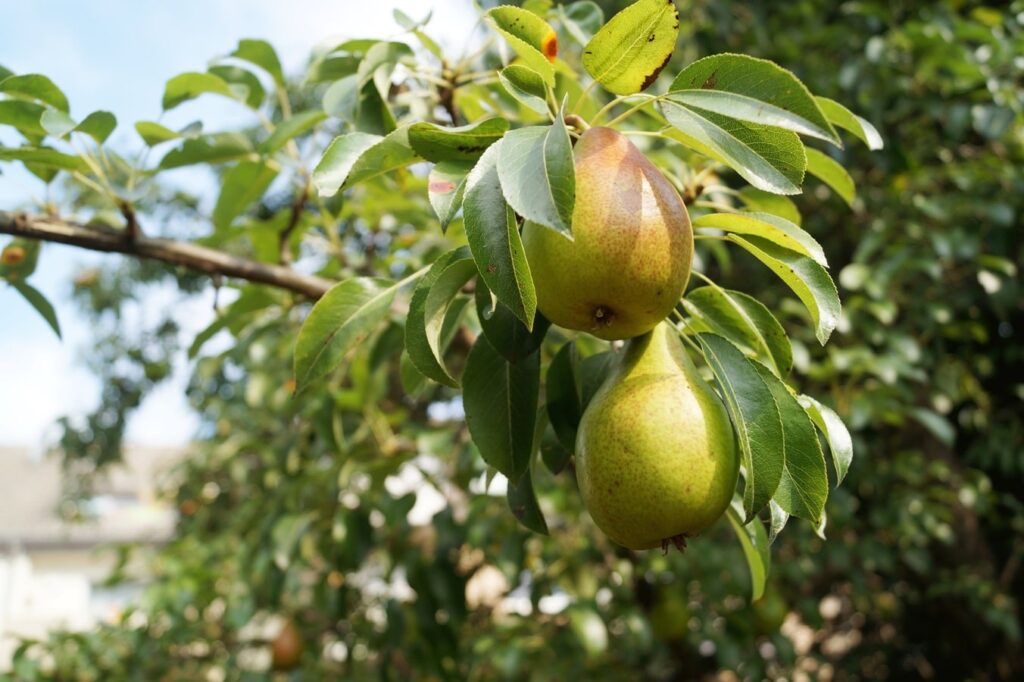
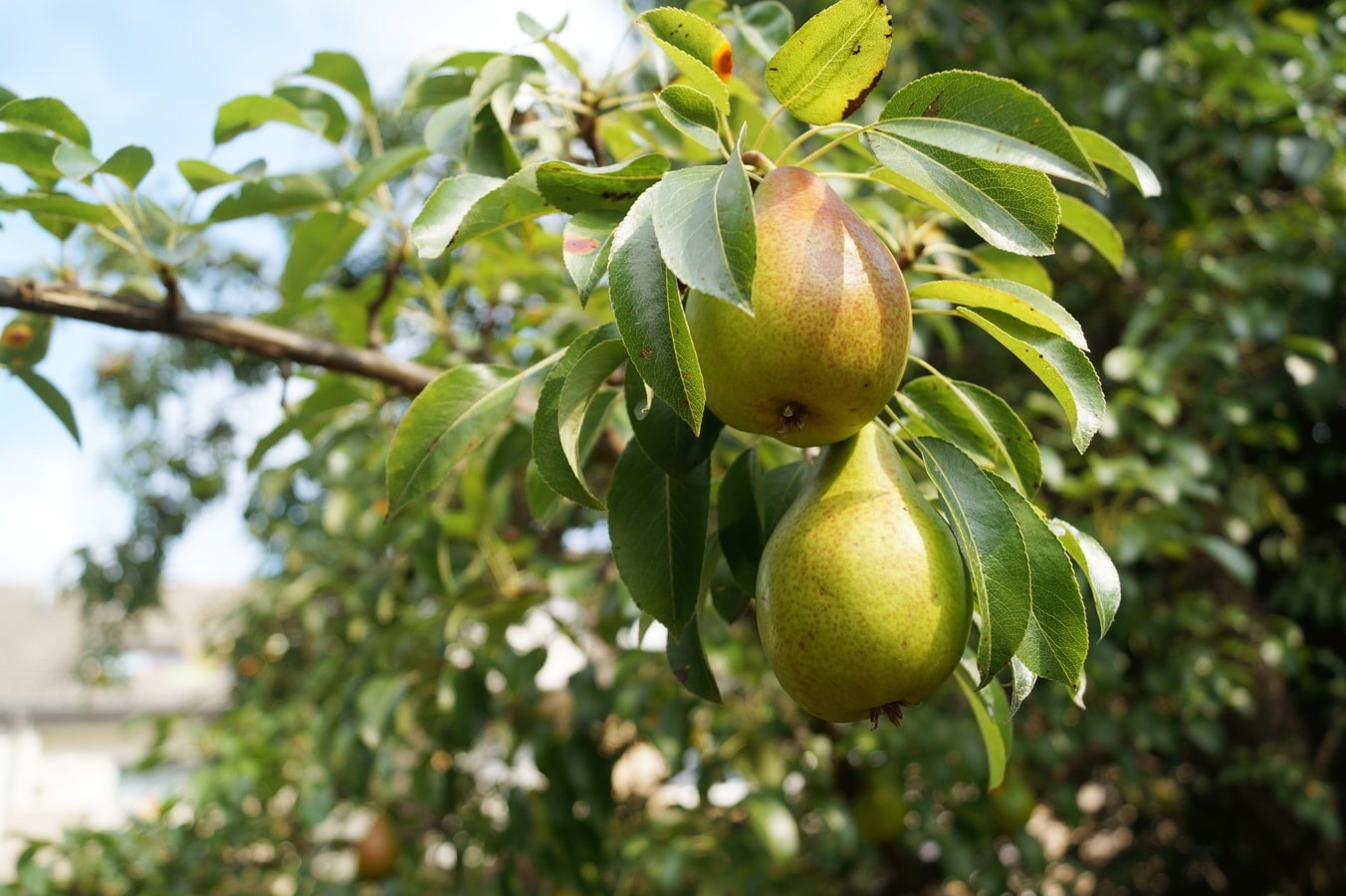
The pear tree is one of the most valued fruit trees, not for its ornamental value, but rather for the amount of fruit it can produce. But if we have to find a downside, something that makes us doubt whether to grow it or not, it would be pests. He is very vulnerable to some of them. Although to be honest, all plants that produce edible fruits are, because there are many insects and other animals that want to feed on them.
But back to the main subject of this article, our dear Pyrus communis. What are pear pests? And how are they treated? Let’s see.
What are?
Anyone who grows plants, especially if they come from gardens, You must be very clear that at any time you may need to carry out preventive or curative treatment to protect them. But if we focus on the pear tree, it is not his favorite fruit tree, because if we compare those that affect other plants with those that our protagonist can have, we will see that he is a more resistant tree.
Now, that’s not to say the damage is minor. In fact, it is important to know how to identify the symptoms, because in this way we can give you the most appropriate treatment and thus avoid greater losses.
carcocapse

Image – Wikimedia/Olei
The scientific name of this insect is Cydia Pomonella. It is a Lepidoptera which, when it is in its juvenile phase, i.e. when it is still a larva, it feeds on the fruit. To do this, it digs galleries, which is why we can see very small holes on its surface. When fully grown, it will measure around 2 centimeters and have a brownish body, with a slightly darker head.
To fight it or eliminate it, insecticides such as pyrethrins can be appliedor opt for other remedies that are much less harmful to the environment, such as pheromone traps.
fruit fly
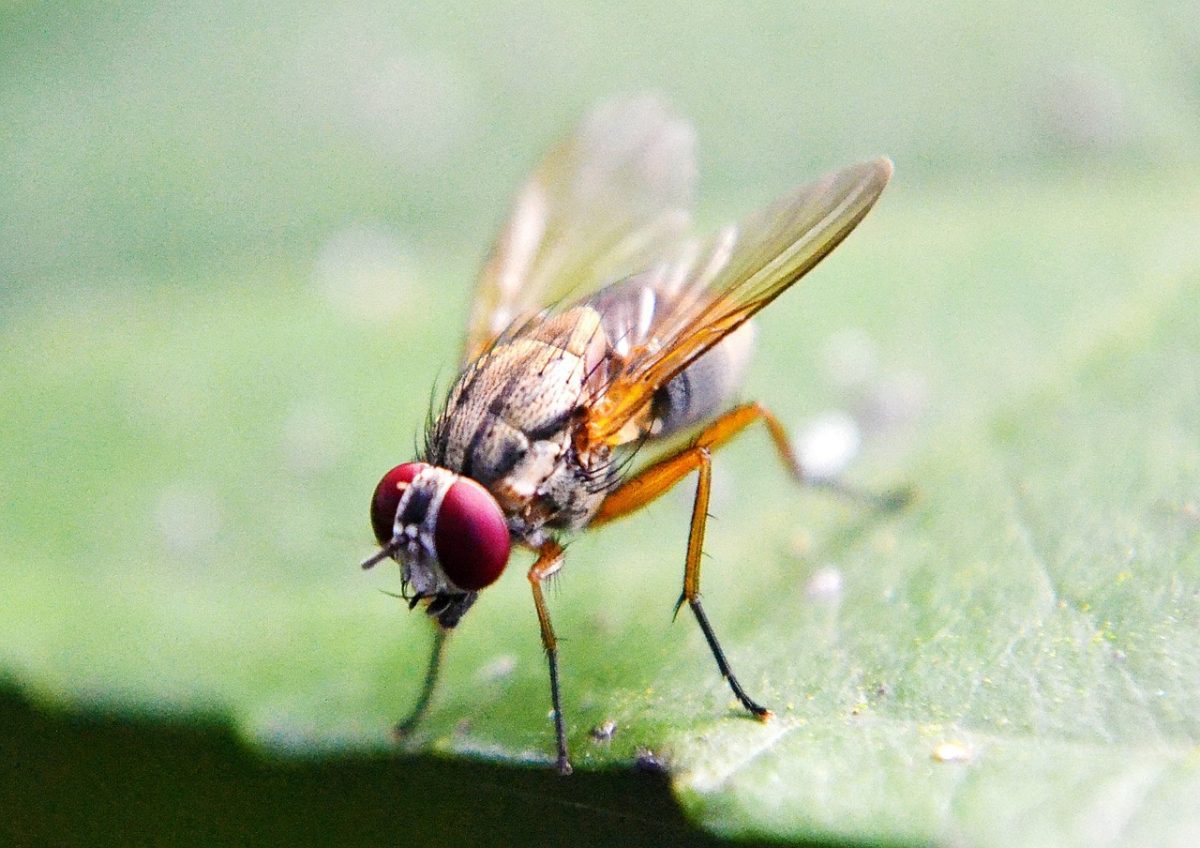
The fruit fly, whose scientific name is Ceratitis capitatais a small insect one centimeter long which he is very attracted to the aroma of fruit. Therefore, in its larval phase, it feeds on it.. As she likes the heat, it will be during the summer that she will be most active. But if we live in an area where it’s warm for a good part of the year, it doesn’t hurt to keep a close eye out in the fall as well.
To fight it, or at least control its population, we recommend that you make a fly trap. This is done as follows:
- Pour two tablespoons of apple cider vinegar into a small container, such as a glass.
- Then cover it with clear plastic.
- And finally, take a toothpick and poke holes in it.
And now you just have to put it near the pear tree so that the insect goes to the glass, and not to the tree.
Pou of San Jose
The San José louse, despite the name given to it, should not confuse you, since it is a type of cochineal, and which, moreover, can easily go unnoticed. The scientific name is Quadraspidiotus perniciosusand if you see it looks like a small, round, brown scale or limpet. It affects many plants, both fruit and ornamental, so the earlier it is detected, the better.
It perches on the fruits, as well as on the leaves -near the veins-, and sometimes also on the young branches which have not yet lignified. To combat it, if the tree is small, I always recommend applying diatomaceous earth (on sale here) of which I leave you a video; but if it is an adult then it will be more interesting to use an insecticide against mealybugs like this one.
pear psylla

Image – innovagri.es
The pear psylla, or Cacopsylla pyri, is an insect that looks like a small fly. The adult specimen is about 3 millimeters long, and has two transparent wings -except the veins, which are dark-. The female produces yellowish, elongated eggs, and leaves them on the leaves or in a hole found in the trunk. Once hatched, the nymphs feed on foliage as well as fruit.
The tree then weakens, because these nymphs secrete honeydew that can attract pathogenic fungi, such as fats. Also, a lot of pears spoil.
To fight it, any of these insecticides must be applied*:
- Abamectin 1.8%
- Acetamiprid 20%
- Acrinathrin 7.5%
- Deltamethrin 2.5%
- Lambda Cyhalothrin 1.5%
- Thiacloprid 48%
- Thiamethoxane 25%
Is it possible to prevent the pear tree from having pests?
Unfortunately no. But what we can do is take care of it so that if it has it it will cost less for it to recover. And how do we do that? Well, it’s really very simple, because it involves fertilizing it in spring and summer, watering it if necessary so that it doesn’t become dehydrated, and only pruning it if you need to. coming out of winter. In this sense, it is important to avoid drastic prunings, since they can not only make the tree ugly, but also weaken it a lot.
Likewise, it is recommended to remove weeds around the trunk so that pathogenic insects do not lodge there. This way we can reduce the risk of them becoming a problem later on. For more information on pear tree care, click here:

Related article:
Pear tree (Pyrus communis)
*Source: Agromatica.