If you purchase an item through links on this page, we may earn a commission. Our editorial content is not influenced by commissions. Read full disclosure.
Have you ever heard of “gummy stem blight”? It is sometimes called “black rot” or “alligator skin” and is one of the scariest fungal blights that can appear in your garden or property.
Once it shows up, you need to act quickly before it spreads. It is able to spread quickly and it can absolutely devastate your crop. Read on to find out how to deal with it!
What is gummy stem blight?
This scourge is a disease that explicitly affects members of the Cucurbitaceae family. As such, it can wreak havoc on cucumbers, melons, zucchini, cucamelons, pumpkins and squash.
It is caused by a fungal plant pathogen called Didymella bryoniae (anamorph Phoma Cucurbitaceae), and it’s a terrible pathogen to fight.
When it becomes established, it renders the whole plant useless. It does not stay in the stem or the leaves but manages to find its way into each cell, all the way to the seed. This is especially devastating if you’re growing versatile foods like pumpkins for flesh and seeds.
Gummy stem blight is highly contagious and can wipe out your entire crop if you’re not diligent about it. Fortunately, it’s easy to spot while it’s still in its infancy, so action can be taken immediately.
Identification

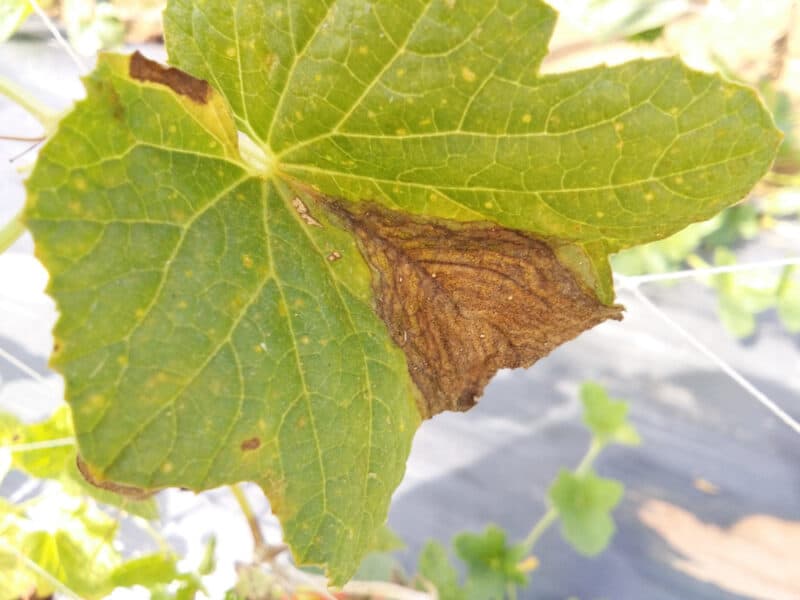
On young plants, the first indications that you may be dealing with gummy stem blight will be brown discolorations around the edges of the leaves. These are usually brown but may be haloed in darker brown or black.
Sometimes they can also have lesions in the center of the leaves, but these are more common on older specimens.
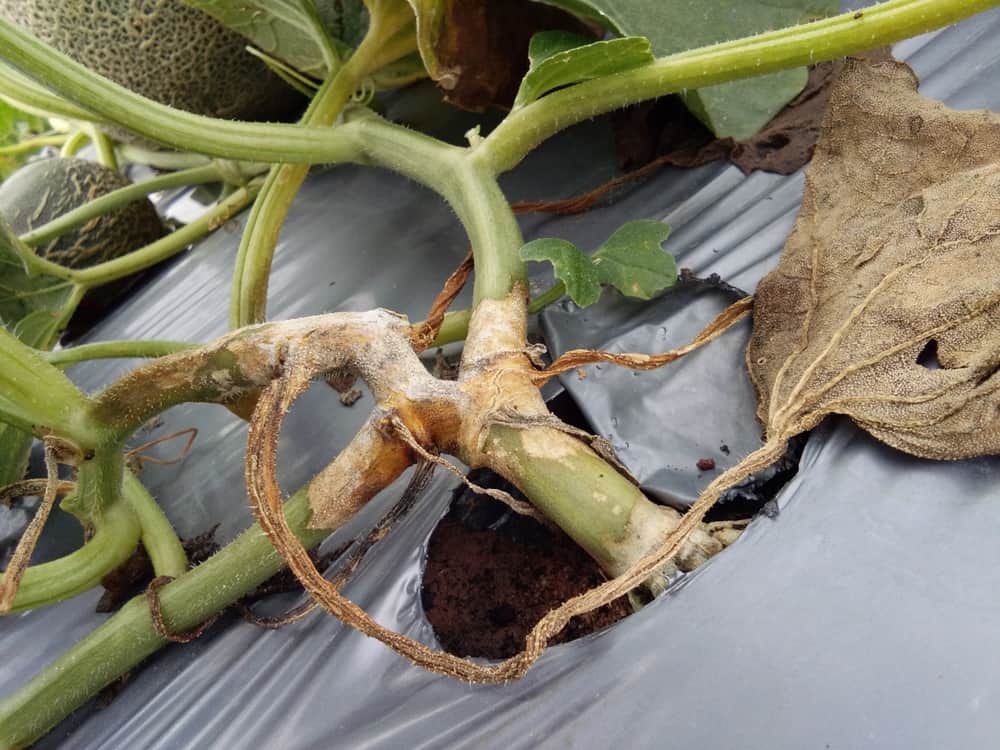
Although this pathogen is known as “gummy stem”, this symptom does not appear until the plant is fully grown. Once your plants are flowering or fruiting, that’s when problems start to show up at the stem.
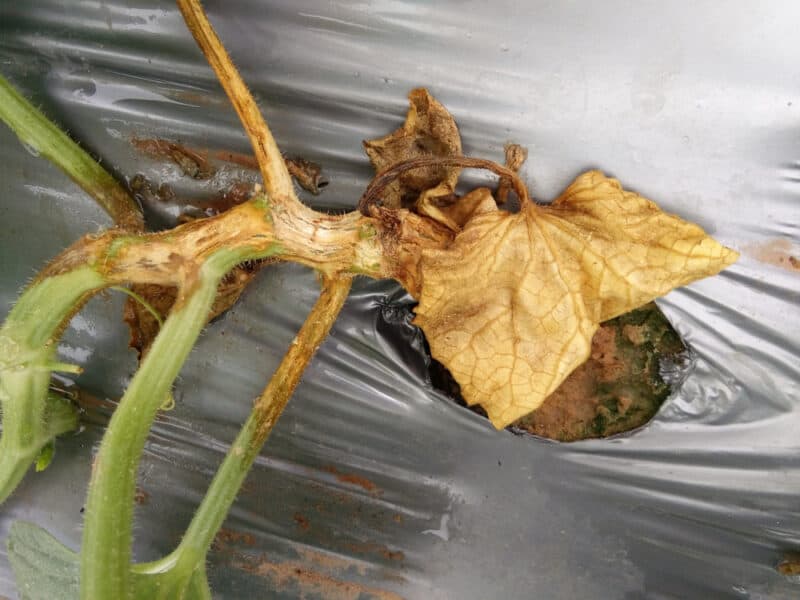
The first signs on more mature plants may be weeping stems. You will see brown or black beads of fluid dripping from the stem lesions, which will feel sticky to the touch (hence the “gum” part of their name).
Leaves may show brown edges, with dark lesions haloed in black that eventually become necrotic and black before the leaves fall.
Signs on fruit
If a fruit has developed, it will also show brown lesions that look like large, soft bruises. These will also be circled in black; a single lesion will render the entire fruit inedible. In addition, any seeds developing in the fruit will be unusable, as they will also be infected with the pathogen.
You may also see necrosis on the fruiting canes. Also, even if the stems are not blackened and withered, they may be too weak to support the fruit they grow.
Treatment
There is no treatment for gummy stem blight once it is established: all you can do is pull up the plants and burn them. Then, even if your other plants show no signs of burning, treat them with a broad-spectrum fungicide just in case.
Although there is no specific remedy for gummy stem, you may be able to kill existing spores before they take hold on your other plants.
Since seeds or soil can harbor this fungal blight, prevention for the next season is the only real remedy you can take.
Practice diligent crop rotation and never plant cucurbits in the same area two years in a row. Also, try to grow your cucurbits upright rather than letting them spread out on the ground.
This not only reduces the possibility of them being infected with the gummy stem, but can also reduce other pathogens such as powdery mildew or mildew.
Choose healthy plants

You won’t be able to tell if the seeds you buy are infected with gummy stem blight. As such, your best bet is to buy them from reputable companies and try to order seeds that are resistant to this pathogen.
This infection thrives in warm, humid weather, and the spores spread just as easily through the air as they do through soil. Observe how the water moves through your garden, as this can be a primary pathogen dispersal conduit.
If you buy seedlings, check them carefully to see if any of their edges look brown or dry. Also keep an eye out for brown lesions. If you see signs like these, don’t buy them.
Focus on good garden hygiene
After harvest, eliminate as much plant debris as possible from the soil surface. Then, turn the soil over to allow the sun to kill any lingering spores.
Spraying the area with a copper or sulfur fungicide can be beneficial, and be sure to feed the soil with beneficial mycorrhizae before planting anything there the following spring.
If you find gummy stem blight on your plants, you’ll need to be incredibly diligent so you don’t accidentally spread it to other parts of your garden. As mentioned earlier, this pathogen is extremely contagious.

Keep extra clothes and shoes on hand so you don’t follow the spores from one part of the garden to another.
For example, if you’re treating an area with this burn, wear plastic sandals that can easily be disinfected in a bucket of hot bleach when you’re done. Then put on a clean pair of rubber boots and tend to your other plant babies.
If you practice this kind of diligent hygiene and make sure you buy blight-resistant seeds or seedlings, you may be able to avoid gummy stem blight in your own crops. Be sure to check your plants daily so you can spot potential problems as soon as they appear and act quickly if and when they occur.
Good luck!
Was this article helpful?
Yes No ×
We appreciate your helpful feedback!
Your response will be used to improve our content. The more feedback you give us, the better our pages will be.
Facebook pinterest