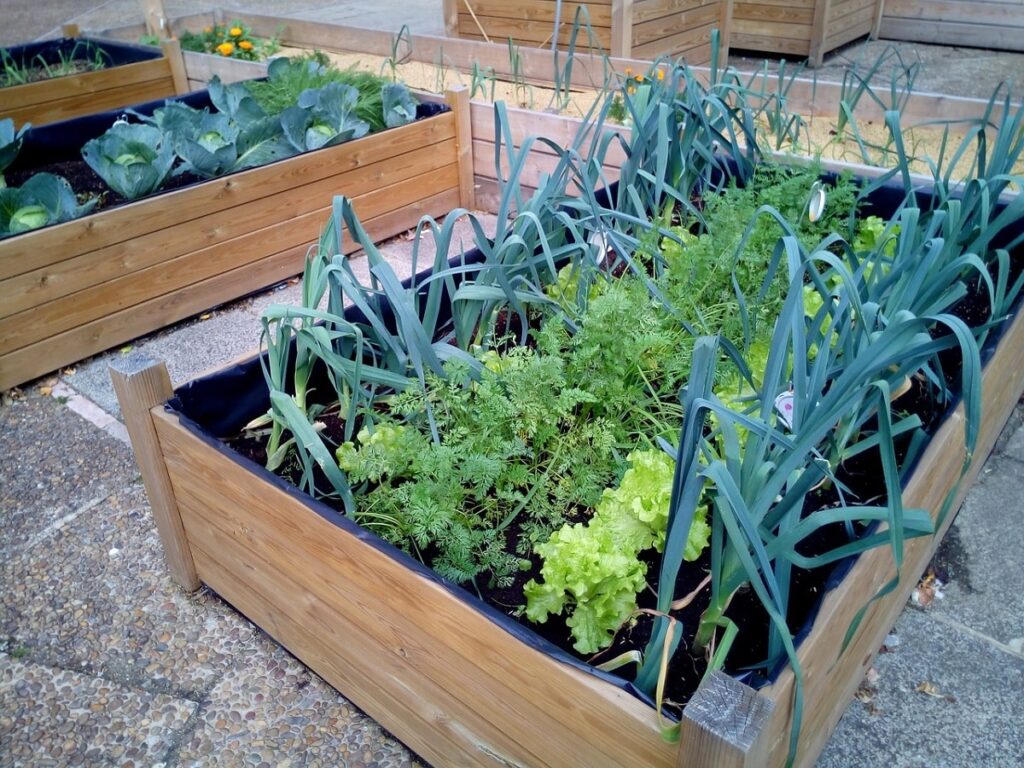
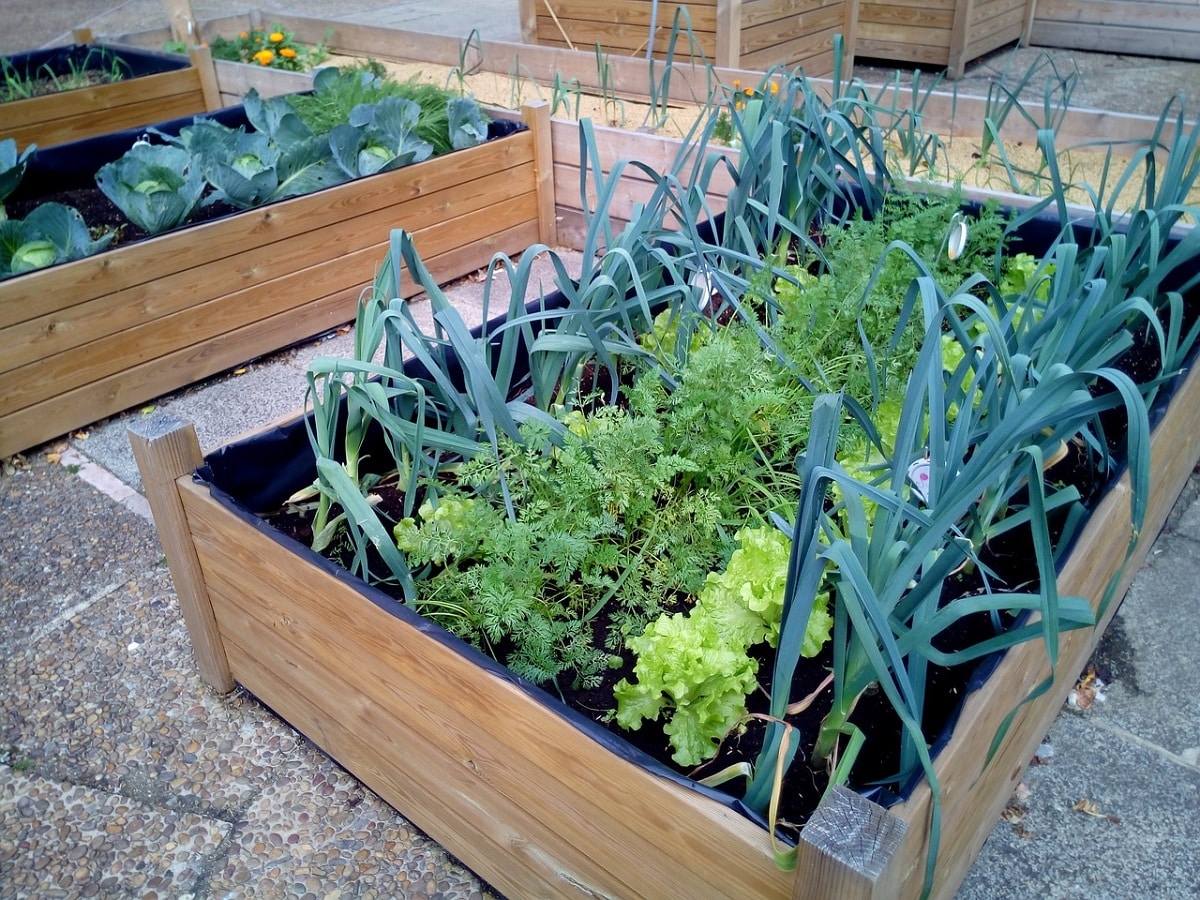
The urban garden is a very powerful tool both for improving urban environments and for the quality of the environment and crops. However, many people do not know what to plant in an urban garden and how they should start. If you are new to this environment, it is important to know the properties and cultivation characteristics of some of the most well-known vegetables.
For this reason, we are going to dedicate this article to telling you what to plant an urban garden, what are its features and recommendations.
What to plant in an urban garden
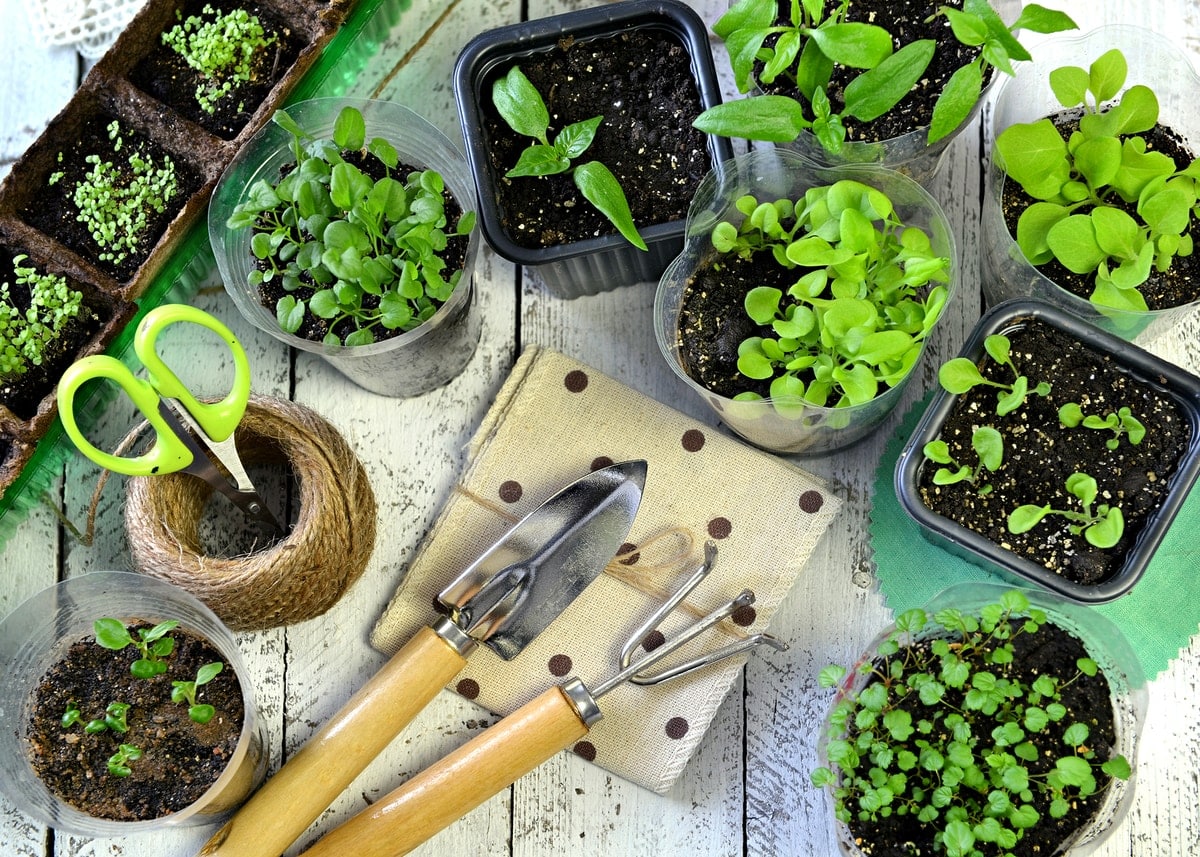
Certain vegetables add flavor to many foods and dishes and are perfect for planting in an urban garden. Here is a list of the most common vegetables to grow in your urban garden.
Onion
The onion is a vegetable that does not require much care. It can survive in poor conditions and does not need frequent watering, but it should be watered regularly. While the onion plant is forming a bulb, it is best to water the plant less often, as this will help it dry out better. It does not need a very rich substrate, but it does need a large amount of substrate.
Onions can be sown in late winter or early fall and will be harvested 4 months later.
Tomatoes
Drip irrigation is the best method for watering plants, rather than watering them multiple times. On the contrary, watering should be done frequently in small amounts. The substrate needs very rich soil, so you will need to add compost or earthworm humus to your soil, in addition to providing plenty of substrate.
The tomato season extends from winter to early spring, and sprouts to be ready for harvest in about 3 months.
Salad
Water should be added frequently and in large quantities to the soil when watering. Lettuce is a crop that needs a substrate rich in organic matter. Lettuce can be grown almost all year round, except during the coldest winter months. It is harvested 3 to 9 weeks later depending on the variety.
Garlic
Garlic doesn’t need a lot of water and can be grown without irrigation if the weather is dry enough. In some climates, no irrigation is necessary. The substrate does not require much care, as it contains many nutrients. It is planted and grown all winter, then harvested about three months later.
What to plant in an urban garden: aromatic plants
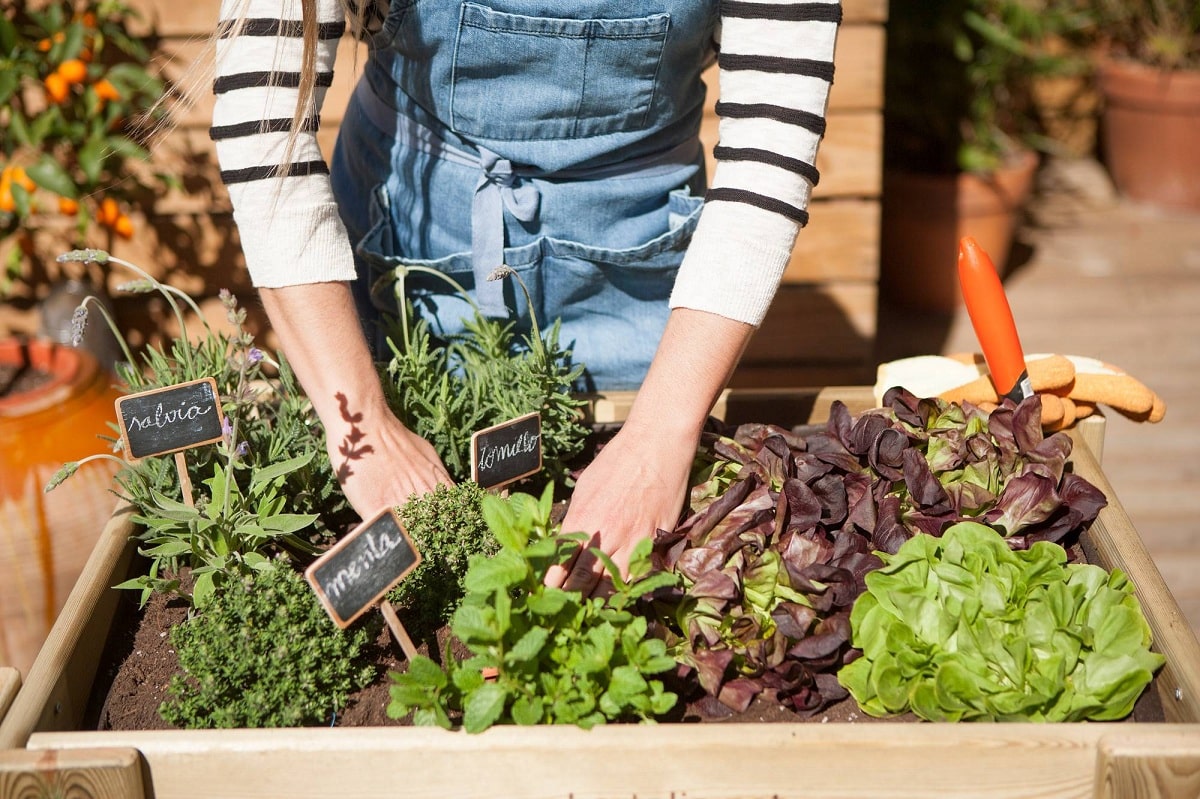
Some of the fragrant herbs that can be grown in an urban garden include:
- Parsley is a key ingredient in the Mediterranean diet, and has many properties and uses. Parsley can be grown in almost any type of soil because it doesn’t need a lot of nutrients. It needs plenty of sun and irrigation and can be planted in spring or summer, producing a 10cm tall stem after 3 months.
- Basil is a plant that prefers rich, loose soil containing a lot of organic matter. It can be grown both in partial shade and in full sun. Basil should be watered frequently but not excessively and should be harvested before it reaches 20 centimeters in height.
- Thyme requires good drainage and should be exposed to sun all day. Don’t add too much organic matter to the soil and don’t put fertilizer on the soil. Only water the thyme sparingly and don’t let the soil get too wet. Thyme is planted at the end of winter and can be harvested when needed for cooking.
- Mint grows best in moist soil, even if the soil is not well drained. It requires little light, but should be watered frequently. The best time to plant mint is in the spring, so you can harvest its tender shoots in the summer.
- Rosemary is a shrub that needs a lot of sun and needs loose, well-drained soil. It can be sown and harvested all year round, but if you want to use it to cook infusions, it is best to do so when the plant is in flower.
- Lavender can grow in almost any type of soil. and, in fact, it can live for a long time (even years) without being watered. Lavender only needs occasional watering when first planted and can be grown in the spring once the cold weather has passed. Lavender can be harvested each spring after the second bloom by pruning the flowers from the stems.
What to plant in an urban garden in summer
Zucchini
Zucchini is loved by many for its ability to be used in many recipes. When grown in an urban garden it can be a successful vegetable. Zucchini is planted in early spring and harvested in summer. Zucchini need lots of sun, water and compost to grow and be healthy.
Beet
Beets, radishes, turnips and carrots are vegetables that can be planted in the summer and harvested in the fall. Carrots and turnips should be spaced about 30 cm apart in soil rich in organic matter and well drained. Both radishes and beets should be soaked overnight before planting, and both can have sprouting issues. Too much irrigation can cause problems when growing beets. Plant the seeds in a location that receives direct sunlight. You can pick the plants 9 to 10 weeks after planting.
radishes
Radishes can be grown any time of the year and are another easy crop. They should be planted in soil rich in organic matter and should be very moist at all times. It can be grown in a pot, as long as the pot is at least 20cm deep. Plant the radishes in a very sunny place and water them in the evening. You can pick them 20-25 days after planting them.
carrots
Carrots can be planted in the summer. Carrot seeds should be planted 10-15 centimeters apart and 30 centimeters deep. The soil should be loose and able to retain water, and should be planted in a shady area, where they don’t get full sun during the hottest part of the day. Carrots can be grown for between 10 and 110 days, depending on the variety. They need to be watered regularly.
I hope that with this information you can learn more about what to plant in an urban garden and the characteristics of crops.