Leeks have always been a great accompaniment to any soup. It gives incredible flavor to many dishes and many recipes include it. Moreover, leeks are close relatives of garlic and onion. One of the best things about leeks is that they can be grown year round. So, if we want to grow leeks in the garden, we cannot be afraid of high temperatures or cold in winter. many people wonder when are leeks harvested once they have been grown.
For this reason, we are going to devote this article to telling you when leeks are picked, what aspect should be taken into account and how to store them correctly.
where are the leeks planted

Leeks need sun. It is a hardy plant that grows well in most climates. It is very resistant, so it will pass the winter without problem. We can start planting in early spring or in July-September. In any case, as with any plant, warmer and more pleasant temperatures (between 18º and 25ºC) allow leeks to grow more vigorously. If the summer is hot and not very rainy, water the leeks more.
Cultivation requirements

Leek is a crop that hardly needs moisture. It does not like heavy, dense and hard soils. Therefore, before using a tiller or digging by hand, if the soil is very hard, light watering should be done to loosen the soil. It is also helpful to remove any stones that may be present.
Leeks do not like manure or compost. So, if we use organic matter, we will ensure that it decomposes well. It can be very useful to use a stone on which certain things such as lettuce or lamb’s lettuce have been previously grown.
The nitrogen supply that we can provide will greatly benefit the leeks. So they can be given comfrey, compost or manure tea.
The ideal option is drip irrigation. Except in summer, you should not worry too much about watering these plants. In summer, care must be taken to ensure that they receive enough water and to keep the soil moist at all times. Joints need water most of the time, and if they don’t, they suffer.
How are they sown?
Leek cultivation, either because we have a small urban vegetable garden or because we have interesting land to grow leeks, is an option that interests us because they are not too difficult to grow and harvest.
Leek seeds, like onion seeds, are very fragile. We recommend that you buy already grown plants, it’s much easier. With a planting template and a little potting soil, harvesting leeks will be easier.
However, if you have seeds, start by sowing leeks in August and September. We bury the seeds to a depth of about 10 cm, water lightly and make well-rotted compost. Constantly monitor the humidity around the leek plants. Either when they start or when they have grown up a bit.
When we grow seeds or grafts, we will leave a distance of about 10-15cm between the plants. A mulch with straw or any other organic composition that covers the soil and retains moisture is excellent for them. Spread a layer of straw on the ground, which is best for growing leeks.
The first and most important thing we must pay attention to in our plantations is weeding, which often presents strong competition for our crops, as well as monitoring for possible pests or diseases.
When are leeks harvested?
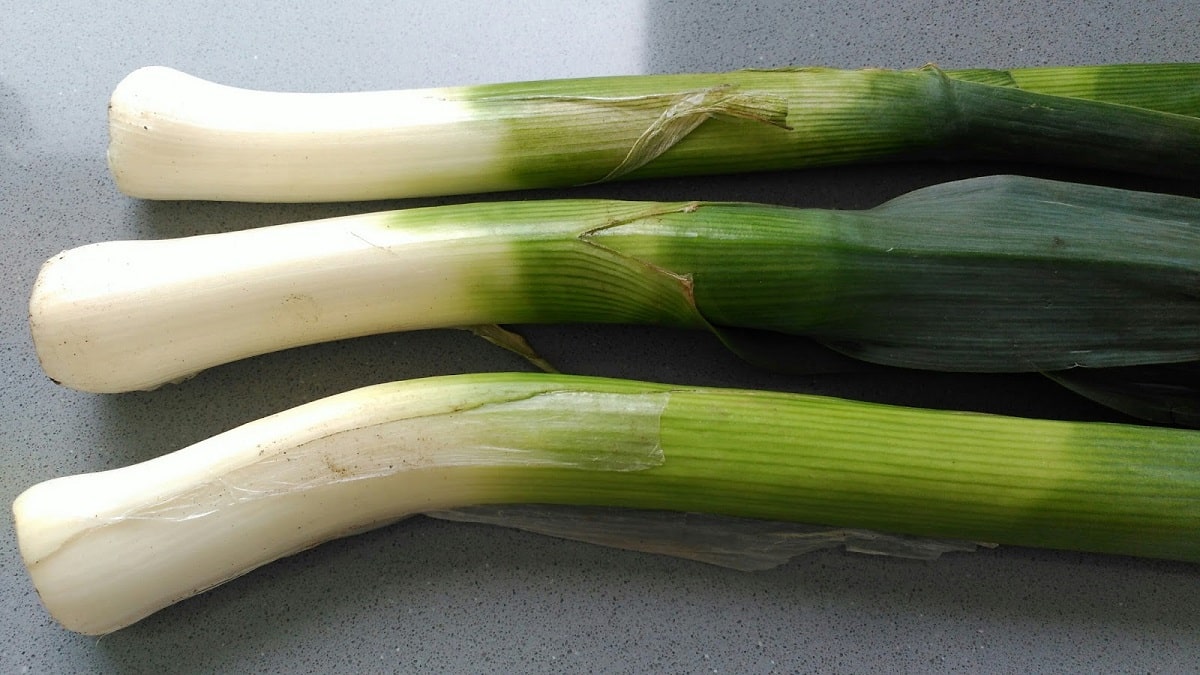
The leek can be harvested when it reaches between 15 and 20 cm. The ideal is to do it when they are at their maximum, although it is good if we take some in advance to eat and try. They are harvested after 5 or 6 months of planting. This will be done when they are large enough and in such a way as to stagger the harvest.
Basic tips for storing leeks throughout the season: Immediately after digging, place the leeks in a well-ventilated room to dry them. Remove damaged, dry and yellowed leaves. Remove broken, rotten and damaged plants. If signs of disease appear during drying, these samples should be removed immediately so as not to infect the rest. Raw, they should only be stored upright, having previously been cut on both sides. The stems are removed by 2/3 and the roots by half.
Optimal conditions Storage room for leeks: refrigerator, cellar or basement, balcony, storage room. Temperature and humidity must be constant (+0…+4°C, 40–50%) and the room must be well ventilated and dry.
What pests and diseases do we find?
Your worst enemy is the leek bug. It is deadly because it lays its eggs on leek leaves and on the ground. We will be able to see how the leaves take on a yellowish hue until they finally rot.
Carrots or celery planted near leeks repel egg-laying butterflies well. In addition, leeks repel carrot flies. If you plan to grow leeks or carrots, remember that they get along well and it is good to grow them at the same time. It is therefore a very useful association.
As we have already said, carrots and celery are excellent companions. But it is also very good with tomatoes and strawberries. We do not recommend eating it with onion, as the pests that attack it will also attack leeks.
We do not recommend planting next to beans, lettuce, radishes, beets and peas.
Properties of leek
Like garlic, leek also has excellent nutritional properties. Leek is a healthy plant that we should always have in our kitchen.
We can highlight the following properties:
- Embalming and digestion.
- Emollient, laxative and tonic.
- In addition, it is rich in vitamins A, B, C and PP.
- Contains sulfur, bromine, calcium, zinc, sodium, phosphorus, magnesium, iron, copper and chlorine (as you can see many minerals).
There is no doubt that these plants are good for our health. Especially if we can grow them ourselves and know they haven’t been sprayed with any chemicals.
I hope that with this information you can learn more about when to collect leeks and their characteristics and cultivation.