
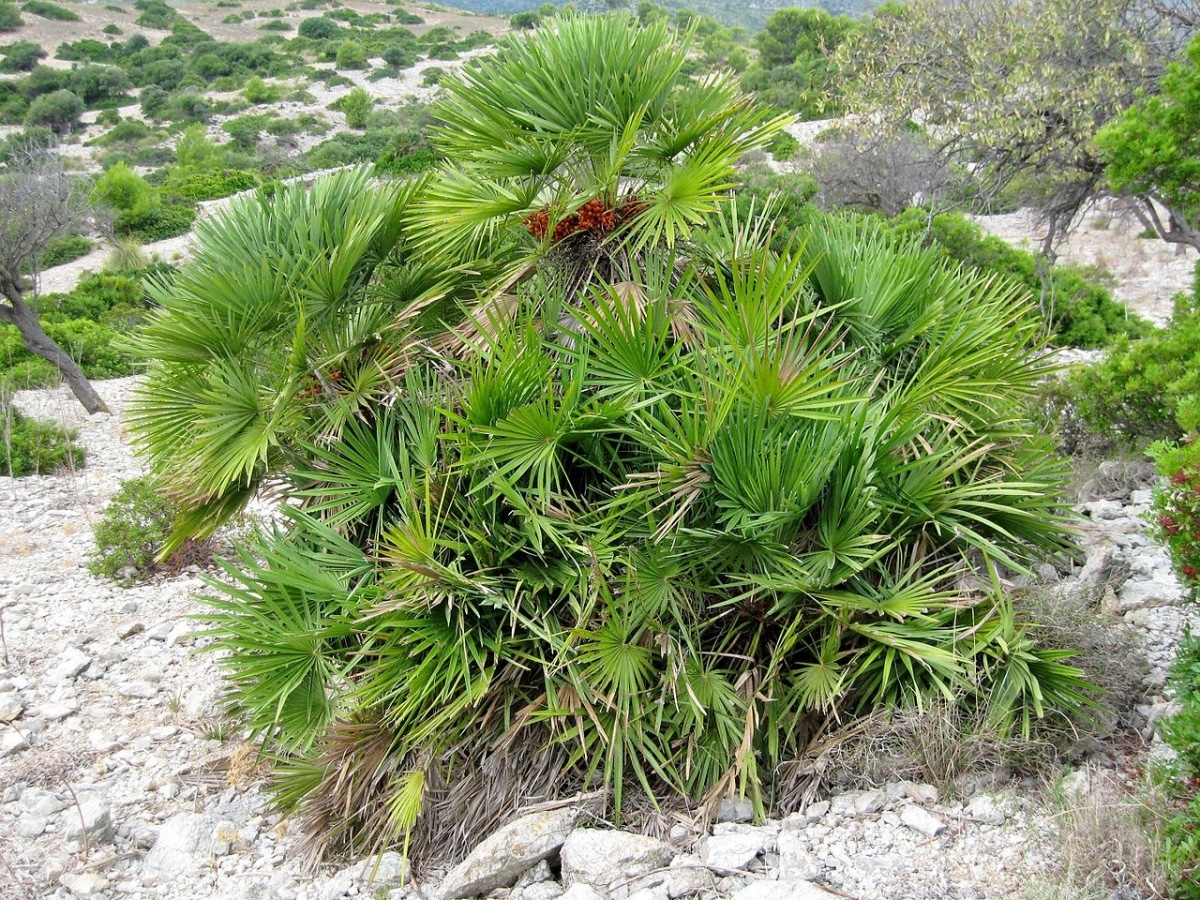
Image – Wikimedia/Olaf Tausch // Heart of palm in the Sierra de Tramuntana (Majorca).
The dwarf palm is one of two palms native to Spain, along with the Canarian palm. But unlike this one, it has a smaller size, more of a single stem (false trunk), and fan-shaped leaves. Because? Because it had a different evolution, since its habitat is a little different.
And that is that plants, like animals, adapt as best they can to where they live, doing things that served their ancestors hand in hand with genetics, because that’s where , in the genes, where they are registered all the mechanisms of improvement that occur since they began to evolve. For it, the dwarf palm in Spain is an amazing palmbecause it is able to withstand summers which, in addition to being hot, can also be very dry.
What is the heart of palm called in Spain?
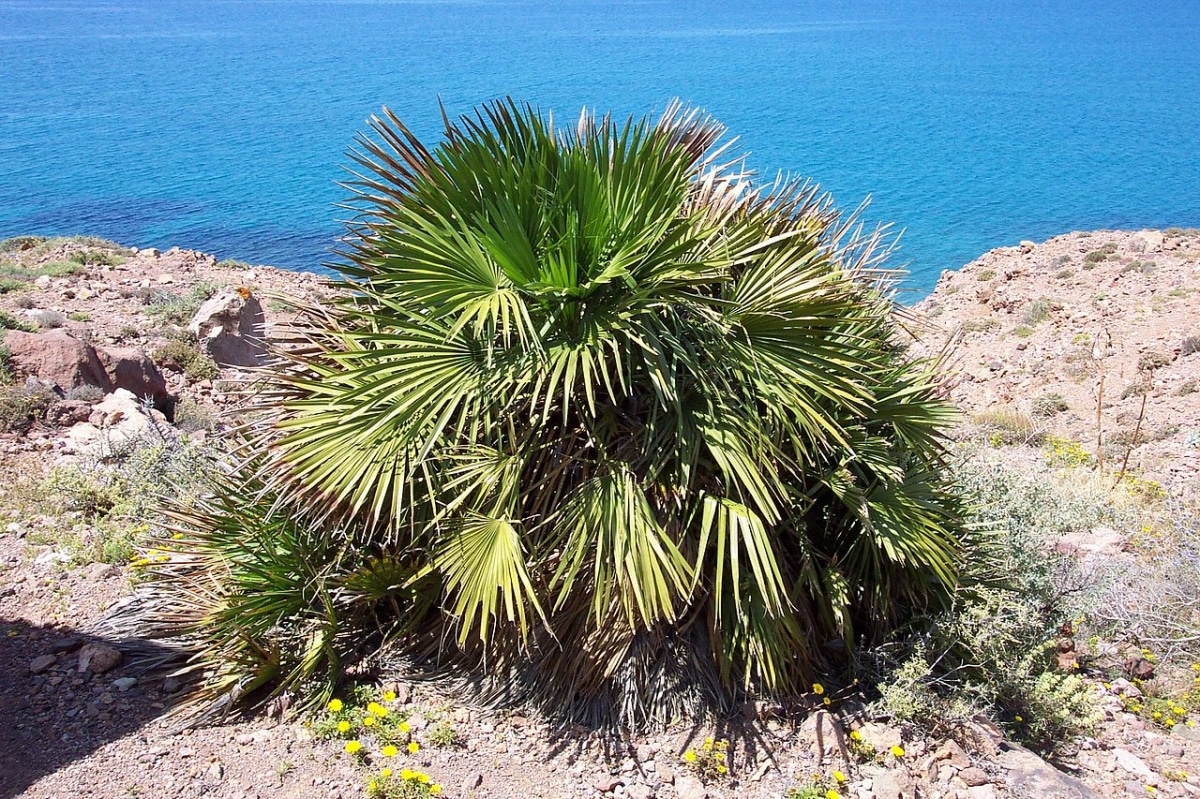
Image – Wikimedia/ANE // Palmetto in the Sierra de Cabo de Gata (Almería).
The heart of palm is a plant that receives several names depending on the provincesuch as: margalló, garballó, palmereta de secà, dwarf palm, palm tree, date palm, palm tree, dwarf palm, broom palm, margallón, escobilla or tamaras, among others.
As you can see, there are a lot of them, that’s why it is important to know the scientific name, since there is only one which, moreover, is universal. It’s this one: Chamaerops humilis.

Related article:
What types of palm trees are found in Spain?
Varieties of palm
Two varieties are known Chamaerops humilis, but you have to keep in mind that they are NOT from Spain. Now, to make this article more complete, we want you to know them because they are also very beautiful:
Chamaerops humilis var cerifera
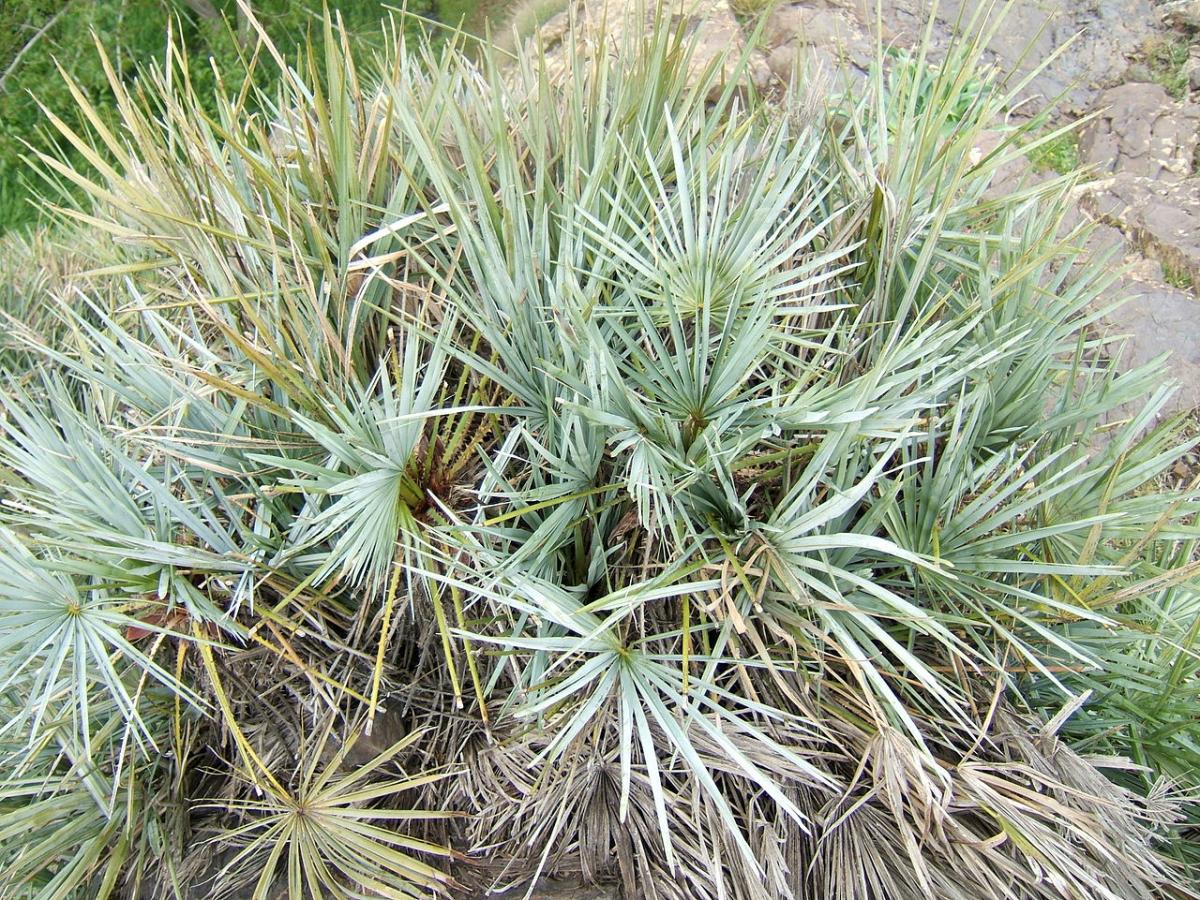
Image – Wikimedia/MPF
Also known as the Atlas palm or blue palm, it is a plant that grows in northwest Africa. As we can deduce from its name, its leaves are bluish (rather glaucous) and it prefers mountainous regions.
Like the Spanish heart of palm, it reaches a height of about 5 meters, with stems about 30 centimeters thick.
Chamaerops humilis var volcano

Image – Flickr/Zone Scott
The ‘vulcano’ is a thornless palm that grows in southern Italy. It has a more compact size, reaching a maximum length of 2 meters. Its leaves are green on the upper side and slightly pubescent on the lower side.
The truth is an ideal plant to grow in a garden loved by children and/or animals.
Where does heart of palm grow in Spain?
The heart of palm is native to the Mediterranean region, where it grows in the drier regions. In our country we find it in the south and southeast of the Iberian Peninsula, as well as in the Balearic Islands.. It is a common species in the Sierra de Cabo de Gata, in Almería.
But, it is also very present on the island where I was born, Majorca, more precisely, in the Sierra de Tramuntana, where it grows in pine forests, thickets, and a few meters from the sea.
What are the given uses?
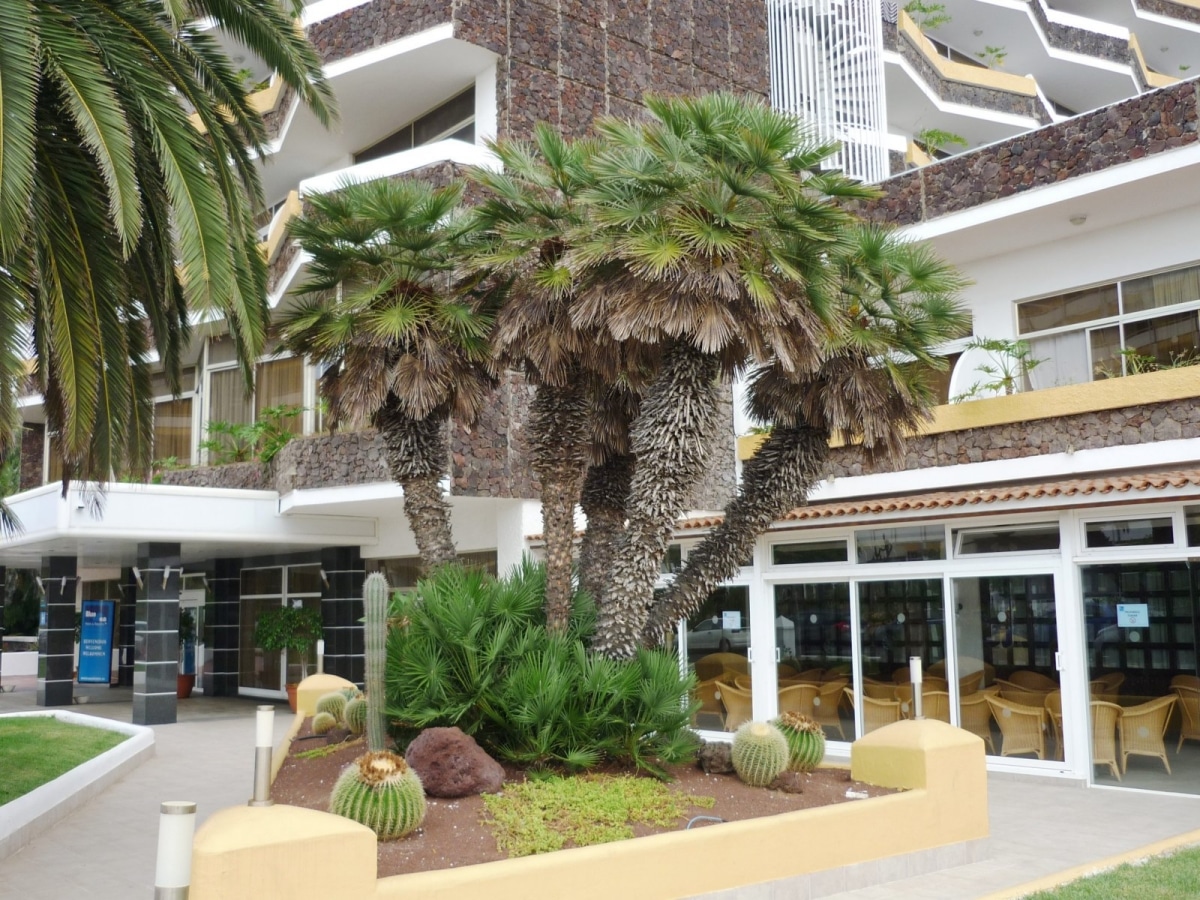
Image – Flickr/Jesús Cabrera // Heart of palm grown as an ornamental plant in the Canary Islands.
It is a palm that has several uses, which are as follows:
- Ecological: Being a plant with thorns, it serves as protection for native fauna, since it serves as a refuge. In addition, the fruits serve as food for many animals, such as rabbits or badgers.
- Ornamental: It is widely used as an ornamental plant in gardens, since it hardly requires any type of care.
- Edible: both the fruits and the heart (heart of palm) are suitable for consumption. However, you should know that the extraction of the palm heart ends with the palm tree.
- Other uses: the leaves are fibrous, so these fibers are used to make brooms, ropes and also as stuffing.
What are the basic needs of hearts of palm?
If you want to have this palm tree in your garden, below I will explain what its needs are so that you know how to take care of it in the best possible way:
direct sun
If you can give it throughout the day, the better.. It is a palm that will not be able to grow well in the shade, so it is very, very important to place it in a place where it receives direct sunlight when it is young, even when it is seedling.
water, but little
It is one of the palms that resist drought without difficulty, but for that it must be planted in the ground; that is, a heart of palm grown in a container will need to be watered from time to time or it will dry out. Therefore, although it lives in places where a minimum of 300 mm of precipitation falls per year, if we have it in a container, we water it a few times a week during the summer, and less the rest of the year; and if it is in the garden, during the first months it should be watered once a week.
well-drained soil
The palm heart does not support excess water in its roots. For this reason, it should not be planted in compact or heavy soils. And if it has to be in a pot, we will fill it with a mixture of peat and perlite in equal parts, or with a universal growing medium that you can buy here.
Mild climate
The Chamaerops humilis It is a Mediterranean palm, so it needs a temperate climate. It can withstand frost down to -7 ºC and high temperatures up to 42 ºC (if there is water), but it is also important that the relative humidity of the air is high.
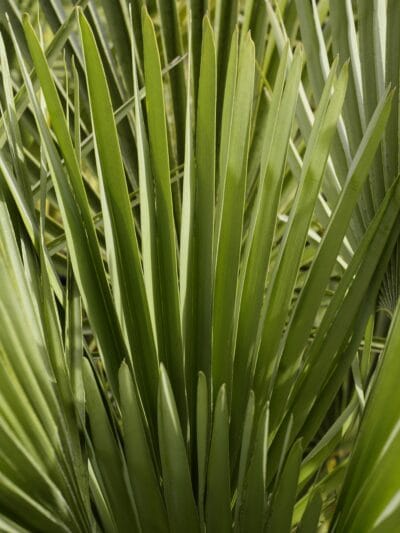
Image – Wikimedia/Hans Hillewaert
We hope you found what we told you about heart of palm in Spain interesting.