The first ones plows the simplest ones used in the Middle East worked very well for thousands of years and reached the Mediterranean, where they were ideal tools for cultivating the hard and rough ground. But then I know developed a very different tool: the plow mouldboard, created first in China and then in Europe.
What is the moldboard plow? General description. Formed by one or more bodies, each of which performs the cutting and turning of a strip of land whose section is rectangular, with a width equal to that of the cut and a height equal to the depth of intervention.
What is the function of moldboard plow? Main function • Primary tillage with turning of the soil, forming a channel which allows aeration and the circulation of rainwater towards the deeper layers. Incorporation of crop residues for decomposition under anaerobic conditions.
What is moldboard and moldboard plow? ploughshare and mouldboard: the ploughshare and mouldboard is one of the most common. The Grid penetrates the earth and produces the cut of a portion of soil, which is then turned over by the fallleaving an open furrow in its path.
What are the types of plows?
The plow It is a widely used agricultural tool in various soil conditions.
- The plow it is probably the oldest tool or tool used in agriculture, also providing a long useful life for the farmer. …
- three differ types: mouldboard, disc and rotary.
What type of plow is best? The plow The disc type is also useful for tillage, but unlike the mouldboard, the disc type is better in hard and rocky soils or soils with large remains of roots, because it works according to its weight.
Where does the plow come from? – Related issues
What are the differences between a disc plow and a moldboard plow?
The disc plowa difference Of the falldoes not cause any suction. Therefore, to achieve the desired soil depth, proper adjustment of the angle of attack of the disk and significant weight of the frame or structure of the plow (generally 150 to 500 Kg per disk).
What is landfill in agriculture?
The fall It is the part of the body of the plow which lifts, folds down, overturns and partially breaks the gleba or rectangular prism of earth cut by the share and the blade.
What are the advantages and disadvantages of the plow?
advantage, disadvantages and alternative methods….doWho Those are the plow disadvantages?
- Damage to the existing microflora in the soil is caused. …
- Creation of the plowing crust. …
- Increased number of tillage steps. …
- Greater energy and economic consumption.
Who invented the moldboard plow?
In 1837, John Deere manufactured his plow closing and fall polished steel, What considerably facilitated the work of plows melting Whatdue to their greater resistance to friction, they frequently got stuck in the hard soils of Illinois (USA).
How long does it take a tractor to plow one hectare?
Barely a quarter of an hour was enough for the tractor complete the work of hectare (more precisely 14 minutes) thanks to an average working speed of 9.3 km/h.
When is the best time to plow the land?
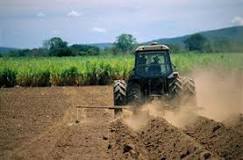
The most suitable period, both for grazing and for crops, is generally between the months of November (the 1st tillage) and March and April (the 2nd tillage). Word work derives from the Latin laborāre, which had the generic meaning of working.
How many HP per plow disc?
Plow of discs It consists of 3 to 4 discs 24″ or 26″ X 1/4” thick disk, with a working depth of disk from 15 to 25 cm. Power requirement for equipment from 80 to 100 hp engine.
Why is the land plowed?
With tillage, we are looking for one thing: to improve soil conditions. This means that if for example we have of flooded ground, try not to accumulate water on the surface.
How does plowing affect the soil?
The tillage of Usually I with traditional tools (plow disc or moldboard), is an agricultural practice that research shows as a possible cause of erosion, compaction, moisture loss and increased production costs when used excessively.
How many HP does a harrow disc need?
Consumption unit 36 86 HP.
How to improve soil quality?
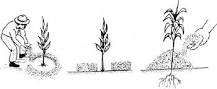
Manure and compost are needed to to improve the structuring of Usually I (chemical fertilizers are needed for higher production). The common method is to dig a hole to produce and mix the compost, organic matter, manure and use them in the Usually Ijust before planting crops.
What are the consequences of tilling the soil?
“The plow increases erosion, mineralization and CO2 emissions into the atmosphere,” he explained, and defended a radical change in farming methods, as is already done in the United States.
What is the name of the implement for plowing the land?
Plow, for prepare well the ground He is a team designed for groove and level the ground thanks to the blades it has. There are several models depending on the need: mouldboard, disc, surface or underground.
How much does the plow weigh?
The ballast approximate of plows bisurco is between 530 kg and 820 kg.
What did plows look like in ancient times?
The plow It appeared more than 5 millennia ago, a revolution at the time when furrows were already being made to place seeds. The plow It was created on the basis of the hoe or the shovel, but used in conjunction with animal traction, marked one of the advances in knowledge of prehistory.
What was used before the plow?
Early hoes were basically an improvement on tools who is They used for thousands of years to open the earth and put the seeds inside, these big sticks first, then hoes, pickaxes and shovels that broke the top layer of the soil to be able to plant the food.
What is landfill in agriculture?

The fall It is the part of the body of the plow which lifts, lowers, overturns and partially breaks the gleba or rectangular prism of earth cut by the share and the blade.
Who invented the moldboard plow?

In 1837, John Deere manufactured his plow closing and fall polished steel, What considerably facilitated the work of plows melting Whatdue to their greater resistance to friction, they frequently got stuck in the hard soils of Illinois (USA).
The most important operating characteristic of the plows discs and moldboardsis its ability to bury manure, plant residues, degraded pastures and the like.