
Pothos (Devil’s Ivy) is an undemanding, easy-care houseplant that thrives in most conditions. However, if your Pothos begins to develop curled leaves, it may be a sign that the plant is unhappy. This article explains why your Pothos leaves are curling and how to prevent it.
Why are my Pothos leaves curling? In most cases, Pothos curls for the following reasons:
- Submarine.
- Overfeed the Pothos with fertilizer.
- thermal stress.
- Root rot due to excess water.
- Too much or too little light exposure.
- Disease/insect infestation.
If your Pothos starts showing curled leaves and other symptoms of anxiety, take a moment to get to the bottom of it. Once you know the cause, you can fix the problem and your Pothos can thrive again. Read on for the causes and solutions for leaf curl on Pothos plants.
6 Reasons Your Pothos Leaves Are Curling
If you’re trying to figure out why Pothos leaves curl and want to know what to do to revive the plant, consider the following 6 possible reasons for the problem:

1. Flooding your Pothos can cause the leaves to curl.
The amount of water you give your Pothos can affect its overall long-term health. When a Pothos plant receives little or no water, the leaves curl up in an effort to retain moisture.
Soon after rolling, the leaves become soft and even mushy. If it’s just a watering issue and you catch the problem early (hopefully you’ll see the curling problem as it begins to develop) then the leaves will thin out quickly and will return to normal after another watering.
Although Pothos plants like to dry out the soil between waterings, they also do best if they receive a decent amount of soil moistening on a regular basis. To ensure your Pothos never gets waterlogged, keep in mind how long it usually takes for the soil to dry out after watering and set up a schedule or reminders.
2. Overfeeding a Pothos plant can cause the leaves to curl.
Overeating can be difficult to distinguish from other problems that curling sheets can cause. A telltale sign that curling may be caused by overfeeding is if the leaves are generally smaller than normal and have changed color (darker green or even yellowish in most cases) while showing signs of curling at the ends .
Most people overfeed their Pothos by using too much fertilizer or fertilizing the plant too often. In most cases, over-fertilizing a houseplant causes salts and nitrogen to build up in the soil.
You don’t need to fertilize your Pothos more than once or twice a year. If you are overfeeding your Pothos, there are other telltale signs to look for besides curled leaves. Among which:
- Yellowish or golden leaves. (Read more about why Pothos get yellow leaves in my article here.)
- The top surface of the soil may be white or crispy.
- The leaves of the plant will begin to fall.
- The roots can rot.
If your plant’s leaves are curling due to overfeeding, you can remove the houseplant from its current soil and transplant it into fresh soil. This is undoubtedly the best way to get rid of excess nutrients that are killing your plant.
Alternatively, you can rinse the floor, soak it with water and let it drain. Repeat several times to help the soil shed excess fertilizer.
3. Heat stress
If your Pothos is under heat stress (usually too hot), the leaves may curl around the edges. Pothos plants thrive in temperatures of 18-29°C (65-85°F). Temperatures outside of this range increase stress on the plant and increase the potential for problems.
Keeping your Pothos indoors will allow you to monitor and manage the temperature the plant is exposed to. The location of the plant in the house can also help. For example, avoid direct sunlight, as intense heat and light can cause leaf burn. Also avoid placing your plant where it can be affected by hot or cold drafts.
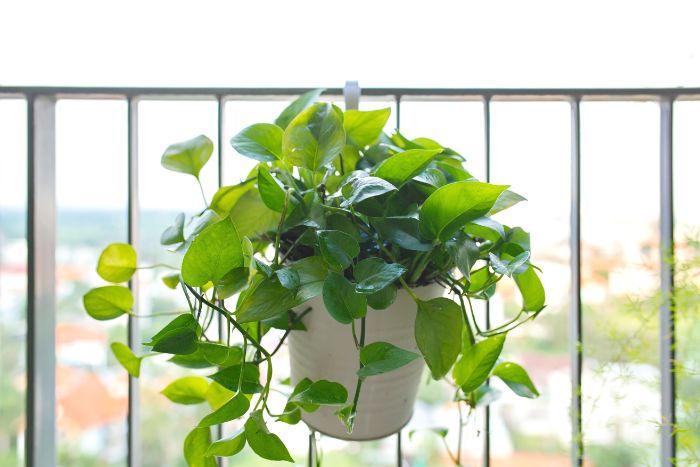
4. Root rot can curl the leaves of Pothos plants
Root rot is caused by too much water or poor drainage, resulting in soggy soil. The roots cannot survive for long in these conditions and without functioning roots the plant is in big trouble.
When the roots rot, water and nutrients cannot penetrate the plant, stems and leaves. Although there is plenty of water in the soil, the leaves dry out and begin to curl as they desperately try to hold water.
If your Pothos has early root rot, you can probably save it. Simply remove the plant from the pot and examine the roots. The roots of healthy plants are white. Use scissors or secateurs to remove the brown areas, as they suffer from root rot. When you’re done, wash off your gear and replant Pothos in cool, well-drained soil.
If you want to learn how to water your houseplants the perfect amount, read my article on how often to water your houseplants.
5. Poor exposure to light
A healthy Pothos plant has broad, flat leaves that turn toward the light source. If the leaves appear to be reaching or curling towards the light source, this is most likely a case of insufficient exposure to sunlight or natural light. You can try to solve the problem by moving the plant to a sunnier location or with more natural light during the day.
If the leaves are falling and curling away from the light (downward), you may be getting too much light. Too much sun exposure can be just as damaging to your plant’s health. To correct the problem, you can move your plant to an area that doesn’t get as much direct sunlight or gets a little less sunlight during the day.
6. Disease or insect pest
Pest and disease damage can also cause a Pothos to develop curled leaves. Curling is usually caused by pests or insects that suck sap from young leaves. If you see bugs or insects on your Pothos, remove them immediately.
You can clean the plant regularly with rubbing alcohol to keep bugs away from the plant (or to give the plant a fighting chance once the bugs are gone).
You can also make your own eco-friendly insecticide by mixing 1 teaspoon of dishwashing liquid in 1 liter of water. This solution can be lightly sprayed all over the plant. This should eliminate any existing insects and deter future insects from taking up residence in your pothos houseplant.
I wrote an article covering many ways to get rid of houseplant bugs naturally. Learn more here.
Last word
As you can see, there are a number of reasons why your Pothos plant may be developing curled leaves. Before deciding how to save your houseplant, spend some time researching what problems the plant may be suffering from.
The good news is that Pothos plants are quite hardy and generally rebound quickly (and well) if treated quickly and correctly. If you want to learn more about how to give Pothos the perfect growing conditions, read my article on how to grow Pothos plants faster.