
Some of the links in the post are affiliate links and I receive a commission for purchases made through some of the links in the post.
Are you a plant lover and want to add a touch of greenery to your interior? Try pothos plants.
Pothos plants grow quickly and can beautify your home with their beautiful leaves.
Golden Pothos is one of the easiest indoor plants to grow and maintain. They are probably the best plant for beginners.
The golden-green variegated leaves shine as if they had been treated with a coat of high-quality wax.
You will be proud to be the proud owner of this plant because it looks so luxurious. And this incredible experience requires minimal effort.
Occasionally, however, the beautiful variegated leaves of Golden Pothos begin to turn black or develop dark brown spots.
Blackening leaves on your pothos can be caused by too much light, too little or too much watering, poor drainage, insect damage, over-fertilization, and temperature and humidity issues.
This article will explain in more detail why the leaves of Golden Pothos turn black and how to avoid this problem in the future.
Why are my Golden Pothos leaves turning black?
 Overwatering or freezing will cause Golden Pothos leaves to turn black (temperature below 45oF or 7oC). Due to excess water, the roots and leaves have turned black.
If your Golden Pothos leaves are turning black due to one or more of the following:
Darkening of Pothos leaves caused by excess water, extreme temperature changes, insects, disease, excess light and fertilizers. These conditions can cause Pothos to crash, get sick, and possibly die.
excessive light
Although pothos plants thrive in bright environments, they should never be exposed to direct sunlight as this will burn them.
Make sure your room has a comfortable temperature and plenty of sunlight. Also, keep your pothos away from areas exposed to excessive sunlight.
If you initially place the Pothos in a room that gets lots of direct sunlight and it doesn’t grow as well as you would like, you can move it to a place where it slows down. light.
underwater and overwater
Pothos plants are more drought tolerant than other plants and need less water. Root rot, which darkens the leaves, is caused by too much water. The plant can perish if this condition is not treated in time.
Plants will die if they receive too much water! Indeed, the lack of oxygen in the soil damages the roots and prevents them from absorbing water properly.
Whether you think you’re watering too much, make sure the soil isn’t too saturated before watering again.
don’t give him your water Usually I more than once every two weeks or until dry. It depends on the weather and humidity in your area.
Keep the soil for your pothos plants moist but not soggy. A significant accumulation of water in the drainage trays under the pots indicates that you are watering too much.
Overwatering a pothos will drown the roots of the plant. These begin to rot, causing the leaves to decay.
poor drainage
As mentioned, your pothos plant will decompose quickly if submerged in water.
Even if you are careful not to overwater the Pothos, the drainage pores may become clogged or the roots of the plant may become girdled, causing poor drainage.
Prevent this by removing clods of soil that can clog holes and prevent water from draining.
Also, if you find the soil to be dry and brittle, you should press the soil against the side of the pot so that the water reaches the roots of the plant.
If the soil is compact on the surface, it should be broken up and invested in potting soil with excellent drainage.
how to fix it
Remove any clods that may be preventing water from flowing through holes in the ground.
In order for the water to reach the roots of the plant, you need to press the soil. Be sure to aerate the soil once the surface is compacted.
Use potting soil with excellent drainage for your Pothos.
insect plague
 Some common insect pests of indoor plants, such as scale insects and red spiderit can also cause dark brown spots on plant leaves.
Nope vermin they are attracted to healthy Pothos. However, if the plant does not have the right conditions, it is more susceptible to insect infestation.
Insect spots are small and appear in the center of the leaves, while root spots appear on the sides of the leaves. At low temperatures, the entire surface of a leaf turns black.
how to fix it
- Remove ivy from the rest of your plants first to prevent pests from spreading. Spread out damaged leaves to avoid bumping into the vine.
- To get rid of scale insects, spray the Pothos with horticultural oil. Horticultural oil prevents mealybugs from entering and killing the plant through the ventilation holes.
- Insecticides can be used on all species of scale insects. In contrast, insecticides have come a long way since their introduction. Your activities in this regard will not cause any harm to the plant. Alternatively, you can exterminate insects. We recommend applying rubbing alcohol to the problem area.
overexposure to light
Pothos would thrive in bright environments, but if placed in full sun it will suffer badly.
If your plant receives too much light, it and its leaves can be damaged. The leaves of your Pothos turn black and wilt accordingly.
Direct sunlight would damage plant cells, causing leaf discoloration. To avoid this, place the plant out of direct sunlight and in an area with sufficient light.
How to fix
To avoid this minor issue, place your plant in an area with lots of natural light, but out of direct sunlight.
Don’t be afraid to move your Pothos into a dark room; they will prosper there. However, you should always ensure that the space where your Pothos is kept has some natural light.
Over-fertilization
in one tightPothos are often fertilized effectively. that is why in addition fertilization This is generally not essential.
Pothos, like other plants, need nutrients to thrive. However, applying too much fertilizer will damage your Pothos.
Burning manure is characterized by blackening of the leaves. Your potted pothos don’t need regular fertilizing. Apply fertilizer once every two to three months, from spring to fall.
How to fix
If you see your Pothos not growing, that doesn’t necessarily mean you need to give it more fertilizer; most of the time it indicates that the plant is not getting enough light or water
Before adding additional fertilizer, it is essential to inspect the watering and lighting of the plant. Fertilizer application should be avoided when plants are dormant in winter.
temperature and humidity
You should do your best to keep the temperature of your Pothos between 15 and 30 degrees Celsius. The plant may die if the temperature drops below 15 degrees Celsius.
Pothos often thrive in average household humidity and adequate lighting. However, lower humidity can cause discoloration of Pothos leaves. Brown and black in winter.
How to fix
If your Pothos is missing humiditymist the plant to provide additional moisture.
A humidifier or oven can also be helpful in developing your pothos.
A simple strategy for increasing humidity near plants is the pebble tray method.
Also, by grouping your plants together, you can increase the humidity around them.
final thoughts
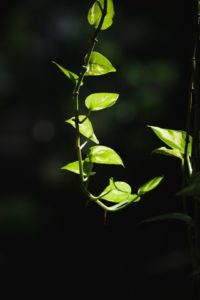 The color of pothos can change frequently, from yellow to brown and, as we have seen, even black.
But there is no need to panic; find the relevant cause and correct it. You will probably not have these problems anymore if you focus on caring for plants and the environment.
Your golden pothos leaves may turn black for any of these reasons. You can find out where your installation is breaking down and fix it.
Pothos plants can turn from yellow to brown as we have seen, or even black depending on their environment. Do not panic, but identify the problem and apply the solution.
The best course of action is to prevent an incident in the first place. If you pay close attention to how you take care of your plant and the environment, you are less likely to have any of these problems.