
A small palm that you can place indoors, the parlor palm is popular as a houseplant due to its shade-tolerant nature.
However, have you ever noticed that the fronds of your living room palm have turned pale by growing them indoors?
In this article, I present the reasons for palm leaf discoloration and share three tips for taking care of it.
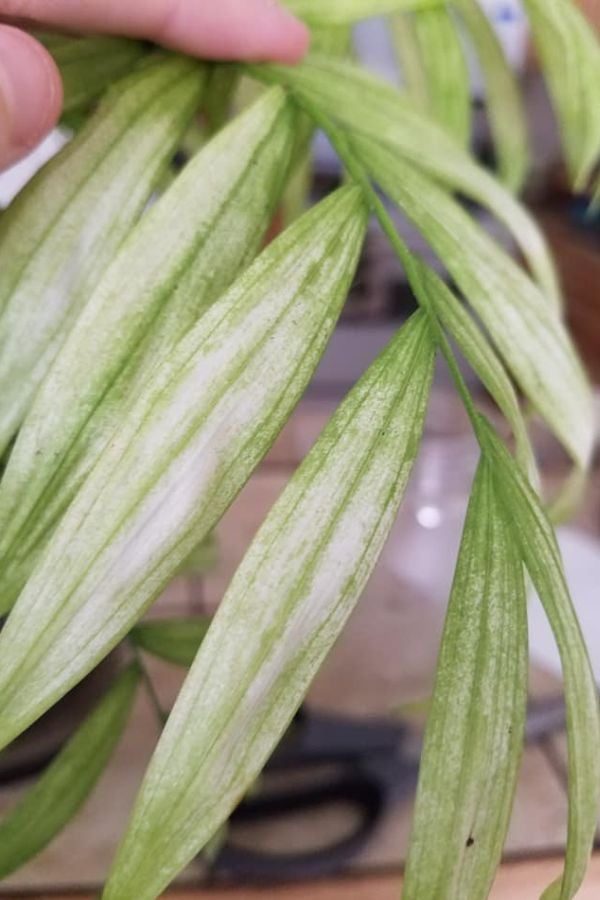 Palm tree white due to mite infestation
Why do the colors of living room palm leaves fade?
Let’s first look at the main reasons why palm fronds in your living room may lose color.
1- Root limit
If you haven’t transplanted your living room palm in more than two years since you bought it, it most likely has roots attached, which means the pot is full of roots.
If the number of leaves and the height of the plant have increased since you bought it, the leaves may turn pale or yellowish due to root attachment.
When a plant has roots, it has difficulty absorbing water and nutrients, which often causes the leaves to change color or become distorted.
How to check if your plant is rooted?
- The roots protrude from the bottom of the pot.
- Water does not seem to be absorbed by the soil during irrigation.
- Try to take the plant out of the pot; if it’s hard to do, it’s probably root related
If you think your parlor palm is root bound, replant it during the warmer months, spring through fall.
Choose a pot slightly larger than your current pot (about an inch larger in diameter) and use soil specifically made for houseplants. Avoid transplanting during colder months as this can weaken the plant.
2- Direct sun (too strong sun)
The green color of plants comes from the pigment chlorophyll which is responsible for photosynthesis. When plants don’t get enough sunlight, they may try to produce more chlorophyll.
On the other hand, exposing the plants to direct sunlight or intense midday sun can cause “sunburn,” which causes the leaves to appear discolored.
Parlor palms, in particular, are shade-tolerant plants. They prefer “partial shade”, “light shade” or “light filtered through a transparent curtain”. Exposing them to too much sunlight can cause their leaves to turn pale.
3- Nutrient deficiency
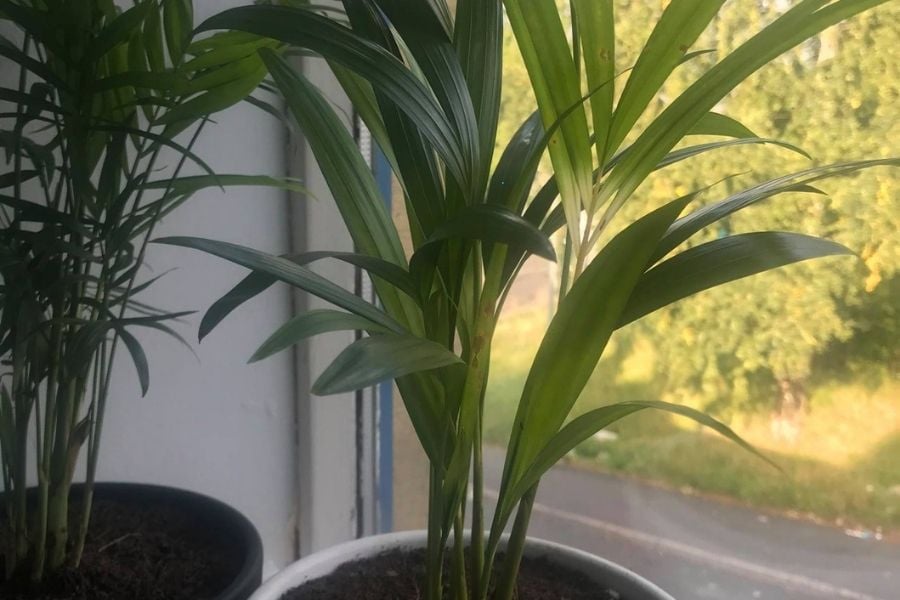
Another reason for the color of parlor palm leaves to fade is a lack of nutrients, especially nitrogen, calcium, and other essential elements.
If you haven’t transplanted your living room palm in several years, the soil may be low in nutrients.
If your plant is not root-bound (as described in Section 1), try applying a houseplant fertilizer from spring through fall (when temperatures are above 20°C).
If you suspect your plant has root bindings, replant it in fresh soil and do not fertilize it as plants with root bindings are more susceptible to root rot.
4- Damage caused by vermin
Another possible cause of parlor palm leaf color loss is pest damage.
In this case, you should see small insects in the hollow of your living room. Common pests that affect parlor palms include spider mites and scale insects.
These pests are more likely to infest houseplants with poor air circulation. If left untreated, they can cause the leaves to change color when feeding and possibly kill the plant.
Common Pests on Parlor Palms
- Red spiders: Dry indoor environments are often a blight. If you see web-like structures near the base of leaves, spider mites are likely present. Remove them as soon as you see them. Leaves affected by spider mites often show patchy discoloration. Spraying the leaves can help prevent mite infestations.
- Cochineals: It can infect indoor plants in winter with the windows closed. These little button-like insects come in a variety of shapes and colors. If there are only a few, you can remove them, but if there is a heavy infestation, using insecticides may be more effective. Check the underside and base of the leaf for scale insects if the leaves are sticky.
- Direct sunlight (sunlight too strong)
What are three tips for growing lounge palms?
Now, let’s present three tips for successful cultivation of living room palms.
1- Avoid temperatures below 41°F
Parlor palms are sensitive to low temperatures, especially in winter. Maintaining a temperature of at least 50°F will keep your leaves in good condition.
2- Keep them out of direct sunlight
Parlor palms prefer partial shade. If they are indoors, it is best to place them near a window or behind a curtain where they will receive filtered sunlight.
3- Ensure good air circulation
Air circulation is often overlooked, especially in the winter when our focus is on maintaining temperature.
However, air circulation is essential for plants. If windows are closed more often in winter, indoor air can become stagnant, which can lead to root rot or mold.
Use a fan or air circulator to move the air around your palm in the living room for good air circulation.
Key learning points
In summary, I’ve discussed the main reasons palm fronds can fade in living rooms and shared three tips for growing them successfully.
It is a common belief that “plants need lots of light”. While some species seek out bright light, shade-tolerant parlor palms can suffer leaf damage when exposed to strong sunlight.
Parlor palms may be small, but they grow well from warm spring through fall. If you haven’t transplanted your living room palm since you bought it, you probably have root problems.
Use this article as a reference to identify possible causes of pale palm fronds in your living room:
Possible reasons for pale parlor palm fronds:
- root limit
- Direct sunlight (excessive or western sun exposure)
- pest damage
Three tips for growing parlor palms:
- Keep them away from temperatures below 41°F.
- Avoid direct sunlight
- Ensure good air circulation.
Sharing is caring!