Plow increases porosity, which promotes growth of plants, although water is lost when the soil is disturbed for evaporation and something of Usually I for erosion and possible rain wash away the nutrients and fertilizers that may have been applied to the soil, generating losses.
What are the types of plows?
types of plows for tilling the soil: deep or primary tillage
- Tools for tillage with reversal.
- Plow discharge
- Plow Discs.
- Plow corruption
- Turn tillage vs. vertical tillage.
- Vertical tillage tools.
- chisel.
What is used to plow the land? Plow, for prepare the ground well He is a team designed for make furrows and level the ground thanks to the blades it has. There are several models depending on the need: of fall, of discs, superficial or of basement.
What are the results of good tillage? Improved aeration and oxygenation Even though we have already mentioned it in other articles, turning the soil increases the number of macropores in the soil. These are responsible for storing gases, (What oxygen), which the roots of the plants need so that the problems do not appear.
How does the land plow work? With the word “plowmeans this process that removes horizontal clods from the surface of the soil. Then, these clods are stirred up and crushed to restore the soil to its initial state and favor the passage of organic matter, guaranteeing nutrition and space for the new crop.
Why is the land plowed? – Related issues
When is the best time to plow the land?
The most suitable period, both for grazing and for crops, is generally between the months of November (the 1st tillage) and March and April (the 2nd tillage). Word work derives from the Latin laborāre, which had the generic meaning of working.
Why is the plow important?
The plow allowed to open the ground and plant crops. Thus was born agriculture. When agriculture became well established – 2,000 years ago during the Roman Empire and 900 years ago during the Song dynasty in China – these farmers were five to six times more productive than the foragers they had replaced.
How much does it cost to plow land?
The price of clearing can vary between €0.25 and €5/m2, although the most common is that it costs between €0.90 and €3/m2.
Why not plow the land?

At plow soil, its volatilization occurs, and hence, loss to the atmosphere. This reduces the amount of nitrogen available for plants once planting has begun. For Therefore, plants resort to organic matter, which means its gradual decrease in the soil.
How to improve hard and dry ground?
So that improve the land of the garden is more complete, the ideal is to combine the compost with a substrate of organic matter, such as earthworm humus. The latter will provide the soil with a good number of minerals necessary for the development of any crop.
What are the consequences of tilling the soil?
“The plow increases erosion, mineralization and CO2 emissions into the atmosphere,” he explained, and defended a radical change in farming methods, as is already done in the United States.
What are the advantages and disadvantages of the plow?
advantage use the plow in the field one of advantage it is What the soil is maintained in its best condition, eliminating imperfections or weeds. In addition, a better porosity is obtained, which What will help What the more oxygen there is to the plants and therefore they grow more vigorously.
How does plowing affect the soil?
The tillage of Usually I with traditional tools (plow disc or moldboard), is an agricultural practice that research shows as a possible cause of erosion, compaction, moisture loss and increased production costs when used excessively.
How to remove soil for sowing?
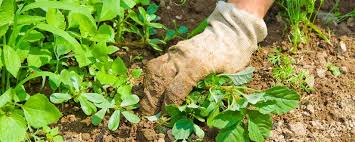
For to perform this task, it is convenient that the Earth neither too dry nor too wet. must be wet for facilitate the pulling of weeds of root. It’s a heavy task that we can do with a hoe stirring the Earth or pull the herbs directly by hand.
What to do after plowing the land?
Often one has to resort to leaving the Earth with lumps after plowing Yes, after, perform additional work to break them up and leave the soil ready for planting. The temperature value is usually not established experimentally, rather intuitively.
How long does it take a tractor to plow one hectare?
Barely a quarter of an hour was enough for the tractor complete the work of hectare (more precisely 14 minutes) thanks to an average working speed of 9.3 km/h.
How much does an hour of work with a tractor cost?
For tractor of 122 HP (90 kW), operating with an average load throughout the year, this consumption would be 13.5 L/h, which is equivalent to 10.13 €/h (0.75 €/litre of diesel), and maintenance and repairs of €3.65/h, which totals €13.77/h.
How did they plow the land before?
The first hoes were essentially an improvement on the tools that I know used for thousands of years to open Earth and put the seeds inside, those big sticks first, then the hoes and pickaxes and shovels that broke up the top layer of soil so they could plant food.
What is a plow and what is it used for?
Function principal • Primary tillage of the soil with turning of the soil to produce swelling and aeration.
What are stationary plows?
The plows that we represent have as their main feature their versatility of operation, offering quality work and performance, they have multiple adjustments in the discs, height, rotation and inclination of these.