
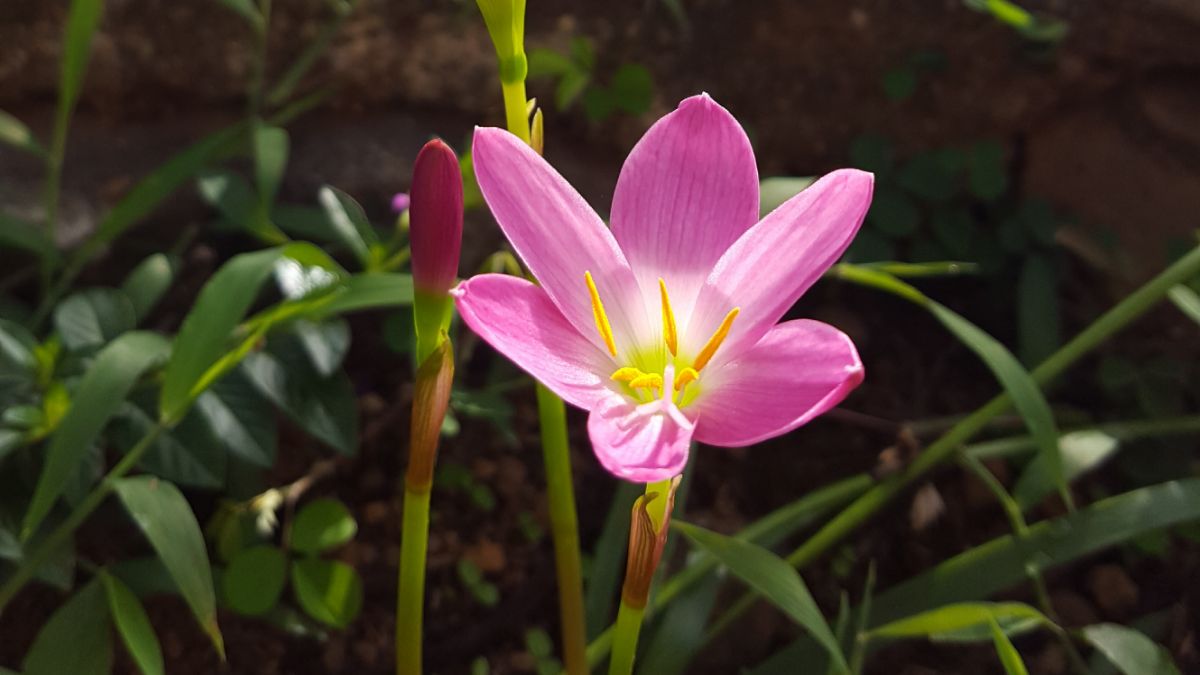
If you are one of those who love flowering plants, Zephyranthes carinata is the one that will not disappoint. But do you know what plant we are talking about?
Zephyranthes carinata was discovered in 1825. and it is one of those which possesses one of the most beautiful flowers of the vegetable kingdom. Below you can learn more about its characteristics and, if you dare, have it in the garden knowing everything it needs.
How is the Zephyranthes carinata
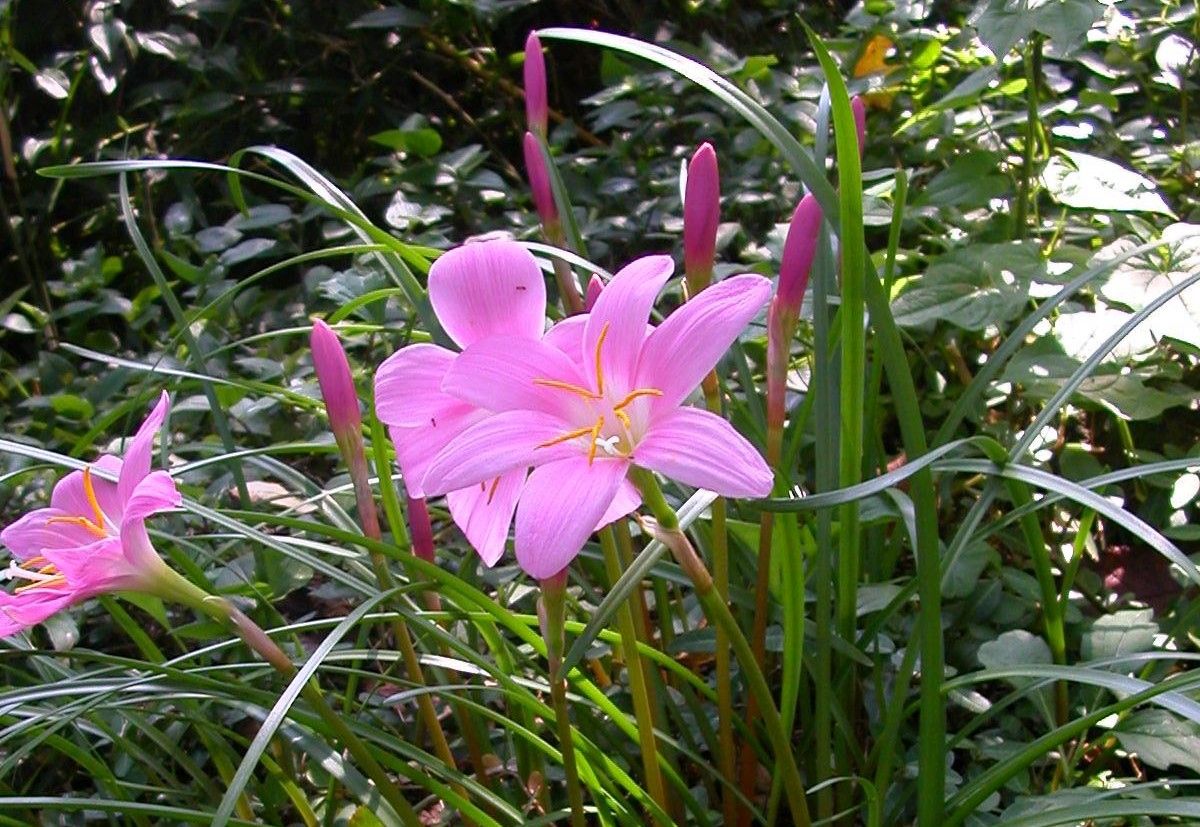
Native to Mexico (although naturalized in China), Zephyranthes carinata is a bulbous plant from the Amaryllidaceae family. This plant, also called rain lily, Maria’s tears, pink pixie or Cefirante, is not too tall, since in adulthood it will normally be 30 centimeters high. This is also because the bulb itself isn’t large either (it will be about 2-3 centimeters in diameter).
The plant has many leaves which will be light green in color. These are narrow, like ribbons, and will also be ribbed in the center. They can measure 15 to 30 centimeters and 6 to 8 mm wide.
However, it is the flower that will attract the most attention from this plant. Apparently, every time it blooms, it does so with a single flower. Although the original is pink, the truth is that now they can be found in other colors like yellow, orange or even white. This flower stands out all the more from the plant since its flower stem can measure between 15 and 50 centimeters.
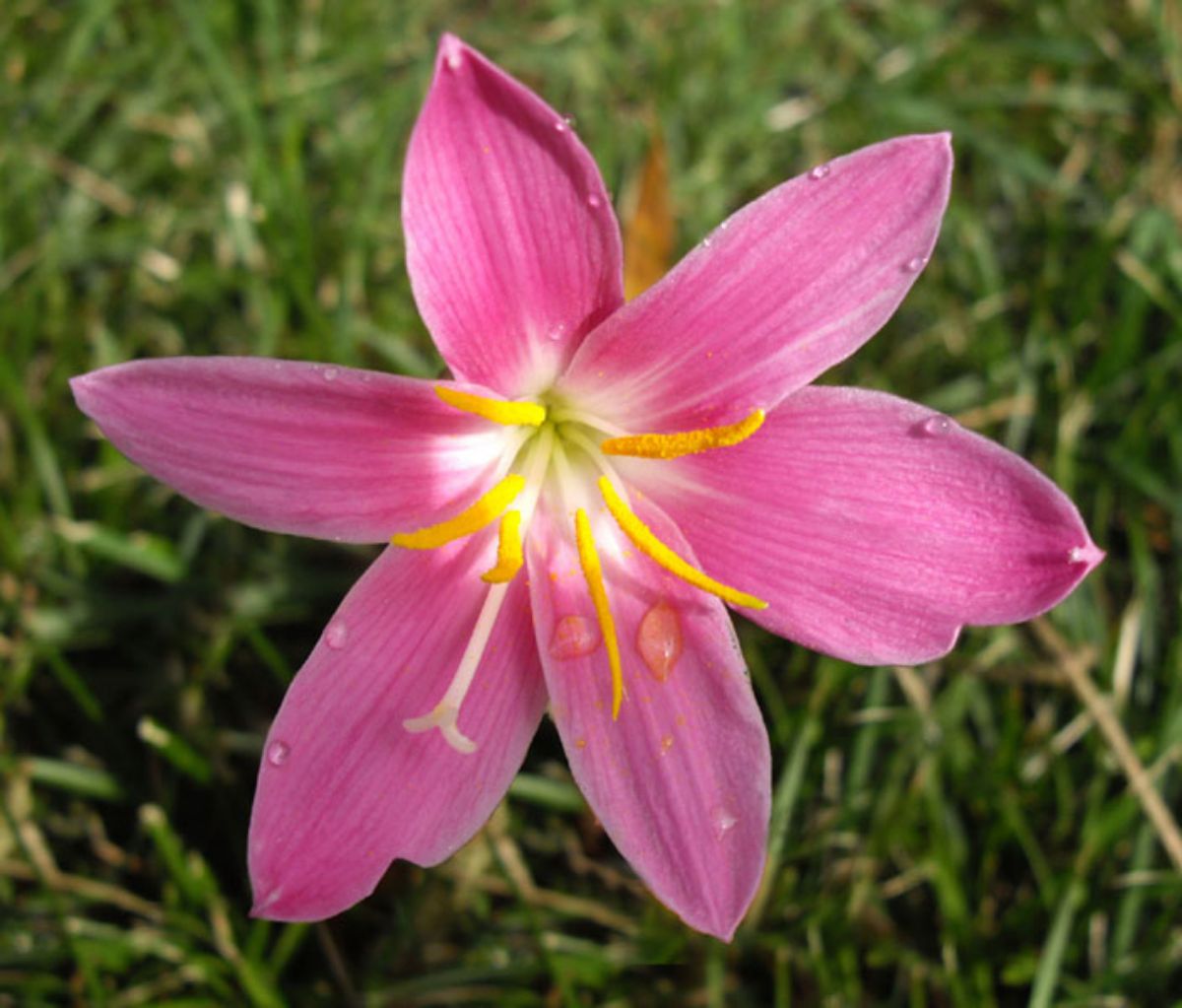
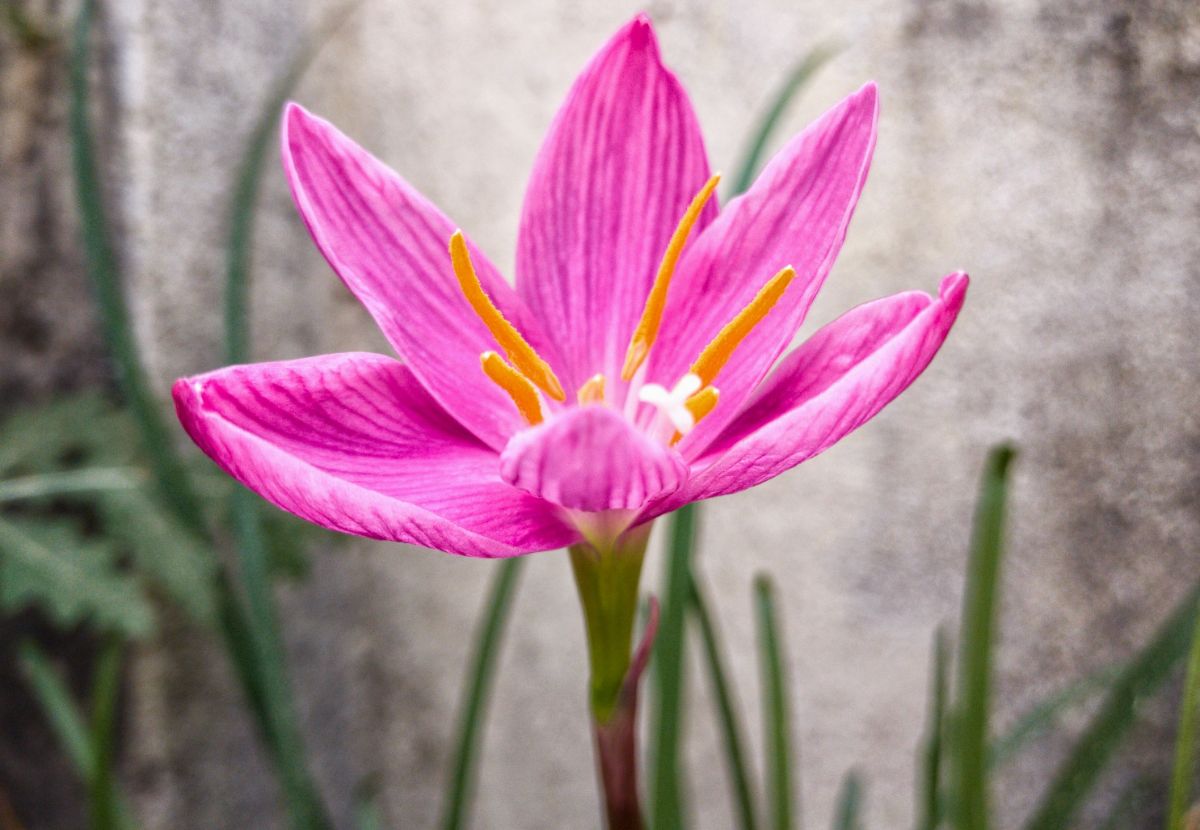
The flowering period of this plant is in late summer or fall. And it is that, according to what they say, when it stops raining is when the flower opens, revealing a star, about 10 centimeters in diameter, composed of 6 to 8 petals with rounded ends andin the center, white with yellow-tipped peduncles.
This plant is ideal to have it in the garden with other plants because it is not invasive, and so they will feed and hydrate each other.
Zephyranthes carinata care
Now that you know some facts about Zephyranthes carinataAnd if you dare to have it in the garden? It can be both potted and planted in the garden. And the care is practically the same. Do you want to know which ones to make the final decision? Pay attention:
location and temperature
As a flowering plant, Zephyranthes carinata needs direct sunlight to thrive. Your best place will therefore be outside. Depending on the climate you have, you must choose between full sun (if it is cold or temperate) or partial shade (if in summer the sun heats up too much and can burn).
Now well, we are talking about a bulbous plant, which means that when it finishes flowering it wilts whole plant and only the bulb remains. This, if the winter is not too cold, you can leave it in the pot (if possible, protecting it). But if not, it will have to be taken out and stored in a dark, cool place until the following spring.
The above already gives you an idea of its ideal temperature. Heat is not a problem for Zephyranthes carinata. But the cold yes, to the point that it can deteriorate the bulb and prevent it from coming out.
Substrate
The ideal soil for Zephyranthes carinata should consist of sand, organic matter and some drainage such as perlite, orchid soil or mulch.
It is a question of making a very light suit so that it does not weigh down and at the same time it is obtained that the plant has adequate humidity. Make sure the soil pH is at 7 or a little lower, as that would be ideal.
Since the soil will need to be changed every year, it will have all the necessary nutrients. Unless you have been using the same pot for several years (if this is the case, it is best to see the subscriber section). Remember that the bulbs are planted in the spring, when the cold and frost season is over.
Irrigation
The irrigation of Zephyranthes carinata must be regular. But you shouldn’t add a lot of water. It is better to water little, even if it is more often per week, in spring and summer. When the leaves start to turn yellow you should hang it so that naturally the plant dries up and so the bulb is ready for hibernation.
We can’t give you an irrigation guideline as it will depend a lot on the climate and where you have it (it’s not the same as being in full sun than being in partial shade in a very stifling climate).
Subscriber
As we told you before, since the bulb must be planted every year, the soil you will use will be new and it already contains the nutrients it needs. But if this is not the case, or if you want to give it additional nutrients, you can bet on a liquid fertilizer for flowering plants.
Apply it to irrigation water (if possible in doses lower than those determined by the manufacturer) and every 2-3 weeks in spring and mid-summer.
Size
The pruning of Zephyranthes carinata is based on the removal of dead leaves as well as flower in late fall, when the bulb goes into hibernation and can be left or it can be dug up and stored.
Plagues and diseases
It is one of the most important care in plants, but in the case of Zephyranthes carinata it is not so. And it is that this plant is quite resistant against pests and diseases.
Even so, problems with lighting or watering can make it sick or even kill it.
Multiplication
To finish, the way to propagate Zephyranthes carinata will be through the bulb. Over time, it will develop suckers that you can cut off and allow the cutting to heal, then plant them out in the spring.
From everything you have seen, there is no doubt that Zephyranthes carinata is one of the flowering plants that will stand out the most in your garden. Do you dare to have it?