If you are an avid admirer of white flowers (bracts), Peace Lily or Moses Cradle (Spathiphyllum) should be on your wish list. While the plant is hardy and low maintenance to thrive, flowering takes up much of its attention with uncertain results. That’s why we help you with this article on how to make peace lilies bloom. Learn how to make the peace lily bloom and illuminate your interior with its subtle touch of elegance, beauty and serenity.

When does the peace lily bloom?
The peace lily blooms naturally in spring and summer. In warm climates, they can flower all year round, but especially at the onset of winters.
How do you make peace lilies bloom?
1. Keep the roots tight

Keeping the plant lightly attached to the roots will promote flowering, as it will then direct its energy towards growing white bracts rather than extending its roots.
If you grow it in a pot, do not choose one that is too big and too wide, a diameter of about 20cm and deep would be ideal.
2. Get a mature plant
Keep in mind that young peace lily plants will not flower. If you want regular blooms, it’s a good idea to get a 1-2 year old specimen.
3. Provide the right amount of light
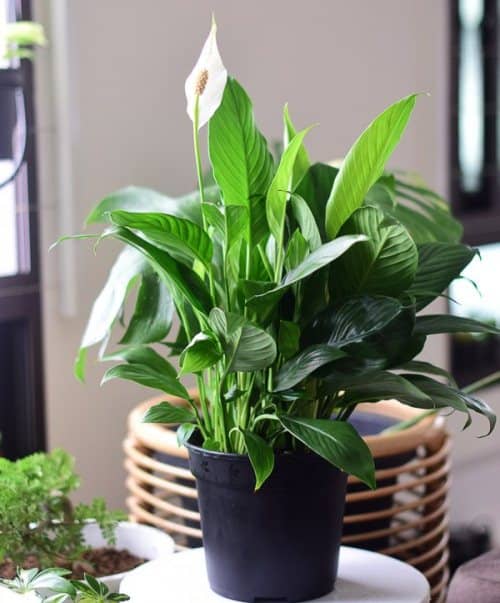
Place your peace lily in a location that receives bright, indirect light. East-facing windows provide the perfect blend of light and shade, while adhering to feng shui principles of well-being.
This indirect light should be bright enough for you to read something in it.
Bright, diffused light will give your peace lilies the energy they need to photosynthesize and produce more flowers.
4. Expose the plant to an appropriate temperature
Plants refrigerated at 12°C can flower 3-4 weeks earlier than those that are not refrigerated.
Do not let the temperature drop below 12 C and avoid exposing the plant to temperatures above 30 C for better flowering.
Peace lilies need temperatures between 15 and 30°C to produce perfect bracts. Higher temperatures will yellow the leaves, while cooler temperatures will stunt their growth.
5. Avoid the use of chlorine in the water
The peace lily dislikes water contaminants such as fluoride and chlorine, as they can brown the foliage.
Use reverse osmosis or rainwater for best growth, but if you only have access to tap water, fill a container and leave it uncovered for a day or more to allow chlorine to evaporate.
6. Provide a suitable substrate
The peace lily needs well-drained, nutrient-rich soil.
Add coarse river sand to the mix to make it grainy and draining; and mix it with cow manure or compost to make it rich in nutrients.
7. Use Proper Fertilizer and Avoid Overfeeding
Use a water-soluble 20-20-20 houseplant fertilizer diluted halfway once every 3 to 5 weeks.
Keep an eye on the health of the flower. A slightly greenish tint indicates over-fertilization, which should be stopped immediately.
8. Make Sure It Gets Proper Humidity

Peace lilies need plenty of moisture to produce denser leaves and flowers. Spray the plant with water every half day or run a humidifier around it.
Placing the pot on a saucer half filled with pebbles and water also does the trick.
Another common mistake is overwatering. This plant likes moist but well-drained soil. The trick is to keep it moist without letting water sit near the roots, causing root rot.
9. Use gibberellic acid
According to Florida University Extension, gibberellic acid, a natural plant hormone extracted from mushrooms, can promote flowering in peace lilies and also helps produce good quality flowers in other tropical plants.
Use the acid foliar spray at 125, 250 or 375 ppm for best results.
You can buy it at a garden center or online and follow all label directions.
Care: Plants are extremely sensitive to gibberellic acid, and excessive use can cause them to wither and die.
10. Care tips after flowering

After being blessed with the peace lily flower, keep an eye out for some things that will ensure healthier plant growth:
Wipe the leaves with a damp cotton cloth every 1-2 weeks to ward off harmful pests.
Cut off dead flowers to encourage new flower growth and give the plant a neater appearance.
Share it on the networks: