If you purchase an item through links on this page, we may earn a commission. Our editorial content is not influenced by commissions. Read full disclosure.
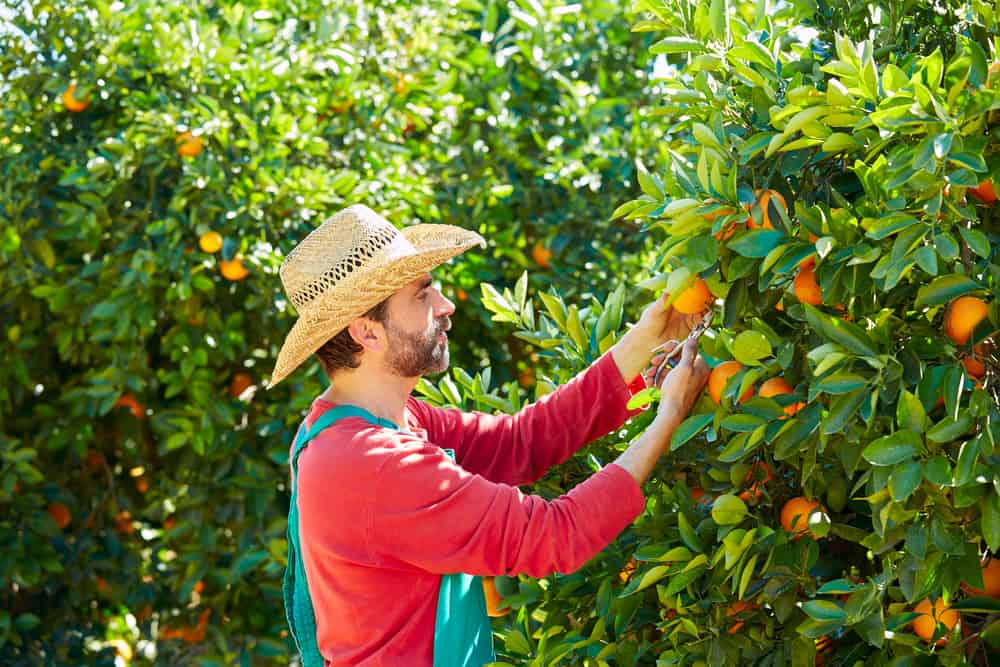
Some fruit trees take a while to grow and produce fruit. Their first harvest can take up to seven years, and some even longer.
I like to grow slow-maturing trees like papayas, but like most gardeners, I want fruit quickly.
If you want to know which fruit trees to plant to give you the fastest harvest, then let’s get to it because we’ll cover the most common and popular fast-fruiting trees.
11 fast-growing fruit trees to try
With these fast-growing fruit trees, you can have fruit in just a few years. Look for fast maturing cultivars and get your fruit even faster.
1. Mango
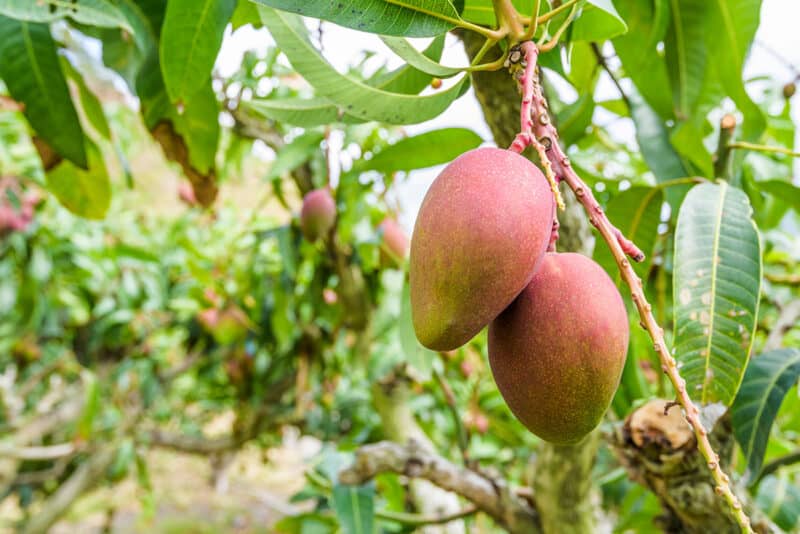
Most mangoes (Mangifera indica) take only one to two years to bear fruit after planting. To increase your chances of getting an early harvest, choose ‘Glen Mango’. Although the zone they grow in is limited, if you live in USDA hardiness zones 9-11, you’re in luck.
The mango tree flowers from December to March and bears fruit about five months later.
Just plant one. The mango tree is a monoecious plant, that is, it has male and female flowers on the same plant.
Mangoes can grow up to 100 feet tall and 30 feet wide, so positioning is key. There are dwarf varieties that you can keep in a pot, such as the dwarf spotted mango, but these are more likely to bear fruit when planted in the garden.
Plant in the spring when all danger of frost has passed, expect full sun and well-drained soil.
2. Mulberry
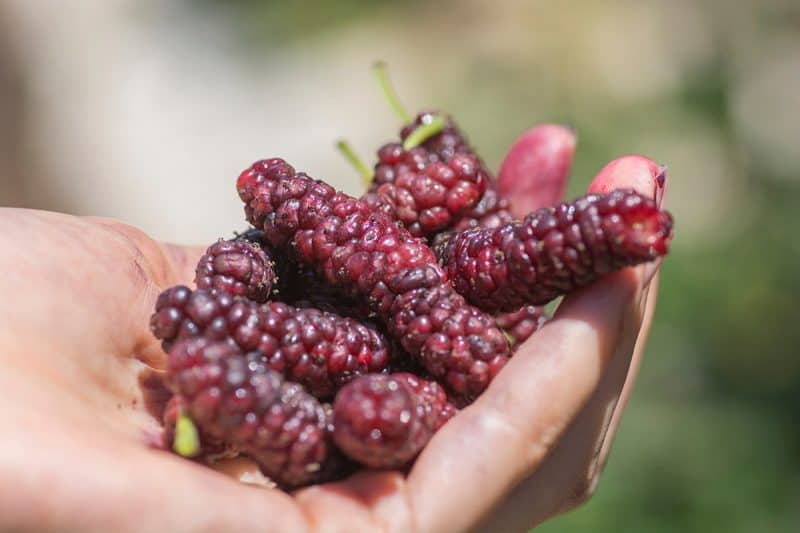
Mulberries (Morus spp.) will bear fruit between one and three years after planting, depending on the type and area. Grow in zones 4 to 8, but make sure they aren’t near structures or paths, as their roots can be invasive and damaging.
The flowering period of the mulberry tree is in the spring, from April to May. About two months later, the berries appear and last from mid to late summer.
Mulberry trees can grow between 30 and 60 feet tall and 30 feet wide.
Harvesting these fast-growing fruit trees is even faster in areas with optimum temperatures between 68 and 86°F.
For a smaller variety, try Texas mulberries (M. celtidifolia).
3. Dragon Fruit
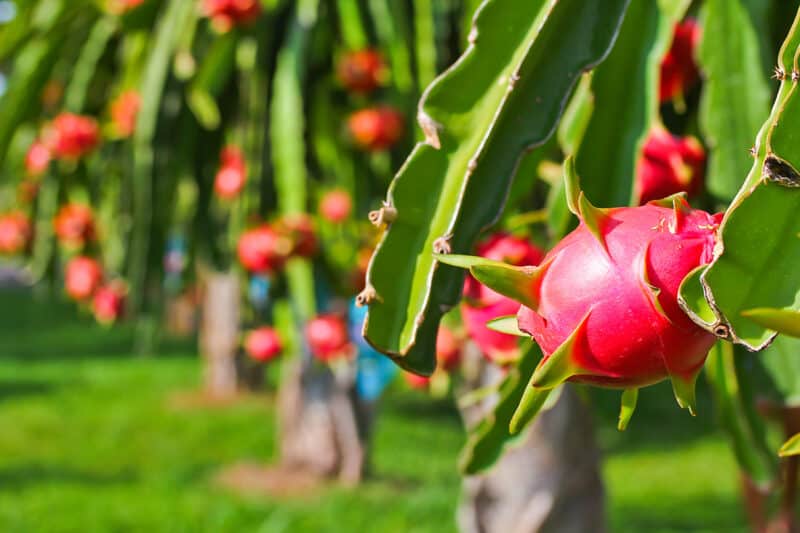
Some dragon fruit trees (Hylocereus undatus) can bear fruit only six to eight months after planting. Talk about fast growing fruit trees!
This is for plants grown in the ground. Container-planted dragon fruit can take up to two years to bear fruit. Once they do, however, some dragon fruit cultivars produce harvests up to six times in a year.
Flowers appear from mid-summer to early fall.
Grow outdoors in zones 9 to 12. Plant your trees in the spring in full or partial sun. Expect this plant to grow to around 8 to 20 feet tall and 3 to 10 feet wide, depending on the cultivar you plant.
Because they come from tropical regions, dragon fruits do not like the cold. The optimum temperature for a quick harvest after planting is between 65 and 85ºF.
4. Lemon
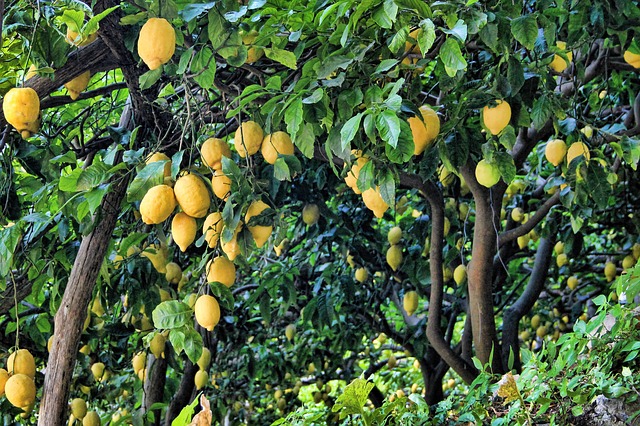
In the right environment, lemon trees (Citrus Lime) can produce a crop in about a year. Less perfect conditions could take up to three years, but either way, when it comes to fruit trees, it’s fast. And who doesn’t want healthy, tangy lemons and lemon juice ASAP?
Grow in zones 8 through 11 and choose the strain best suited to your region. In zone 8, you should consider cold hardy varieties like ‘Meyer’ because most lemons need tropical or subtropical environments. They thrive in average temperatures of 75-85°F and moderate humidity.
Lemon trees grow from dwarf sizes to 20 feet tall and 15 feet wide. Plant in spring and you should see flowers around the same time next year.
5. Fishing
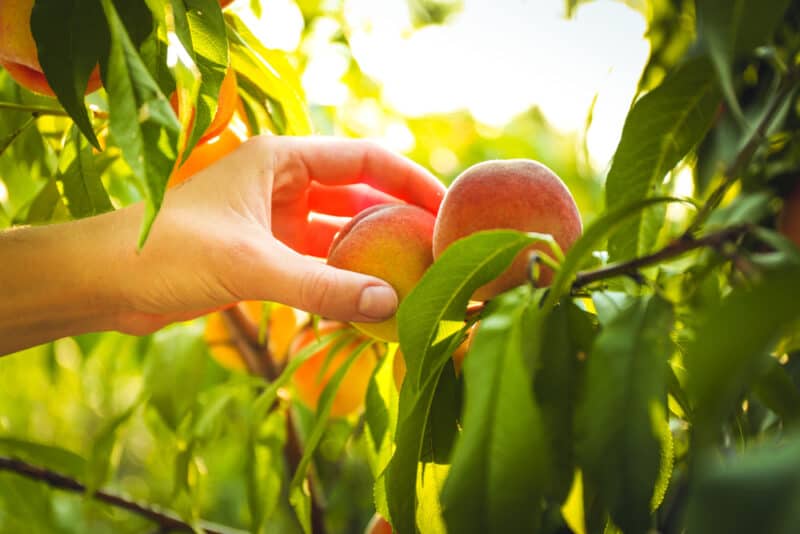
Is there anything more delicious than biting into a peach warmed by the sun (prunus persica)? You don’t have to wait too long once you’ve planted a sapling.
Grow peaches in zones 5 through 9, but if you live in zone 4, some cold-tolerant cultivars grow there as well. Try ‘Canadian Harmony’, ‘Contender’ or ‘Redhaven’.
Peach trees will produce fruit within two to four years when planted from a sapling.
Most peach trees are self-pollinating, so you only need to plant one if you have limited space. You’ll get a bigger harvest if you have more than one, though.
Dwarf varieties are less than ten feet tall, while the average height of a standard peach tree is around 25 feet. They are, however, fairly easy to trim to a smaller height.
Plant in late spring or early winter. Peach trees need about 600 hours of chill time (45ºF or less) to set fruit in the spring, although this varies by cultivar.
6. Apricot
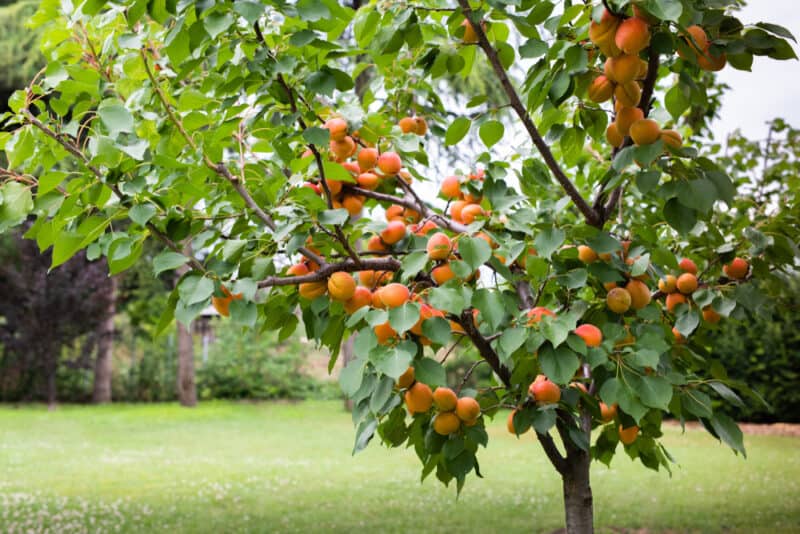
Like a peach, the straight apricot tree (Prunus armeniaca) will bear fruit in two to four years. Plant in full sun in zones 5-8 and you should be enjoying your fruit in no time. The flowers don’t like spring frosts, so choose a spot near a brick wall to avoid late frosts that kill the flowers.
There are cold-resistant apricots. Look for “Canadian White Blenheim”, “Goldcot”, “Tilton” or “Tomcot”. Find the best for your area before planting; otherwise, the tree can only be ornamental.
The flowering period of apricots is around April. Harvest time depends on the variety, but over a three-week period you will gently pick the fruit with the stem intact and eat and store it.
A mature apricot tree can reach 20 to 30 feet tall and just as wide. There are, however, reliable dwarf cultivars. Look for ‘Wilson’s Delicious’ or any other dwarf cultivar for small spaces.
Plant apricots in the fall so they have time to root before winter dormancy.
7. Guava
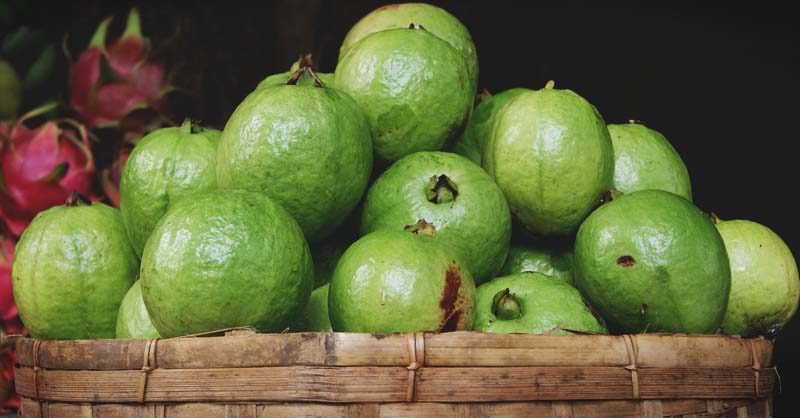
It will take three to four years to fruit, but once the guava (Psidium guajava) starts, they are prolific and reliable in the right environment. Once established, a guava will provide up to 80 pounds of fruit per year.
Grow in zones 9 to 12, where frosts are rare or mild. The guava will withstand a short spell of cold but will lose all of its leaves if temperatures drop to 29ºF. Guava’s preferred temperature range is 62-82°F.
Bees are the main pollinator of guavas, so they are perfect for attracting more bees to your garden.
In tropical regions, guava grows up to 30 feet tall. In subtropical areas, they can reach 12 to 15 feet tall. Plant in early spring.
8. Fig
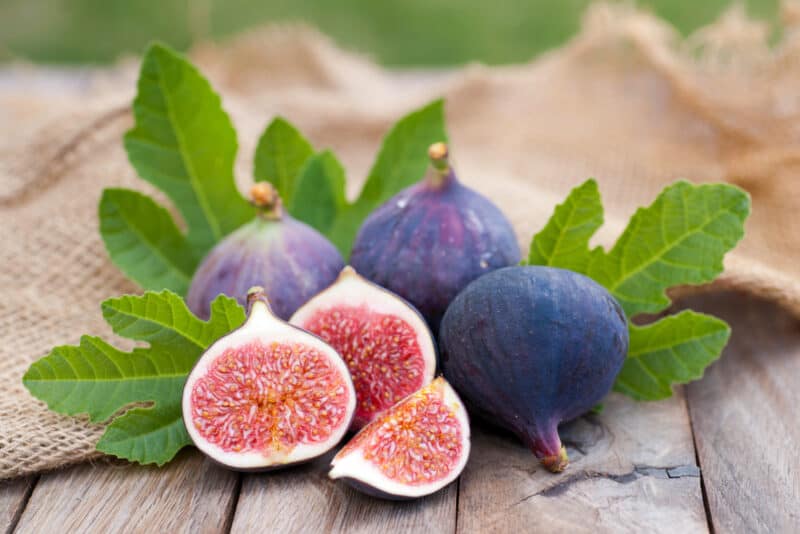
Figs (Ficus carica) typically take up to three years to produce fruit. Some take as many as five, but that’s usually not the case.
Plant in full sun in zones 6-9. Fig trees produce fruit around May if all goes well (they can be picky) and can continue until the first frosts around November.
The fig tree will grow up to 20 feet tall and 10 to 20 feet wide. They can be messy when growing, so store them with a prune. Plus, pruning creates new growth for even more fruit.
Plant young trees in spring or late fall. You can buy one on Amazon.
9. Asian pear
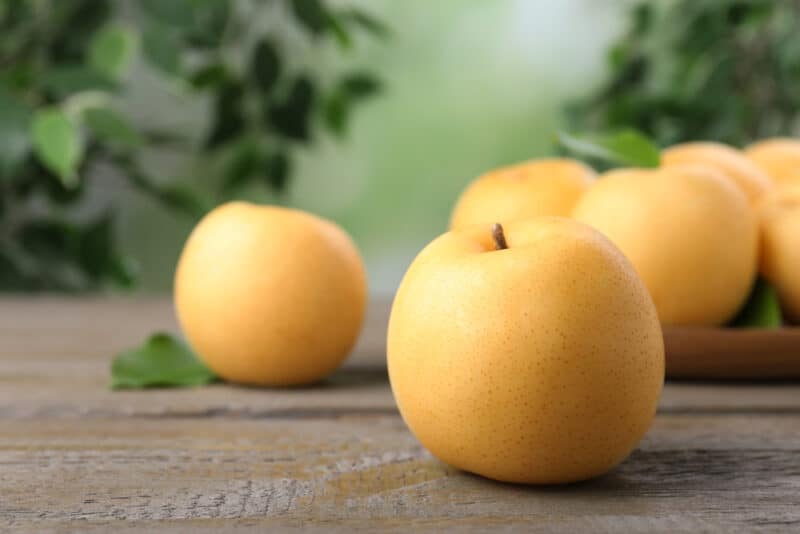
Harvesting Asian pears (Pyrus pyrifolia) is very likely after just three years, and if you’re lucky, just two. They thrive in zones 5-8. You should be able to start harvesting between August and October.
It’s a big tree. It grows 30 to 40 feet tall and the same wide.
Asian pears are self-fertile, but harvests are larger and of better quality if another pear cultivar is planted nearby.
Plant in spring when danger of frost has passed. They are cold hardy, but not when first planted. They need a chill period during the winter of about 50 to 70 days with a temperature below 45ºF. Then they need long, hot summers to develop fruit.
10. sweet cherry
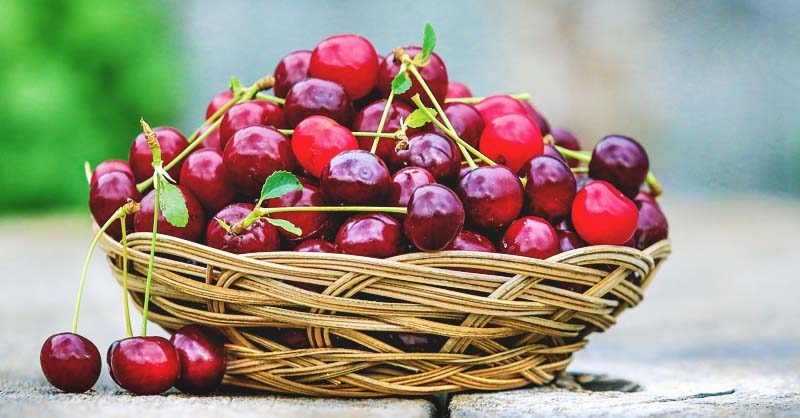
sweet cherries (avian prunus) can be harvested within two to three years of planting if it is a grafted tree. Own-rooted trees take several years longer. Plant in zones 4 to 7. The tree will flower in the spring, produce fruit in May and June, and sometimes until early July.
The cherry tree is a deciduous tree that can grow up to 65 feet tall. There are dwarf cherry trees that will also produce fruit in two to three years. ‘Stella’ is a reliable dwarf cultivar.
Plant in spring or early fall when the tree can take advantage of more moisture in the round.
11. Apples

Not all apples will produce fruit quickly. Dwarf cultivars will start fruiting in about two years, and there are a few fast-growing cultivars as well.
‘Early-Harvest’ apple trees (Malus domestica ‘Early Harvest’) will give you sweet fruit within one to three years of planting. Plant in zones 3-8. There are size choices: full-size, semi-dwarf and midget.
Expect a harvest as early as June or as late as September.
Whole trees grow up to 25 feet tall and 25 feet wide. Early harvest dwarf apples reach about 10 feet tall and wide. They can also be planted in containers.
Plant the early crop in full sun and water well. They are not drought tolerant and need at least 1 inch of water every ten days, and more during dry spells.
If you have a bare-rooted tree, plant it in the spring. If you have a potted tree, plant it until mid-autumn.
Was this article helpful?
Yes No ×
We appreciate your helpful feedback!
Your response will be used to improve our content. The more feedback you give us, the better our pages will be.
Facebook pinterest