If you purchase an item through links on this page, we may earn a commission. Our editorial content is not influenced by commissions. Read full disclosure.
We all like certain plants because of their appearance, their scent or because they are useful in the kitchen. Sometimes, however, these plants really aren’t good for the garden or yard because of their overgrown root systems.
Plant roots are incredibly strong, especially with some trees, and while they are likely to damage our property, they can cost far more than we can imagine.
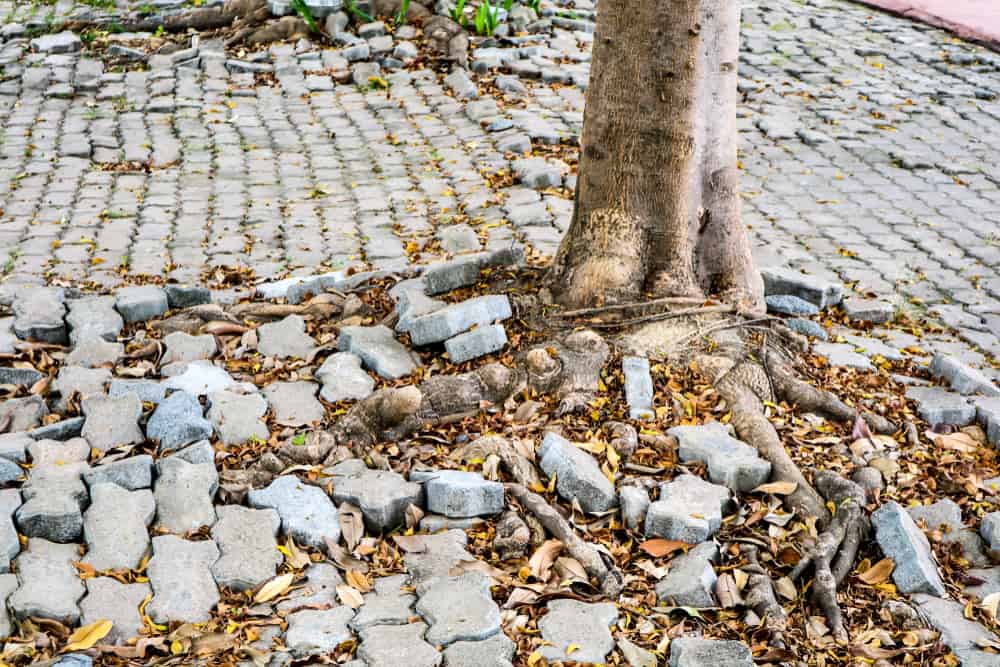
Often the damage is not noticed until the roots reach the surface or break something, but they have grown by destroying things underground for a long time.
If you want to avoid destructive plants, let’s look at some of the worst.
What is an invasive root system?
First, we’ll look at what exactly makes a root system invasive. It is not about self-seeding. Some plants have extensive root systems, but they don’t become invasive. Some root systems are deep and some are closer to the surface, but they stay close to the plant or lack the strength to damage certain parts of your property.
Invasive root systems come into contact with and damage structures, foundations, swimming pools, fences, retaining walls, water pipes and power lines.
Warning signs that you have overgrown roots
- Vertical cracks in the walls.
- Buckling or raised areas in paths, concrete slabs, tiles or pavers.
- Clogged drains, water not flowing quickly through the drains, or changes in water pressure for no reason.
- Soil disturbance or exposed roots around plants.
- Plants appear everywhere, coming from a single plant.
- When you constantly remove a plant, it regrows easily and quickly all the time.
Sometimes the invasive roots cause damage, while other times the plant may spread or prevent other plants from growing around or near it.
Plants that have invasive root systems
1. Yucca

Yucca (family Asparagaceae) is a trendy plant that fills home gardens with its classic, simple form. It is best to plant away from structures as the roots are strong and can push through solid materials.
Yucca plants have a long, strong taproot that seeks water sources downwards. They also have fibrous roots that spread out in search of water. They can invade water pipes and swimming pools, and even penetrate concrete.
Plant the yucca away from structures and water pipes, or put it in pots. Just make sure the taproot doesn’t grow out of the drainage hole and into the dirt.
2. Ficus

The ficus (ficus spp.) has gained popularity as a landscaping tree because it is an easy to grow and maintain evergreen. It looks good too.
But the root system of the ficus is very invasive, and if you plant it near paths, driveways, buildings or underground utilities, it will cause a lot of damage.
You can still have a ficus if you plant it carefully away from anything it can damage, especially if you have a large property. You can also purchase and install a root barrier between any potential damage points and the tree when the roots are mature.
If you really like ficuses, they look great in balls in containers near your front door.
3. Jacaranda

The Jacaranda tree (Jacaranda spp.) has a very vigorous root system. The top sections of the system occupy approximately the top 25 inches of the floor. The entire root system can spread twice as wide as the canopy.
As beautiful as these trees may be, think carefully about where you plant one. They can grow massive and underground the root system grows to twice that size.
4. Gum tree (Eucalyptus)

You will be familiar with this Australian classic (Eucalyptus spp.) if you live in or have visited California. The root system is both damaging and bulky. The main taproot can grow up to six feet deep.
The remaining 90% of the root system is in the top 12 inches of soil. This means that in order to be stable, the tree grows these shallow roots very wide, and they have been known to extend from the base of the tree up to 100 feet away.
This makes the root system potentially damaging if planted near buildings, infrastructure or even other plants.
5.Magnolia

Although they are not as invasive as some on this list, if you plant magnolias (Magnolia spp.) too close to your house, sheds or barns, they can become a problem.
Magnolias usually need to be about 15 feet tall before their roots become a problem, but they also prevent other plants from growing around them due to the shallow root mass.
Plant magnolia at least five feet from trails and 30 feet from buildings.
6. Silver Maple

Some maples, such as sugar maple (A. saccharum) and red maple (A. rubrum), are not known for their invasive roots. Silver Maple (A. saccharin), however, is known to damage foundations and anything underground that expanding roots encounter.
Plant silver maple at least 100 feet from your house, barn or outbuildings.
7. Sycamore

Like many of the root systems on this list, the sycamore maple (Acer pseudoplatanus) do not have deep roots, but they spread widely, causing damage to paths and buildings.
The roots are normally found in the top six feet of the ground, but extend beyond the drip line, making them a problem if planted in the wrong place.
Plant at least 12 feet from a path or driveway and 25 feet from a building.
8. Mulberry

Many people plant mulberry trees (Morus spp.) because they grow quickly. If you have one near a water pipe with the slightest leak, the mulberry tree will find it and puncture it.
The roots of mulberry trees will not damage building foundations but will weaken the soil around those foundations, causing stability problems.
9. American elm

This tree (Ulmus spp.) has a shallow root system, and although it does not always have invasive roots, there are circumstances when it does.
When the tree is older and larger, it has been known to invade sewer lines in its search for moisture. Plant away from driveways and paths as they will be damaged if they are between the tree and a water source, such as pipes or a water tank on your property.
10. poplar

Poplars (Popular spp.) and their hybrids are fast growing, making them a popular choice for landscaping. They can grow up to 150 feet tall with large canopies. The roots can grow up to two or even three times the height.
Roots can impact building foundations, but are more likely to find their way to sources of moisture such as water and sewer lines.
11. Mint

You might be thinking how did we come to mint after talking about 150 foot trees? Mint (Mint spp.) has invasive roots that spread underground and spring up everywhere. Once you plant mint, you usually have it forever.
Although it does not affect buildings or pipes, it can invade an area preventing the growth of other plants.
Plant mint in pots that you can place above the garden or in containers that you can bury to prevent spreading.
12. Bamboo
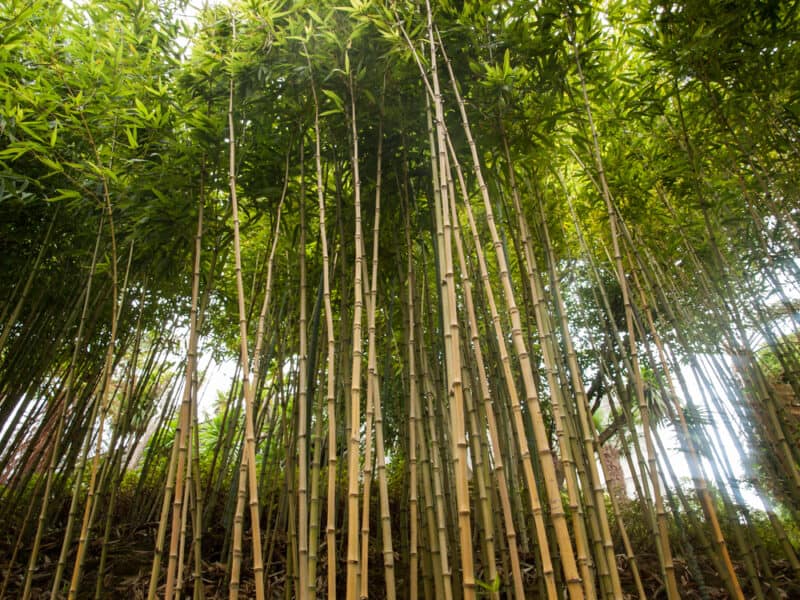
Bamboo (subfamily Bambusoideae) is a popular landscaping plant and is popular among many gardeners. You can successfully contain it by using root barriers and choosing varieties that don’t send their roots far.
Clumping types generally remain compact. Running types of bamboo can wreak havoc with its root system.
The rhizomes can spread up to 30 feet from the plant and damage foundations, paths, patios and drains.
If you want bamboo, consider planting it in large containers with root barriers specific to bamboo roots.
13. Campanula

Because it is such a delicate-looking plant, the bellflower (Bellflower spp.) will surprise you as it pushes through the asphalt.
Spread by underground rhizomes, it will appear everywhere, so plant it in containers.
14. Obedient Plant

If only the obedient plant (Physostegia virginiana) is aptly named. Maybe he was named sarcastically? It spreads by fibrous roots and rhizomes. It can appear anywhere in your yard long after you think you’ve taken it all away.
Like other plants that spread by aggressive rhizomes, consider planting in containers.
15. Bee balm
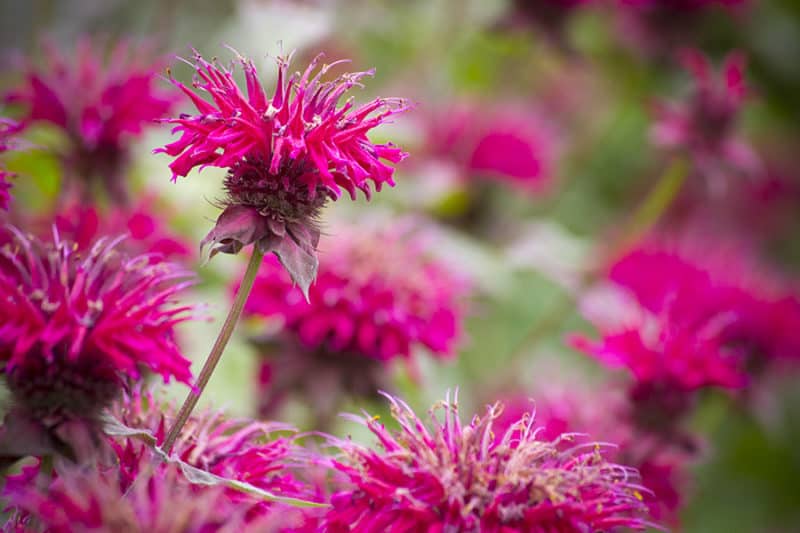
Bee Balm (Monarda spp.) is increasingly popular in gardens around the world, but it is also a plant that spreads by its roots and rhizomes all over your yard and garden.
Its roots tend to extend away from the plant and appear in random places. It’s related to mint, so that shouldn’t be too surprising.
Bee balm grows in clumps, but don’t be fooled into thinking it’s compact. New plants will grow in clumps, while sending out rhizomes in all directions.
The mother plant eventually dies and many new plants appear where you never intended to plant them.
Use plants with invasive roots

Don’t be afraid to use any of the plants listed in this article. They are all wonderful and attractive plants that look great in any landscape.
Just be sure to consider where you plant them and if there will be any consequences of root or rhizome spreading.
If you have a large property, plant away from your underground buildings and services.
If you are planting in a smaller area, be aware of root spread and plant size over time.
Was this article helpful?
Yes No ×
We appreciate your helpful feedback!
Your response will be used to improve our content. The more feedback you give us, the better our pages will be.
Facebook pinterest