
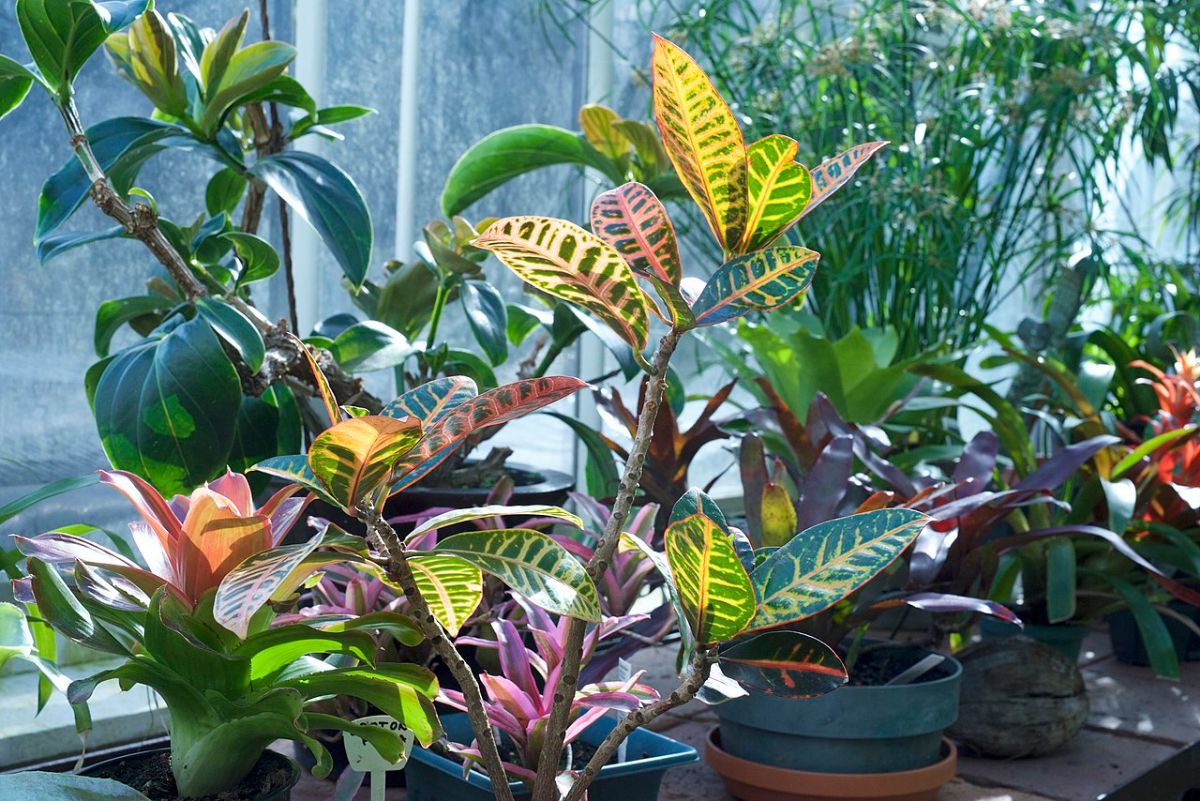
If you like crotons, you will know that there are many types. One of the finest you can have at home is Petra’s croton. Their care doesn’t differ too much from what you have with another species.
If you have received one, or if you have seen it and want to have it, but at the same time you need to know what is the most important care you should give it, we will tell you below.
The most important care of the croton Petra
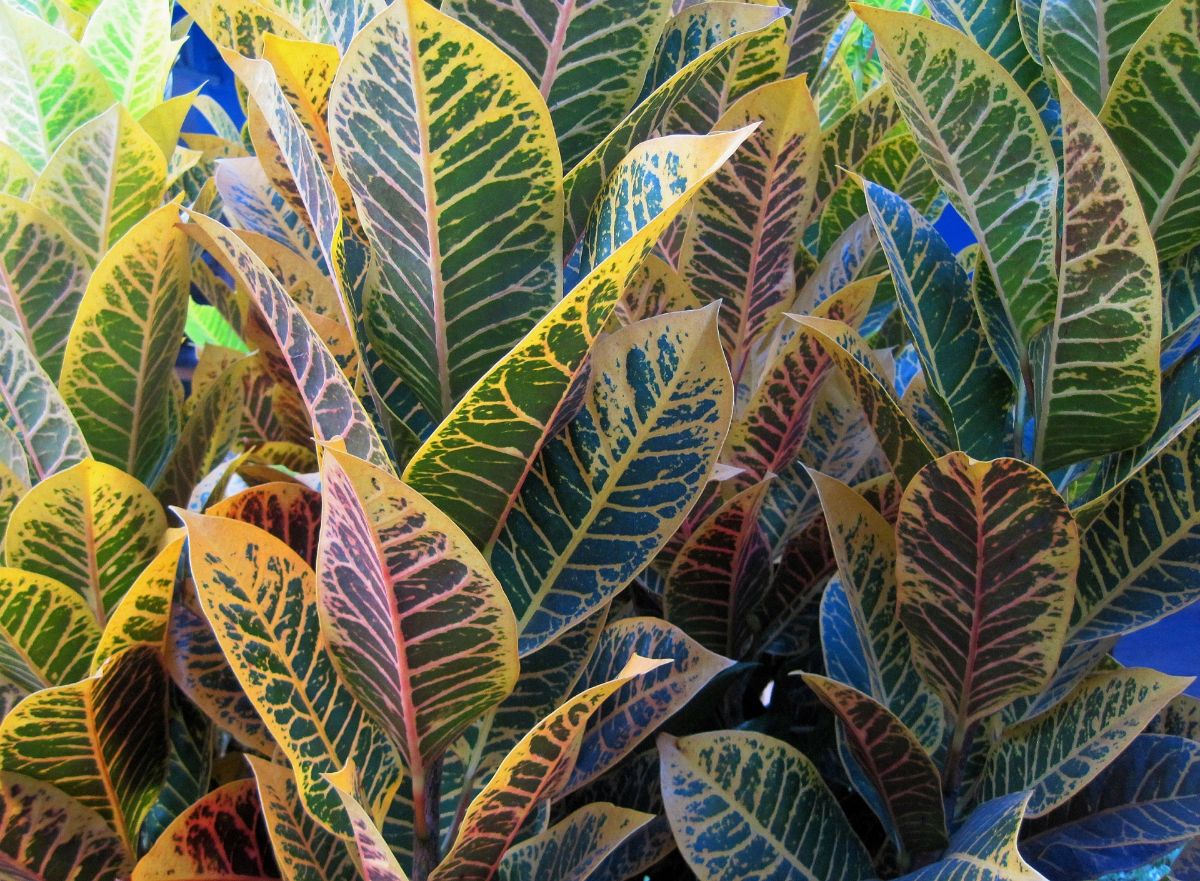
A croton is one of the showiest plants you can have in your home. However, it is a bit tricky when it comes to caring for it and you have to be very careful to keep it healthy, otherwise the leaves will fall off soon and in the end you will lose this plant.
So that this does not happen, we leave you here the specific care of the croton Petra.
Location
In general, the Petra croton can be both indoors and outdoors. But it’s not the same in one place as in another.
If you are going to put it inside the house, we advise you to place it next to a window where the sun shines as much as possible. However, he doesn’t like direct light, as it will eventually burn him. The best thing is that it has a curtain or something that filters that light. But it takes a good dose.
If he does not give it enough light, you will notice that the leaves lose their characteristic shine and this will make it look duller.
In case you want to put it outside the house, we recommend that you take it to a semi-shaded place so that the sun only gives it a few hours (early or late afternoon) and let the rest have light but not direct. It will be much better that way.
Temperature
Before I tell you about the temperature, you should be thinking, what kind of climate do I have at home? If you are one of those who suffer from very cold winters, it is not advisable to have a croton because they cannot tolerate these temperatures at all. In fact, below 16 degrees you will almost certainly lose the plant.
On the contrary, higher temperatures tolerate them well, as long as you are more aware of their needs.
In general, the ideal for this plant is between 18 and 25 degrees. As you can see, a temperature that could not be reached in all regions of Spain.
To land
Now let’s talk about the plant substrate. Croton Petra is a plant that, being in a pot, requires you to be more attentive to its care, and special care should be taken with the substrate.
That doesn’t mean you’ll need any special terrain, no. But we recommend that you mix what you are going to use with some drainage so that it does not clog it because it does not tolerate water pockets or the substrate being too wet (this will kill the roots of the plant and , after that, with the stem and the plant itself).
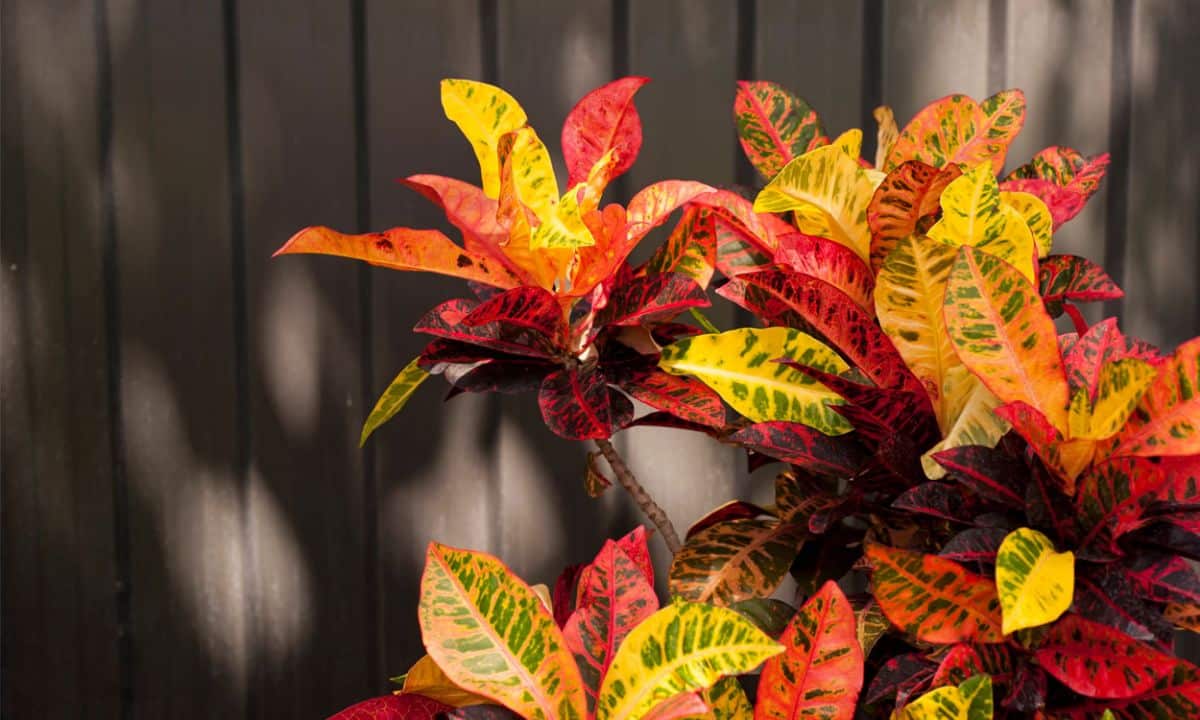
Source: Shanghai Nurseries
Irrigation
This is one of the most important cares for Petra’s croton (and one that can cause it to die). To start, you should know that it needs a lot of water. It is a plant that dries quickly and you have to watch it to water it. But not to the point of drowning it because that will only cause root rot.
So how do you make it the best it can be? You see, in summer it surely needs you to water it daily. If you see that the next day it is still wet, or not dry, instead of watering it in the morning, do it in the evening, or the next day.
This croton does not like the soil to be completely dry, so you will have to be more careful in this regard.
In winter, as the temperatures are colder, you can leave more time between waterings. The important thing is that the earth does not dry out completely because if it does, it may not recover.
Of course, make sure that the pot has drainage holes and that no water remains under it (in a plate or similar) as this will only rot the roots.
Humidity
With Croton Petra, humidity is very important. In fact, with all crotons you have to be careful with this one because they need it.
You must give it a high ambient humidity, i.e. with a humidifier at around 50%. If you don’t want to put a humidifier on it, just spray water on it (it will depend on the ambient humidity you have, if it is very low it will have to be constant and daily (3-4 – 5 times a day); if you have higher humidity, maybe 3-4 times a week is enough.
Subscriber
Being in a pot, one of the cares for Petra’s croton will be to fertilize the soil to provide it with extra nutrients that will be perfect for it. You must fertilize it from spring to autumn and we recommend that you do it, at first, once a month and in its growing season every 15-20 days.
Regarding the fertilizer to use, you can use the liquid (to mix it with the irrigation water) or the bars that they sell that you just have to plant in the ground.
Plagues and diseases
As for the pests that affect the Petra croton, special care should be taken with spider mites, scale insects and cotonets.
The red mite is detected by the cobwebs it creates on the leaf part. To solve it, it is better to apply an insecticide. As for mealybugs, in this case after cleaning the whole plant with a cotton ball soaked in alcohol.
Finally, you will detect cotton plants because they appear white and hairy areas, mainly on the back of young leaves.
As for diseases, the main one for this plant is root rot. You may also end up with problems with too little or too much lighting. If it is missing, the leaves become discolored and fall off; and if any remains, you will notice that the leaves are burnt.
Multiplication
Reproduction of the Petra croton occurs by cuttings. This is usually done in the spring, because that’s when you’ll have the best chance of success.
What some do is put it in water until it comes out of the roots and when these are very long it is planted in a substrate of peat and coarse sand.
Do you have any doubts about the care of the Petra croton?