
If you purchase an item through links on this page, we may earn a commission. Our editorial content is not influenced by commissions. Read full disclosure.
Onions are a gem to grow in your garden. They make good friends with many other cultures and enhance the flavor of others. Plus, they help keep pests away. If you’re looking to do a little companion planting this year, you can’t go wrong with onions.
Onions are easy to grow and it is a cash crop. Combine that with the fact that onions are super useful in the kitchen, and you can’t go wrong planting as many as will fit in your garden.
So if you want to get the most out of your onion crop by embracing companion planting, let’s look at what to plant with them, and a few to avoid.

Best Companion Plants for Onions
Onions need full sun and don’t like shade from other plants. The soil pH should be between 6 and 7 and well drained. Wet soil will cause onions to rot. They grow best in temperatures ranging from 55ºF to 75ºF.
Here are some of the best plants to share space with onions.
1. Carrots
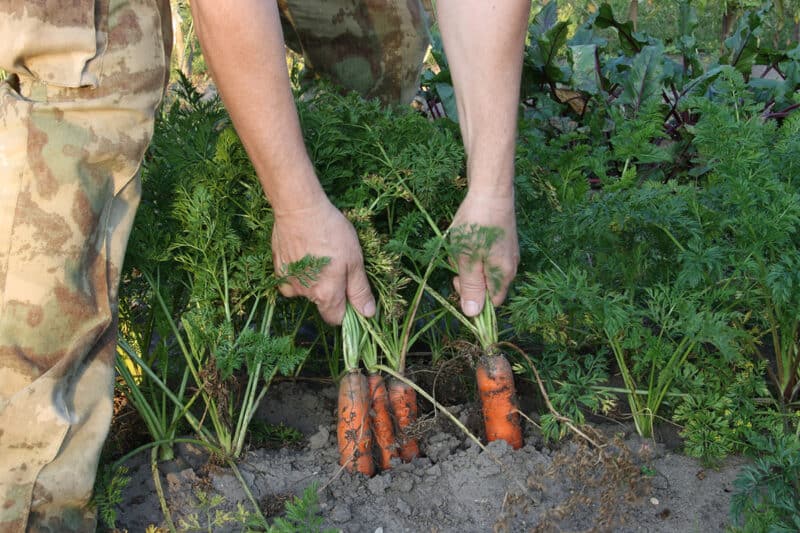
Onions benefit carrots (Daucus carota subsp. satisfied) as they help repel the carrot fly. If you have a growing patch of carrots, surround them with onions. The onions act as a border, repelling the carrot fly, which hates the smell of onions.
You can also have alternate rows of carrots and onions.
2. Beets

Onions are a great deterrent to many pests, so it makes sense to surround them with pest-prone plants like beets (vulgar beta), which need protection. Some aphids and sugar beet beetles dislike onions because of the sulfur smell they give off.
If you have trouble with rabbits, hares and deer eating your beet greens, plant lots of onions around them. I like to plant beets about the middle of the planting area, then surround them with rows of all types of onions.
Just make sure you can access the beets when you need them.
3. Swiss chard

Swiss chard (Beta vulgaris subsp. vulgar) can provide shade to the ground to help keep it moist. Because it doesn’t get too big, chard won’t block sunlight from reaching the onions. A little shade is good, but too much will hurt the onions.
Because onions have short roots, they like moist (but not wet) soil. Companion planting of Swiss chard contributes to this.
Plant Swiss chard among the rows of onions, but keep the base about 12 inches from the nearest onions. You can plant Swiss chard behind the onions if the garden faces afternoon sun.
4. Leeks

It is often advised not to plant similar plants of the same family together because of the pests and diseases they may attract. Leeks (Allium ampeloprasum) and onions are a pair made in heaven. They both have similar soil, temperature, and nutrient needs.
Leeks are also a valuable weapon for onions. When the onion fly comes for the onions, it is disturbed by the smell of leeks. Plant alternate rows of leeks and onions, or rows of onions and rows of leeks alongside.
5. Summer Savory
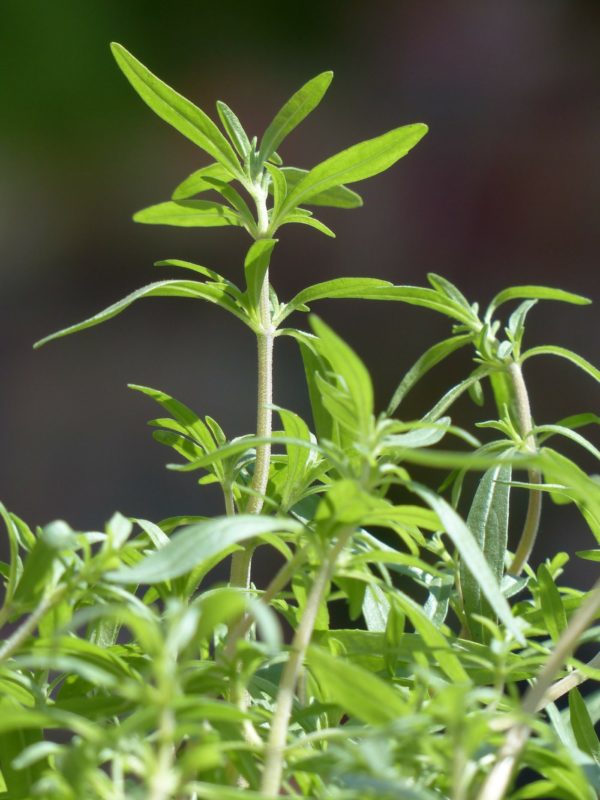
Some companion plantings do not offer protection, but rather an improvement in quality and quantity. summer savory (Satureja hortensis) makes the onions slightly sweeter and also improves their size.
Because summer savory can grow up to two feet tall, beware of the shade problem. Plant the onions in front of the sun. Water both well, but do not saturate the soil.
6. Brassicaceae

The whole family of brassica genus benefits from being planted with onions. These include:
- Cabbage
- Cauliflower
- Broccoli
- kale
- Kohlrabi
- Mustard
Just avoid planting turnips near onions. They can affect the flavor of turnips.
Brassica is always awash with pests but can be protected with onions. The smell of onions repels many pests attracted to crucifers. It can save you a lot of spraying and processing.
7. Lettuce

Salad (Lactuca sativa) is a fast growing crop compared to onions. Sow the lettuce seeds while the onions are still small. You can harvest the lettuce and then give the onion bulbs time and space to grow.
Onions will also repel many pests that plague lettuce such as slugs, snails and aphids.
8. Strawberries

This is not a common combination because you might think the onions will affect the sweet flavor of the strawberries (Fragaria × ananassa). It doesn’t, but onions will prevent many pests associated with strawberries.
Plant rows of strawberries along the sides of the onion plot, keeping about 12 inches apart from each other.
9. Chamomile

Not only chamomile (Matricaria recutita and Anthemis nobilis) an excellent plant to grow for herbal remedies and teas, but it also improves the taste of onions when grown nearby.
Chamomile seems to grow very well when planted in the onion garden. Additionally, when the weather is humid, the antifungal properties of chamomile can help onions ward off fungal diseases.
10. Peppers (hot and sweet)
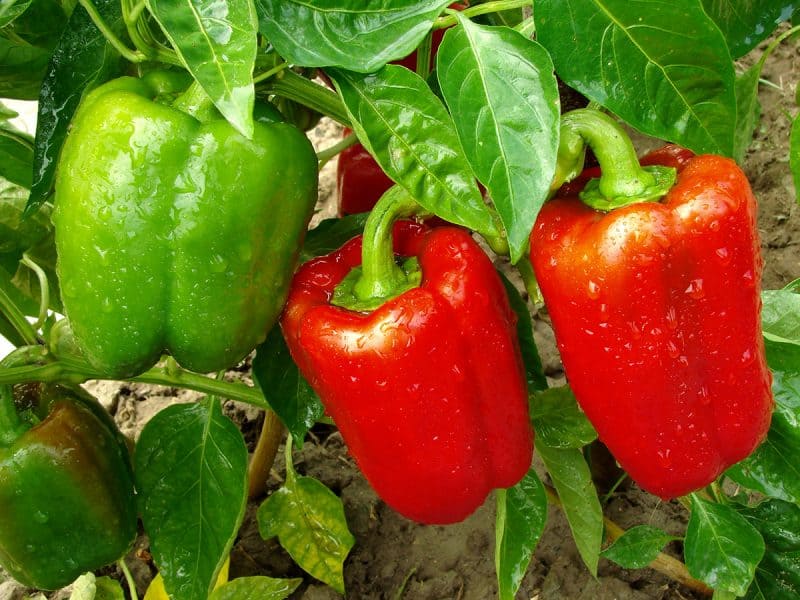
Onions protect pepper plants by repelling many pests that love them. Aphids and cutworms like young pepper plants but don’t like onions. Plant the bell pepper within 12 to 18 inches of the rows of onions.
11. Melons
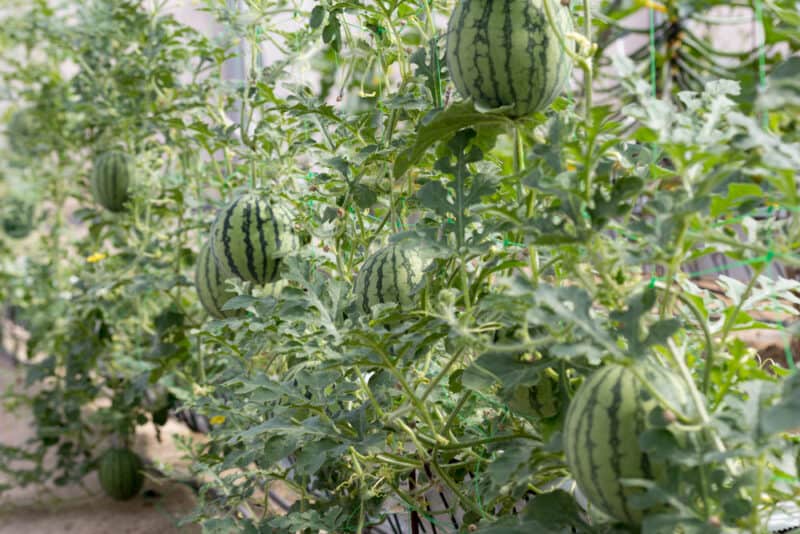
Pests that are attracted to melons are repelled by onions. These include melon aphids and spider mites. Most melons are suitable for onion planting as long as the melon vine does not trail directly through the rows of onions. They will likely smother the onions from light and moisture and could damage them along with their fruit. Try these melons:
- Honeydew
- Watermelon
- Cantaloupe
12. Radish

I’m pretty sure radishes (Raphanus raphanistrum subsp. satisfied) are friends with everyone in the garden. They grow so fast that they can be planted among just about anything, including onions.
Plant radishes between the rows of onions and even between the onions in the row.
There aren’t huge benefits for onions or radishes with this planting combination, but the timing suits both crops. Radishes grow quickly and will be long gone before you even think about harvesting the onions.
You can even get two plantings of radishes, but be careful not to disturb the onion bulbs.
13. Parsnip

Parsnip (Pastinaca sativa) benefit from onions as much as carrots. They share space well because of the smell of onions. Parsnips suffer from the same pests as carrots, but onions repel them.
I have a few rows of onions with carrots on one side and parsnips on the other. It works well.
14. Dill

Dill (Anethum graveolens) grows well with onions without causing problems. The presence of dill contributes to the flavor of onions and is a useful herb in the kitchen, just like onions.
15. Borage

Borage (Borago officinalis) attracts predatory wasps to the garden which attack many pests that destroy crops, including onions.
This underrated plant will also help protect other plants in the garden that you use as companion plants. Borage repels both cabbage worms and tomato worms.
16. Worries

Worry (Tagetes spp..) are well known for repelling aphids and are suitable for planting in rows with onions. You can also plant marigolds around the rows of onions as a barrier or at the edges of the garden.
17. Mint

Mint smells so strong to insects, especially onion flies, that it confuses them.
Remember that mint will take over the garden wherever it is planted, so I suggest planting it in pots that you can remove at the end of the growing season.
If you are planting tomatoes with onions, mint will also help them, so a good idea is to place the mint containers between the two crops. Be careful that the mint roots do not grow through the bottom of the containers and into the soil.
4 plants to avoid putting with onions
All is not well with onions. Here are four plants to avoid.
1. Legumes

Onions and beans definitely don’t mix. Onions give off a chemical that kills the good bacteria on the roots of the beans. This will stunt their growth or even kill the plant.
Along with beans, include other legumes that don’t work well with onions like:
- Peas
- Lenses
- Alfalfa
- Clover
- Chickpeas
- Soy
- lupins
Legumes fix the soil with nitrogen, so consider planting onions after you have had legumes in an area of the garden. Onions are big nitrogen eaters.
2. Sage

Sage is not bad for onions, but the requirements are different. If you try to get sage right, the onions will suffer, and the same goes for sage if you try to achieve the set growing conditions for onions.
The best thing to do is to keep the two plants well separated.
3. Asparagus

Onions and asparagus compete for the same nutrients, so unless you’re always in the garden watching over them, one will suffer, if not both.
Asparagus also takes a long time to establish and grow year after year. You will disturb them if you harvest the onions near the asparagus.
4. Other alliums (except leek)
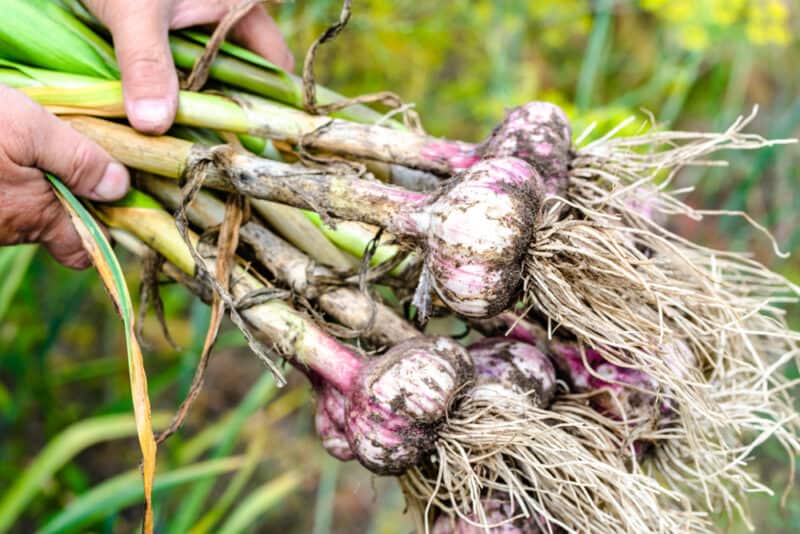
Garlic and shallots should be kept away from onions. Onion Maggots will easily switch from Onions to Garlic and Shallots and you will lose all three crops.
Was this article helpful?
Yes No ×
We appreciate your helpful feedback!
Your response will be used to improve our content. The more feedback you give us, the better our pages will be.
Facebook pinterest