If you purchase an item through links on this page, we may earn a commission. Our editorial content is not influenced by commissions. Read full disclosure.
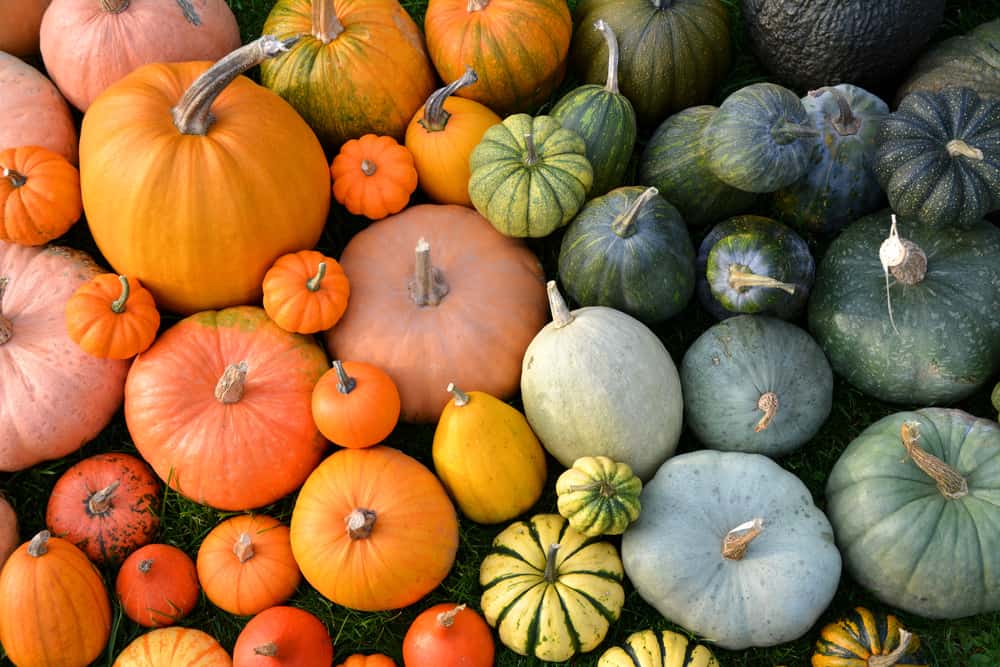
When you think of pumpkins, you’re probably picturing the standard type of orange we carve on Halloween or bake into a pie. But did you know that there are hundreds of different pumpkin varieties? It’s true! They can be tiny or huge, textured or smooth, and come in hues from orange or red to blue, white, gray, green and more!
Check out some of the fabulous strains listed below: you might find a couple you’d like to grow in your own garden this year.
1. Jarrahdale

These chunky, ridged pumpkins have a gorgeous slate blue-gray rind and deliciously nutty flesh that doesn’t get too sweet. They are popular in Australia and New Zealand, but are also gaining popularity in the United States.
These pumpkins are excellent for long-term storage, as they can stay fresh in cold cellars or pantries for up to a year after harvest. Their flesh is sweet and tender, and well worth the effort to cultivate.
2. Tokyo Blue
If you love blue pumpkins, here’s another one for you. This pre-WWII variety hails from Japan (as you might have guessed) and has sweet, shiny yellow flesh in a surprisingly blue rind. Whether you like to use your pumpkins for sweet or savory recipes, this is an ideal cultivar for any garden space.
3. Carnival
Do you like color and texture? Then discover the carnival pumpkins. They are deeply furrowed, with mottled skin with cream, yellow, orange, green, and black stripes or blotches.
In terms of size, this is one of the smallest pumpkin varieties on this list, about the size of Amish pie pumpkin fruit. Their flesh is dry and mealy rather than sweet, making it ideal for soups, stews, and garnishes.
Speaking of carnivals:
4. Funnel Cake
There are some very beautiful varieties of pumpkins, and this one is no exception. “Funnel Cake” pumpkins come in mottled pastel pink, mauve and dusty blue hues, sometimes covered in straps.
Their flat shape is often called a “stackable pumpkin” because they can be stacked well without falling or rolling.
5. Sunlight
If you love bright, cheerful hues and berries, check out Sunlight pumpkins. They are quite small – weighing only around 5 to 6 pounds when fully grown – with lemon yellow skins. Their pale orange flesh is suitable for sweet or savory recipes, and the plants are quite resistant to various molds.
6. Chioggia Marina

If you’ve ever dreamed of growing pumpkins that look like goblin tumors, you’re in luck! These Italian pumpkins have been grown in ancient salt pans near Chioggia since the 1600s.
The deep, rust-colored flesh under the green, warty skin is sweet and floury and is as delicious roasted with herbs as it is made into ravioli filling or used in pastries.
7. Bat
Hello gothic gardeners! If you like the goblin pumpkins mentioned above, you might also like “batwing” fruits. They are one of the smallest pumpkin varieties on this list, weighing around 1/4 pound, but they would make amazing additions to your annual Halloween decor.
Grab seeds from Amazon.
8.Casper

While we’re talking spooky punkins, ‘Casper’ is the one you should check out if you like ghostly white veggies and fruits. These beautiful fruits have pale white skin and silky, super sweet orange flesh.
9. Trolls
Since we’re looking at varieties of pumpkins named for ghouls, ghosts, and things that jostle in the night, let’s not rule out “Troll” pumpkins.
These are very odd, with large bluish button-like indentations on the bottom and dark pink, red and yellow stripes all over.
That said, they have very dense flesh with almost no seed cavities, and their flesh is drier than most other pumpkins: perfect for baking and canning!
10. Midnight
Here’s one more for the goth/creepy garden crowd. ‘Midnight’ pumpkins are fist-sized, with black skin and pale orange flesh inside. They are mainly grown for decorations, but are edible if you don’t mind working on a smaller scale.
However, they tend to be seed-filled, so they are a good option for seed-loving gardeners. Be sure to pick them while they are still black, as they will turn orange over time.
11. corn on the cob
This is a brand new hybrid cultivar, and it lives up to its name for its appearance! Of all the pumpkin varieties we’ve come across, this one has the brightest yellow flesh yet. It is heavily warty and gnarled, much like an ear of corn (hence its name).
12. Yokohama

If you like these warty, heavily textured pumpkin varieties, check out “Yokohama.” The color of this cultivar can vary from gray or orange-brown to mauve. It’s affectionately known as the “frog-backed” pumpkin, and its flesh is considered absolutely exquisite. Apparently it tastes a bit like butternut squash, with hints of Asian pear, avocado and mango.
13. Turkish Turban

These pumpkins have extruded “button”-like shapes on their bottoms like the “Troll” cultivar mentioned above, but the entire fruit resembles a hat or turban (hence the name).
This is one of the most colorful pumpkin varieties on this list, with variegated hues of red, orange, white, and green. The flesh is sweet and nutty, and can be used for sweet or savory dishes.
14. Dutch Crookneck
These pumpkins look absolutely amazing. They have long, swan-like necks that curve deeply like shepherd’s crooks, hence their name. Flavor-wise, they taste like a cross between sugar pie pumpkins and butternut squash.
Their seeds are contained in their rounded bases, so you can simply cut off the necks and roast them with no problem. The flesh is sweet and floury, excellent in curries, soups, pies and muffins.
15. Mussee de Provence

If you’re looking for the ultimate ‘Cinderella’ pumpkin, look no further than the ‘Musquee de Provence’ cultivar. With its rusty orange-brown skin and deep grooves, it looks like the ultimate mystical pumpkin that will transform into a carriage with the flick of a wand.
Its dense, dark orange flesh is soft and silky and makes the most incredible pies and soups.
About fairy tales:
16. Porcelain Princess
Of all the pumpkin varieties on this list, ‘Porcelain Princess’ is one of the prettiest. It has cotton candy pink skin and rich orange flesh as sweet as its name. The fruits reach 8 to 10 pounds each and are as delicious as they are beautiful to look at.
As a bonus, these plants are quite resistant to both mildew and powdery mildew!
17. Blue Doll

While the other “blue” pumpkins on this list are colored like the sky or a robin’s egg, these beauties have a more silvery hue. In fact, their skin can range from silver to grey-green, and when the fruits ripen they are often square and square rather than round!
They are resistant to powdery mildew and their sweet, dark orange flesh is perfect for cooking or canning.
18. Peanut

Although the official name of this variety is ‘Galeux d’Eysines’, it is affectionately nicknamed ‘Peanut’ due to the gray-brown peanut-shaped warts that grow all over its salmon-pink skin.
Rather than indicating some kind of burn, these warts are sugar deposits that indicate the sweetness of the fruit! The more warts you see, the softer the flesh inside. It is one of the best varieties of pumpkin for desserts or sweet soups because the sweet, succulent flesh is unmatched in flavor.
19. Long Pie
While most pumpkins on this list are round or flat, the ‘Long Pie’ fruit is shaped like a rocket! They were first cultivated by indigenous peoples around the Great Lakes, and their flesh is soft, smooth, and nearly stringless.
Try roasting and mashing the flesh as a base for “three sisters” soup or for use in cornbread pudding with maple or birch syrup.
20. Atlantic Giant
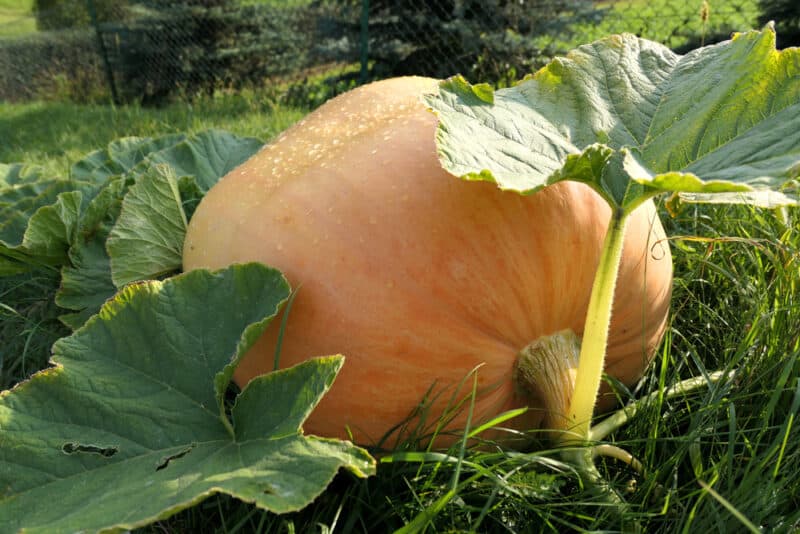
It’s one for the books, everyone. If you love gigantic produce and have the time, space, and resources to grow them, then giant Atlantic pumpkins can be fun to grow. The largest crop on record weighed over 1,650 pounds!
Now here’s the best part: while most giant pumpkins have bland, tough, inedible flesh, “Atlantic Giant” pumpkin flesh is quite tasty! The flavor dissipates as the pumpkins get bigger, but one massive fruit can feed a surprising number of people.
As you can see, pumpkin varieties can come in a wide range of sizes, colors, and textures! If you’re a winter squash fan and want to add more visual interest (or some interesting flavors) to your table this year, consider growing a few beauties from this list.
If they grow well, save the seeds to share with friends and family.
Was this article helpful?
Yes No ×
We appreciate your helpful feedback!
Your response will be used to improve our content. The more feedback you give us, the better our pages will be.
Facebook pinterest