Taking care of your plant is hard work and not easy at all and if you see anything happening to your plant you may wonder where it went wrong.
Well, a hydrangea, like any other plant, is no exception and you often see that your plant is not itself.
There can be many problems in the life of a plant, one of them is leaf curl, in this case of your hydrangea.
However, there are many different reasons, if you catch the problem at an early stage, it won’t be a big deal and you can fix it in no time.
Everyone wants to see their plant healthy and happy and any change to your plant could mean a change in its environment.
Therefore, as soon as you notice a problem, be sure to first analyze all the possible reasons why your plant is changing, and then come up with a solution.
There are many reasons why your hydrangea may curl, including overwatering, flooding, excessive light, frost damage, pests, a variety of hydrangeas, fungal infections, garden problems. fertilizer and the impact of replanting.
Let’s see why the leaves of your hydrangea are curling, the causes and the solutions too!
Why are the leaves of my hydrangea curling?
excess water
 Overwatering is one of the main causes of leaf curl in the plant. If you have overwatered your plant, you will usually see your plant’s leaves curl downwards.
This usually happens because too much water does not allow oxygen to reach the roots properly and therefore disrupts the flow of minerals to the leaves.
This is the main reason why the leaves begin to curl due to excessive watering of the plant.
Submarine
Underwater is also often the cause of leaf curl. Drying causes the leaves to curl.
If the root of your plant has been dry for a long time you will see the leaves start to curl and if it continues to receive sunlight you will also notice the leaves burning.
Water your hydrangeas regularly to avoid this problem. To check if your plant’s soil is dry, feel your plant’s soil. If the soil is an inch dry, your plant needs water.
Even if the soil is slightly moist and not dry, you can still water your plant. You will need to water your plant more when the weather conditions are dry where you live and especially during the summers.
excessive sunshine
Too much sun can cause your plant’s leaves to curl and break.
Although this problem is most common with the bigleaf hydrangea, it can also occur with any other type of hydrangea if it receives too much sun.
There are a few other types of hydrangeas that can tolerate lots of sun. So when you buy your hydrangea, be sure to buy one that’s appropriate for the area you live in so that your hydrangea’s leaves don’t curl and droop.
frost damage
Frost damage is very dangerous for hydrangeas and is one of the most common reasons hydrangea leaves curl.
Once your plant starts showing its leaves, i.e. in spring, if the temperature drops later, it is very harmful for your plant.
This will cause the leaves to curl and when the leaves are fully grown the leaves will have black spots but the new leaves that are starting to grow will take the brunt of the frost damage and curl and your plant may also lose leaves.
If your plant has been damaged by frost, there is not much you can do except remove the damaged parts and wait until the next season for the plant to grow.
You may also be interested in: Why Does My Hydrangea Have Small Flowers?
harmful
Pest attacks are common among plants, just like your hydrangea plant. If your plant is infested with a pest attack, you will see your plant’s leaves curl up.
Leaves usually curl inward because pests like to feed on the underside of leaves, causing the leaves to change shape and curl inward.
type of hydrangeas
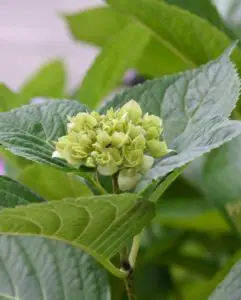 There are certain types of hydrangea plants that are more common and more prone to curling.
Most hydrangea plants are very sensitive to a change in the environment and even a small change in the environment will cause the leaf shape to change.
Some of the hard-to-maintain hydrangea varieties include the tall, soft-leaved hydrangeas. Even a slight drying out of this plant will lead to many changes in its appearance.
They like plenty of water and thrive on an inch of water per week. So, if you are looking for a hydrangea plant for your garden, choose one that is not too difficult to maintain and is also less susceptible than other types of hydrangeas.
mold
If you see black spots and curled leaves on your hydrangea plant, it is likely a fungal infection affecting your plant.
If this is the case, try watering only at the base and not on the leaves, as this could make the problem worse. Leaves with dark spots should be removed, and affected branches should be removed.
Since mold likes to grow in dark, damp areas, try to keep your hydrangea plant away from these areas so mold doesn’t have a chance to thrive.
fertilizer
Sometimes curled leaves and brown spots are also caused by the plant receiving too much fertilizer. Try using 2 cups of fertilizer if you have an area of 9.2 square feet.
Your fertilizer should also be a 10:10 mix. This is often a problem for container-grown plants, so if your hydrangea is in a container, be sure not to use any other fertilizers for the rest of the season. season.
Also, too much fertilizer in the summer will cause your hydrangea’s leaves to curl, so be sure not to over-fertilize during these months.
We have an article on how Make natural fertilizer for your hydrangea here.
Replant
Sometimes your hydrangea’s leaves may curl if you’ve repotted your plant. Repotting can have serious consequences for your plant, especially if you bought it from a nursery and then planted it in your garden.
As it is grown in different conditions and then repotted, it can cause a repotting shock for your plant.
So if you buy your hydrangea somewhere, try to buy one with the biggest root system, and be very careful when flower pot of your plant
Also, be sure to give your plant the same conditions it was grown in to avoid leaf curl.
If you like this article, check out our article on Why are my hydrangeas turning green?
How do you prevent your hydrangea leaves from curling?
Rolling up the leaves of your hydrangea can be very disappointing for garden owners. So let’s look at some ways to stop curling hydrangea leaves.
- Adjust the amount of water. If you see signs of too much or too little water on your plant, adjust the amount of water first to prevent this problem from happening again. Be sure to give your plant the amount of water it needs.
- Yes there is one insect attack use insecticides on your plant to control attack and prevent leaf curl.
- Yes there is one mushroom attack on your plant, be sure to spray a sulfur-based fungicide to stop the attack.
- Give your plants a well ventilated area in case of fungal attack to avoid this problem.
- keep one too moderate temperature for your plant and make sure the conditions are neither too warm nor too hot for your plant.
final thoughts
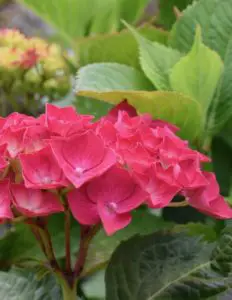 There are many ways a hydrangea can curl, it can be inwards, downwards or outwards and knowing the cause of leaf curling will also ensure you have the solution at hand. hand.
There are also many reasons why your hydrangea is starting to curl and once you notice changes in your plant you need to first look around and then decide what next step to take to ensure safe growth. and health of your plant. .
The hydrangea is not a difficult plant to care for and if you care for it properly and provide for its needs, you will see your plant thriving and thriving in no time.
Whether you grow this plant indoors or outdoors, it will look great wherever you place it.
This plant is also an excellent choice for a novice gardener, as it does not require much maintenance. However, if you don’t take care of it properly, you will see your plant’s leaves curl.
Before you go, here are some other related articles that I encourage you to read below to solve more of your gardening problems:
This is how you prevent your hydrangea leaves from burning
Snowball shrub against hydrangea
How to Get Rid of Black Spots on Hydrangea Leaves?
hydrangea tree vs shrub