
If you prefer more flowers than leaves, a showy display of flowers that lasts for weeks, and a vine that won’t destroy the structures it climbs on, then clematis could be your girl.
I must admit that clematis has intimidated me for more years than I can remember. Somehow I convinced myself that a plant that blooms so profusely on such a fragile-looking stem would still be difficult to overwinter.
I’m happy to say I was wrong, and I’ve been growing clematis as a perennial vine for a few years now and overwintering it with great success.
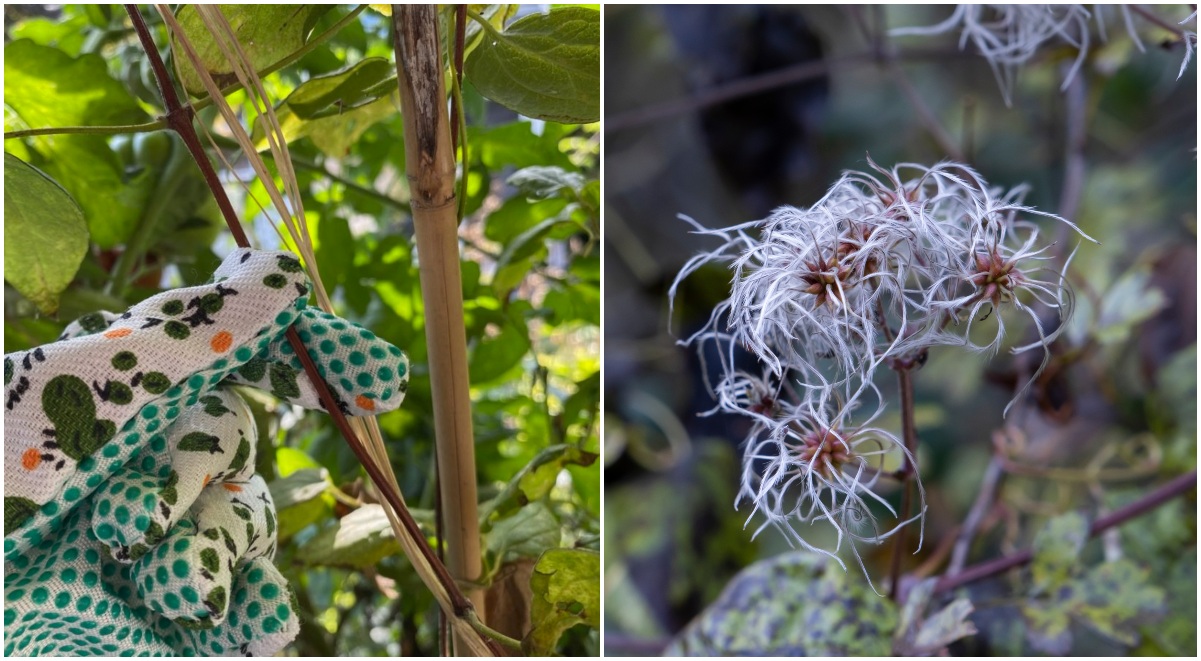
 One of four clematis plants I have successfully overwintered.
Here are the three chores I do in the fall to make sure my clematis survives (and thrives) through the winter.
1. Clean up dead leaves and flowers.
At this time of the year, the flower petals have already been washed away. But the stamens (the core of the flowers) still hold. Your clematis is unlikely to propagate from seed, so you can cut off the remains of dead flowers. In the photo below you can see that the petioles are already beginning to dry, so you will not miss anything when removing them.
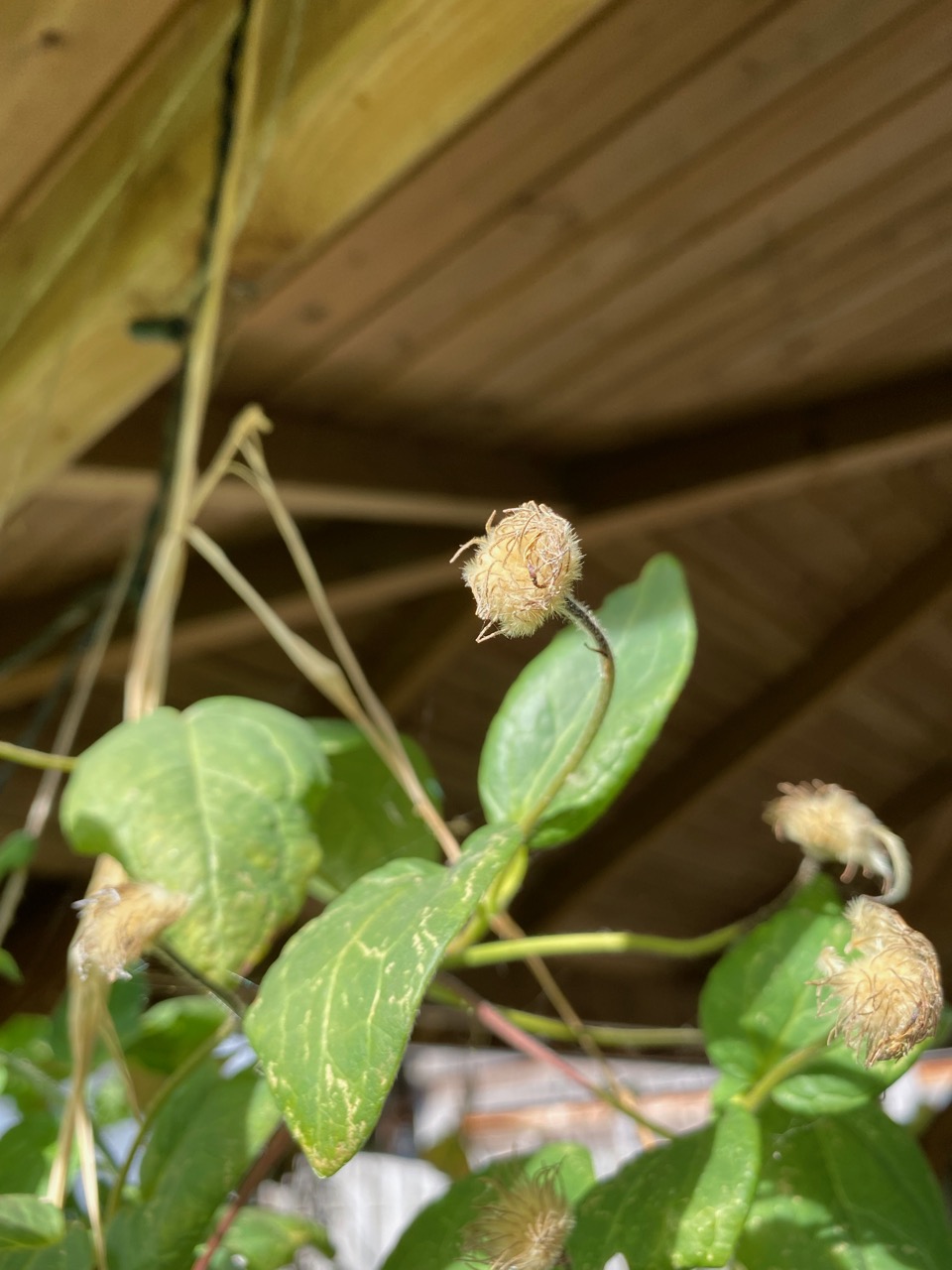 The flowers are long gone on my clematis.
 Most clematis are deciduous, which means they lose their leaves in the fall. If your plant hasn’t had any problems during the growing season, you can let the fallen foliage act as mulch around the crown.
But if you’ve been plagued with pests or disease (clematis are particularly susceptible to rust, leaf spot, and clematis wilt), cut off any dead leaves and dispose of them in your household trash. Don’t forget to disinfect your shears with alcohol when you’re done with this job to minimize the risk of spreading this unwanted fungus to your other plants.
2. You can remove dead stems.
The main reason I remove dead stems is that they sometimes add too much weight to healthy stems if they are hampered by snow or ice. If there isn’t much snow or you’ve planted your clematis in a sheltered spot, you don’t need to cut dead weight in the fall.
 This rod is still very flexible, so it is very much alive. It will stay on.
 Clematis stems are fragile, so handle them with care. Because they are nervous and nervous, it can sometimes be difficult to tell if they are dead or not. A good way to say this is to take a rod between your index finger and your thumb and gently bend it. If it doesn’t move, the stalk is still alive and ready for another season. If you click right away, you can either collapse it to the first active node or cut it completely.
3. Protect your clematis roots.
One year I made the mistake of planting a young clematis in a freshly prepared garden bed. It took a few months for the ground level to stabilize. So over the winter the ground level in this new bed dropped under the pressure of the heavy rains, exposing the roots of my new clematis. And that’s how I learned the hard way that clematis roots are even more fragile than vines.
It took me a while to realize what was happening and rectify the situation by adding layers of compost and lasagna-like mold to tuck in the exposed roots. However, the story has a happy ending, as this clematis fully recovers and even produces a few flowers in late summer.
 The roots of clematis are very fragile, so they need winter protection.
 My luck was partly due to the fact that we didn’t have many days with freezing temperatures, and partly due to the sheltered position where I placed the plant. Although my mistake could have meant the end of this clematis, all she did in protest was to delay growth and flowering for a few months. Lesson learned!
So learn from my mistake and be sure to protect your clematis roots during the winter months. A good layer of fresh compost and then a thick layer of mulch are essential and the least you can do.
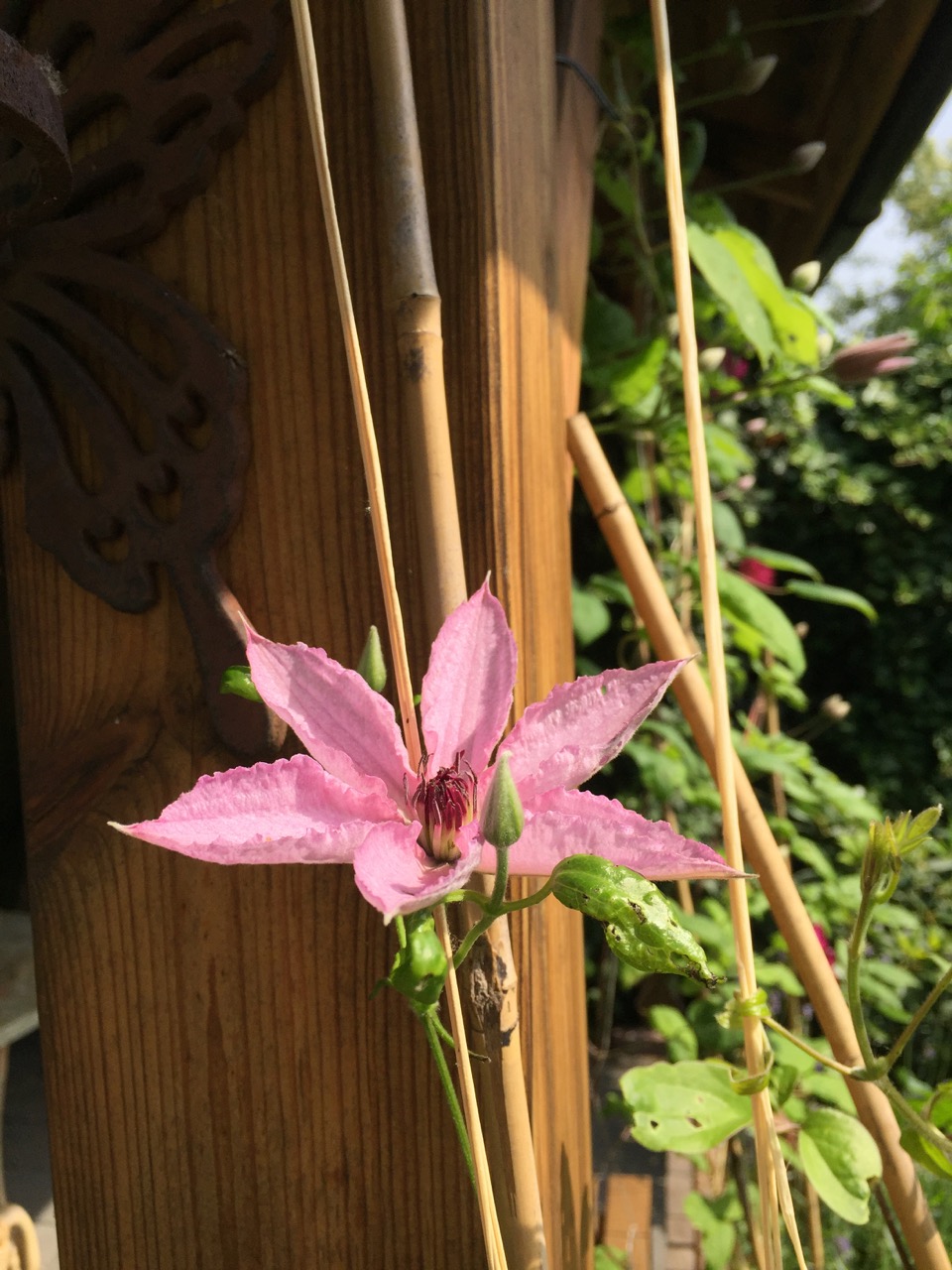 This is the stunted clematis which only produced about five flowers.
If you want to go further with overwintering your clematis, and you should, especially if you have a long, hard frost, you can cover the crown of your clematis with a piece of burlap. Wrap it around the base of the plant and secure it with burlap or twine. Don’t overtighten it. Make a note in your garden calendar to remove the burlap around March (or when the danger of a hard frost has passed in your garden).
Covering the base of clematis is especially important if you are growing it in containers. In this case, move the pots to a sheltered location or try to insulate them with a layer of dead leaves or a burlap sack to which you have added dry grass clippings, dead leaves or dry straw.
Should I prune my clematis in the fall?
Fall isn’t the best time to prune your clematis, with one exception: if you’re remodeling your clematis.
Pruning clematis in the fall, rather than spring, can result in the suppression of next year’s shoots (which have formed but are not yet visible), depending on the clematis group.
 The tag tells you when to prune. Keep your plant labels in a separate folder.
 So if you are looking for abundant flowering, it is best to wait before pruning. However, if your goal is to reshape your clematis, you can prune it lightly in the fall to encourage branching at the top, or a heavier pruning to encourage it to branch out from the crown. Keep in mind that you may sacrifice next year’s flowers if you do this, but the plant will recover. It is better not to get into the habit of autumn pruning for clematis.
Can I plant clematis in the fall?
Yes, fall is the best time to plant perennials, including vines.
I am a big proponent of establishing perennials in early fall due to optimal soil temperatures. During the summer, hot, dry soil is not suitable for new plants.
Fall conditions, with soil still warm and regular rainfall, allow plants to settle more gently into their new homes and continue rooting well into the season. A good rule of thumb for fall planting is to prepare about four weeks before the first frost date in your area.
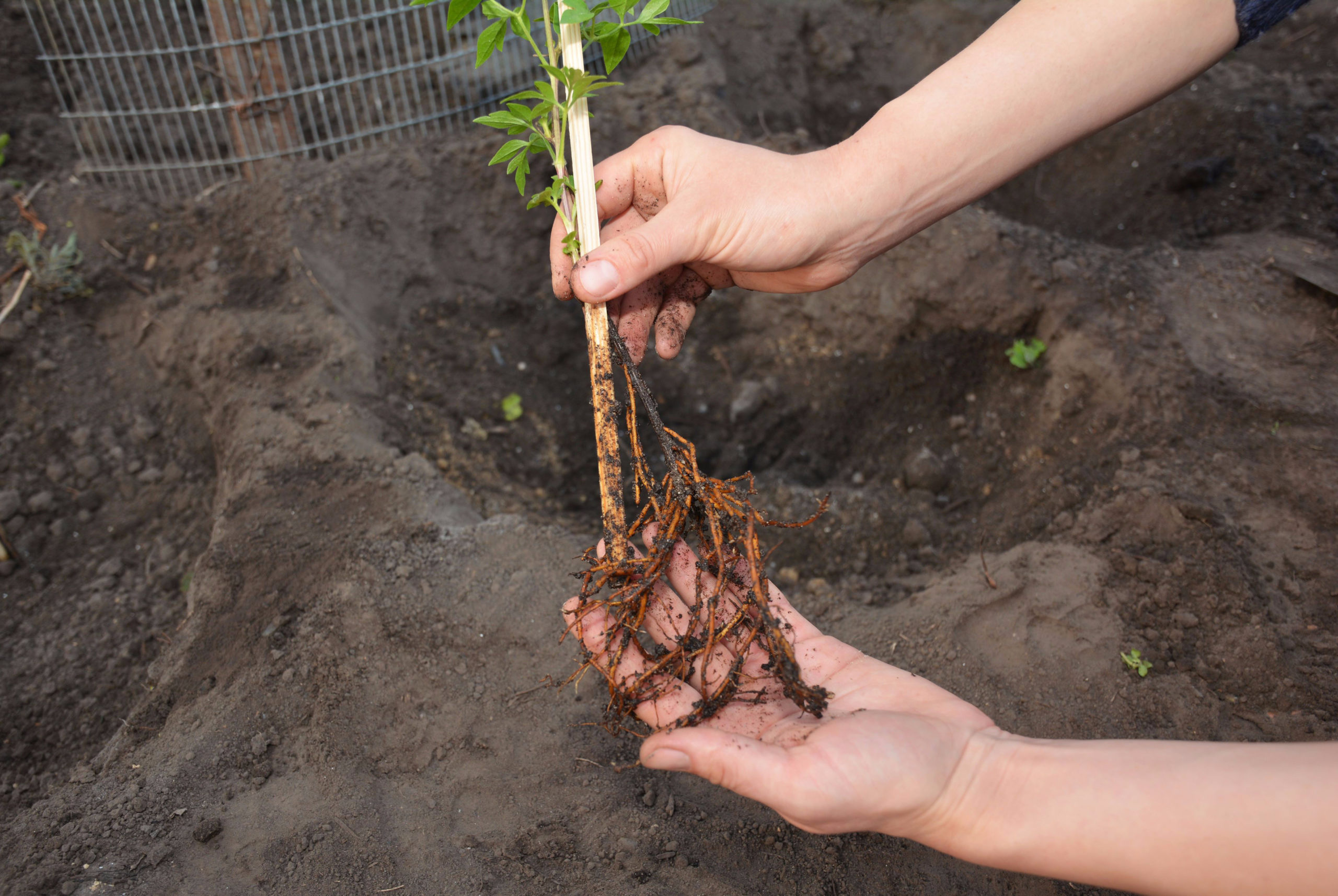 You can plant clematis from early to mid-autumn.
 If you’re planting a new clematis this fall, choose a location that receives at least six hours of midsummer sun. Prepare your planting site by digging several inches deeper than the root ball and burying the roots a few inches below ground level. Backfill the planting hole with rich compost and water well for the rest of the fall.
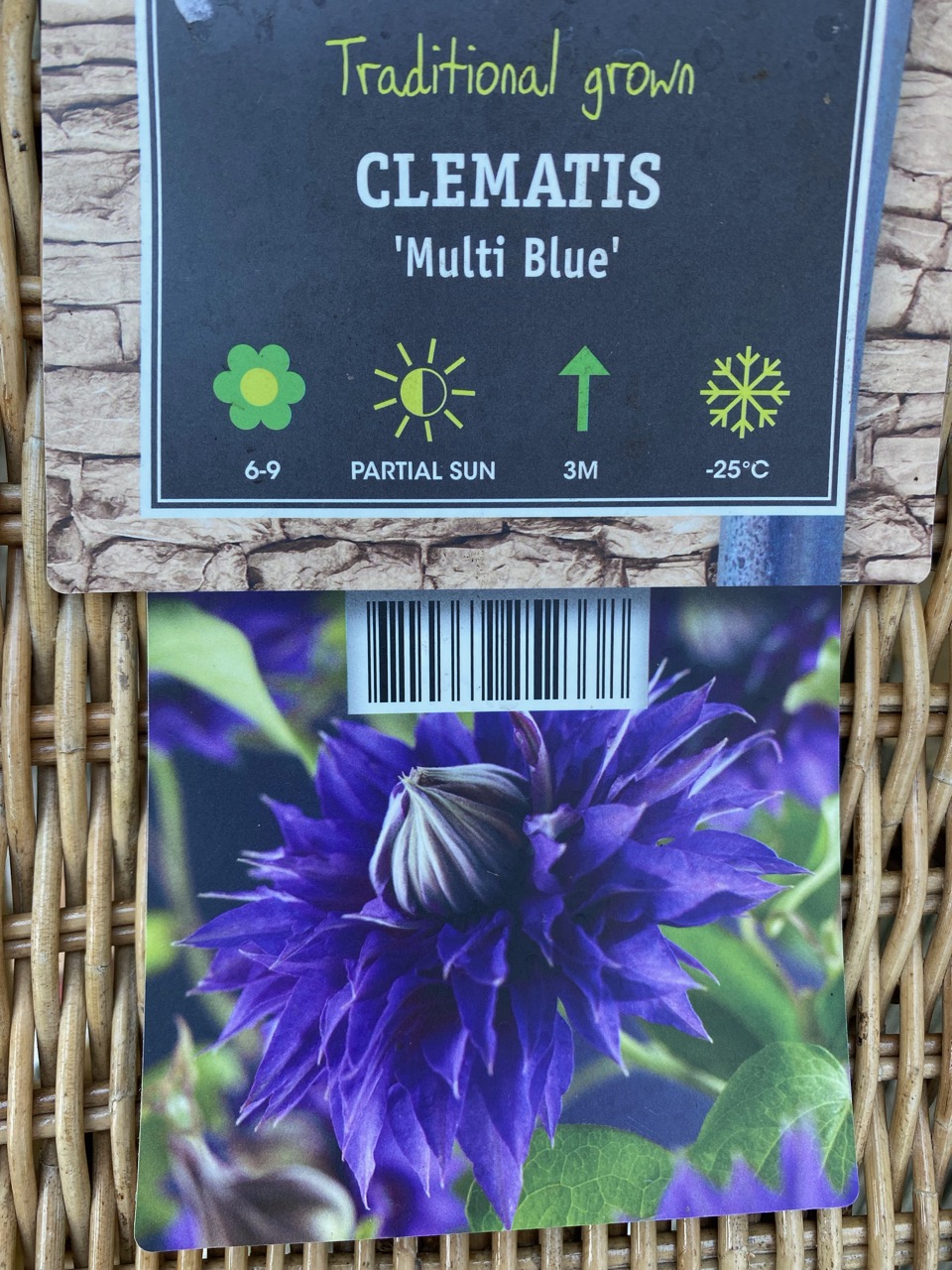 A snowflake symbol is a good indication that your clematis is hardy (-25C translates to -13F)
With a little extra care and attention, your clematis will overwinter just fine. But when buying new plants, always keep in mind the hardiness of a particular variety. While it may tempt you in the store, save yourself the heartache and buy plants that can survive the cold season from your USDA garden (or local equivalent).