

Which plants smell a lot? The truth is that there are a lot of them, and the most interesting thing is that many of them can be grown in gardens, balconies and terraces. And no, I’m not just talking about those herbs that we call aromatic plants, but also others that, for example, have flowers with an intense aroma.
So if you want to know some of the prettiest, I will tell you their names.
giant hoop

Image – Wikimedia/Moose Sailing
The giant hoop, whose scientific name is titanium amorphophallus, It is a tropical plant that, when it flowers, releases an aroma so strong that it can be perceived from several kilometers away.. It wouldn’t be a problem if that smell was pleasant, but of course their pollinators are lovers of foul smells, so our nostrils will have to put up with that.
Yet when you look at pictures of this plant and see it surrounded by people, you wonder how disgusting it will be. But just in case, we want you to be warned.
Stream

Image – Flickr/Andres Bertens
Calla is a rhizomatous plant that blooms in the spring, after the leaves have sprouted. Although there are different colors the flower that smells the most is undoubtedly the white onethat of the species Zantedeschia aethiopica, and not that of a cultivar thereof. Also, it is the one that is most easily obtained, since it is the one that sells the most.
It must be planted in the fall (or at the end of summer), in a pot or in the ground, and in a semi-shaded position. This way you will see how it will flourish without problems.
hoya carnosa
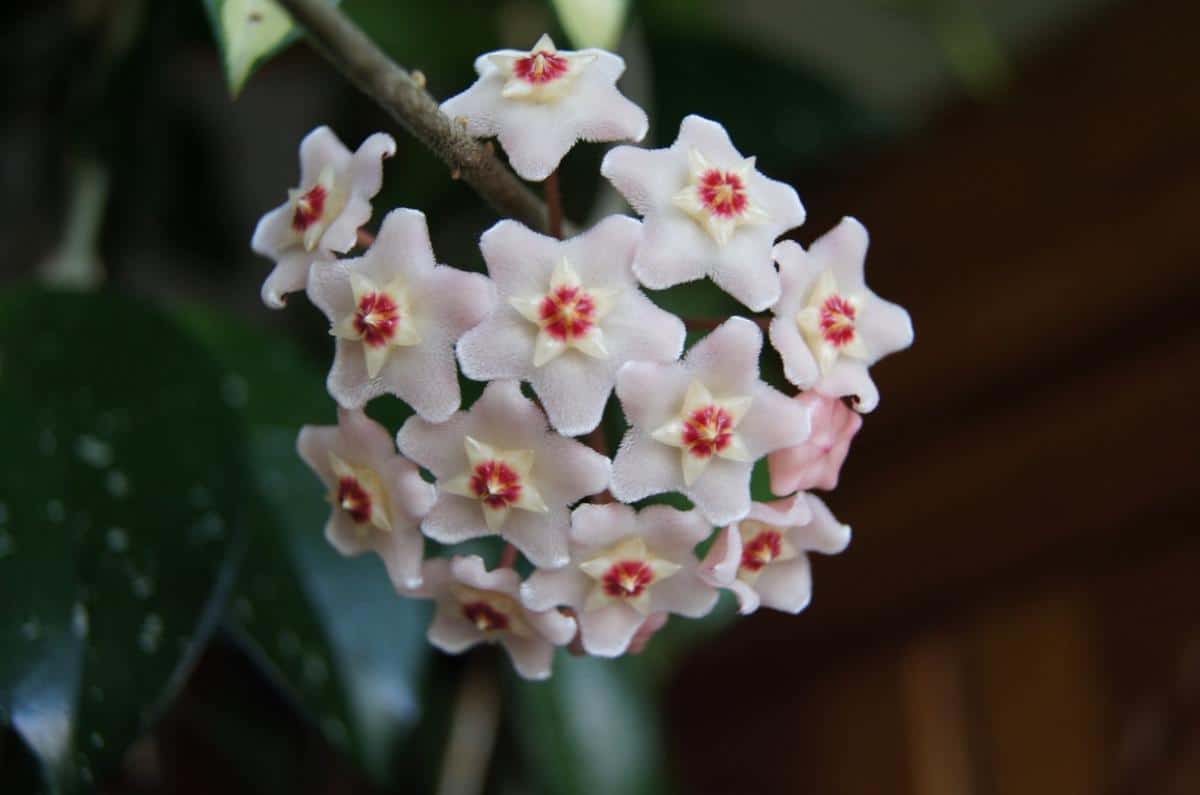
La hoya carnosa es una planta crasa (o si se quiere, suculenta teniendo presents que es una suculenta, sí, pero no cactácea), epífita con flores aromatics que sele cultivar como colgante en interiors, así como en exteriores donde las temperaturas son agradables all year long. And it is that Being tropical, it should not be left unprotected if it drops below 10°C.
Likewise, it should not give direct sun, but it should be in an area with lots of light. Likewise, a land for succulents will be added, and it will be watered very occasionally.
Lavender

Lavender is one of the many aromatic plants that exist. It is a plant that reaches more or less 1 meter in height, and is widely used to beautify gardens, especially in the Mediterranean region, because it resists very well to the drought and heat of the region. And if that wasn’t enough, it’s mosquito repellentSo don’t hesitate to get one.
But beware: It should be exposed to direct sunlightOtherwise, it will not be able to grow. It supports moderate frosts, and also pruning.
Lemon
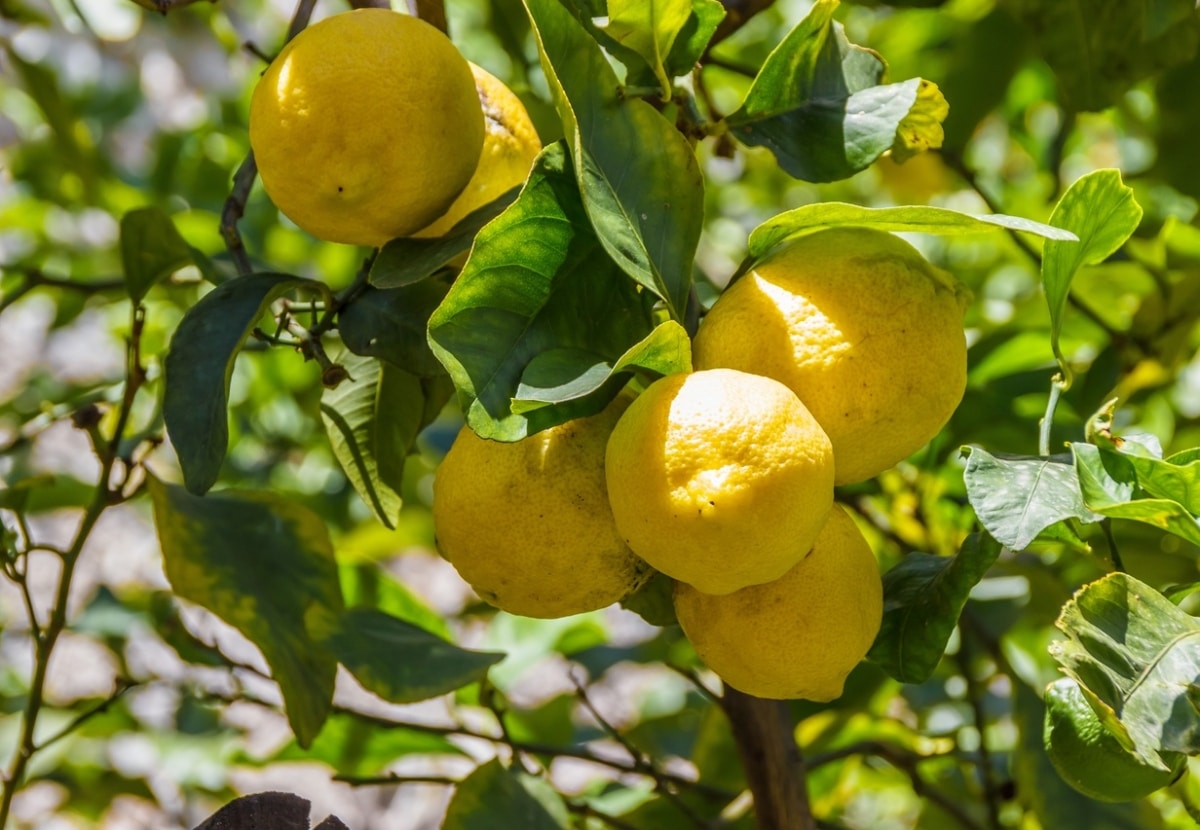
The lemon tree is an evergreen fruit tree that can reach a height of about 5 to 7 meters. Everything will depend on whether it is in a -large- pot or on the ground. You will surely know how the lemon smells or its flowers, but its leaves are also aromatic. For this reason, and because of its ease of maintenance, it is interesting to have it in the garden or on the terrace.
But yes: it must be in a sunny place, otherwise it will not grow. Likewise, you can’t run out of water – without going overboard – and a regular subscriber from spring to summer.
Magnolia

Image – Flickr/Ruth Hartnup
All trees in the Magnolia genus produce wonderful, fragrant flowers. M. grandiflora, which is the easiest species to find in nurseries in Spain, It is persistent and has the particularity of starting to flower when very young. Indeed, I have a specimen that measures one and a half meters without a pot and I have already had the opportunity to enjoy the sweet scent of its flowers.
These are plants that need acidic soil (i.e. land with a low pH, between 4 and 6.5), in addition to a rather temperate and humid climate.
plumeria

The plumeria is a tree, or more often a shrub, of tropical origin which can have deciduous or perennial leaves depending on the conditions of the region (if, for example, the temperature drops below 10°C, it will behave like obsolete). Its growth rate is slow and it is difficult for it to flower. In fact, in order for you to do this, it has to be hot. (about 30°C maximum and about 20°C minimum) for several days in a row, which is why you will only see it blooming in summer.
In culture, it is a bit demanding, because he does not like to have his roots always wet, and apart from that he is very sensitive to the cold. For this reason, irrigation must be very controlled so that the soil has time to dry out a little, and protect it if temperatures drop below 5°C (better after 15°C if you don’t want leaves are missing).
Do you know of other plants that smell very good?