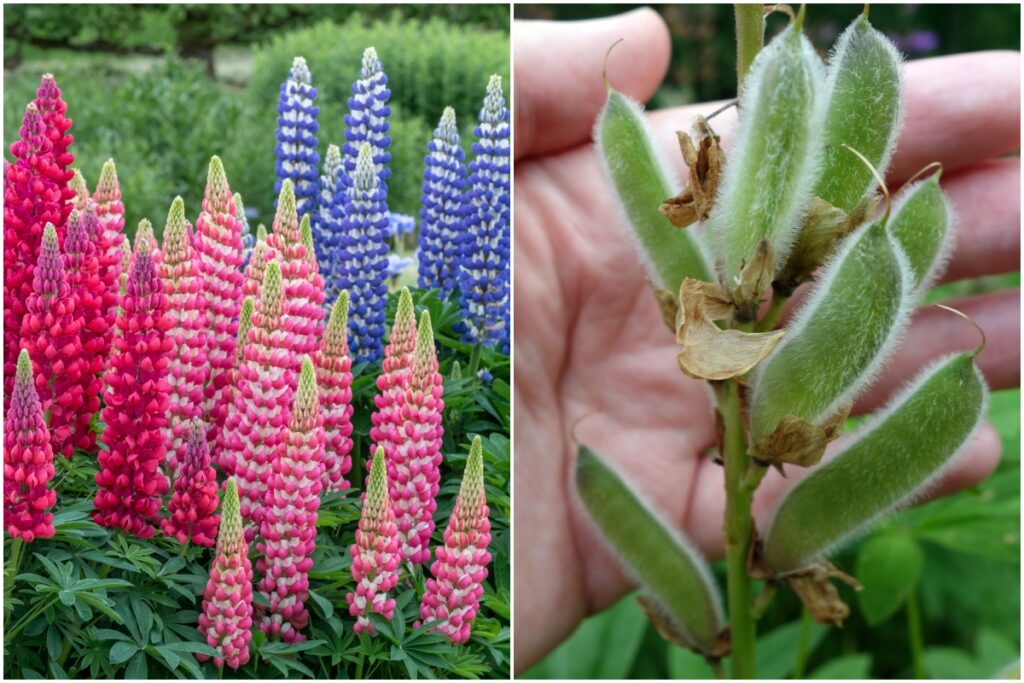

The only reaction I am capable of when I see lupines in a garden is to stop and look. Some call it admiration, others call it stalking.
I started lupines from seed in two different gardens, so I have a good appreciation for the patience it takes to grow them.
 The lupins will be shipped in mid-June this year.
 But how sweet are the rewards once these perennials begin to bloom. Its beautiful torch-shaped flowers buzz with bees and butterflies for weeks. And the bright, rich colors that lupines bring to the garden are well worth the wait.
However, lupine care does not stop there. There are a few things you can do with your lupine after it blooms so you can enjoy these cottage garden favorites for years to come.
1. Deadhead lupins and you can get a second bloom.
Well, suppose you read this article quite early in the season. In the northern hemisphere, most lupins begin to flower in late May and early June. If you hit a dead end along the way, your lupins might surprise you and continue to bloom well into July.
 The same lupine stain as above after thorough stripping.
How do you know when to kill Lupin? It’s easy. Once the bottom half of the flower spike has finished flowering and going to seed, it’s time to remove it. In this way, the plant does not spend its energy in the production of seeds. Instead, it will continue to bloom for a few more weeks, although I have seen lupines bloom well into August in temperate climates.
 The smaller flower stalk at the front is the second flower of this plant.
A small detail to note is that in this second flowering the flowers will be a little smaller and more graceful. But they will still have that lupine charm.
2. Let your lupine self-seed.
This is probably the laziest option you can take. But lazy in a good way. Lupines are prolific self-sowers, so by doing nothing you are letting nature take its course and take the reins in propagating these beauties.
 The flower heads are dried in the same order of flowering: bottom to top.
 Once the pods are dry, they split open and drop the seeds. However, not all fallen seeds will develop into young plants; only those that receive sufficient water and sun will begin to grow the following spring.
You can transplant these baby lupins anywhere you want them to grow, but keep in mind that lupins don’t like their roots disturbed. Their deep taproots make these plants excellent nitrogen fixers and soil improvers, but also make them quite picky when it comes to dividing and transplanting.
 Baby lupins are best transplanted in groups.
 So keep as many neighboring plants as possible and transplant them all into one large group. Also, lupines look showier anyway if you plant them in groups.
3. Collect the seeds to make even more lupines.
If you prefer a more hands-on approach to propagating your lupins, it’s best to harvest the seeds as soon as the pods are dry.
The easiest way to do this is to let the pods dry out almost completely, but not enough to crack them open. You can then cut off the entire head of the seed and place it in a paper bag. Shake the bag vigorously until most of the seeds are loosened.
 Wait for the pods to dry out a bit before harvesting the seeds.
 Most lupine species are biennials. This means that they spend their first year developing their roots and leaves and won’t flower until their second year. So if you want to have flowers next year, you can start your lupine seeds this summer. If you sow your seeds in the fall or the following winter, you won’t get flowers until the following year, about 18 months after sowing begins.
 We grow these Russell hybrids as perennials in our Pennsylvania garden.
 However, not all lupines are created equal. There are annual lupines (for example, bicolor lupine AND Lupinus nanus) that will flower in their first year. If you want to plant Wild Lupines, look for lupinus perennis (also known as wild lupine), lupinus arboreus (more like a bush) and the super popular Lupinus polyphyllus (especially Russell hybrid lupins).
 Not all lupins will go to seed at the same time, so it might look messy for a few weeks.
If you are planting lupine from seed, it is best to check what type of seed you have saved; not only to avoid disappointment, but also to optimize your seed planning. Remember to soak lupine seeds overnight before planting to improve their germination rate.
 Starting lupine from seed requires a little extra planning, depending on the type you’re planting and your gardening area.
 4. Cover your lupins with a good layer of potting soil.
This trick is especially useful later in the season when the lupins begin to wilt. Lupins, like all legumes, are quite greedy plants. Applying a thick layer of compost once the flowers die off ensures your soil has a balanced mix of nutrients to feed plants for the following year.
 Like all legumes, lupins are heavy feeders and need good mulch, preferably fresh compost.
 If you have plenty of fresh compost, I recommend filling in the lupines after they have finished flowering and then again when the foliage begins to die back later in the year.
Lupines, even the short-lived varieties, are wonderful additions to any garden. With a little post-bloom care, you and your garden animals can enjoy the benefits of lupine for years.