The Japanese maple or Acer palmatum is native to Japan but can also be traced back to Korea, China and Mongolia.
Its reddish webbed leaves and wavy trunk make it a wonderful addition to gardens and lawns.
Japanese maple has long been used in traditional medicine, so its benefits include skin treatment, liver and eye coverage, and digestive properties as well as external beauty.
It was once used to make the famous Chinese “Japanese maple syrup and tea”. People have been using Japanese maple as a natural medicine since the 19th century.
Japanese maple has many varieties and each variety has a different structure that can spread up to 30 feet in height.
The plant needs a good amount. light to get the right leaf color. Japanese maple thrives perfectly on slightly moist, acidic soils.
Other than that, Japanese maple grows average. They grow fastest when they are younger plants, but the rate gradually slows as they mature.
It takes up to a year for a mature plant to reach 2 to 3 feet. Also, the lifespan of this plant with proper care is about 300 years.
Now let’s see what an Acer plant with its alluring beauty can offer us.
What are the advantages of a Japanese maple?
1) Natural anti-wrinkle treatment
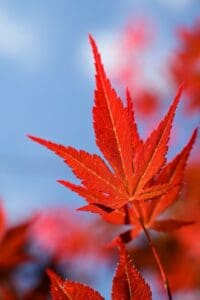 Japanese maple or acer plants have abundant tannins. In general, tannins are found in the tissues of the plant.
It is primarily responsible for maintaining the color of the plant, which includes red, light pink, purple, and green. Tannins are a complex chemical compound that helps maintain the quality of leather.
Additionally, many scientists believe that red maple and sugar maple naturally treat wrinkles.
According to investigation, helps the plant to control the function of enzymatic regulation. Are you still confused? Let me give you more information about this.
In our body we have elastin, a natural protein that helps keep our skin in shape. But there is an enzyme called elastase that breaks down this protein and causes wrinkles, which leads to aging of the skin.
Now, if you use an extract from the summer and fall leaves of the red maple, it forms a barrier to the enzyme and prevents it from working.
This results in tight skin. Moreover, the best way to use it for skin care is to mix maple extract with another skin care product to get the desired result.
But that’s not all. Research has also shown that red maple extract helps heal dark spots and other skin inflammation.
You may also be interested in: Japanese Maple vs. red maple
2) Food benefits of Japanese maple
In Japan it is used as a tea, but not all types of Japanese maple, only some, such as red, sugar and Nikko maple.
The main reason to use a Japanese maple as a tea is to be healthy and to fill the body with nutrition.
Plus, the sugar maple syrup is something else to enjoy. The plant extract is mixed with boiled water and gives it a thick texture. Then use it on food to add extra flavor.
It is an ancient tradition and is used in foods in many ways. The United States, China, Canada and Japan have used it for centuries, but in different ways. Maple syrup is famous in the United States. While tea tops the list in Japan.
3) Digestive benefits
Japanese maple or other Acer plants contain another chemical compound called flavonoids. This compound is found in the leaves, flowers and stems of the plant.
The flavonoid is used to create balance in health while maintaining the path of the digestive tract.
Acer plants tend to exhibit antimicrobial effects. You must be wondering how exactly this works. Let me tell you more.
We have microbes in our digestive tract that help us digest our food. In the event that these microbes have been compromised by an outside element, Japanese maple can help restore balance.
How much should you take now and how? First of all, every plant contains chemicals. Some are beneficial, some are not.
The same rule applies to Japanese maple. The best way to ingest a Japanese maple is to make tea from it.
Japanese maple tea contains many beneficial chemicals that can help your health. Two things to deal with.
First, never take a large amount of the herb (directly). Second, don’t use it for digestion until you smell it.
If you like this article, check out our article on where to plant a japanese maple
4) Liver regulation
 Japan and Korea use the stems of the plant to overcome liver damage and disease. Moreover, the same function has been studied in China.
Extract the sap from the stem of the plant and process it into oil or syrup to make it usable. Other medical techniques have also been used to make medicine from it.
However, all of these methods are used to achieve an antioxidant, anti-inflammatory and antimicrobial effect that helps in the treatment of liver problems.
Furthermore, the same practice was also followed to cure eye complications. The Acer plant is used in Canada and Japan for sore eyes.
Along with these health benefits of Japanese maple, scientists are still further studying the chemical functions of the plant. Other investigation it has shown optimistic results for treating tumors and many other bronchitis problems.
so is another investigation produced the results that maple trees can be used for the treatment of diabetes. It helps in the regulation of glucose in the body.
In addition, Alzheimer’s disease was also addressed in this study. Work is underway with maple trees and “countering neuroinflammation” is the potential solution the study suggests.
5) Decorative element
Whether you plant your Japanese Maple in the soil of your garden or in a pot, it will complement your interior.
Due to its distinctive appearance and ease of maintenance, it has been used to decorate gardens, patios, lawns, and even balconies and patios.
In addition, it is very easy to prune this plant to the desired shape. You can easily turn the plant into a shape that matches your other plants.
Since it is found in the red leaves, it opens up more possibilities for finding more creative ideas for your garden.
You may also be interested in: Why Is My Japanese Maple Turning Brown?
6) use of wood
Japanese maple wood is not hard enough to be easily used in furniture making, but it is used in some areas.
The most important thing is that the wood is flexible or soft to use in small decorative pieces. For example, wooden planters and wall decorations are easy to make from wood.
Apart from this, Japanese maple benefits from its use in the production of drums, violins and guitars. Similarly, baseball and cricket bats are also made of wood.
In addition, maple wood for paper production also plays a crucial role.
You may also be interested in: Why Is Your Japanese Maple Turning Green?
final thoughts
 Japanese maple became popular with growers in the late 19th century. It has very beautiful leaves that start out as green leaves, but change to red, pink, purple and yellow in the fall.
In addition, the flower also has a very exceptional plumage. Japanese maple has band-shaped flowers and has two pairs of five petals, one pair is white and the other is purple.
The characteristic beauty of this plant makes it ideal for outdoor decoration. It will not tolerate serious plant diseases, very unlikely for other plants.
Additionally, the flowers also do not attract insects unless pollination is necessary. But mites and scales can give you a hard time. For this, you can use a spray or other home remedies to save your plant.
Finally, Japanese maple has no toxic or harmful effects on humans or animals. Your pets may play with the plant without any precautions (but do not let your pets or children ingest the plant in large quantities).
Other than that, many studies have concluded that Japanese maple has negative effects on horses. The plant is considered poisonous to horses.
The ingestion of Japanese maple by the horse affects the respiratory system of the animal. In this case, you should immediately call the expert.