
Backyard fish farming is a great way to raise healthy protein for you and your family and sell it in markets. In just a small space, you can raise pounds and pounds of delicious and healthy fish or fish to sell as pets. The trick is to choose the best species of fish for your farming setup.
If you haven’t already, check out our complete guide to home fish farming. Then, if you’re ready to add fish to your pond, these species are your best bets.
There are three main types of fish that are most recommended when keeping fish in your backyard, but we also have some additional suggestions. Here’s what they are and why you should consider them:
1. Koi / Carp
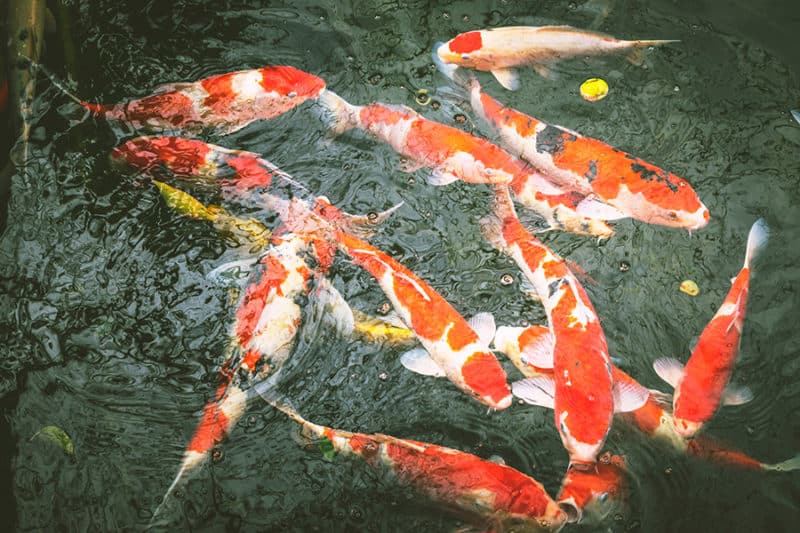
If you are raising fish to sell as pets, then your best bet would be koi or nishikigoi (skewered carp). This hardy carp species performs well in all kinds of outdoor and indoor environments. The smaller varieties are ideal for indoor freshwater tanks, while some of the larger ones thrive in outdoor koi ponds.
Koi are brightly colored varieties of Amur carp (Cyprinus rubrofuscus), which are bred specifically for their beauty as ornamental species. In fact, there are dozens of named variants, many of which are prized for their rarity.
If you are raising fish to sell as pets you may want to look into some of the rarer breeds, these will be more sought after by collectors and therefore fetch more money than the standard breeds.
For example, Ōgon (黄金) koi are monochromatic and have a metallic sheen to their scales. They mostly come in shades of platinum, orange, or gold, but there is also a cream-colored variety that is incredibly rare. A single platinum koi can sell for between US$55 and US$150, depending on its size.
As an added bonus, koi are also cheap to keep because they can eat fish food, vegetables, fruits, grains, and most store-bought insects, rather than being restricted to special diets.
In general, carp need about six months to reach a weight of one pound.
2. Tilapia

Tilapia is another species of fish that many people keep in their backyard. They too can survive in almost any weather. But they must be in water that stays at a constant temperature of 77-86°F.
If your water temperature ever drops below that, just get a water heater. Once you plug it in, the water will stay warm and your fish should be fine.
These fish will also thrive in standard city water as well as natural water sources. Note that if you live near the ocean, there may be a higher salt content in your water table. Have it checked to see what its salinity levels are before introducing fish.
Tilapia can survive as long as the salinity is around 16 to 20 parts per thousand.
These fish will eat most plant-based foods and insects and mature in about eight months.
Blue Nile tilapia is a particularly good variety. They are beautiful, tasty, disease resistant and can tolerate pretty crappy water quality.
Depending on the type you are raising, tilapia take about 6 to 18 months to reach one pound.
3. Trout
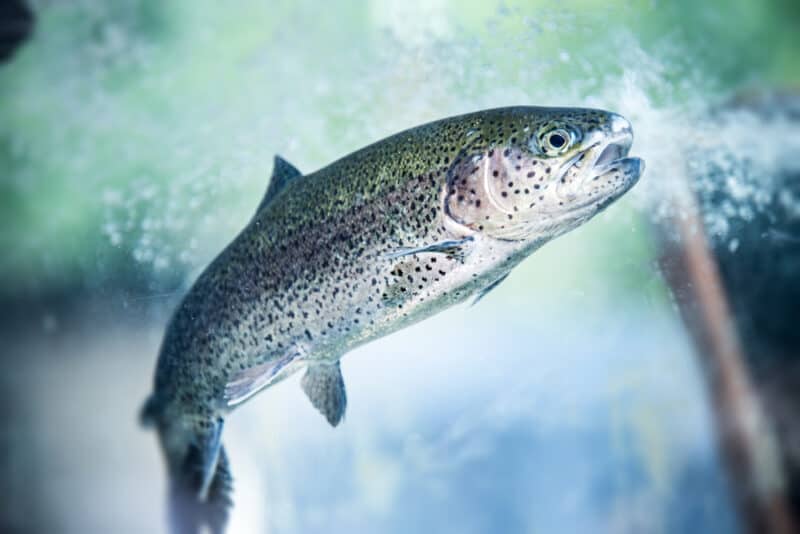
If you know anything about trout, you will know that they are exceptionally cold hardy. In fact, trout species thrive in USDA Growing Zones 6 and lower. They can be found in cool lakes, rivers, and streams from California to Kyrgyzstan, and are favored by fish farmers in Canada, the northern United States, and northern Europe.
Do some research to find out which species of trout are native to your area, as well as the environment in which they thrive best. Then try to recreate this environment on your own land. Next, contact your local fish farming supply company and ask for recommendations on which local species to farm.
When it comes to food, trout can be a bit of a picky eater. They may not fare as well as other species in a self-sustaining ecosystem, so keep an eye out for them. If they look small (underweight) or are dying, then stick to commercial fish food.
It is also important to note that trout need clean, clear water at all times as they are sight feeders. If they can’t see the food around them, they can’t eat. Feed your trout at dawn and dusk for maximum feed intake.
Trout take about a year to reach one pound.
Other Fish Species to Consider
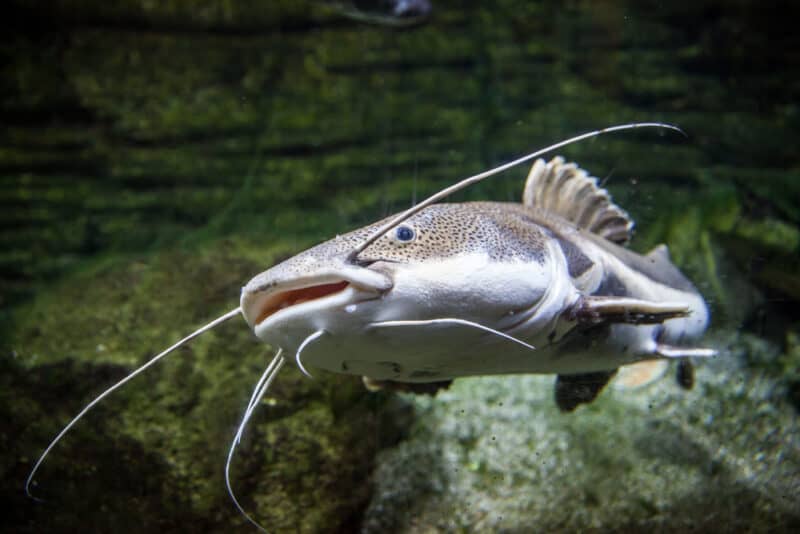
In addition to the fish mentioned above, catfish and largemouth bass are also excellent species to raise for food in an agricultural facility. They are quite easy to breed too. Of course, that assumes you’re based in North America.
Catfish has a strong flavor, which some people like and some don’t. Either way, it takes them about eight months to reach a one-pound weight, and they can tolerate crappy water conditions.
Perch is also doing well in North America. They grow quickly, reaching a pound in about a year and a half, and can tolerate cold water.
Salmon is an extremely popular species for consumption and sale in markets, but can be difficult to grow in an agricultural facility. They are even more sensitive than trout to water conditions. The salmon needs about a year and a half to reach a pound.
If you love bass, the hybrid striped bass is best for backyard fish farming. They take a year to reach one pound.
If you are in Europe, species such as carp, bass or cod might do better in your area.
If you opt for pets, you can also keep goldfish. Some of the larger and more ornamental types can fetch big bucks in the market.
As a general rule, it is best to grow species native to your area. This goes for fruits, vegetables, herbs and trees, as well as various animal species. Those that have evolved over thousands of years to thrive in your home environment will do much better than an introduced species.
How many fish do you need?
If you are new to backyard fish farming, start small with only one or two species at most. The rule of thumb is one pound of fish per five gallons of water. But if you’re new to the process, you should be much more conservative.
Don’t breed more than 80-100 fish in the first few years to test the waters, so to speak.
You will undoubtedly lose several fish to disease, injury, and predation as you get the hang of it. As such, keep your effort small until you know the tricks of the trade. You can always increase their number as you go.
Introducing new fish
Regardless of the species, before introducing new fish to your breeding facility, make sure your system is up and running. If you have existing fish, you should set up a temporary tank to contain the starters before adding them to the main tank.
This gives you a chance to observe them and make sure the new fish don’t have any diseases or problems. Add a few tablespoons of iodized salt to each gallon of water to kill parasites.
Then, over the next week, add some water from the main tank to the temporary tank to gradually transition the fish to the conditions they will live in.
Was this article helpful?
Yes No ×
We appreciate your helpful feedback!
Your response will be used to improve our content. The more feedback you give us, the better our pages will be.
Facebook pinterest