Medlar is one of those essential fruit trees in the orchard. Its fruits are delicious, it does not require great care and the results can be very good.


This fruit tree is the tree known as loquat, Eriobotrya japonica. There is a European variety, the common medlar or European medlar, whose scientific name is germanic mespilusbut although it produces a fruit similar to the Asian variety, being indigestible it is used mainly for ornamental purposes.
They are characterized by their dark green lanceolate leaves, which reach up to 15 cm in length. Its white flowers grow in clusters and produce a sweet fruit, the loquat. This fruit is round and orange-yellow in color.
How and when to plant medlar
The ideal time to plant medlar is at the end of winter, so that this tree begins its growth in the spring. We can plant the seed directly into a seedbed, or we can use a homemade seed sprouter as we explained recently on the blog. This way we will make sure that at least the seed begins to develop.
Although the tree grows in a pot, a year after planting it (if we did it in the spring, then the following spring) we can transplant it to its final location. This can be an area in the garden where we are not going to plant anything around, taking into account that this tree will not stop growing from year to year, and its crown will expand.
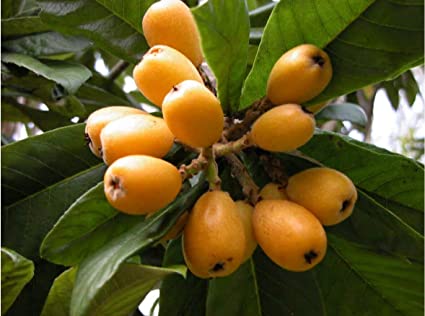
Medlar and its care
Medlar is not too demanding in terms of care, but it is always important to consider the ways in which this culture can best adapt and thrive.
Floor
This fruit tree grows in a wide variety of soils, but prefers deep, nutrient-rich soils. It has an average height of 6-8 meters and a rounded crown.
Climate and water needs
Medlar is drought and cold resistant, making it ideal for hot, dry climates or climates that have harsh winters or freezing nights. Its growth is slow, with a growth rate of about 10 cm per year. Medlar requires little attention, although it does need frequent watering, mainly during the growing season.
Plagues and diseases
He Eriobotrya japonica andIt is resistant to harmful insects or pests and diseases, making it ideal for organic gardens or those who want to minimize the use of pesticides that end up contaminating soil and groundwater.
Likewise, some diseases can be a real nightmare, such as loquat mottle, caused by the fungus Fusicladium eriobotryae, which attacks all the aerial parts of the loquat, but mainly the fruit. It is recommended to remove the affected areas and use homemade fungicide and natural.
Also pests such as aphids, which we have already seen several times home remedies for aphidscochineal or fruit fly they can attack and damage this tree and its fruits.
Size
Pruning is like other fruit trees and we will do it in winter. I recommend the post dedicated to the apple tree pruning and other fruit trees, since the treatment is the same.
How long does a loquat take to bear fruit?
Medlar takes between 3 and 4 years to produce its first harvest. This harvest may be limited at first, but the tree will produce more fruit as it ages. Mature trees produce fruit every year, often reaching their peak production at 8 years. A mature loquat tree can produce 5 to 10 kilo fruits each year.
What do you think? Did the article help you? Leave me your opinion in the comments of the forum and if it works for you, you can always support the channel with a donation or help me spread it by sharing it on social media. If you want to follow me, here are some of the social networks I use Facebook , instagram , pinterest either subscribe to my youtube channel
HERE I LEAVE YOU A POSTER IN CASE YOU WANT TO SAVE IT ON PINTEREST
