The first time I saw brown spots on the leaves of my Pilea, I shrugged. “It’s just a place. There’s nothing to lose sleep over,’ I thought to myself and went about my business.
YouThe brown spots multiplied over the next few days and I couldn’t put my head in the sand anymore. So, armed with a photo, I searched online for answers as to why my plant was showing signs of distress.
MyThe reasons why pilea leaves turn brown are due to inadequate lighting, too much sun exposure, pests, temperature fluctuations, rooting and lack of good watering practices.
The main reason for this is overwatering, so be sure to check the soil before watering your pilea.
And as I went to check my plant for each cause, I finally narrowed it down to the culprit that was giving me sleepless nights.
This guide will tell you the main causes of Pilea leaf browning and, most importantly, what to do about it:
Why are my Pilea leaves turning brown?
Are you ready to find out why your Pilea might be sick? Here are the most common reasons:
excess water
 Have you ever thought about how much water you give your Pilea? If the leaves have turned brown, you may have overwatered.
These are the Pilea plants. They have succulent characteristics that allow them to retain water for a long time. Therefore, additional water is not good.
On the contrary, it causes water retention in the soil, which contributes to root rot. And if you keep overwatering the plant, root rot can eventually kill it. Brown spots are just a warning: the worst is yet to come.
The choice of soil also influences the health of the plant. Although you cannot intentionally overwater the plant, the soil can work against you.
Pilea plants prefer peat-based potting soils because they are rich and well-drained. Other potting mixes may not be ideal and can create an environment that promotes root rot.
Submarine
It is almost impossible to overwater without thinking the opposite: watering the plant less than necessary.
Although Pilea does not like being submerged in water, she still needs water. Even succulents cannot survive long without water.
If you ignore the plant’s needs, it will soon show yellow and brown spots. In addition, he falls and can die if he stays in this state for too long.
insufficient light
The Pilea grows best in bright, indirect light, as this is how it can make food. But if it does not receive enough light, it suffers.
The leaves stop growing and the stems begin to show leggy growth as they try to reach for more light.
Also, the leaves are stunted and instead of becoming large and round, they become smaller and begin to curl upwards. These are all indications that the plant is not getting enough light.
For more information on how to get enough light for a pilea, we did an article on the Battery light requirements.
direct sun exposure
Too much of anything can be poisonous. And in the case of Pilea, direct exposure to sunlight may harm it rather than help it.
As noted above, this plant thrives in bright, indirect light. And in such conditions, the leaves become round and grow in size.
But when exposed to direct sunlight, the leaves begin to turn brown and may even turn yellow. And unfortunately, this damage prevents the plant from producing food and is irreversible.
If more leaves are damaged, the plant will become weak and eventually die.
root-bound pilea
The good news is that Pilea grows quite fast. But the downside is that you have to replace the pot every 1-1.5 years.
If this crosses your mind, you might be surprised that the plant’s leaves are turning brown. The reason behind this? – If the roots are clogged, the plant cannot absorb enough nutrients to promote growth.
temperature variations
The Pilea prefers temperatures between 60 and 95 degrees Fahrenheit. If temperatures are above or below this range, the plant may respond by turning brown.
It is the result of heat stress, especially when temperature changes are abrupt. For example, during the winter, Pilea leaves may turn brown if placed near a window, allowing cold drafts to enter.
The same thing can happen if you place the plant near a heating vent. To check if your plant is a victim of temperature changes, look for scars and brown spots on the leaves after exposure.
If you like this article, check out our article on What are the most common problems with a pilea?
How do I prevent my Pilea leaves from turning brown?
Can you prevent your Pilea from turning brown? Of course he can! The Pilea only shows signs of fear when it doesn’t get what it needs. And here’s how to deal with the pain points we discussed above:
excess water
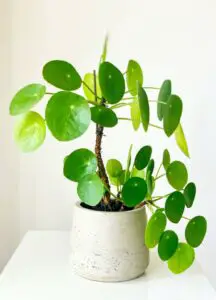 The easiest way to deal with too much water (and underwater) is to understand what Pilea needs. Ideally, the plant only needs water when the soil is dry.
Of course, the frequency of this will depend on your climate. In some areas, you can water the plant once a week and it will be fine.
And in other cases, you may need to water the plant every few days. The general rule is to water the plant only when the top two inches of soil are dry.
Also, you need to use the right potting soil for your plant. And finally, always make sure that the pot has enough drainage holes and check that they are not clogged.
Submarine
Finding a balance between killing the plant with too much or too little water is not easy. But you can’t sit back and let nature take its course. Instead, here’s how to deal with a submerged plant:
- Judge the plant by looking at the leaves. A submerged plant will have brown spots on the leaves, and the leaves will be thin and crispy. Maybe they are even bent.
- Check the soil to make sure the top two inches of soil are dry. This is a general rule that you should always follow when watering the Pilea.
- If the soil is dry, submerge it in water by running water through the soil, then draining the excess water through the drainage holes. Leave the plant alone and give it time to soak up the water.
- Keep checking the plant to see if the top two inches are dry. When it’s time to water the plant again, soak it well and let it soak up the water.
You should maintain a regular watering schedule that is flexible enough to accommodate changing weather.
And if you’re having trouble keeping to the schedule or knowing if the plant needs water, buy a moisture meter. This saves you a lot of guesswork and helps you care for the Pilea and other plants in your home.
insufficient light
Most Pilea species have access to bright, indirect light. And when placed indoors in places with limited access to light, the plants suffer.
The easiest way to solve this problem is to move the plant. Move to partial shade/partial sun area. Ideally, it should be near a window.
To ensure that the plant is not in direct sunlight, you can use curtains in front of the window. Also rotate the plant every two weeks to ensure it grows evenly.
If your home doesn’t have enough access to sunlight, you can invest in grow lights to supplement what the plant gets from daylight.
Can the Pilea die from insufficient sunlight? Fortunately, this plant can survive in low light conditions. But there is a caveat.
Under such conditions, the leaves of the plant turn dark green and become much smaller than they would ideally be. In addition, they exhibit leggy growth, which can be quite unsightly.
We have an article about it. how to fix a long leg pool to beautify your plant.
direct sun exposure
Sun damage is irreversible. However, here is how to store your leftover Pilea leaves:
- Remove damaged leaves to make room for new growth,
- Move the plant to a location with bright, indirect light. Make sure the plant is not in full sun.
- Do not expose the plant to the sun when the leaves are wet, which catalyzes further damage.
Over time, the plant will produce new foliage and can sustain its growth by producing more food.
root-bound pilea
A root-bound plant should be transplanted to allow the roots to absorb water and nutrients from the soil. All you need is:
- Check for signs that the plant has attached roots: these include roots sticking out, water squirting out onto the soil when you water the plant, and visible root binding.
- Find a pot a few inches wider than the current pot and move the Pilea.
It should be at least a year before you need to move the plant again.
temperature variations
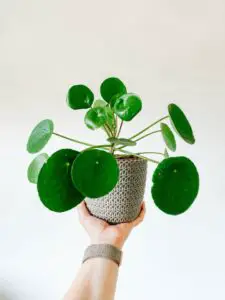 Did you know that frost can kill Pilea? It is important to control the temperatures to which you expose the Pilea to avoid this.
To do this, keep the plant in an area where the temperature stays between 60 and 95 degrees Fahrenheit. Also, make sure the plant gets enough water and sunlight.
Under these conditions, the brown spots will disappear and the plant will begin to show signs of good health.
final thoughts
Most causes of Pilea plant browning are due to neglect. But the good news is that you can fix these issues within days. Invest in a good Pilea grooming routine to prevent them from raising their heads again.
Happy gardening!
Related Items:
Why is my Pilea hanging up? Causes and how to fix them
How big can a pilea grow: how fast and tips for growing them
What is the ideal humidity for a Pilea? Misting Tips & More