

Within the cactus family, there are many varieties. Almost as many likes as you can get for these plants. One of them is the Cereus repandus, also known as Cereus peruvianus. You know him?
Here we leave you a guide with the characteristics that you must know about the Cereus repandus as well as the care in case you have one at home or want to have it. You can consult it to improve the quality of your plant.
How is the Cereus prevalent
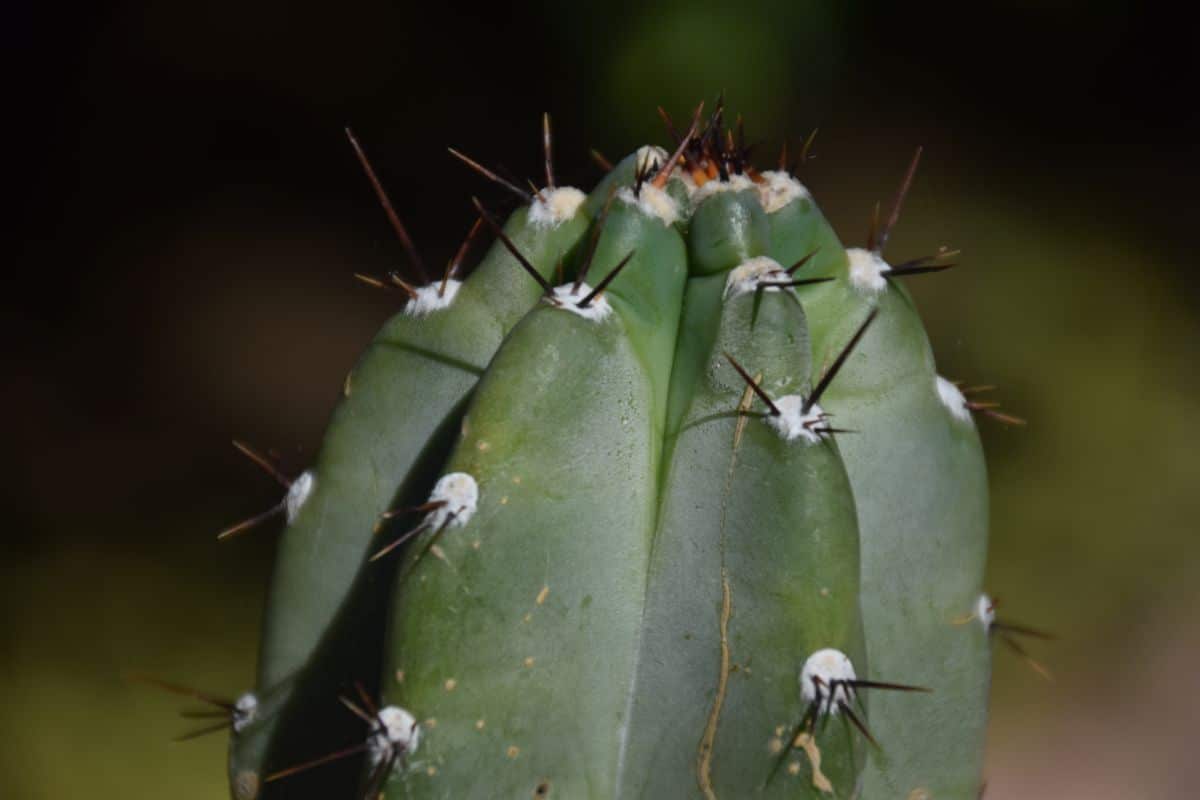
When looking for data on Cereus repandus, you should be aware that it is more common to find it under other names. One of the most common is the Cereus peruvianus. However, there are others such as the Cereus Uruguayanus, the candelabra cactus or the computer cactus.
It is native to Brazil, Uruguay and Argentina, although it can now be found in many other countries. It was first described in 1768 by British horticulturist and botanist Philip Miller.
Visually, we are talking about a columnar cactus consisting of one or more stems, which can easily reach 15 meters in height. It is tall (the stems can be 15-20 centimeters thick (diameter)), straight and spiny. However, when she is in a pot, it is not easy for her to reach this height and she stays at 1-2 meters at most.
Younger specimens have a bluish green tint but as they mature this fades and they are a darker green.
As for the ribs, he has them. The normal thing is for them to be between five and eight, which are quite wide and prominent (especially since deep indentations and indentations will appear).
AT, in addition to the areolas in those notches that we told you about that will be full of white hair and from which will come out seven small distinct brown thorns (except in exceptional cases which can measure five centimeters).
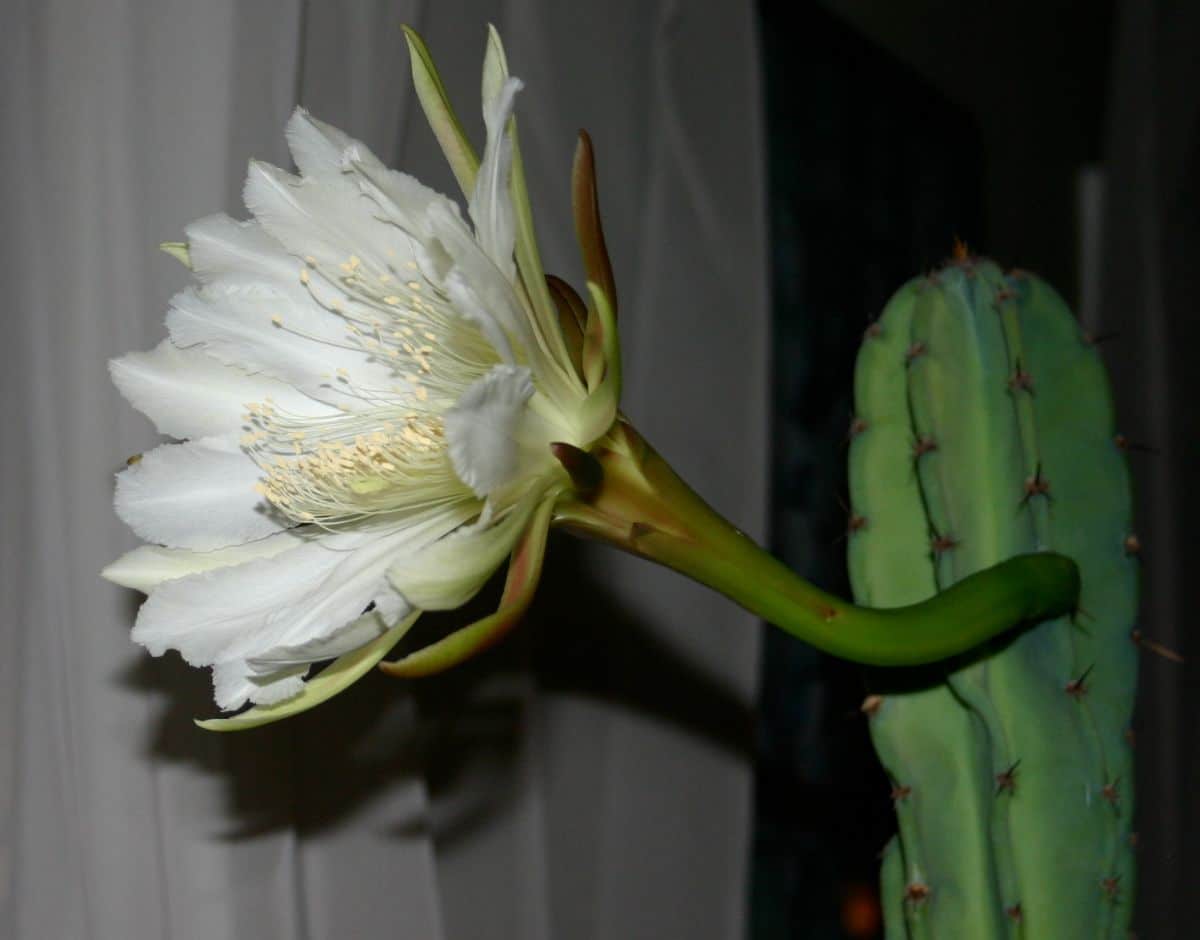
Like many other cacti, Cereus repandus also flowers, but you’ll only see it on larger, more mature specimens. The flowers will be about 15 centimeters long, with white and brownish-green petals. Its flowering season is summer and, in addition, it has the peculiarity that the flowers only open at night.. Only one night, because after that it wastes away. If you are lucky enough to have pollination in the flower, the fruits will arrive, which will be red and between 2.5 and 5 cm in diameter.
Widespread Cereus Care
After learning a bit more about the Cereus repandusDo you dare to have some at home? This is one of the cacti you could have indoors and outdoors. In fact, if you have it indoors, it grows much faster than outdoors. But what other care do you need? We explain them to you.
location and temperature
as you were toldCereus repandus can be kept indoors or outdoors. It is a variety that, although it needs sun, does not need to be direct (especially if it is not used to it) because it burns very easily. For that:
If you want it indoors, place it in an area where it receives several hours of direct sunlight. (but checking that it does not burn it, if so, always better the indirect light), and the rest of the day the indirect sun. With this, he will be able to grow about 30 centimeters per year.
If you want it outdoors, a semi-shaded location is best as this will ensure that the sun doesn’t do its job, especially in the summer. If the specimen is already accustomed to the sun, you can leave it in full sun. And its growth in this case? Well, we are talking about between 50 centimeters and 1.2 meters per year (of course this will depend on giving it the right conditions and having room to grow).
As for the temperature, heat is not a problem, nor cold, at least down to -3°C. If it’s minor, then yes it can get worse. Even so, the first years, or if the specimen is young, it will be more dangerous because it will not get used to it.
Substrate
Like many other plants, the soil for Cereus repandus should be light and, in this case, rich in nutrients. A mix that will work well for you is to use a cactus substrate with mulch and perlite, as this way you will provide everything the plant needs.
Its transplant takes place approximately every two years (at least if you have it in a pot). However, you should top it up with mulch every year to keep the soil acidified.
Irrigation

The irrigation of the Cereus repandus must always be in its growth period, that is, in spring and summer. At this time, you should water whenever you see that the soil is dry several inches above. Otherwise, you should wait.
For its part, in winter (and in autumn) it can be watered once a month, but if there is humidity in the environment, we recommend that you do not do this.
Subscriber
Cereus repandus is one of the cacti that is very grateful to be fertilized. If we take into account that it is a plant that grows very quickly, the additional nutrients will be useful. The best? A slow-release, rich in potassium and phosphorus, and low in nitrogen.
Plagues and diseases
Although it is strong enough to resist pests, we recommend that you be careful with scale insects, which can not only affect the visible area, but also the roots themselves. It can also be an attraction for the red spider, which will do its own.
As for diseases, the most important is root rot, that it can rot and the cactus disappears.
Multiplication
Finally, to propagate Cereus repandus, it is best to use the seeds of its fruits.
These are harvested from the fruit of the cactus and must be cleaned for planting in the spring. They are quite fast (they germinate before other varieties of cacti) but that is also why they are delicate.
In spring they should be planted in pots with good soil. and, if you keep them at a constant temperature of 25 ºC, in 14 to 28 days you will see that they begin to come out and grow. Until they are well rooted you should not touch them, and only then should you move them into a small pot so that they begin to grow.
Another way to reproduce it is to use rooted stem parts. However, this is not easy to do, and it also means “breaking” the plant itself. Finally, cuttings is another option, less destructive, and which can provide you with a better solution.
As you can see, Cereus repandus is not a cactus that will give you much trouble, yet it can be very ornamental for your cactus garden. Would you dare to have it?