
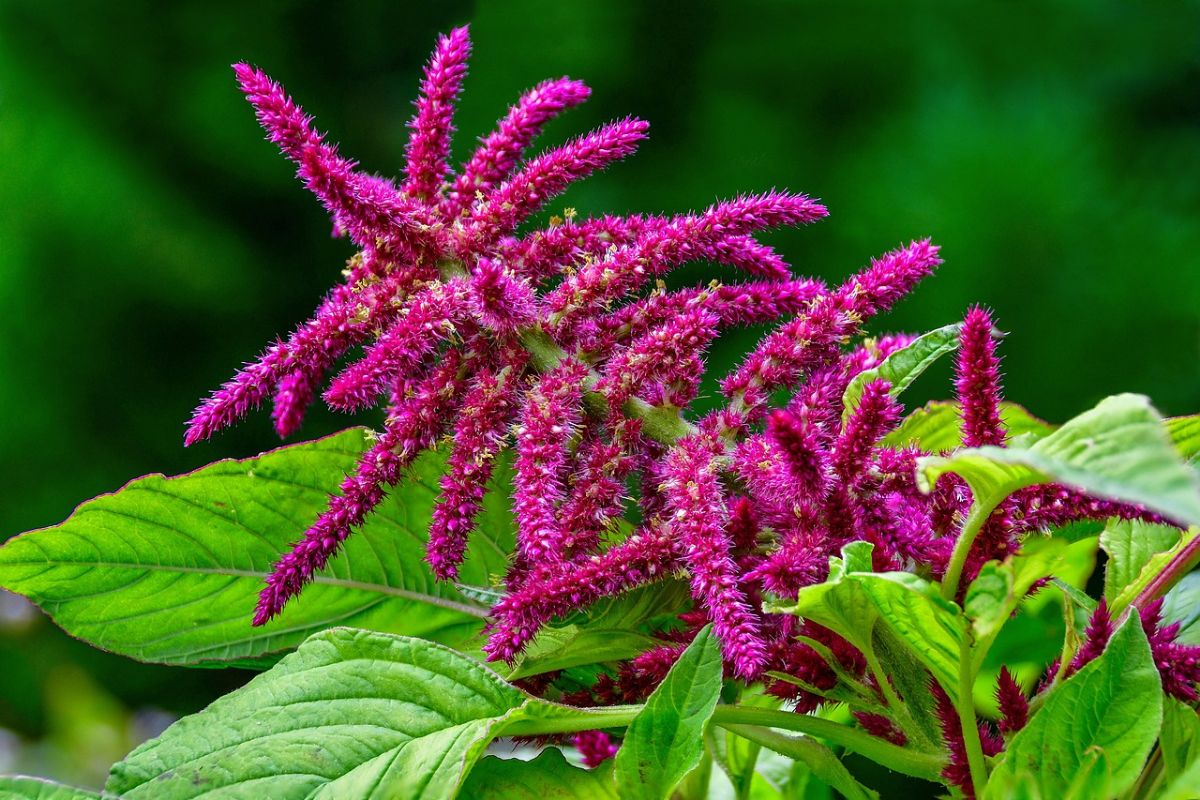
If we said “turkey mucus” to you, most likely you would take it as an insult. However, it is the name in Spain of the plant Amaranthus caudatus. Do you know her?
It is a plant characterized by the colors it has but also for being an evergreen. Want to know more about her? Do you know the treatments? Here you have the specific file for it.
How is the Amaranthus caudatus
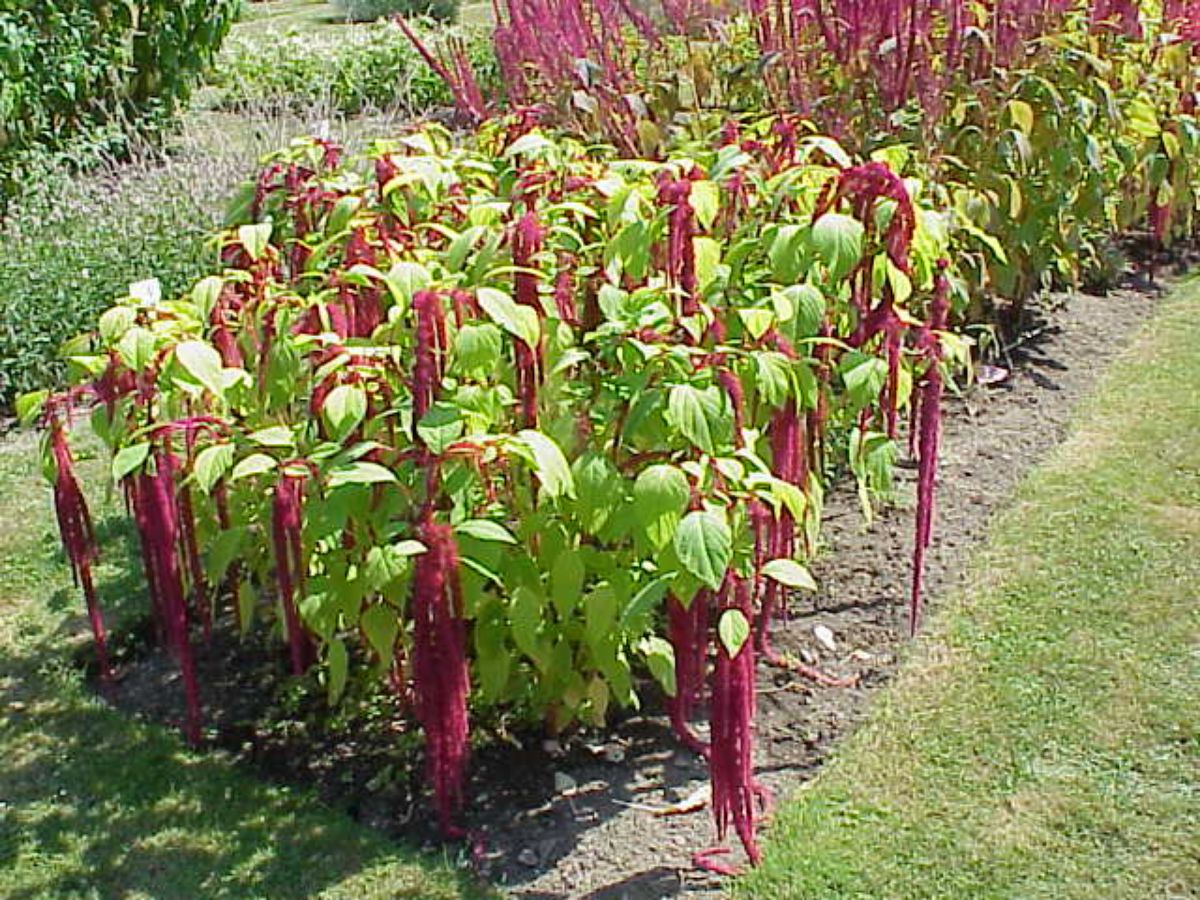
As we have already told you, Amaranthus caudatus is also known as turkey slime. However, it is not the only one: quihuicha, attack, amaranth, purple ataku, bledo, quinoa de Castilla are other names under which you can find it. and that they refer to the same plant.
It is part of the Amaranthaceae family and is fast growing. But what is most characteristic of it are the leaves, stems and flowers.
It is native to Peru and Bolivia, although it is known in other parts of the world (especially since Amaranthus are quite varied and there are several types).
Amaranthus caudatus plant It is composed of a central stem that can reach 2 to 2.5 meters in height. Additionally, it branches into branches that can grow from the very base of the plant.
Regarding the root, it is not too big, but rather short. Of course, it is divided into several secondary roots which are the ones that fix the plant to the ground.
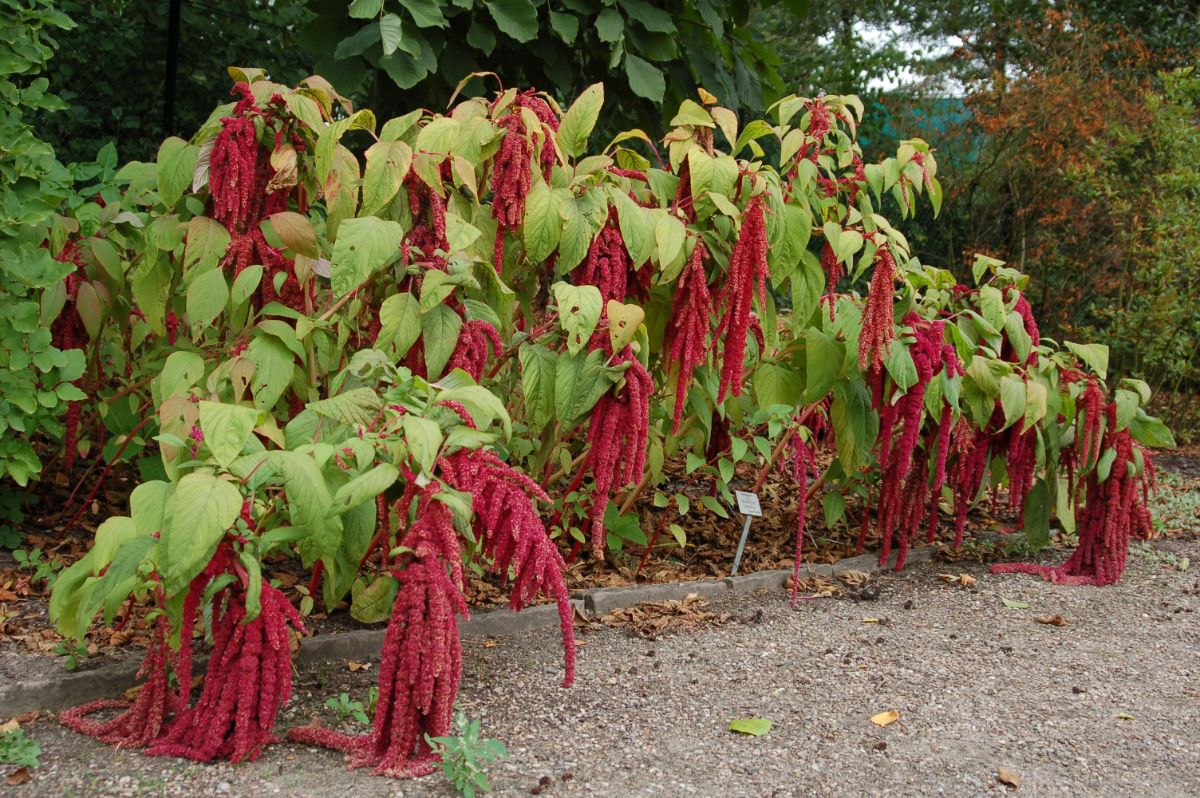
The leaves are green, more or less long, and they fall downwards because they are thin and the plant itself tends to push them to this side because they are not firm. Next to them come the flowers, which almost always grow from the main stem. These are fully flowered branches, some even measuring more than 90 centimeters. These can be purple, gold, or red, and unlike the shrub plant as a whole, it will look like a wisteria (without actually being one, of course).
Amaranthus caudatus care

Now that you know a little more about Amaranthus caudatus, perhaps its design will catch your eye for your garden. Would you like to have it at home? So, so that you do not have a problem, here we leave you the main care that you should give it.
location and temperature
Amaranthus caudatus is a plant that loves being outdoors. In fact, you need it. And it is that this plant needs sun to develop properly. Now, it all depends on the climate you have where you live.
For example, if you live in an area where the sun is scorching (especially in summer), it is better to put it in partial shade because in this way you will avoid that the hours of greatest incidence can affect the plant. In exchange, if the temperatures are warm or even cold, the best location will be in full sun so that it can be well fed.
As for the temperature, it also adapts to what you give it, although if you want it to be good you must make sure that it does not drop below 0ºC since, even if you do not see it not a priori, after the frost the plant will die.
With the heat you will not have a problem, because it resists well to high temperaturesbut if it is very cold or there is constant frost, it is better to protect it with a net or similar.
Substrate
The plant is not picky in this regard. The truth is that it adapts to anything you throw at it: sand, acid, limestone, neutral, alkaline… The only ones that might give you problems are clay (when heavy or compacted) as well as dry or sandy soil.
Our recommendation is to use humus-rich soil and mix it with some drainage like perlite or even orchid soil, as it will oxygenate better and be good for the roots.
Irrigation
Amaranthus caudatus is a plant that can tolerate drought. But that doesn’t mean it doesn’t require water. When the plant is young, it needs large amounts of water. And keep an eye on her so she doesn’t die. On the other hand, when he is an adult, he should not be thrown away as much.
Of course, it is inconvenient to go overboard with irrigation, because, having short roots (the main one), it is easy for her to rot.
Subscriber
The subscriber has two phases. On the one hand, before planting it, either in a pot or in the ground, you need to add organic fertilizer and agricultural fertilizer to feed the soil base. For example, you can add a little peat.
The second phase corresponds to the growth of the plant. Being very fast growing means it needs a lot of nutrients and they are quickly depleted in the soil. For that, every 15 days you will need to apply fertilizer in the irrigation wateras well as a leaf.
Of course, this only applies to spring and summer; the rest of the year there is not much need for it although, to take good care of it, you can apply it once a month (in autumn) and every two months in winter.
Size
Pruning Amaranthus caudatus is to remove faded flowers as well as the parts of the plant which are diseased, deteriorated or which cause problems. Beyond that, you shouldn’t do anything else.
Plagues and diseases
Regarding plants and diseases, you should know that the plant itself is a bit problematic in this regard. Beetles, caterpillars and snails they can spoil the appearance of the plant (eat the leaves).
Con respecto a las enfermedades, las relacionadas con el excess o falta de luz o de riego son las más problemáticas, pero también puede darse una deficiencia de nutrients, que hará que las hojas se vulvan amarillas (bien de la base à la punta, o on the contrary).
Multiplication
If you have this plant and want to propagate it, know that the way to do it is through the seeds of the flowers. Harvesting and planting them in early spring, first in nurseries and then transplanting them, is the best way.
As you can see, Amaranthus caudatus is one of the plants that will beautify your garden the most. Do you dare to have it in a pot or planted directly in the ground?