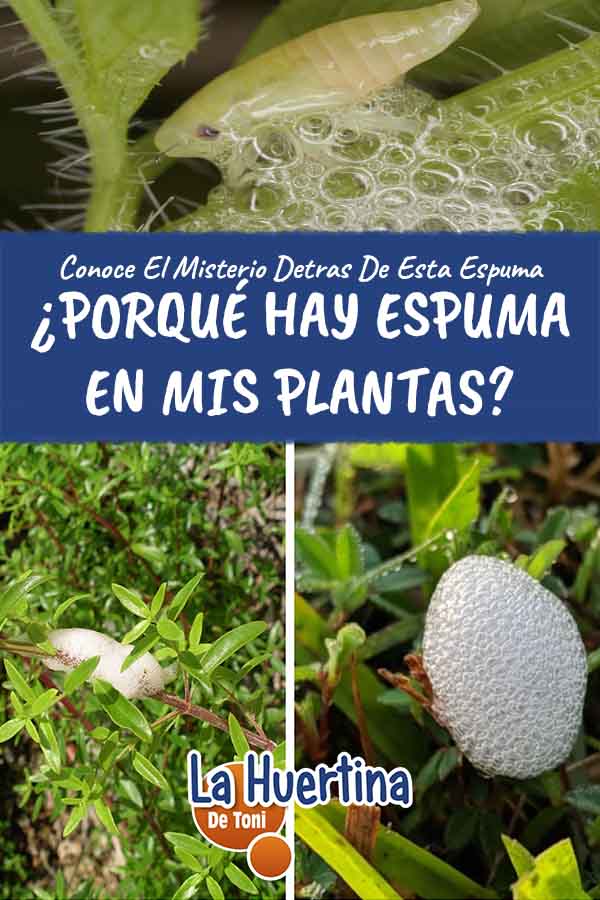
Surely you have seen white foam on the branches of your plants more than once and the first thing you thought was that it was saliva. It’s very similar, disgusting isn’t it? But rest assured, it’s not human saliva, it’s an insect that generates it. Today we are going to meet the leafhopper.
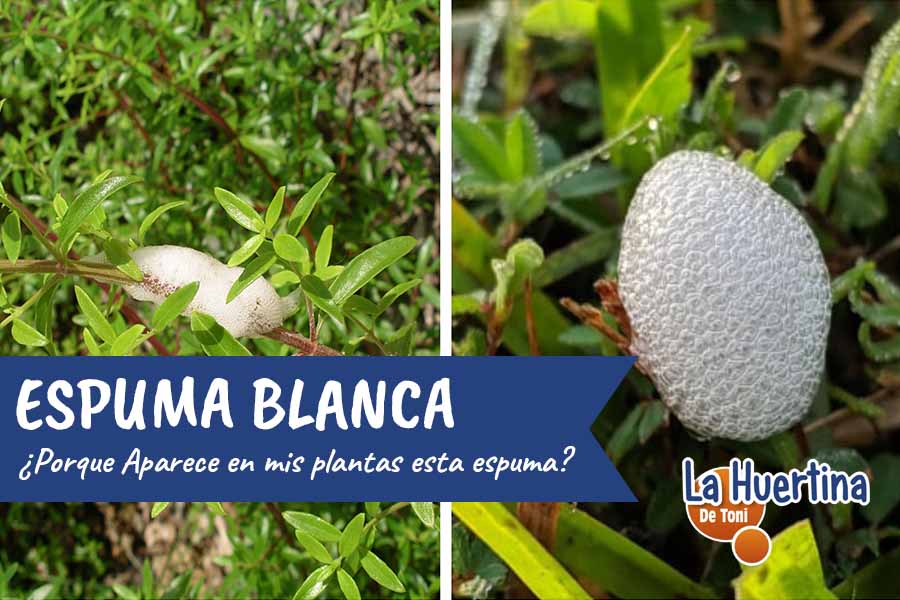

Leafhoppers, leafhoppers or spittlebugs are phytophagous insects that feed on the sap of plants. It is known by these names because when it feels threatened, it jumps thanks to special legs to do so and also because they look like cicadas.
Meet the leafhopper
Leafhoppers are insects of several colors depending on the species and the country, since those that live in tropical countries are generally brightly colored. One of their defense mechanisms is jumping and some can jump 100 times their body length. For a human this is impossible, insects always surprise us with their super bug abilities.
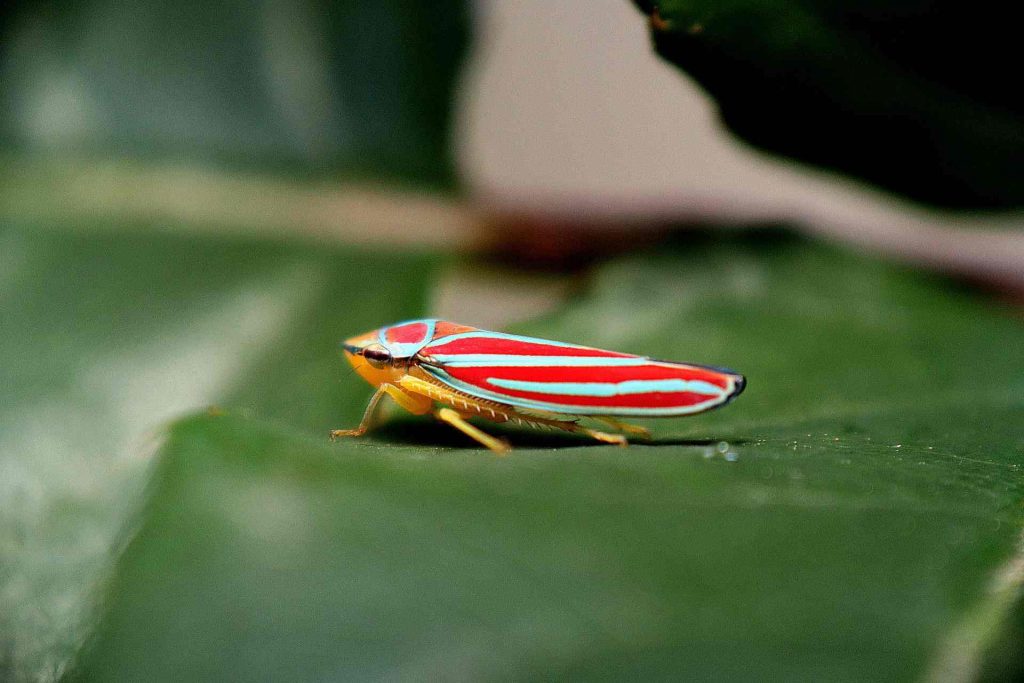
They can also generate a bitter, irritating substance if they feel threatened and their color warns of this. In nature, aposematic coloring is that which indicates how dangerous an animal is based on its color, the more striking it is, the more dangerous it is. And if that wasn’t enough, they can also fly.
Life cycle
Adult leafhoppers lay eggs on the undersides of leaves in the fall, and when they hatch, the young disperse to cover themselves. The cycle begins in early spring and by mid to late we will begin to see the masses of bubbles in the plants.
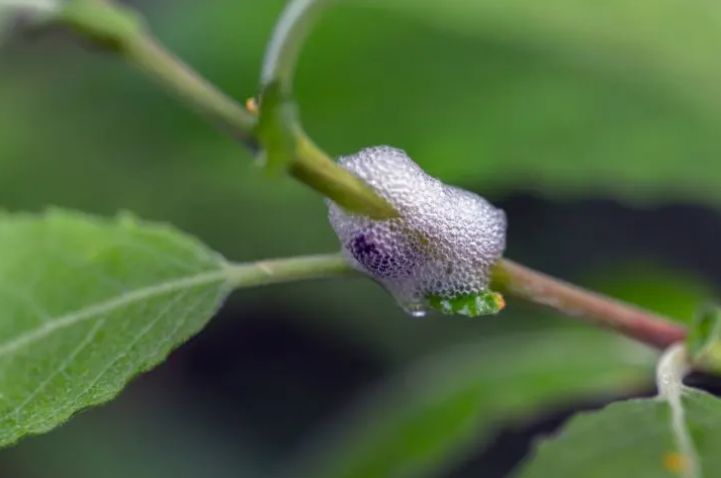
Inside are the baby spittlebugs that use them to defend themselves against predators. They are very resourceful, they feed on the sap and while excreting it they make movements with their legs to generate foam. Without it, the bed bug would dry out and die or be eaten by predators.
You already know the mystery, in each cluster of bubbles there is a sniper larva.
As the sniper grows, he sheds his skin until he reaches the final stage where he becomes an adult.
The leafhopper: ally or enemy?
Some species can be considered pests because they cause damage to crops, especially if there is a large population, but having a garden with masses of bubbles is not a problem. Leafhoppers feed on a part of the plant known as the xylem, and some of the nutrients the plants consume are transported through it, but not all. The plant has another part known as the phloem and this is where most of the nutrients needed by plants are transported. What I mean is that the sniper does not deal damage thanks to the area where it feeds.
To offer

Castalia Organic Black Soap – Pack 2 liters Total -…
- ✔️ CONTROLS AND REDUCES PESTS – Thanks to its improved composition for agricultural use, it is effective in controlling and reducing the population of harmful insects with soft cuticles such as aphids, flies…
- ✔️ DOES NOT CREATE RESISTANCE – Castalia Bio Potassium Soap acts by contact, destroying the protective layer of the insect and not by ingestion like chemical insecticides, which…
- ✔️ SOURCE OF POTASSIUM – Its decomposition generates Potash Carbonate, which acts as a fertilizer and corrects potassium deficiencies in the plant, helping its growth and providing resistance to…
- ✔️ ORGANIC AND NON-TOXIC – Potassium Soap is an ecological product based on vegetable oils suitable for all types of crops (fruit, citrus, horticultural) and plants, both outdoors…
- ✔️ DOSAGE AND DIRECTIONS – It is recommended to apply a dose of 10 to 20 ml of potassium soap for each liter of water, by spraying, in hours of less sunshine and in the absence of wind…
When does it become harmful? Depending on the country you live in, certain species of leafhoppers can transmit the bacterium Xylella fastidiosa which is devastating olive groves in Europe and which still has no cure.
Other crops it commonly affects are beans, potatoes, eggplant, pumpkins, alfalfa, and soybeans.
ecological remedies
If you think leafhoppers are damaging your crop, there are remedies to control them:
- Potassium soap: You can apply a treatment every week until there are no more adult leafhoppers.
- Neem oil: The good thing about neem oil is that it seeps into the plant, giving it a bitter taste, being able to fight the leafhopper internally and externally, as it also fights the adults.
- Pipes: If you don’t like seeing the masses of saliva on your plants, you can try using garden hoses to remove them.
It is best not to use the remedies unless necessary, remember that neem oil kills other insects which may be predators.
What do you think ? Was this article helpful to you? Yes Do you have doubts Where do you want leave a comment you can enter the forum and if it works for you you can still support the channel with a donation or help me spread it, by sharing it on social networks. If you want to follow me, here are some of the social networks I use Facebook , instagram , pinterest That is subscribe to my youtube channel
HERE I LEAVE YOU A POSTER IN CASE YOU WANT TO SAVE IT ON PINTEREST