
Nothing compares to a beautiful blooming sunflower that you personally planted and nurtured. I love growing sunflowers every year and seeing how well I can grow them. But how tall can sunflowers reach and what can you do to grow them to impressive heights?
How tall can sunflowers reach? Standard sunflowers typically grow 6 to 10 feet tall. Giant sunflower varieties can reach 15 to 20 feet tall, and the world record sunflower reached a height of 30 feet 1 inch and was grown in 2014.
Read on to find out how big sunflowers can get, how long it takes, and how to easily grow impressively sized sunflowers.
How tall can sunflowers reach?
These beautiful summer flowers produce striking golden yellow petals, with a brown center filled with sunflower seeds that birds love. It is fascinating to watch the sunflowers turn their faces towards the sun throughout the day.
Most standard sunflower varieties reach a typical height of 6 to 10 feet, achieving all of their growth in a single season beginning in mid-spring and ending in late summer. Giant species and hybrids can grow considerably taller. Let’s take a look at some of the fastest growing sunflower varieties.
The greatest variety of sunflower
- Pike’s Peak – 12 to 15 feet high
- Giraffe – 15 to 18 feet tall
- American Giant – 14 feet tall
- Russian Giant – 9 to 12 feet tall
- Titan – 12 feet long
- Sunzilla – 16 to 24 feet tall (hybrid)
- Kong – 16 feet tall (hybrid)
Dwarf or miniature varieties like Elf or Big Smile grow about 34 inches per year and can reach a maximum height of 2 or 3 feet in late summer. Gardening enthusiasts can experiment with new varieties that can produce larger stems and petals.
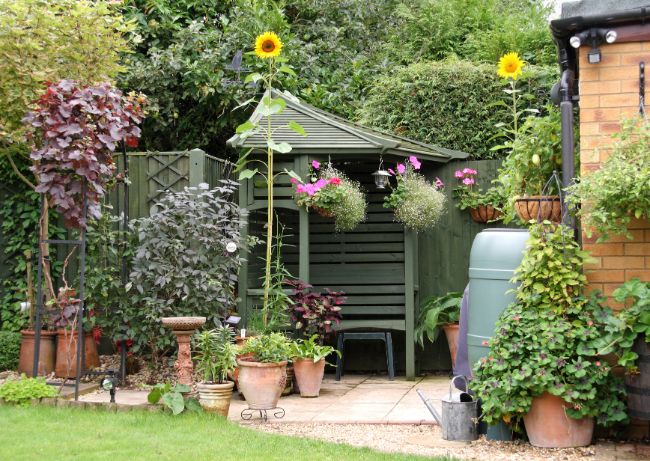 Even grown in pots, sunflowers can reach impressive heights.
How can sunflowers grow fast?
Some types of sunflowers do not require staking or support. The stems are relatively tough, so they will grow anywhere as long as there is sun and the ground is not soggy. Certain conditions allow sunflowers to grow fast and strong. That’s some.
- Understanding the nature of the soil can help you determine if it creates the best environment for growing sunflowers. These amazingly beautiful plants grow well because the soil is slightly alkaline with a pH of up to 7.5.
- The roots develop quickly if you ensure that the seeds are continuously in the sun. Sunflowers will not grow to their full potential when kept in containers.
- Sunflower seeds are excellent food for birds and squirrels, so it may be a good idea to grow your flowers indoors. Store seeds in a biodegradable container that will eventually decompose if transplanted outdoors. Water and cover the seeds until they germinate in 7-10 days. You can move them to the ground after 14 days.
- When planting shoots, leave three feet between standard varieties. One foot is enough for miniature species, while giants need at least 4 feet of space. It takes 30 to 60 days for the flower heads to appear and another 30 days for the flower to reach maturity.
After the flowers bloom, bees and other insects come together to sip nectar and carry pollen from flower to flower. This guarantees a new cycle for these beauties.
The back of the flower turns yellow, which means the seeds are growing and maturing. You can save the large flower seeds once they are fully developed to feed your pets or even enjoy them as a healthy snack at home. With the same seeds, a new batch of sunflowers can be grown next year.
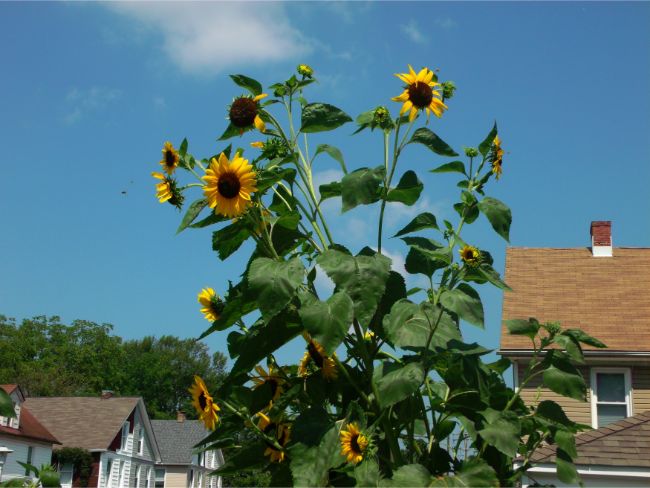 Multi-headed hybrids like Kong can also reach impressive heights.
 How much does a sunflower grow in a week?
Several factors can influence the growth of sunflowers, such as the quality of the soil, the frequency of watering and their position in relation to the sun’s rays.
It is quite interesting to watch the sunflowers bloom and grow for days and weeks. Any packet of seeds you buy to grow in your garden will tell you what growth to expect each month, as long as you maintain conditions that can keep your plants healthy.
For example, if your seeds are to grow to a height of 2 feet, you should expect them to grow about 10 inches per month and about 2 inches per week. After reaching their full height, individual large-headed flowers bloom for 3-4 weeks. Multi-headed varieties may last longer, especially if they die regularly.
What is the largest sunflower ever grown?
Some giant varieties of sunflowers reach 20 or 22 feet, but the tallest sunflower was recorded in 2014. This sunflower was planted by Hans-Peter Schiffer in Germany. He reached an enormous height of 30 feet 1 inch. A veteran of tall sunflowers, Schiffer has successfully tried growing them many times. He managed to hold the title of largest sunflower twice.
How can I make sure my sunflowers reach their full height?
Sunflowers come in different shapes and colors. However, the ones that tend to reach maximum height are the good old yellow gold varieties.
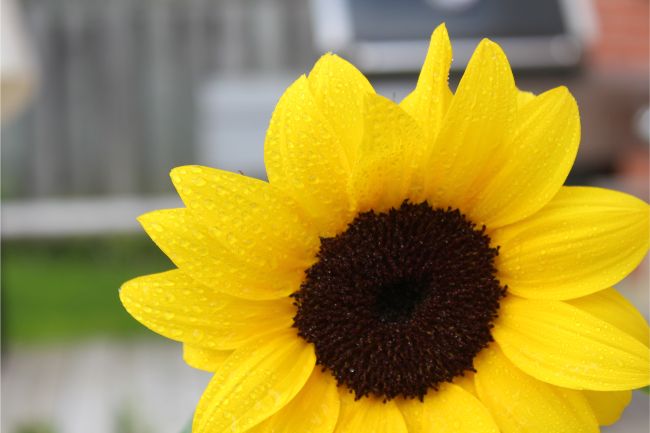
Here are some tips that will help your seeds reach their full height during the flowering season.
- Make sure your flowers have direct access to sunlight. Sunflowers are drought tolerant and should be exposed to direct sunlight for 6-8 hours a day.
- Sunflowers need frequent access to nutrients. They will deplete the soil more than any other plant, depriving other plants of all necessary elements. The nutrient supply must be replenished every year if you want to grow sunflowers for the following season. The better the diet, the larger the flowers will be.
- Growing seeds directly in the ground will make them bigger. However, some gardeners choose to plant them indoors to ensure they are safe for birds and animals. This is a compensation to be made based on your individual preferences and experience. If you choose to plant them in a pot, do not delay transplanting them and be sure to do so as soon as the shoots start to sprout.
- If you want your giant sunflowers to get bigger, you can space the seeds 20 inches apart. This will make the stems taller, although the buds will be smaller. Planting the seeds too far apart can cause the buds to grow larger. As a result, they may be too heavy for rods to carry.
- Natural fertilizers help your sunflowers grow bigger and healthier. Dilute a good fertilizer and add it weekly to your growing flowers. You can also make a few holes in the ground, 1.5 meters from the plant; each of them is 3 to 4 feet deep. This allows nutrients to easily reach the roots.
How are large sunflowers cared for?
Tall sunflowers can become more susceptible to weather conditions, especially wind, due to their great height. It’s a good idea to keep an eye on weather reports to avoid unfortunate accidents.
If the wind is expected to be strong, delay watering as this will prevent the plants from blowing away. Sunflowers don’t need staking, even the biggest ones. However, it can help sunflowers survive in windy conditions.
How long do sunflowers live?
The typical flowering season begins in spring. Sunflowers will continue to grow during the hot summer season and will begin to die back with the fall frosts when temperatures begin to drop. To ensure you have longer sunflowers, plant the seeds within a few weeks.
Are all sunflowers annual?
Most of them are. The seeds will germinate and the flowers will fully bloom during a growing season that typically lasts from spring to late summer. However, perennial sunflowers have smaller heads and will not flower for at least 2 years after the seeds are planted.
Can you grow sunflowers in pots?
Dwarf varieties grow beautifully in a pot or container. More than one flower may appear per plant. It doesn’t matter whether you take care of your sunflowers, whether you grow them in pots or in the garden.
Why are my sunflowers staring at the ground?
When sunflowers bloom, they face the sun all day. But as the stem grows, it becomes more woody and movement is less noticeable. The flowers will not move towards the sun and may stand upright due to the weight of the flower head; however, the leaves continue to follow the sun.
I hope you enjoyed reading this article and learned everything you need to know about pruning sunflowers. Taking care of your sunflowers and showing them love and care is so much fun and I always love the challenge of growing bigger sunflowers every year.