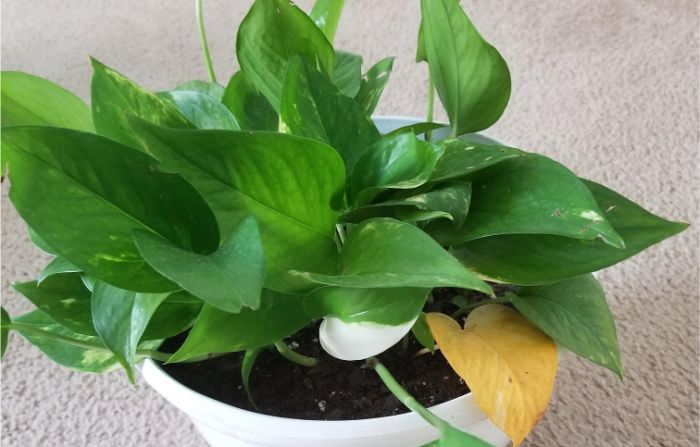
Many people like Pothos as a houseplant because it is easy to grow and requires minimal maintenance. If your Pothos leaves are starting to turn yellow, you might be wondering what’s going on with them! This article explains why it happens, how to fix it, and how to avoid yellow leaves in the future.
Why are my Pothos leaves turning yellow? Yellow leaves on a Pothos may be due to:
- Too much direct sunlight.
- Too much or bad fertilizer.
- Root rot due to excess water.
- fungal disease
- Exposure to hot or cold temperatures.
- Submarine.
- Renewal of older leaves.
The good news is that even if your Pothos has yellow leaves, you can bring it back to life by identifying and correcting the root of the problem. Below, we look at the reasons why Pothos plants have yellow leaves and what you can do to help your beloved plant.
7 Reasons Why Pothos Leaves Are Turning Yellow
1. Too much direct sun exposure
Although pothos, like all houseplants, need a certain amount of sunlight, they don’t really like direct sunlight. Too much direct sunlight can even cause signs of leaf scorch.
You can grow Pothos indoors, or even in a shady area, but you want to make sure it gets plenty of bright, indirect light. The fact that Pothos is a low-light plant makes it even more popular as a houseplant.
You don’t need to place your Pothos in direct sunlight or near a window. Simply place it in a room that gets enough natural light every day.
If your Pothos is in full sun and the leaves are changing color, move it to a more shady spot. Alternatively, you can hang a sheer or voile curtain in front of the window to filter the amount of light the houseplant receives.
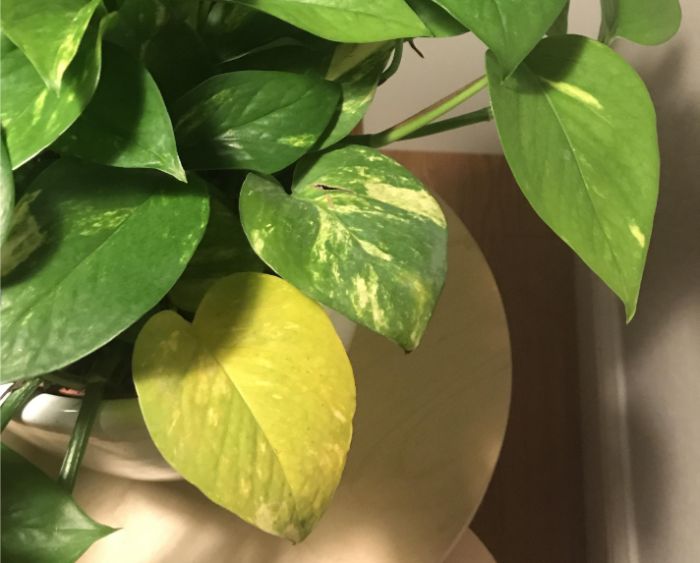
2. Too much or too little fertilizer can cause Pothos leaves to turn yellow
Although fertilizer isn’t strictly necessary when growing a Pothos in a decent potting mix, some plant enthusiasts like to stimulate growth by enriching the soil every few months.
It is best to use fertilizer every 2-3 months during the growing season for best results. Any good balanced houseplant fertilizer can be used, but it’s important not to overuse it or use one that contains the wrong nutrients for your plant.
Too much fertilizer can have serious adverse effects and stunt plant growth. If you use fertilizer too often, it can accumulate in the soil and begin to negatively affect the plant. When this happens, the leaves often turn yellow.
If you suspect a buildup of fertilizer, you can water the soil several times and let it drain. Alternatively, you can remove the Pothos from the pot and then repot it with fresh soil.
3. Overwatering can lead to root rot and yellowing of leaves
If yellow leaves are found all over the plant, overwatering is likely the culprit. Poor drainage and too much water will keep the soil wet. Pothos roots will rot if this happens too often.
Once roots begin to rot, water and nutrient uptake is negatively affected. This means that your houseplant is not getting the food and nutrients it needs to thrive and grow. With a lack of moisture, the leaves turn yellow and even fall off.
To avoid this, it is best to let the soil dry out before watering the plant again. To test if the plant is ready to water, stick your index finger halfway into the soil. If it comes out wet, don’t water the plant yet.
If your finger is dry (as is the soil), you can water the plant. Drain the soil in the saucer and discard any excess water. Leaving the plant in a saucer of water can also cause root rot.
When you first plant your Pothos, be sure to use well-drained soil. If you’re concerned that the soil won’t drain properly, consider adding a little perlite to improve drainage.
To check if root rot is the cause of the yellow leaves, remove the plant from the pot to inspect the root system. If the roots are white, they are healthy and without root rot. This means that there is another cause for the yellow leaves.
If they turn brown, prune the rot from the plant. Prune rotten roots, leaving only healthy roots. You should transplant the Pothos into fresh, healthy soil and disinfect your pruner or pruner.
4. A fungal disease can turn the leaves of Pothos yellow
If you overwater your Pothos or leave the soil damp, soil fungi can take hold. Fungal growth can lead to poor nutrient quality, contribute to root rot and cause the plant to wilt.
Another way your Pothos can contract a fungal disease that causes leaves to yellow and drop is by keeping the leaves and stem moist. This often happens with houseplants that are sprayed regularly.
Avoid misting your Pothos houseplant and allow the soil to dry out between waterings. This particular type of plant does not need constant access to moisture. If so, it can quickly become a fungal host.
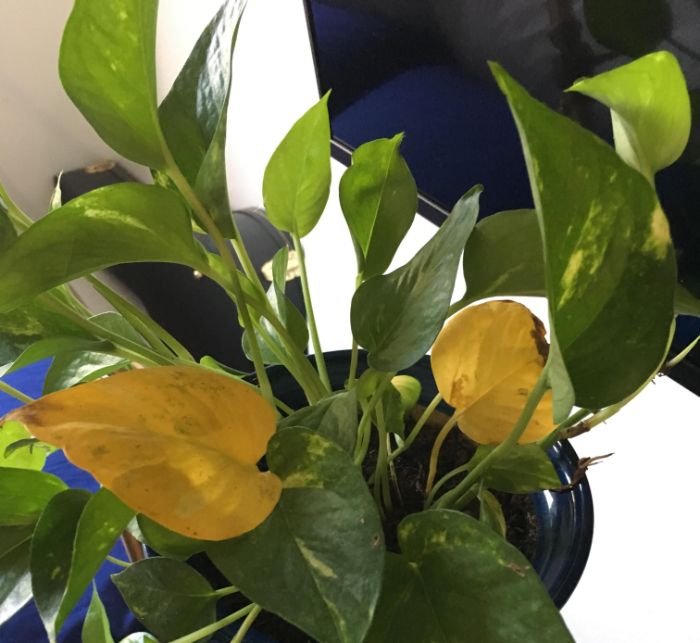
5. Exposure to hot or cold temperatures can cause Pothos leaves to turn yellow
Pothos thrive in reasonably regulated temperatures. It grows best between 70°F and 90°F, but has been known to remain healthy even in temperatures as low as 50°F. Of course, 50°F is no longer the ideal growing condition for a Pothos. . Any temperature below this temperature or above 90°F can cause the leaves of houseplants to turn yellow.
In many cases where temperature is an issue, it’s because the plant is too close to a cold window. Then the plant is exposed to cold drafts. Another cause is that the plant is too close to a fireplace or stove where it gets too hot. Pay close attention to where you place your houseplant and avoid yellow leaves due to temperature fluctuations.
6. Underwater
If you’ve taken the plant out of the pot and only checked the roots for root rot, your houseplant’s leaves may turn yellow because they’re underwater.
Symptoms of overwatering and overwatering a houseplant are often similar. If there is no water, a plant will conserve supplies and energy. In most cases, the leaves turn yellow and then drop from the plant.
7. Yellow leaves can result from renewal of older leaves
Sometimes yellowing leaves are not a sign of a serious problem. this may be completely normal. If you see yellowing leaves, check which leaves are turning yellow and falling off.
Many houseplants, not just Pothos, shed their old leaves to make way for new foliage. This is fine and should be considered normal. Yes it is the older leaves, near the bottom of the stem, that turn yellow and then fall off.
Last word
When you first notice your Pothos houseplant has yellowing leaves, get to work immediately to find the underlying cause. Although Pothos plants are easy to grow and fairly long-lived, they do require immediate attention if unsatisfied.
To overcome the problem of yellowing leaves, you may just need to do something as simple as moving your plant to another area or changing your watering and fertilizing strategies. Be prepared to act quickly to ensure a healthier and happier Pothos. You might also be interested in my article on how to grow your Pothos plant faster.