
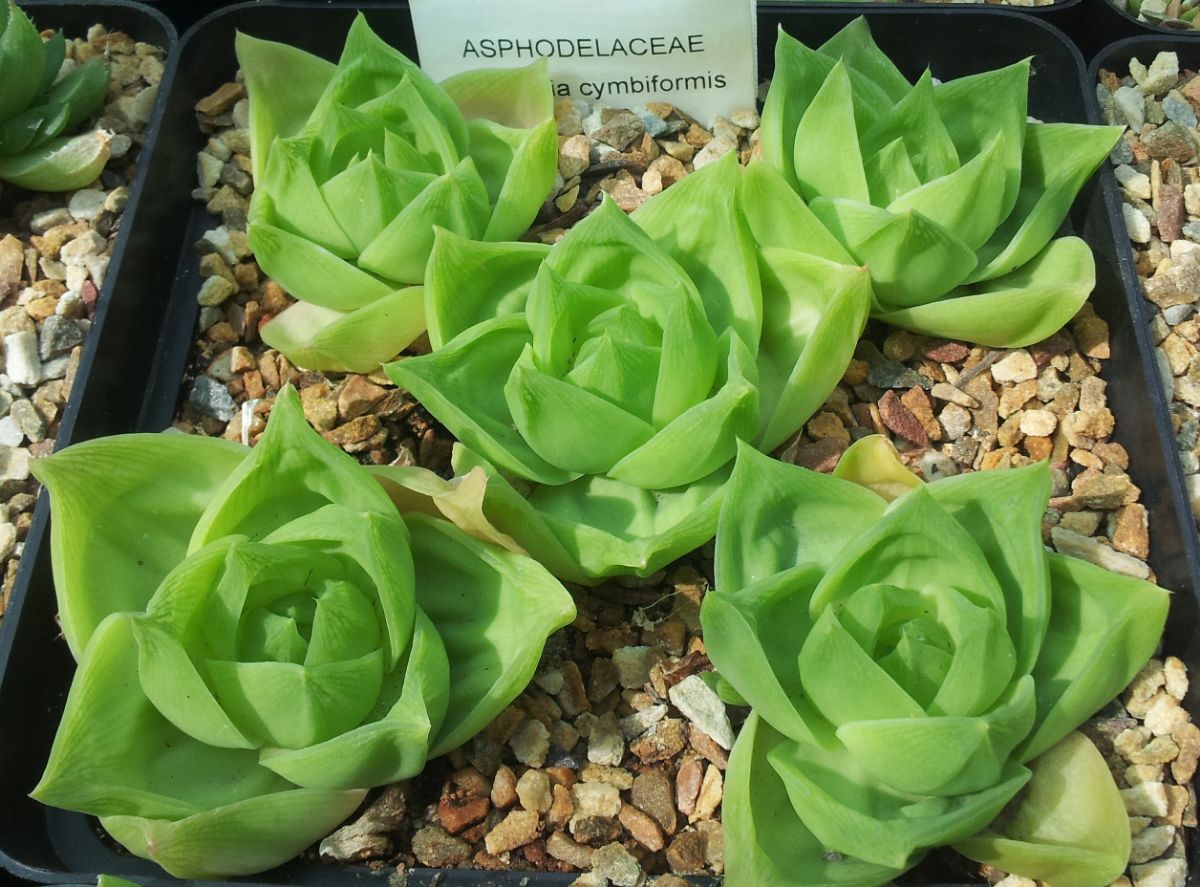
If you are a big lover of succulents, you surely have some at home. One in particular may catch your eye. Could it be Haworthia cymbiformis? Its maintenance is very easy and also, due to its resistance and beauty, it is often given a lot.
But, How is it? What care does Haworthia cymbiformis need? Then we reveal everything to you so that you do not have a problem with it.
How is Haworthia cymbiformis
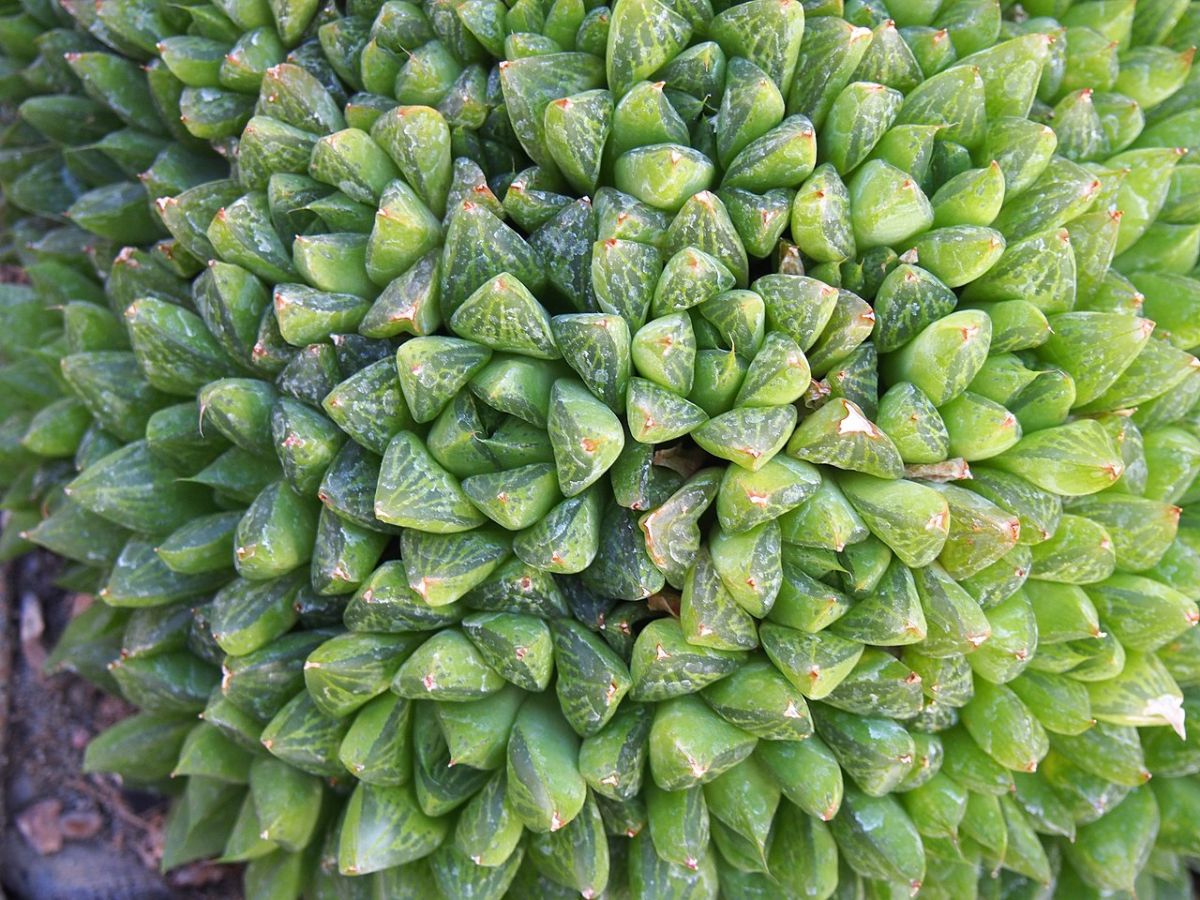
Before commenting on each of the care that this succulent will require, it is good that you know what it looks like so that you can recognize it when buying it or even if you have it in your garden.
To start, Haworthia cymbiformis is native to South Africa and its name Haworthia is due to its discoverer. On the other hand, cymbiformis means “boat-shaped”.
This succulent is not too big. It forms rosettes composed of very fleshy leaves ranging from green to pale green, some even with transparent tips. But the peculiarity of this plant is that it hardly has roots, in fact, it develops them superficially because in its natural habitat it is almost dug up.
You can reach 8-10cm in diameterbut not much else.
As for its flowers, because yes, it flowers, you should know that these will be of two colors, either pink or white. They will have small green-brown veins and these will grow considerably larger than the plant itself (we are talking about 15-20cm long).
Haworthia cymbiformis care
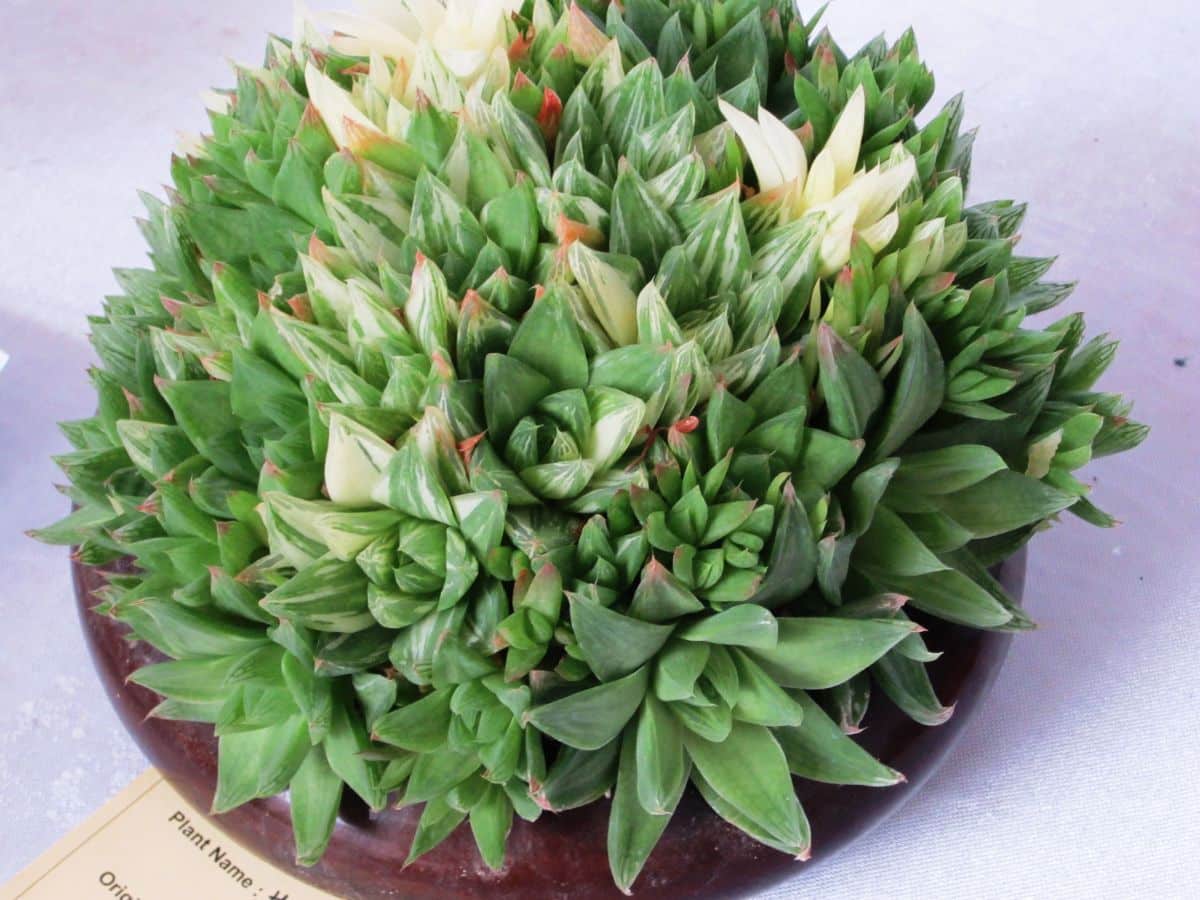
Now yes, you want to have this succulent in your home and make it last a long time? So here is a guide with all the care of the Haworthia cymbiformis so that it does not resist you.
Lighting and location
The first thing you need to know about Haworthia cymbiformis is that it needs many hours of light. The more you give, the better. Now it also adapts to semi-shaded sites.
With this we want to tell you that if you can put it outside much better than inside. If you want it at home, find the window where it gets the most sunlight during the day and place it there so it can benefit from the greatest amount of light.
As delicious as it is, can withstand direct sunlight and, although you may get the leaves of this one somewhat scorched at the tips (by the sun), this does not negatively affect its health. In case there are too many, if you have it in a pot, moving it to a more shady spot will suffice.
Temperature
As we have already told you, Haworthia cymbiformis originates from South Africa, which means that tolerates hot, dry weather very well. As for the temperatures, with extreme heat you will have no problem. But with the coldest yes. It’s not that you can’t let it go, actually down to 0 degrees, you don’t have to worrybut if there are usually frosts where you live, then yes, because they do not tolerate them.
Substrate
As a succulent, it needs well-drained soil because it needs the soil not to be flooded or with a lot of water (this is harmful to it and can end up rotting it).
You can use soil for cacti and succulents although we recommend adding a little more perlite to improve the drainage of it and thus ensure that it is well.
Irrigation
For the irrigation of Haworthia cymbiformis you must take into account that it needs a lot of water, but it really needs to be watered very little. What does it mean? You see, when it comes to watering, you have to make sure that when you do it, you have more than enough water (i.e. watering heavily) but not too often.
The reason is that the leaves of Haworthia cymbiformis store water and they are the ones who can give you the key to watering or not. For them to be good, you have to see them fleshy and round. If you see them thin and pointy, they don’t have enough water storage and you need to water them.
To give you an idea, some water them every 15-20 days. But it is not something that you always have to follow because everything will depend on the climate you have in your house or in the garden.
So what to do? First try the following:
- In winter: water only if you see dry soil.
- In spring: water every 15 days.
- In summer: once a week.
From there, what would be the base, it will have to be adapted to your climate and the needs of the plant (it can be more or less).
Keep in mind that Haworthia cymbiformis prefers to go through dry spells before overwatering it.
Subscriber
Although succulents do not need fertilizer, in the case of Haworthia cymbiformis they appreciate it very much, especially when they are growing. But not much either; in fact if the paying a little every 3 months will be more than enough. That yes, use only half of what the manufacturer gives you and always in the months of growth, in the others let them rest.
Cut
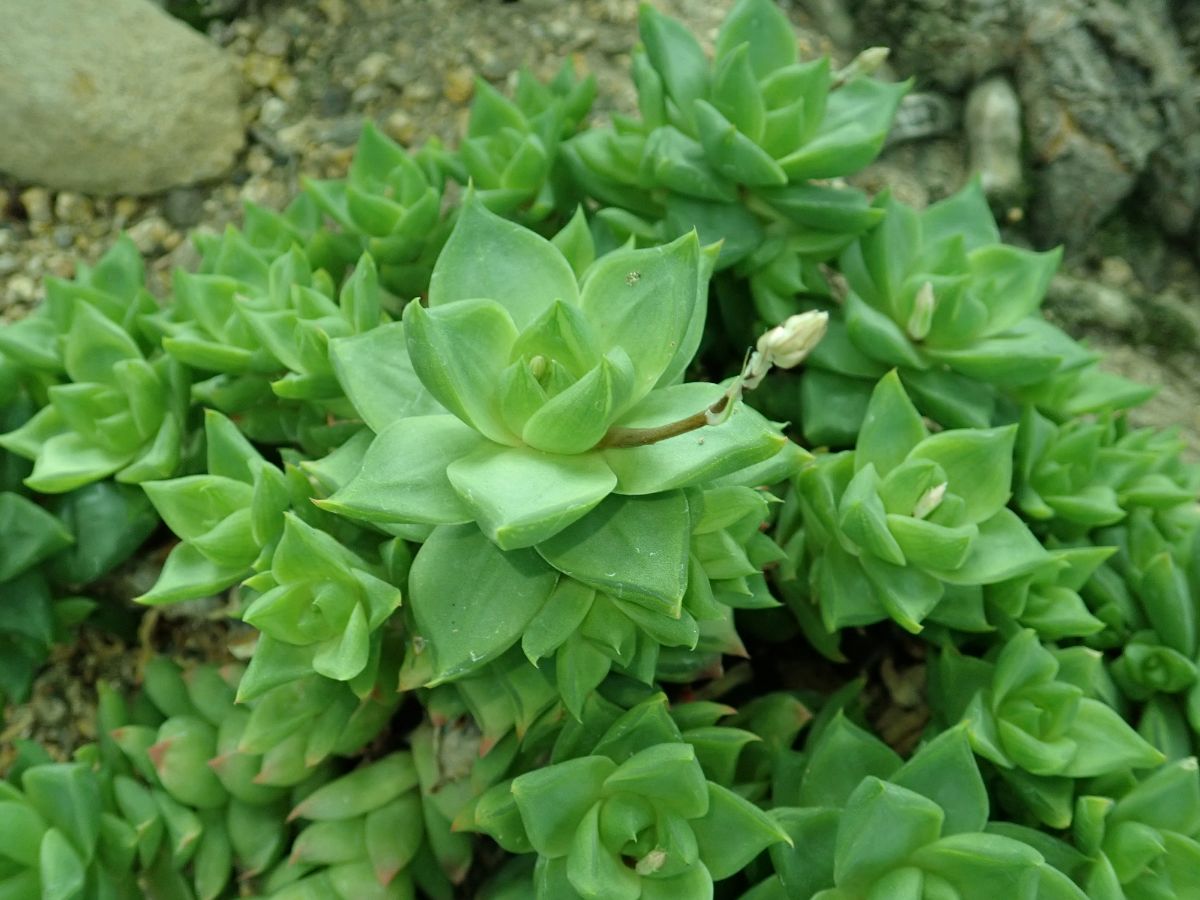
Succulents are usually not pruned although when they flower and no longer exist that would be convenient cut off that flower stalk so it doesn’t make the plant look ugly or steal energy.
Plagues and diseases
Although all succulents are very hardy, the truth is that there are pests that can affect it. In the case of Haworthia cymbiformis, these would be mealybugs, aphids and mites. Also watch out for slugs and snails.
All of this can be treated if you catch it in time with a specific product.
Also, in terms of diseases, the most problematic will be the excess water which can cause fungus to appear.
the reproduction
Finally, if your plant is well cared for, you may want to reproduce it. In reality, Haworthia cymbiformis itself develops suckers when healthy. These will be at the base of the plant and you will only have to cut them and plant them in another pot. Of course, before putting them on, let them dry for about 3 days to seal that wound. In 15 days you will already have them active.
Another option is per seedalthough it is not the most common.
What to keep in mind is that Haworthia cymbiformis is said to not last long because each season it loses some of its roots and reaches a point where it completely rots. Therefore, it is important to remove suckers or shoots from it.
Do you have questions about the care of Haworthia cymbiformis?