
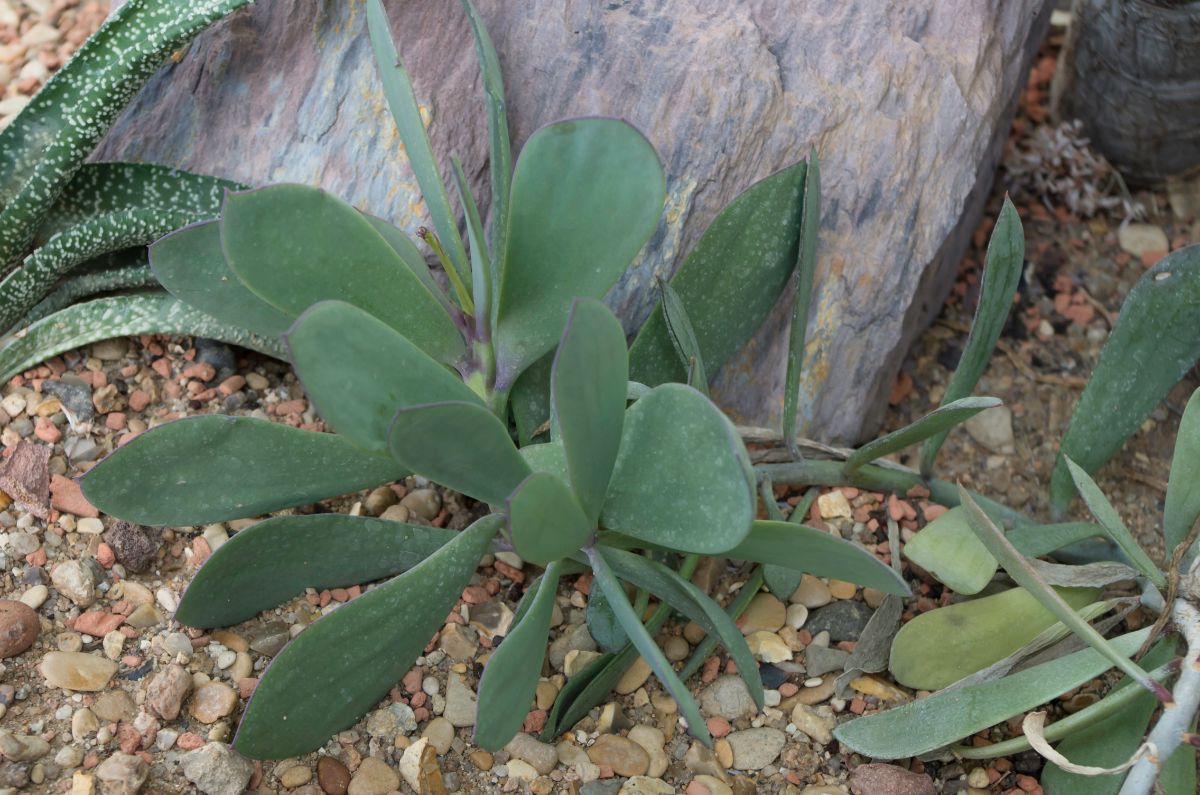
When we say “senecio”, you surely think of rowleyanus, or vegetable ball. However, among these there are many varieties, being one of them the Senecio crassimus. Have you ever heard it?
If you like senecios, you will love this one because it is very different from the others. Find out about its characteristics and the care it needs if you keep reading.
How is the Senecio crassimus
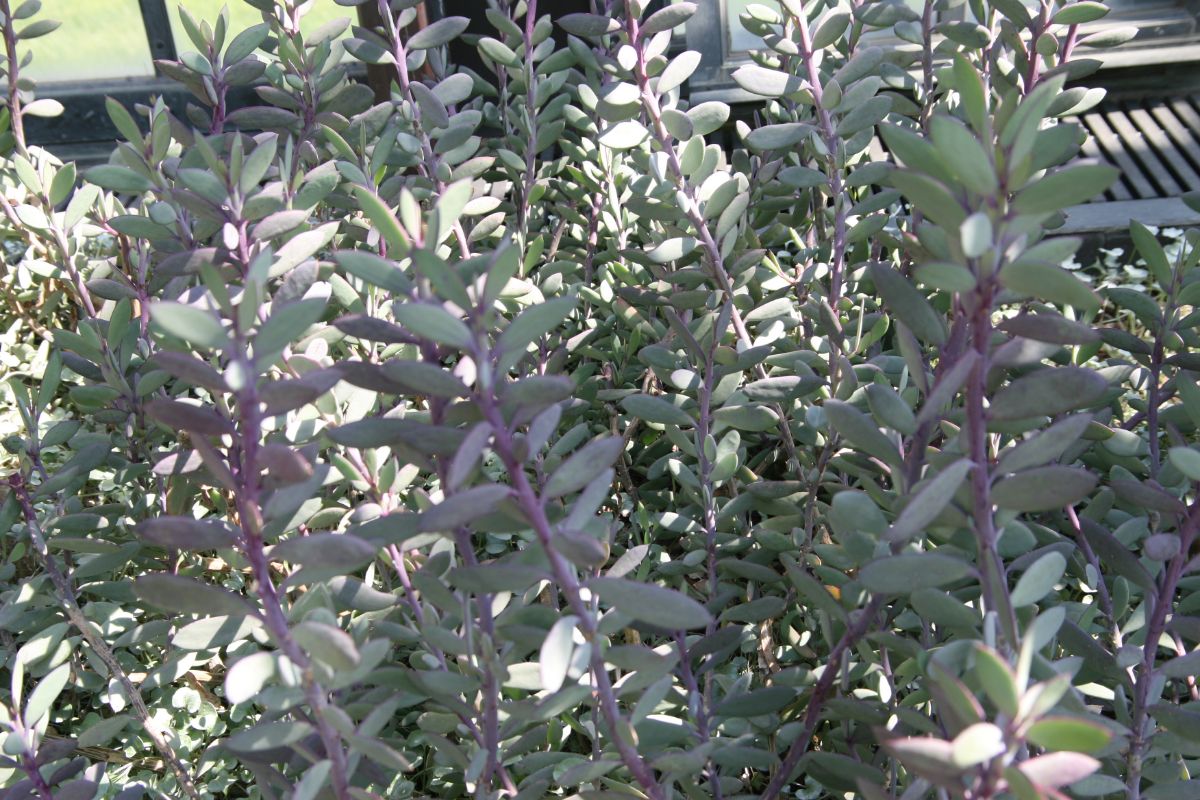
Senecio crassimus can also be found in stores sold as vertical senecio. And it is that, due to its characteristics, This succulent has a bushy habit, reaching 60 centimeters in height. And yes, that means it’s unsuspended and has no finished twigs bending over. It is totally different from those you may know. And it comes from Madagascar.
As for the plant, physically, as we tell you, it will grow in the form of a bush. It is quite leafy with its leaves and stems so you won’t have a problem with that. Regarding the stems, you will notice that they are erect and thick, quite the opposite of the senecios you may know. Also, they are purple and gray (and not green as one would normally expect).
The leaves, on the other hand, are green, with the edges matching the stem, as they have greyish-purple tones. In addition, these are elongated, they can measure from 6 to 10 centimeters each, and quite thick. Its growth, like the stems, is vertical. They grow along the stem alternately, that is, one on one side, the other on the opposite side.
In the spring, if the plant is healthy and has received the necessary care, it is common for it to flower. These are going to be tiny and look like daisies. They are yellow in color and will be about two centimeters in diameter. Multiple flowers can grow from a single flower stalk (and we warned you before that it usually produces multiple stalks).
Senecio crassimus treatment

After hearing about Senecio crassimus, it may have caught your attention. It’s not one of the most common in stores to buy it, but it’s not hard to locate or expensive either. Therefore, if you are planning to have a succulent of this type, we want to help you with care.
location and temperature
Senecio crassisimus is an outdoor plant, and as such we advise you to put it outside, on a balcony, a terrace, directly in the garden… It likes light, even if it doesn’t have the sun all day. In this regard, it can occur in the morning or in the afternoon, but at times of greatest incidence it could wreak havoc on the leaves of the senecio.
Therefore, its best location may be where it receives direct sun early or late in the day and the rest with indirect light.
Inside the house you might have it, yes, but always placed as close to a window as possible to get the most light; plus a few hours of direct light.
Keep in mind that the more sun the better as it will give the edges of the leaves, and even the stems, a more intense color.
Regarding the temperature, your ideal would be between 20 and 30ºC. However, It can withstand low and high temperatures without a problem. Even frost if they are not too hard.
Substrate
Light, porous and drained. This is how we could describe the type of soil you should use with Senecio crassimus. As succulent as it is, it needs suitable soil, but it is not demanding with it. For this reason, we can offer soil for cacti and succulents or a universal substrate.
Besides, you need to add perlite or similar so that it is looser and does not harden over time. And finally, as a recommendation, we would say to add some worm humus to keep it slightly moist (not flooded, but it has some moisture). To give you an idea, it would be: 50 substrate, 40 perlite and 10% humus (or less).
Irrigation

Irrigation of Senecio crassimus is not difficult, far from it. To start, you will water only when you see that the soil is completely dry. As long as he’s not like that, even if he touches you, don’t water him.
Keep in mind that if you make a mistake with watering, fungus may appear and the roots will rot.so sometimes it’s better to miss than more.
One of the keys that can tell you if the plant needs watering are its leaves. If the months are duller and thinner, even wrinkled, it is because they lack water.
Subscriber
Although succulents do not need a subscriber, it is not bad to add some from time to time, especially if they have been with you for a long time and you do not change the substrate often. In general, a succulent plant fertilizer will be fine. In case you don’t have it, a universal can serve you.
Size
Although Senecio crassimus does not need pruning, you will need to check it for dry, damaged leaves, etc. that it has as well as the flower stems when finished.
In the case of young plants, if you want them to acquire a certain shape, you can prune them. more often to obtain it and, later, in adulthood, it will only be to maintain it.
Plagues and diseases
In this regard, although this senecio is resistant, the cottony scale is the one that can harm it.
In case of illnesses, the worst will be root rot due to poor watering.
Multiplication
Do you want to reproduce your Senecio crassimus? Well, it’s as easy as cutting cuttings. When pruning, try to select one about 10 centimeters long.
You will have to wait a few days for the cut that occurs on these to heal (and have a better chance of luck). And then you just plant it and wait for it to show signs that it has taken root (you’ll know if it starts sprouting).
As you can see, Senecio crassimus is one of the plants that you can have in your garden without worrying that it needs a lot. Do you dare to have it?