
If you purchase an item through links on this page, we may earn a commission. Our editorial content is not influenced by commissions. Read full disclosure.
Agave plants are beautiful and virtually maintenance free. Once you’ve planted them, they’ll brighten up sunny, dry areas of your garden and you won’t have to do much more than sit back and watch them grow.
These plants are also used to make sweeteners, tequila, mescal, etc. Most home growers choose to keep them for their ornamental value. They are perfect for desert landscapes and xeriscaping.
So, how to grow agave at home? Keep reading to find out.

Agave Plant Varieties
This impressive plant has 270 known species in the Agave genus, all of which belong to the Asparagaceae family. Most agave plants can be grown in USDA plant hardiness zones 7-11, but thrive best in dry climates.
Agave (Agave species.) are long-leaved succulents that form a rosette shape when fully formed. The leaves have small prickly tips and also produce a floral arrow.
There are 40 species of agave plants native to America, and most grow in the west and southwest of the country. People use this plant to make fermented drinks made from pulque, tequila, and mescal. They can also be used to make a low glycemic index sweetener.

You can also grow these succulents for decorative purposes in your garden.
Here are the most common species of agave plants:
- A. attenuata
- A. deserti
- A.americana
- A. angustifolia
- A.tequilana
- A.ovatifolia
- A. macroacantha
- A. potato
- A. victoriae-reginae
The choice between species will depend on your taste. Some agave plants have slender leaves, and others have twisted leaves resembling sea creatures like octopuses. If you want to make tequila, you’ll have to farm the tequilana species.
The best time to plant agave is spring or early fall. It can take up to seven years for this plant to reach full maturity. When mature, many species grow tall flower stalks from the center of the rosette.
The flowers are bell-shaped and come in many colors, such as white, green, and yellow. The plant will often die after the flowers produce berry pods.
There are many options for growing agave; you can place them as part of your outdoor space, as part of a border or as part of a succulent collection. You can also grow them as edibles in rows.
Or, you can grow them indoors in small containers if there is enough light for them to grow. They need full sun, at least six hours of direct light per day.
How to Plant Agave

These plants can be striking additions to your home, but preparing the ground and choosing the right location are essential before planting this succulent.
Most people choose to grow an agave plant in their garden because its eye-catching details are enough to create a centerpiece among other flowers and herbs. It’s essential to make sure you leave enough space around the plant, as it can get quite large and take up a lot of space.
Sharp points can be painful to the touch, so you should always leave a good walking distance around them.
Choose the right place

Agave plants should be in full sun. This means that it is not a good idea to constantly keep them in the shade behind a building or under a tree.
As long as the climate is warm, they can sometimes tolerate partial shade, but there should be full sun for most of the day.
Before deciding on a permanent location for your agave, it’s worth remembering that these succulents don’t transplant well, so the location will be their final home once planted in the ground. The location should have at least six hours of sunlight per day.
Floor
Besides well-drained soil, agave plants prefer rocky or sandy soil. If there is not good drainage, it can lead to root rot, which can kill your plant over time. These succulents also like slightly acidic to neutral soils with a pH between 6.0 and 6.8.
This soil is the same whether you are growing from seed, pup, bulblet or nursery stock.
Temperature and humidity
Your agave plant will need a climate with low humidity and frost-free regions. Too much moisture can also lead to rotting issues on your plant. That said, there are a few species that can tolerate some freezing temperatures.
Most species grow in USDA growing zones 8 and 9, but others can thrive as low as zone 5, such as A. parryi.
Agave Plant Care Tips
When growing agave plants indoors, it is best to choose a container that is more spacious than the nursery plant or large enough for the seeds to sprout when the plant reaches full maturity. The size of the container varies depending on the species and cultivar of agave.
Some species are tiny, about the size of your hand, and some are massive. One in Texas reached 40 feet!
The best soil for container growing is a simple cactus mix with the addition of small rocks and pebbles. Repotting will also need to be done annually to keep the soil fresh and healthy. Most people have a tendency to kill their agave by overwatering it, so be sure to only water when the soil seems totally dry.

Agave is drought tolerant and you will only need minimal watering in your garden.
The best way to tell if your agave needs watering is if there has been a long period of no rain and the top three inches of soil are dry.
However, the watering will be different at the beginning of the growth phase. After placing the plant in the ground, you should water it when the top two inches are dry until it is established in its new home.
Once your plant is established, you can water it less.
Another great aspect of agave succulents is that they require little care. Of course, you’ll have to check for pests and such, but nothing too long.
If the leaves are sun damaged or starting to turn brown, you can cut them with a sanitized garden knife. Otherwise, you can let your new succulent grow without too much interference!
Watch out for these pests and diseases
These plants are quite hardy, but there are a few small insects and fungal pathogens that manage to feed on these prickly plants.
Snout weevils
Scyphophorus acupunctatus are the most common type of insect to feed on agave plants. These beetles are half an inch long and have a snout-like mouth, which makes them instantly recognizable.
The snout weevils will suck the liquid inside your plant and the female beetles will lay their eggs in the center in the spring.
You must be very careful at the beginning of the growth process when your plants are young, because this is when these beetles cause the most damage. If you notice wilting or wrinkles on the leaves, you should apply neem oil or an insecticide.
Anthracnose
This disease, also called blackhead, is caused by the Colletotrichum mushrooms. You can spot this disease by the yellow or brown spots that eventually turn black on the leaves.
Again, this disease likes to target new, young plants, so it’s essential to be vigilant for the first few months while your plant is getting established.
Use a copper fungicide to treat anthracnose. Our guide has more tips.
Root and crown rot
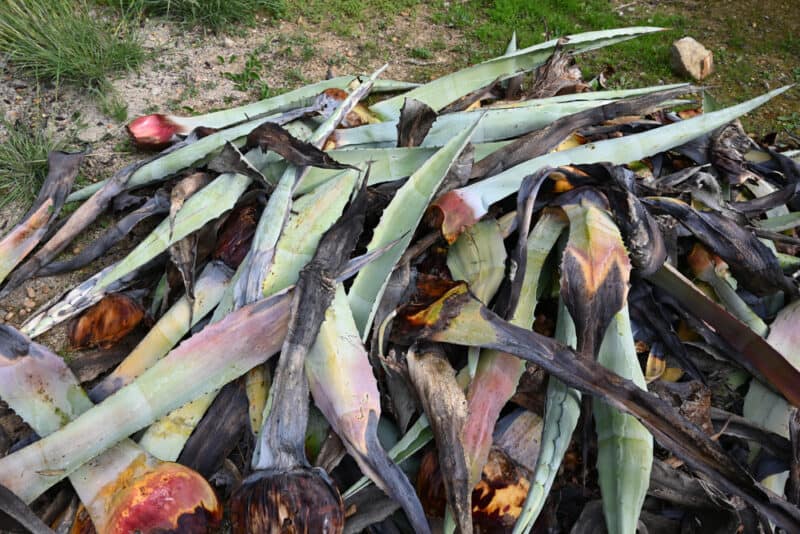
Root and crown rot is caused by fungi such as Fusarium oxysporum and Phytophthora cinnamomi. It is usually spread through water, infected seeds or infected plant parts. When infected, the leaves turn black or yellow and mushy.
You can prevent root rot by being careful not to overwater and by planting in a well-drained area. Once your plant has root rot, you can treat it with a copper fungicide, but you can never completely eradicate the problem.
Uses for Agave

Agave syrup is made from agave nectar and has become a popular alternative to honey. Although you need special equipment to extract the nectar itself, you can buy the stuff and make your own simple syrup at home for use in cocktails and desserts.
All you need are these ingredients to make your simple syrup:
- 2 ½ oz chopped ginger root
- 1 cup agave nectar
- 2 cups of water
Boil until it forms a thick consistency, then strain.
Otherwise, just enjoy these pretty plants like the decorative marvels that they are!
Was this article helpful?
Yes No ×
We appreciate your helpful feedback!
Your response will be used to improve our content. The more feedback you give us, the better our pages will be.
Facebook pinterest