

Imagine that instead of turning on the lights when it gets dark, you could read a book under the light of a glowing plant on your desk, or take a walk under the light of a glowing tree instead of electric lights. The bright plants It has always been studied by scientists.
For this reason, we are going to dedicate this article to telling you what light plants are and what studies exist on them.
Light Plant Studies

Engineers from the Massachusetts Institute of Technology (MIT) in Cambridge (Massachusetts, USA) took the first fundamental steps to bring to life the scenario that today seems to have disappeared from science fiction tales.
A team led by Dr. Michael Strano, a distinguished professor of chemical engineering at the Massachusetts Institute of Technology, incorporated a series of special nanoparticles (microscopic particles) into the leaves of watercress plants, tricking them into emitting a dim light for almost four hours.
The researchers believe that when they manage to optimize this nanotechnology, the plants will become bright enough to illuminate workspaces. A team from the Massachusetts Institute of Technology cultivated plants that can glow for nearly 4 hours and light up the pages of a book up close.
This technology could also be used to provide low-intensity indoor lighting or to turn trees into automatic streetlights.
Benefits of light plants

What are the main advantages and benefits of using plant lights to illuminate interiors and streets? Designing living plants for visible light emission and long-lasting lighting is compelling because plants have independent energy generation and storage mechanisms.
Plants are double carbon negative, meaning they consume CO2 in producing fuel and are themselves a product of carbon sequestration (conversion of CO2 into organic compounds) in the atmosphere. When the technique is optimized, say the researchers, they will be able to illuminate entire workspaces or be used for street lighting.
Plants are the pinnacle of sustainable biomimetic lighting that is not dependent on any human infrastructure and adapts well to outdoor environments. They repair themselves, they already exist where we want them to work like flashlights, they survive and persist in different weather events, they have their own source of water, and they also do all of the above so autonomous.
Extraordinary vegetation
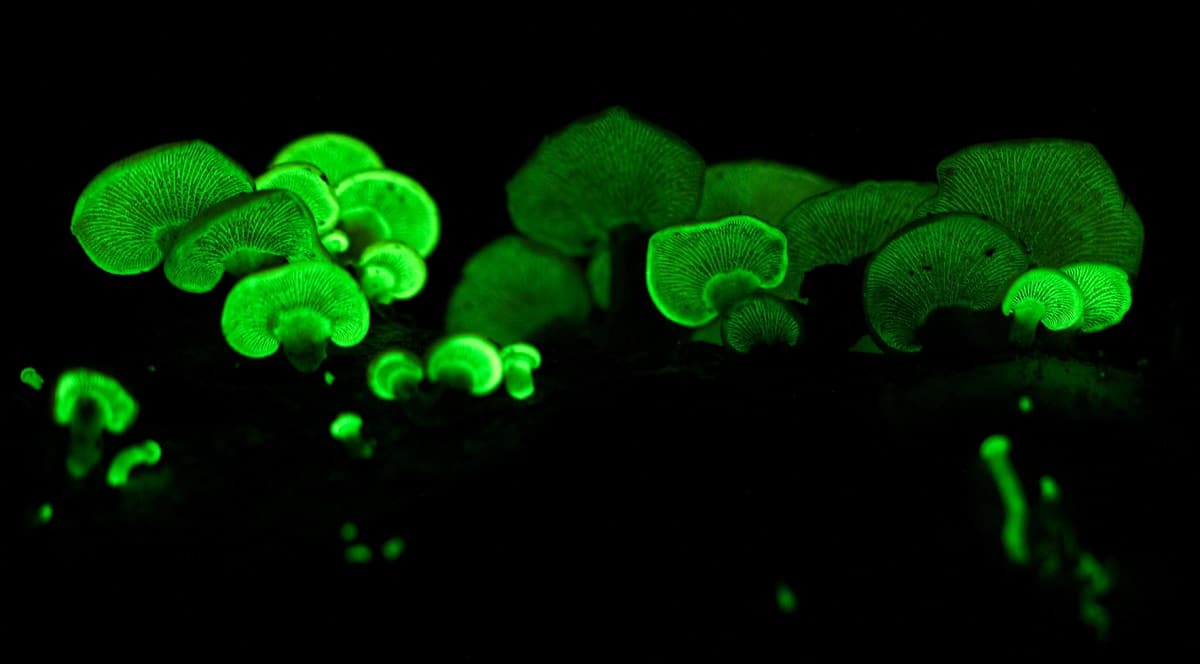
So-called “nanobionic plants” are a new field of research promoted by Strano’s laboratory, in which they incorporate different types of nanoparticles and artificial plants to support many of the functions now performed by electronic devices.
According to MIT, Strano’s team has already applied the technology to design plants that can detect explosives and transmit that information to a smartphone, as well as vegetables with electronic sensors in their leaves that react when they warn when the water level is low.
Agency scientists have also developed a nanobionic plant capable of capturing more than 30% of light energy, inserted carbon nanotubes into cells that produce photosynthesis, and made it possible to detect pollutants such as carbon monoxide. nitrogen.
Professor Strano’s team has previously developed nanobionic plants with enhanced photosynthesis and the ability to detect contaminated gases, explosives and drought conditions.
“Lighting, which accounts for approximately 20% of global energy consumptionis one of the logical targets for these very specific plant technologies,” Strano said, noting that “plants can repair themselves, have their own energy, and adapt to the external environment.
To create their glowing plants, the MIT team turned to luciferase, the enzyme that makes fireflies glow. Luciferase acts on a molecule called luciferin, causing it to emit light, while another molecule called coenzyme A helps the process by removing a byproduct of the biochemical reaction that inhibits the activity of the enzyme luciferin.
Nanoparticles and plants under high pressure
The MIT team packaged each of these three components into different types of carrier nanoparticles made from materials classified as “generally recognized as safe” by the US Food and Drug Administration (FDA). A glowing MIT logo plant is printed on rocket blades, which are impregnated with a mixture of nanoparticles.
According to Strano’s team, these nanoparticles help each component reach the right part of the plant and they prevent these components from reaching concentrations that could be toxic to the plant itself.
According to the authors of the US Department of Energy-funded study, the researchers used silica nanoparticles to transport luciferase and slightly larger particles of the polymers PLGA and chitosan to transport luciferin and coenzyme A, respectively. .
According to MIT.
At the start of the project, researchers produced plants that They glowed for about 45 minutes and have since perfected the process to glow for 3.5 hours.
Currently, a 10-centimeter watercress seedling produces about one-thousandth the amount of light needed to read, but researchers think they can increase both the amount of light emitted and the duration of that light energy by further optimizing the debit.
Luciferase acts on a molecule called luciferin and forces it to glow. A molecule called coenzyme A is also involved in this process.which makes the job easier.
Each of these components is carried by a nanoparticle, which ensures that they arrive at the right place and prevent them from concentrating in a particular place, which could be toxic for the plant. The researchers managed to make the plants glow for about three and a half hours.
And although the light they get is relatively dim, they believe it is possible to increase the intensity and duration of the light. Unlike previous experiments, which succeeded in making specific types of plants glow through a much more complex process, the method developed by the MIT researchers can be applied to any type of plant.
I hope with this information you can learn more about what light plants are and their characteristics.