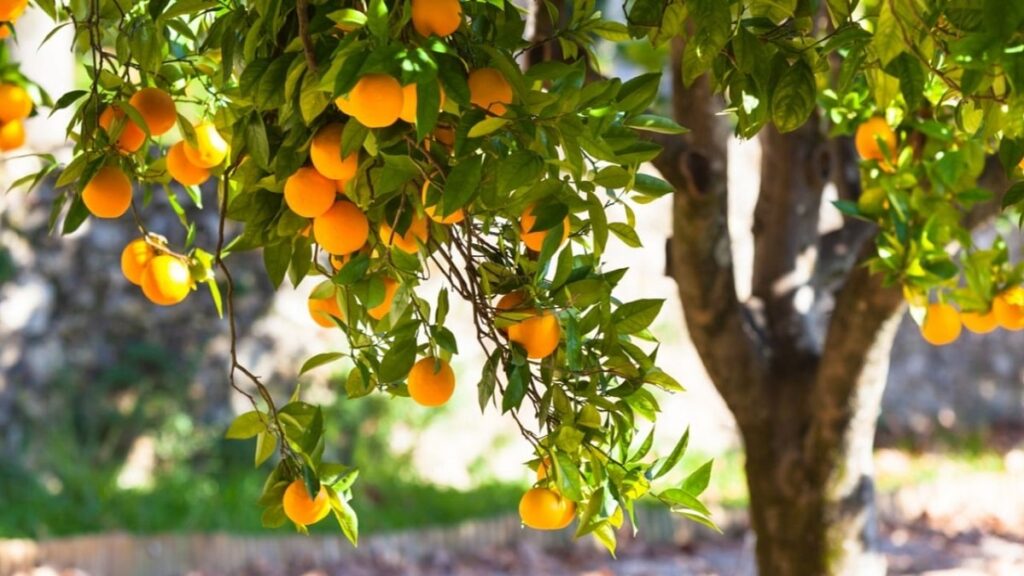
Orange trees are one of the most widely grown and consumed citrus fruits in the world, and if you have one in your garden, you need to know how to water it. The watering orange trees it needs some fundamental aspects to be done correctly. Water is essential for its efficient development and, above all, for producing better quality fruit. Regularly pouring water on it is not enough.
For this reason, we are going to dedicate this article to telling you everything you need to know about orange tree irrigation, its characteristics and the aspects to take into account to do it correctly.
Orange trees irrigation needs
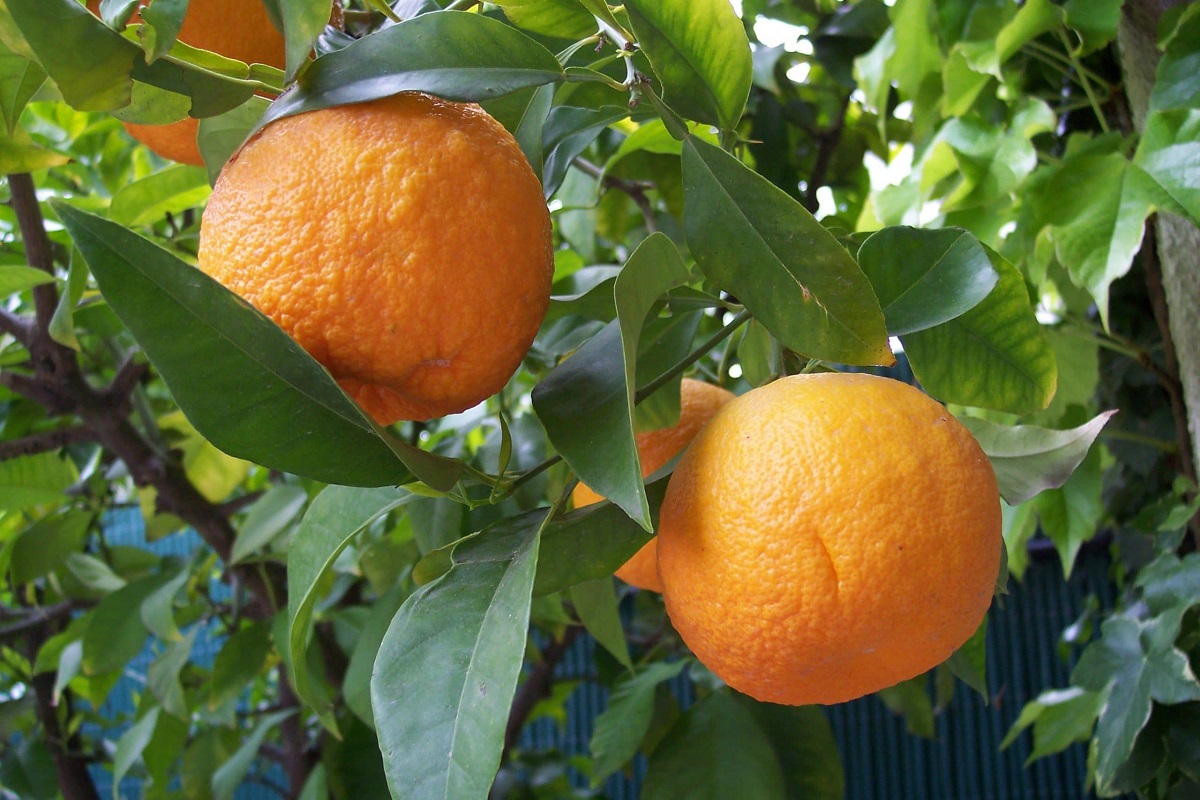
Orange trees should be kept in a permanently moist substrate without flooding. This leads to determining the irrigation needs according to the dry aspect of the land, and more or less frequently, depending on the case.
When orange trees are planted in clay soil, they need less water than sandy soils because they retain water longer. The age of the tree should also be considered, as young trees tend to require more water than mature trees.
Lack of watering can be easily identified by looking for changes in leaf color, which often appear to be pale green. These sheets are noticeable in these conditions from the end of the crown, so there is a possibility of correcting the defect once it is discovered.
Frequency of irrigation of orange trees
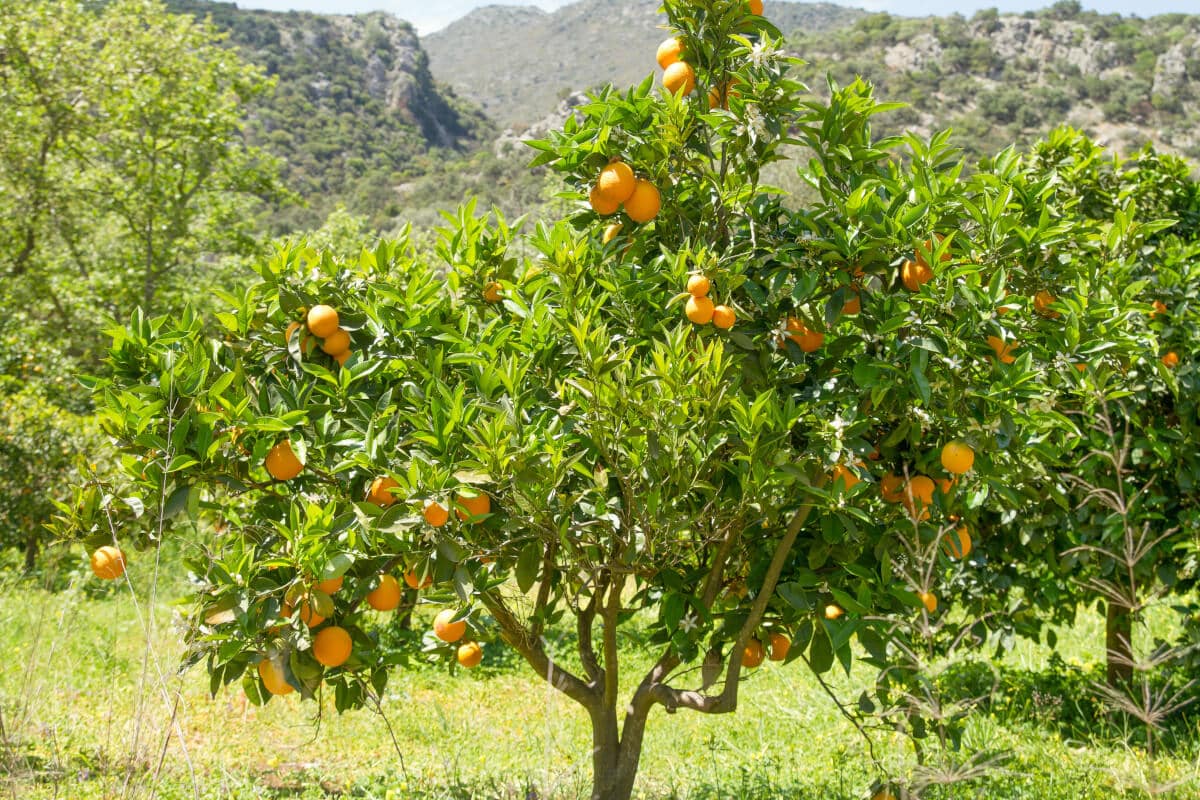
The amount and frequency of watering your orange tree depends on several factors, such as terrain, weather or time of year. Usually you don’t have to work on this so much in the winter because the tree has no leaves and there is very little transpiration.
Therefore, on average, a risk can be established every 15 days. In summer, the problem is different. At this point, the trees are in full production and the heat is accelerating the evaporation of water.
Therefore, it is best to water it twice a week to ensure it gets the amount of water it needs. It is important that With each irrigation cycle, apply the appropriate amount of water so that it penetrates the subsoil. and keep the root environment moist.
It does this by using a low flow but long cycle time mechanism so that the soil gradually absorbs the water. Keep in mind that during rainy periods you must reduce the irrigation cycle so that your orange tree does not “drown”.
What is the best way to water an orange tree?

The best method for irrigating orange trees is drip irrigation, which you should use with a low-flow system. This mechanism will allow water to penetrate directly to the roots of the tree and the ground will be able to absorb what is needed in the exact place.
In some cases, it may be advantageous to create grooves in the environment to help distribute the water across its diameter rather than concentrating the drip in one place.
This way, it not only supplies the right amount of water, but it covers all possible gaps. Drip irrigation is beneficial because it also makes it easier to apply certain types of fertilizers at the same time as watering.
When an orange tree is affected by high humidity, the color of the leaves will change from green to yellow. However, the greatest effects are evident in the roots, which can become a focal point for the colonization of fungi or bacteria.
Root rot will most likely not only cause root damage, but can lead to the death of the orange tree. When defining all aspects related to this care, it is important to consider how your orange tree responds to watering. Although research has produced a set of references such as those expressed here, you should adapt them to your particular situation. This way you will have a well maintained tree in a humid environment that produces delicious fruit. Of course, don’t forget to fertilize and prune.
Types of irrigation and quantity
There are two main types of irrigation for the orange tree. Both types of irrigation will also be helpful in optimizing tree growth. However, keep in mind that they will need to be used in different contexts. Everything will depend on the type of soil in which the orange tree is planted. We are going to write what are the two main types of orange tree irrigation:
- One of the recommended types of irrigation is the so-called “blanket”. This irrigation technique requires very porous and well-drained soil. If the soil does not have a drainage system, such watering can create an accumulation of moisture, which can lead to fungal diseases. This type of irrigation involves flooding the area where the orange tree is with enough water to reach the lowest roots. We do not recommend this type of irrigation if the soil is very clayey.
- Another widely used irrigation method for citrus is drip irrigation. This form of irrigation is particularly recommended in winter, because in summer the water that drips evaporates before reaching the roots of the tree.
Orange trees do not always need the same amount of irrigation. While morning watering is generally recommended, plant water needs vary throughout the year:
- During dry and hot seasons, it is necessary water abundantly 3 or 4 times a week to avoid evaporation by the sun.
- Irrigation needs are greatly reduced when it is cold or when it rains more, and can vary between once a week and every 3 weeks.
- Another time when less watering is needed is before flowering, as water stress promotes flowering, which produces more fruit.
- When the tree bears fruit, the need for water increases, therefore irrigation must also be more abundant.
I hope with this information you can learn more about orange tree irrigation and its characteristics.