
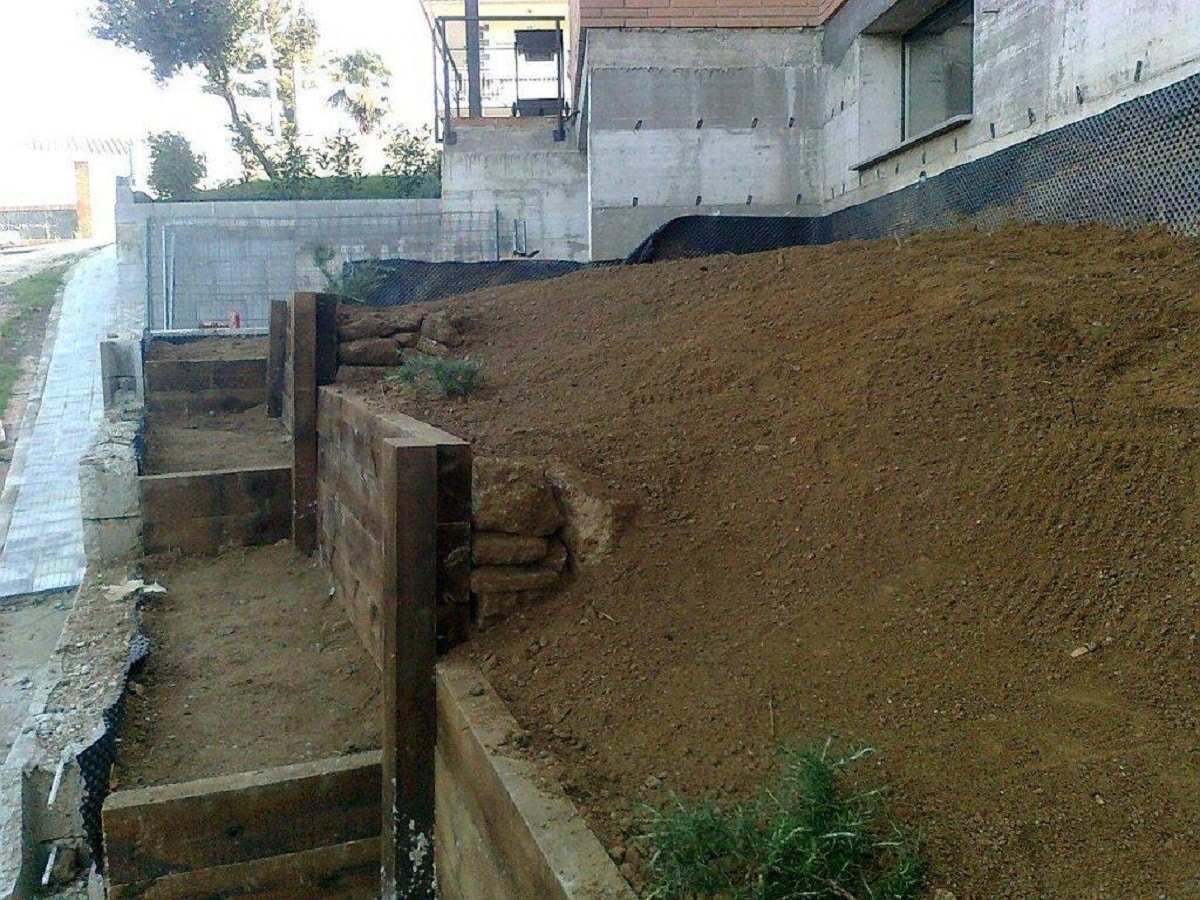
Often, when we want to start cultivating land, we realize that the ground is uneven and, on some occasions, quite sloping. You must know certain techniques so that the ground can be leveled correctly. many people wonder how to level a floor with a lot of irregularities to be able to sow
Therefore, in this article we are going to give you the best tips and tricks to learn how to level a floor with a lot of irregularities.
Leveling a floor with a lot of irregularities

The work of leveling the field consists of removing the micro-relief, allowing uniform irrigation over the entire surface. A constant, non-erosive slope should be achieved while allowing water to flow into the furrow.
Land leveling is essential for gravity irrigation systems (by furrow or bank) if we compare it to the installation of irrigation under pressure (sprinkling) or localized at high frequency (micro-sprinkling, mist, infiltration, drip) where it is essentially done to facilitate agriculture or to reduce water and wind erosion.
To calculate the flatness of the ground, the center of gravity method can be usedbecause it is the most suitable according to the ground situation, such as relatively flat but undulating ground, and the situation where the direction of the slope is not clear.
Areas requiring gravity irrigation are in desperate need of leveling. To do this, select areas with less steep slopes, that is, areas where the horizontal curves have greater distances. So the stakes are placed at a distance of about 25 meters from each other, thus determining the height of the terrain. Their average is then used to calculate the barycenter.
Heights are calculated from the centroid by subtracting or adding height differences based on slope, including NS and EO directions. The difference is the average of the ground elevations obtained by linear least squares regression between the order numbers and the items. To get the height difference, subtract project elevation from site elevation. Positive values represent cuts (open spaces) in the terrain, negative values represent the fill itself (embankments).
Calculations needed

Obtaining the cut/fill ratio consists of adding all the cuts and fills previously calculated to arrive at a cut/fill ratio close to 1.20. On the contrary, the position of the center of gravity must be modified to reach a value closer to the optimal value. The earth movement required to level the area is the average movement obtained by multiplying the area of influence of the pile or attached surface by the sum of the cuts.
The leveling or leveling of the land, mainly consists of eliminating “high places” or “low places” existing on a certain farm using a scraper, so that the irrigation water can be applied perfectly and evenly to its entire surface, otherwise the rainwater will drain properly and not cause unwanted erosion processes.
Although the flatness of irrigated land tends to decrease, it is still, in some cases, necessary to eliminate problems of surface puddles, that is, to correct surface drainage defects. This kind of treatment is necessary even when pressurized irrigation is usedbecause the accumulation of surface water can introduce fungal or cryptogamic diseases in certain fruit varieties and herbaceous crops that are particularly sensitive to these problems.
As with all crops that use traditional gravity irrigation systems, such as furrows, platforms (tables) or laying, need to move over the soil surface to improve irrigation efficiency. This is particularly evident in rice cultivation, where the improvement of results due to better control of the level or depth of water in the plots is very important.
Steps for leveling terrain with a lot of irregularities
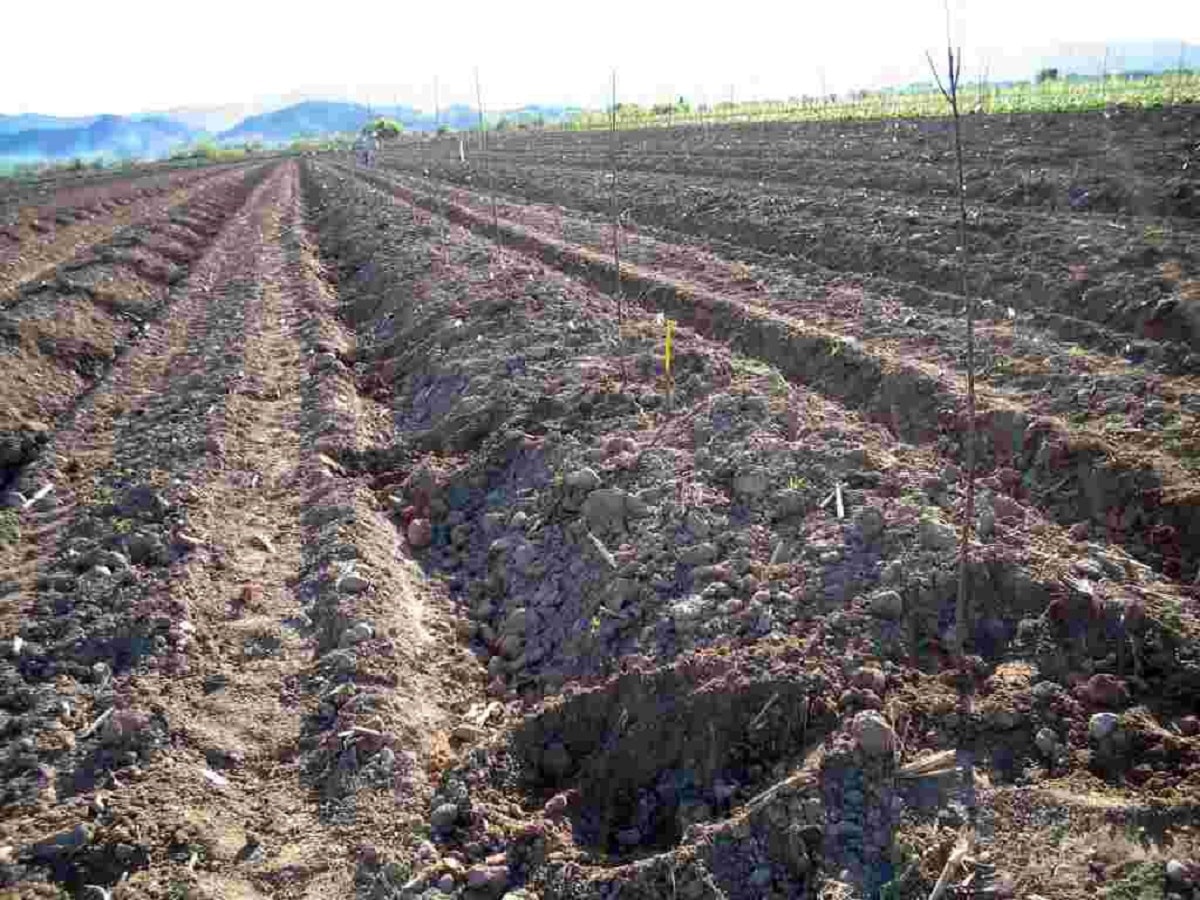
To level the playing field, we don’t need to equip ourselves with any type of technology or special machinery, we just need to have the intuition of a few key concepts. Other than that please be patient as we are not professionals. It will certainly take us longer than if it was done by a professional. But we will see that it is quite a simple task and we will end up getting tired, but satisfied to do it ourselves. To level the ground, all you need are very basic tools such as a level, a hoe, a shovel, a rake and a few others.
Let’s see what are the steps to learn how to level a terrain with a lot of unevenness:
- Determine the perimeter of the desired area. The first thing we will do is identify the area that we need to level and mark the boundaries that delimit said area. You can do this with stakes or iron rods and rope.
- Using a hoe, or a pickaxe if the ground is harder, We will search inside the area to gradually gain depth. Next, we will use the shovel to scoop the dirt out of the floor.
- Compact and rake the soil. Then, with the same hoe, one can break up or remove some remaining clods. Hoes also help us balance and compact the soil by moving the earth from high to low. Then we will rake the ground removing any stones that may remain. With the upper part of the rake (teeth up) always facing us, we will be able to level the entire surface better.
- Check the level. Using something as simple as a spirit level, we’ll check that our surface is level. Once we’ve successfully leveled the ground, it’s time to finish the job.
- End using the function. Depending on the use that we are going to give it, there are different ways to level the area. Maybe we just want it to be a flower bed or flower pots, and we don’t have to do anything else. But it is also possible that we have leveled the area for the installation of a gazebo in the garden. In this case, the formwork can be made and filled with self-leveling mortar. Here you need to smooth the ground with a layer of concrete and a layer of cement on top.
I hope with this information you can learn more about how to level a floor with a lot of unevenness.