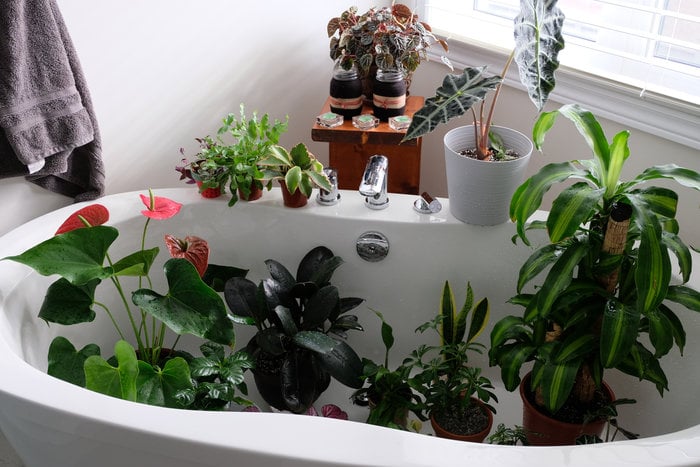
Watering houseplants can sometimes create a real mess. It’s very easy to cause a dripping pan to overflow or spill water all over the floor. This article gives you all the tips for watering your indoor plants without dirtying them.
How to water indoor plants without dirtying them? You can use non-draining pots or dish racks or you can water your houseplants in a sink to avoid messes. You can also use a controlled watering method, such as a self-watering pot, skewer watering, or ice cube watering.
Can I use a pot without drainage holes to collect water?
Although it may seem that using pots without drainage holes in the bottom solves a water problem and retains moisture, it exposes your plants to additional problems that could lead to their demise.
The main problem with using bottomless drainage pots is that they are very easy to overwater, leaving the soil too wet, especially if you used heavy soil like potting soil instead of potting soil. This can lead to root rot and once this happens the best thing to do is to throw the plant away as it usually cannot be restored.
Do self-watering containers really work?
As long as you don’t overfill the pot with water, self-watering containers They are a clean alternative and as the soil dries it absorbs the water held in the container reservoir.
Other advantages of self-watering containers are that they are inexpensive, they come in a wide variety of colors and sizes, so there is something to suit your plant size and palette of interior colors. There’s a spout on the reservoir that lets you pour out excess water if you’ve added too much, and they work well if you’re going out of town for a short time.
Depending on the size of the pot, the lower reservoir can hold 2-4 cups of water. Additionally, you can water the ground from above or add water to the lower reservoir by pouring it from the lower spout.
Use a watering can with a long, thin spout, as this makes it easier to pour liquid into the reservoir without spilling any.
Stackable self-watering systems
If you want to grow multiple plants in a compact space, consider using a vertically stackable self-watering container system. This type of system is nice because you can add more pots as your needs grow and the pots go up instead of out, saving space.
The pots have a reservoir and when you water from above, the water seeps through the system, watering the plants below. They also make attractive additions to the home. Just be sure to use plants with similar light and water needs.
How do I prevent my indoor plants from losing water?
Many indoor planters come with an attached or separate drip tray that collects water that comes out of the bottom drainage holes. If you don’t have a drip pan under your pot, you can be sure that at some point you will have a stream of water coming out of the bottom.
However, if your pan doesn’t have a drip tray, you can easily improvise. Using a plastic lid with a ledge about an inch under the jar also works well for retaining water. Make sure the diameter of the lid is slightly larger than the diameter of the bottom of the pan so that the water has room to drain.
This keeps the surface the jar sits on dry and ensures that grandma’s old table stays in pristine condition and you get a good night’s sleep.
What is double encapsulation and how does it work?
Another simple option for keeping the surfaces on which the pots sit dry is double encapsulation. Simply place the pot with drainage holes in the bottom in a slightly larger pot with a solid bottom without holes.
Of course, you should empty the outer container of water about 30 minutes after watering. Leaving too much water in the outer pot can make the soil too soggy which can lead to root rot issues.
The double pot allows you to use non-draining decorative pots to cover a less ornate container. If desired, you can place small pebbles at the bottom of the outer pot, which will elevate the planted pot out of soggy conditions and add height. This is especially useful if the inner pot is smaller than the outer pot.
Can I use ice cubes to water the plants?
As long as you don’t fill the surface of the soil with a large amount of ice cubes or crush them around the base of the plant, they are great for mess-free watering. This system also helps with using a frozen mess, if your refrigerator’s ice maker gets too excited and the cubes start shooting all over the floor.
It’s as simple as placing four or five ice cubes, depending on the size of the jar, on the floor and letting them slowly melt.
Do the irrigation spikes work?
When it comes to watering houseplants, water spikes and bulbs have become popular in recent years and can add a bit of flair to your houseplant decor. A trip to your local garden store or online garden supplier should give you a plethora of color, size and style options.
How to use a watering can
water nails they are made of porous materials such as terracotta or unglazed ceramic. Depending on the product, skewers come with plastic pipes and some have a tank, although some require you to make your own tank.
Its use is simple, just place the plastic tube in the pouring pen, insert the tip into the potting soil with the top almost level with the ground, fill the water tank and insert the other end of the tube. Make sure the reservoir is slightly higher than the pot.
Create your own tank using any type of bottle, such as a decorative bottle, a wine bottle, or even a plastic soda bottle. Water from the tank is drawn through the hose and into the ground as it dries, keeping it contained without spilling it. Don’t forget to check the water level in the tank and top up if necessary.
If you feel like plastic tubing sticking out of your plants and into a bottle is obviously unsightly, this probably isn’t the option for you. However, if you plan to be away for several weeks, this system works well to ensure your plants are watered while you are away.
How to use a throwing ball
crystal water balls Not only are they pleasing to the eye and practical, but they come in different sizes and colors. They make watering indoor and outdoor potted plants easy by keeping the water in the pot and not on the ground or on that old table.
They are easy to use, you fill the bulb with water, put it in the potting soil, and when the soil dries out the water seeps from the bulb into the soil. If your container is large, you will likely need several bulbs to meet the plant’s water needs. Fill the bulb with additional water as needed.
Can I just water my houseplants in the sink?
Of course, an easy way to water plants, especially those in small pots and hanging baskets, is to take them to the sink and let them soak completely. This method works especially well for hanging baskets, as it reduces the risk of water spilling over the side, creating a soaking mess.
Simply place hanging baskets or planters in the sink and let the water run until it comes out of the bottom. Leave the pot or basket in the sink for about 30 minutes, empty the water from the container, dry the bottom with a towel if necessary and put it back in its previous place.
It is also a good method for leaching salts from the soil through fertilization.
How about using a sponge in the pot?
Another DIY trick that helps soak up water and keep it in the pot and sink is to use a sponge. Just cut a sponge the size of the bottom of your container, place it in the bottom, add soil and plant as normal. The sponge absorbs some of the water that would normally end up in the drain and eventually on the floor.
Additional Watering Tips for Houseplants
These are just a few of the options available to water your houseplants without hassle. You also have options in more expensive drip irrigation systems, but the pipes and controllers are exposed and hard to hide.
An old-fashioned watering can also works well, but don’t use one that’s too heavy to handle when full – the spout is short and bulky, making it difficult to direct the water – and don’t overfill the pot with water.
Additionally, keep interior surfaces free of water and debris by practicing good watering practices, which generally involves watering when the top inch of soil is dry to the touch. Applying water to the already saturated soil ensures that it quickly rises from the bottom of the pot and drains onto the drip tray. If you let the soil get too dry, it won’t be able to absorb water effectively and it will also run off the bottom and onto the drip tray.