If you purchase an item through links on this page, we may earn a commission. Our editorial content is not influenced by commissions. Read full disclosure.
Whether you live on a large property or have a small place in the suburbs, it’s essential that you feel comfortable. Privacy, protection from intruders, and keeping pets and livestock in their place are crucial.
Fences are great, but why not grow a fedge?
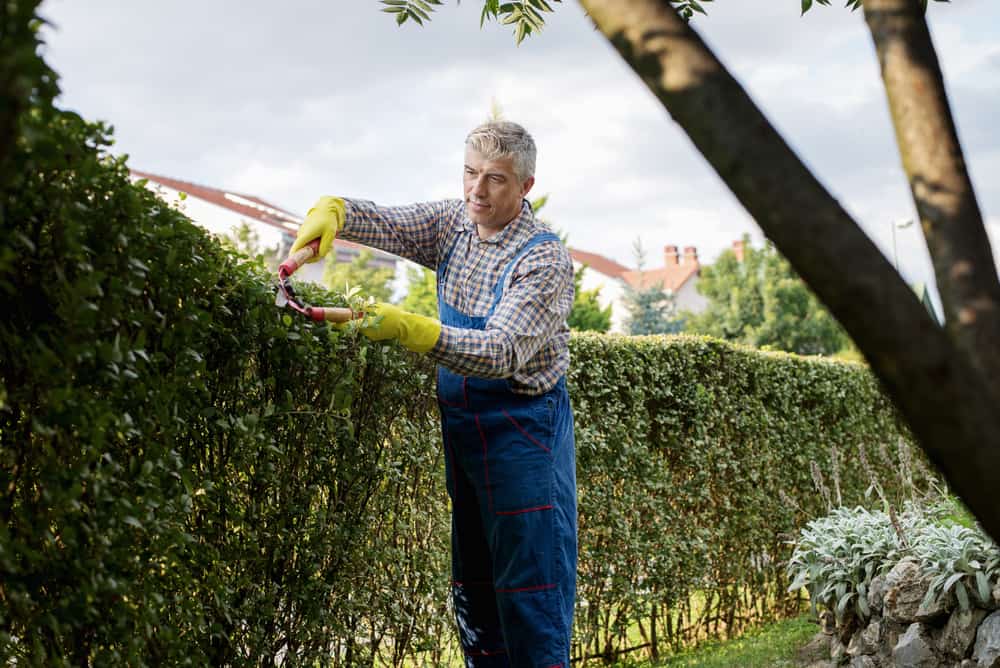
A hedge is a cross between a fence and a hedge. It offers privacy and security while maintaining a natural aesthetic. If you use an edible species, it can also provide food.
Here’s everything you need to know to fedge your property.
How to Plant a Fedge

At its most basic, the fedge can be a living fence to keep your animals in and intruders out. It can also give you some privacy. But there is more than that.
Live plants can help control soil erosion and stabilize slopes. You can also use fedges near water, such as streams, to avoid damage from powerful waves. Or use borders to add an elegant touch to your property.
It is important to remember that some plants, such as willows and blackberries, grow and spread quickly. Be prepared to control growth, so it doesn’t end up where you don’t want it to.
Generally, people use willow, juniper, Russian olives or boxwood to create fedges. For a food hedge, use blackberries (Rubus spp.), highbush cranberry (Highbush Viburnum), Goji berries (Lycium spp.), sea buckthorn (hippophae spp.), or hawthorns (Crataegus spp.).
But really, you can use any tree or shrub that forms a dense barrier. Work with what you have!
Just be sure to use plants that work well in your climate, and if you’re combining species, make sure they thrive in similar conditions.
Plant your rows
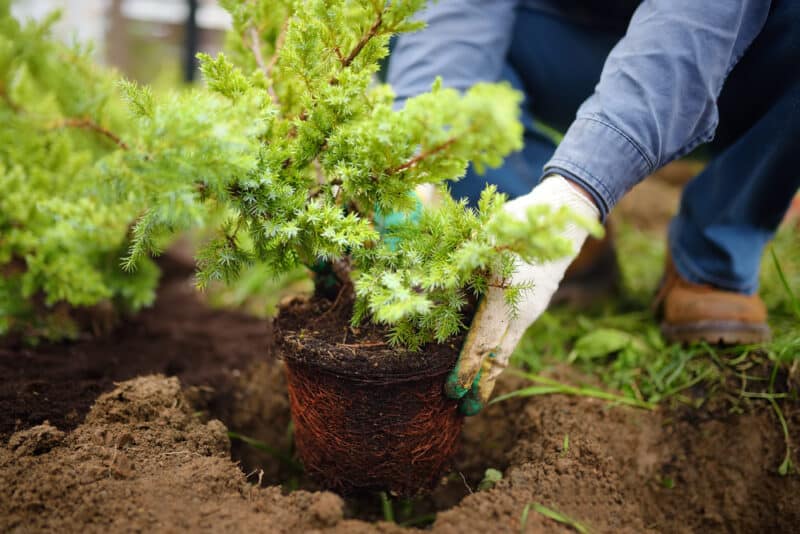
You should plant most species in early spring, so they have plenty of time to establish themselves and take root in the soil.
Choose species that will grow well in the conditions you have. If your planting environment is arid, you don’t want to use a water-loving species.
Before planting, amend the soil with well-rotted compost. All plants can benefit from the nutrients and improved texture.
Once you have suitable species and suitable soil, it’s time to plant.
Place your plants in a row, but closer together than is generally recommended. For example, if blackberry plants should generally be spaced five feet apart, place them two and a half feet apart instead.
You can put garden twine and metal poles between each plant to hold them in place and provide temporary fencing until the plants grow.
Weeds can be problematic as they will prevent the plant from filling out. It is important to control weed growth in the area where you want to grow the structure.
Help with spacing
To make sure your plants are properly spaced, mark the edges where you want the border to stop and start. Then pass a piece of string between them and mark where each plant should be.
Dig a hole at each marked spot.
This can be useful as you may not be able to dig all the holes you need at once. It may take several days. This way you know exactly where to pick up your work.
Weaving a Willow Fedge
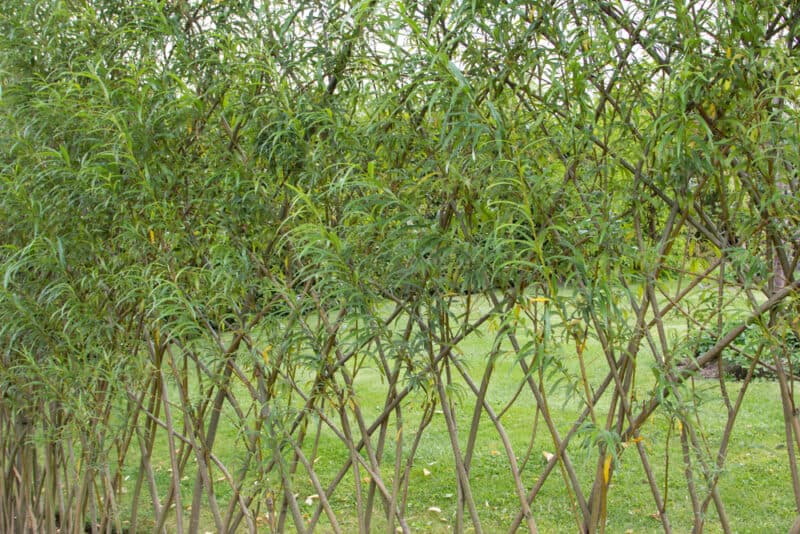
Willows form a unique edge that you can weave into a fence-like shape. It makes your fedge look great and adds a decorative element that works well with the rest of your garden.
For example, you can place a fedge at the back of a flower garden and your plants will be colorful!
Weaving can be done by gently bending the whips and wrapping them around each other. You can braid them, create a diamond pattern or simply choose whatever suits you best.
To ensure the final structure is secure and will firm up as you envision it, wrap garden twine around each joint. In this way, the wind or the shock of the structure will not destroy it.
You won’t need to keep the string on the edge forever. Once the structure has rooted itself in the ground and the wood has hardened, you can remove the string. In the meantime, check the twine frequently to make sure it isn’t cutting the tree.
This process can take months, so be patient.
While you’re at it, you can also create a willow arch to cross your border. Install a small door and you have a fairy tale entrance.
Maintaining a willow border
Willow edging is easy to maintain if you trim the edges occasionally and watch for broken or untangled weaves. Prune and weave the willow throughout the year to encourage new growth and maintain its shape.
You will also need to watch out for weeds and remove them if they start to appear near your fedge.
If you need to replace a live willow, choose the same cultivar that you used initially. This is essential if you want your border to be even.
Make a flower border

Your fedge doesn’t have to be totally utilitarian. You can use plants with beautiful flowers. Rugosa Rose (Rosa rugosa), hawthorns (Crataegus spp.), weigela (Weigela spp.), and lilacs (Syringe spp.) all make nice options.
Depending on the species, you may need to train the young plants to encourage multiple trunks and dense branching.
Be sure to prune your plant appropriately for the species. You don’t want to go and prune the fedge and find that you’ve pruned the part of the plant that was developing flowers for the following year.
Create a Food Fedge
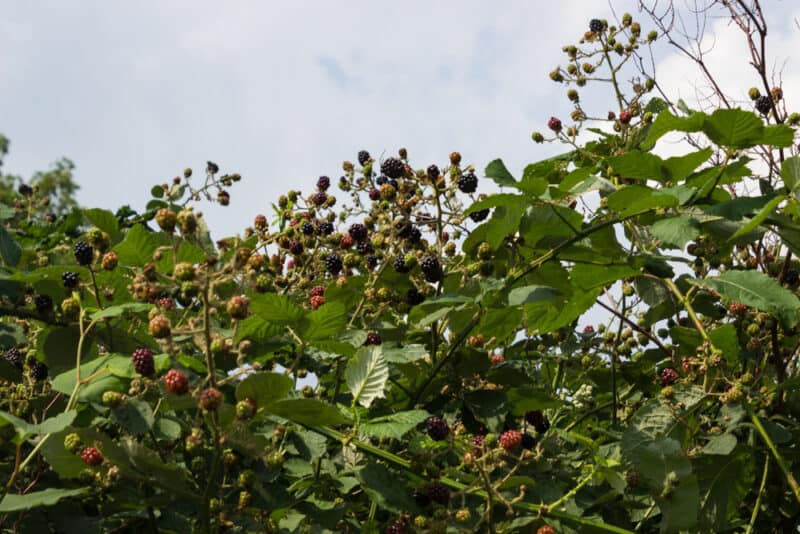
To create a food hedge, use densely growing edible species. You can even combine a bouquet of plants. Imagine a pretty fedge with rugosa roses (Rosa rugosa), blackberries (Rubus spp.), currants (Ribes uva-crispa), and native plum (Carissa macrocarp).
The trick is to place the plants close together, but not so close that you favor pests or disease. Do not place them closer than half the recommended distance.
Was this article helpful?
Yes No ×
We appreciate your helpful feedback!
Your response will be used to improve our content. The more feedback you give us, the better our pages will be.
Facebook pinterest